Seoul is often known for palaces, shopping streets, and trendy cafés, but the city also has a softer side. Beyond the busy neighborhoods, there are large urban parks, peaceful walking paths, dramatic waterfalls, and quiet green corners that are surprisingly easy to reach by subway. Some are perfect for first-time visitors, some are better for photos and sunset views, and others are ideal for travelers who simply want a slower and calmer day in Seoul.
If you are still planning how to get around the city, read our full guide to Transportation in Korea: Complete Guide for Tourists.
Best Urban Parks in Seoul for First-Time Visitors
Many of these nature spots are easy to reach by subway, but having mobile data makes the trip much smoother for maps, station exits, and navigation.
Check South Korea eSIM options with Saily before you go.
Seoul Forest
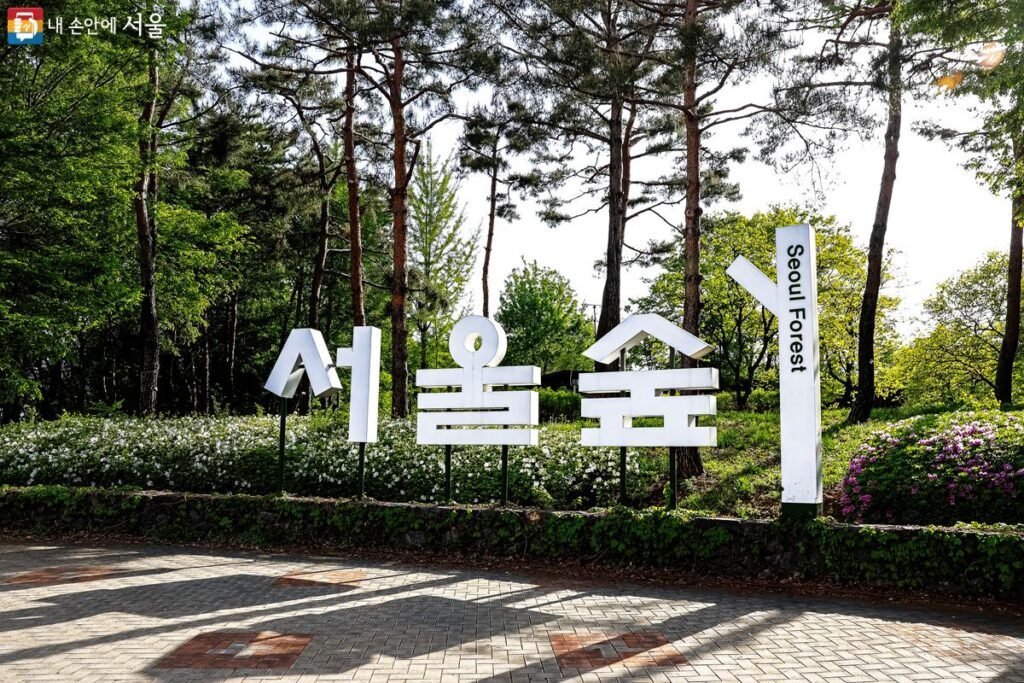
If you want one of the easiest and most rewarding green spaces to visit in Seoul, Seoul Forest is one of the best places to start. It feels spacious without being overwhelming, and it gives visitors a nice balance of trees, walking paths, open park areas, and a more local everyday atmosphere. It works especially well for travelers who want a relaxing outdoor stop without leaving the city center too far behind. Seoul’s official tourism information lists it as one of the city’s key green spaces, and Seoul is currently preparing parts of the area for the 2026 Seoul International Garden Show, which also shows how important the park is in the city’s public green network.
If you are new to Seoul’s subway system, our guide to How to Use the Seoul Subway as a Tourist (2026 Guide) will make the trip much easier.
How to get there: Take the Suin-Bundang Line to Seoul Forest Station and use Exit 3 or 4. The park is about 242 meters away. If you are coming by Line 2, Ttukseom Station Exit 8 is another easy option.
Gyeongui Line Forest Park
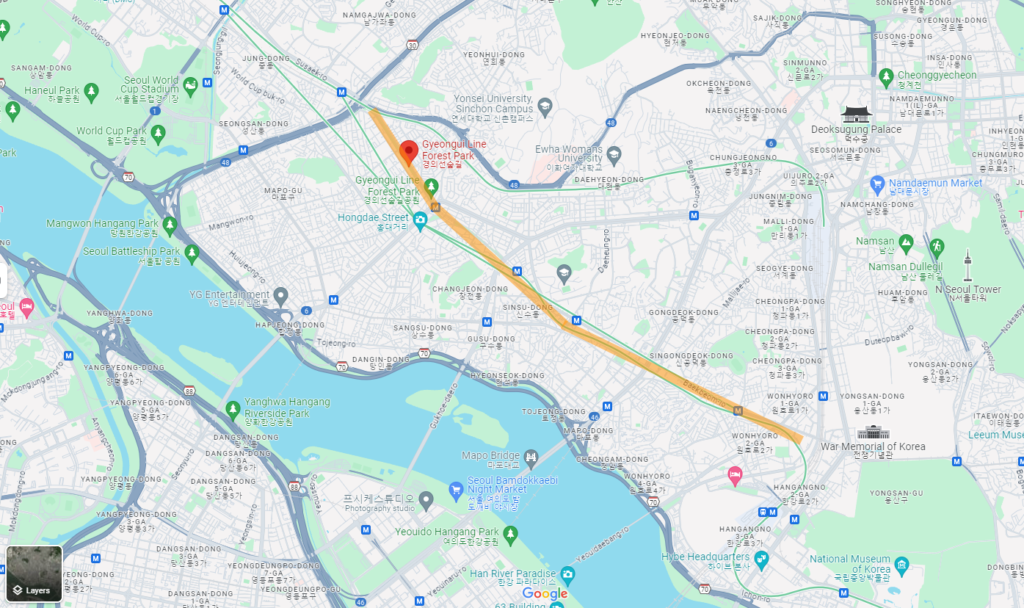
Gyeongui Line Forest Park can be accessed from several stations, but Hongik University Station is the easiest starting point for most visitors. This is a great choice for travelers who like casual walks, neighborhood cafés, and a mix of greenery and city life. It feels more everyday and more local than many famous sightseeing spots, which is exactly why it works so well in this guide.
If you plan to visit several parks in one day, our guide to T-Money Card in Korea: Complete 2026 Guide for Tourists (Including NAMANE Card & Discover Seoul Pass) explains why a transport card makes Seoul travel much easier.
How to get there: Take Line 2, the Gyeongui-Jungang Line, or the Airport Railroad to Hongik University Station and use Exit 3. Official Seoul tourism information places the park just a short walk from the station, with one listing showing the Yeonnam section about 209 meters away.
Seoul Children’s Grand Park
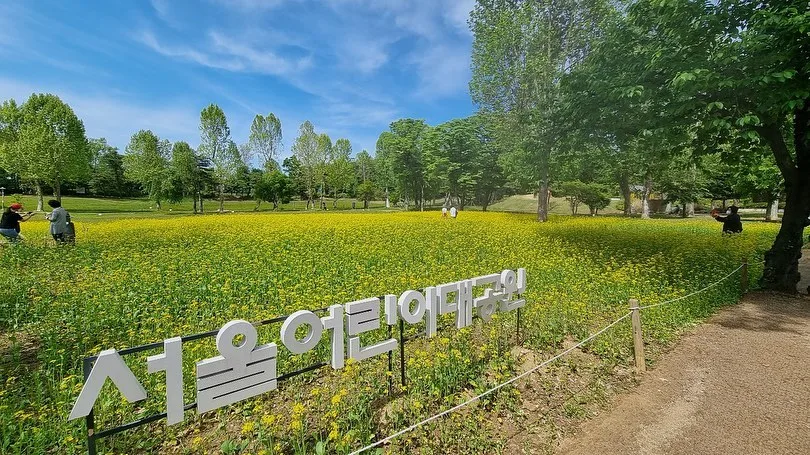
Seoul Children’s Grand Park deserves a place in this article because it is not just a park. It is a large family-friendly green space that also includes a zoo and other attractions, which makes it much more versatile than a typical city park. This is one of the best options in Seoul for visitors traveling with children, but it is also a pleasant stop for adults who want a wide open park with an easy layout. One of its biggest advantages is that the park itself is free to enter. Official tourism information lists park hours as 05:00–22:00, with the zoo operating from 10:00–17:00.
How to get there: Take Line 7 to Children’s Grand Park Station and use Exit 1 for the main entrance. Official Seoul tourism information lists the entrance at about 106 meters from the station.
Best Photo Spots in Seoul for Waterfalls and Views
Yongmasan and Yongma Falls Park
This area works well as a combined stop because it offers two different experiences. Yongma Falls Park gives you the dramatic visual highlight, while Yongmasan adds a wider-view, light-hiking atmosphere. Official Seoul tourism information describes Yongma Falls Park as home to the highest waterfall in eastern Seoul, while Yongmasan is known for beginner-friendly hiking and broad city views. That makes this one of the best choices for travelers who want a stronger visual experience than an ordinary park walk.
How to get there: For Yongma Falls Park, take Line 7 to Yongmasan Station and use Exit 1. The park is about 325 meters away. For Yongmasan Mountain, use Exit 2, with official tourism information listing the trail access at about 553 meters away.
Hongje Waterfall
Hongje Waterfall is one of the most unusual nature-themed photo spots in Seoul because it brings a dramatic waterfall scene into an urban setting. Official tourism information notes that the waterfall runs year-round from 08:00 to 21:00, and official Korea tourism information describes it as a 25-meter-high, 60-meter-wide artificial waterfall. This is a strong pick for travelers in their 20s and 30s who care about scenery, photos, and a stop that feels a little different from the standard tourist route. The nearby waterfall-view café scene also makes this area feel more complete as a short half-day outing.
How to get there: Take Line 3 to Hongje Station, use Exit 4, then take Bus 7713 or 7738 and get off at Baekryeon Bridge. From there, it is about a 213-meter walk to the waterfall.
Haneul Park
Haneul Park is one of the best choices in Seoul for wide-open views, sunset light, and photo-friendly scenery. It is the most popular of the five parks inside World Cup Park, and official Seoul tourism sources highlight it for its scenery and strong visual appeal. This spot works especially well for travelers who like panoramic views, open skies, and places that feel more cinematic than intimate. It is also a good fit for readers searching for a sunset spot in Seoul.
Because Haneul Park involves a longer walk from the station, our guide to How to Use Taxis in Korea (Kakao T, Uber & Tips) may help if you prefer a shorter last-mile transfer.
Planning to visit Haneul Park for sunset views and a longer outdoor walk?

Browse K-beauty sunscreen and skin-care essentials with this Olive Young deal.
How to get there: Take Line 6 to World Cup Stadium Station and use Exit 1. Official Seoul tourism information lists Haneul Park at about 1.6 kilometers away, so this is a longer walk than some of the other places in this guide. Seoul’s official English page also points visitors to Exit 1 as the main subway approach.
Quiet Healing Walks in Seoul
Hang-dong Railroad and Pureun Arboretum
These two places are best enjoyed as one slow travel route. Hang-dong Railroad is a 4.5-kilometer railway trail with an older, quieter atmosphere, while Pureun Arboretum is Seoul’s first municipal arboretum. Seoul’s official English page introduces them together, which is one of the strongest reasons to keep them in one section of the post. This combined route is ideal for travelers who want something calmer, less crowded, and more reflective than Seoul’s better-known tourist areas.
The mood here is very different from places like Haneul Park or Hongje Waterfall. Instead of dramatic skyline views or big photo moments, this route is about walking slowly, enjoying greenery, and noticing a quieter side of the city. That makes it a particularly good match for readers looking for hidden gems, quiet dates, or free-entry outdoor spots in Seoul. Pureun Arboretum’s official information also lists it as a major eco-friendly public green space with themed gardens and educational value.
How to get there: For the simplest paired route, start from Cheonwang Station on Line 7 and walk toward Hang-dong Railroad. For the official Pureun Arboretum transit route, take Line 1 or Line 7 to Onsu Station, use Exit 3 on Line 1 or Exit 2 on Line 7, then take Bus Guro 07 to the Pureun Arboretum Rear Entrance.
Which Spot Fits Your Travel Style?
If you want the most balanced and easy first stop, go to Seoul Forest. If you enjoy neighborhood walks and café-friendly urban greenery, choose Gyeongui Line Forest Park. If you are traveling with children or want a large outdoor park with free admission, Seoul Children’s Grand Park is one of the best choices. If you want waterfalls and stronger visual impact, Yongmasan / Yongma Falls Park and Hongje Waterfall are better picks. If sunset and wide-open views matter most, Haneul Park is the stronger option. And if you want the quietest, slowest route in this guide, Hang-dong Railroad and Pureun Arboretum are the best match.
Final Thoughts
Seoul has far more nature than many first-time visitors expect. Some places are easy introductory parks, some are scenic photo spots, and others are better for quiet walking and rest. That range is what makes Seoul such a rewarding city for travelers who want more than just famous landmarks. With a little planning, you can combine forest walks, waterfalls, sunset views, and slower healing routes into the same trip.