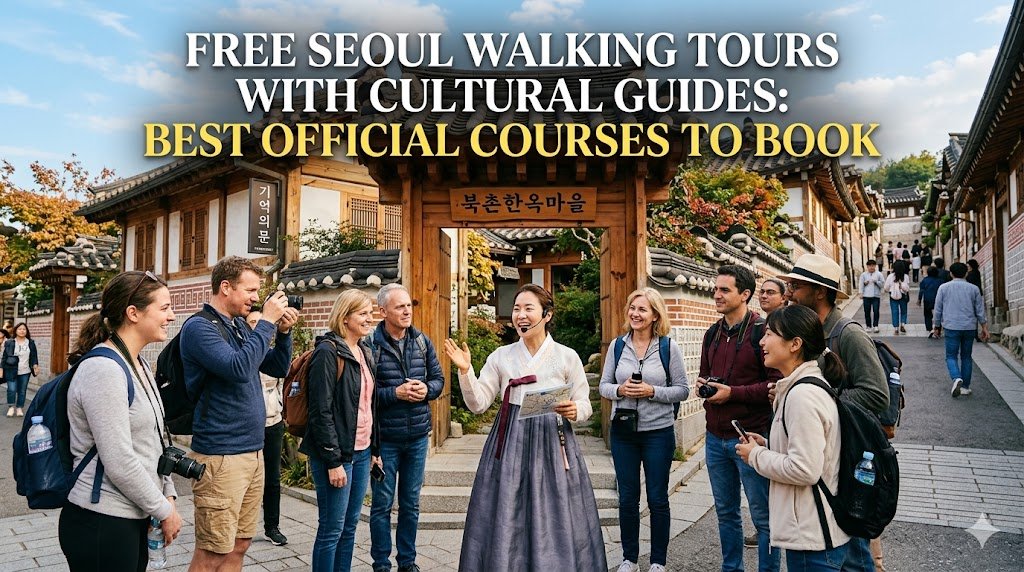
Seoul Guided Walking Tour is one of the best free cultural activities in the city. The official program is designed for visitors who want to explore Seoul on foot with cultural tour guides, and the public overview currently describes it as offering more than 40 official courses across the city. In addition, Seoul has also promoted three special K-pop Landmark Walking Tour routes as a limited-time program, which makes the walking tour system even more appealing to younger travelers and global K-pop fans.
Unlike a simple photo walk, this program is built around explanation and storytelling. You are not just passing by famous places—you are walking with a guide who explains the history, culture, urban development, and hidden context behind each area. The official program overview highlights major places such as Gyeongbokgung, Bukchon, Cheonggyecheon, Namsan Fortress, Mongchontoseong, and Sungkyunkwan among its 40-plus courses.
One of the biggest advantages is that the tour itself is free. That said, some routes may still involve separate personal costs such as palace admission, transportation, or small activity fees depending on the course. That is why this is best described as a free guided walking tour, rather than a fully no-cost day in every case.
The walking tours are conducted in Korean, English, Japanese, and Chinese, though the exact language schedule can vary by course, weekday, and time slot. For international readers, that makes this one of the most useful official cultural programs in Seoul because it combines accessibility with local storytelling.
If you plan to check tour schedules, use maps, or make reservations while exploring Seoul, having mobile data will make the experience much easier.

Check South Korea eSIM options with Saily before your trip.
1. Best for First-Time Visitors: Gyeongbokgung
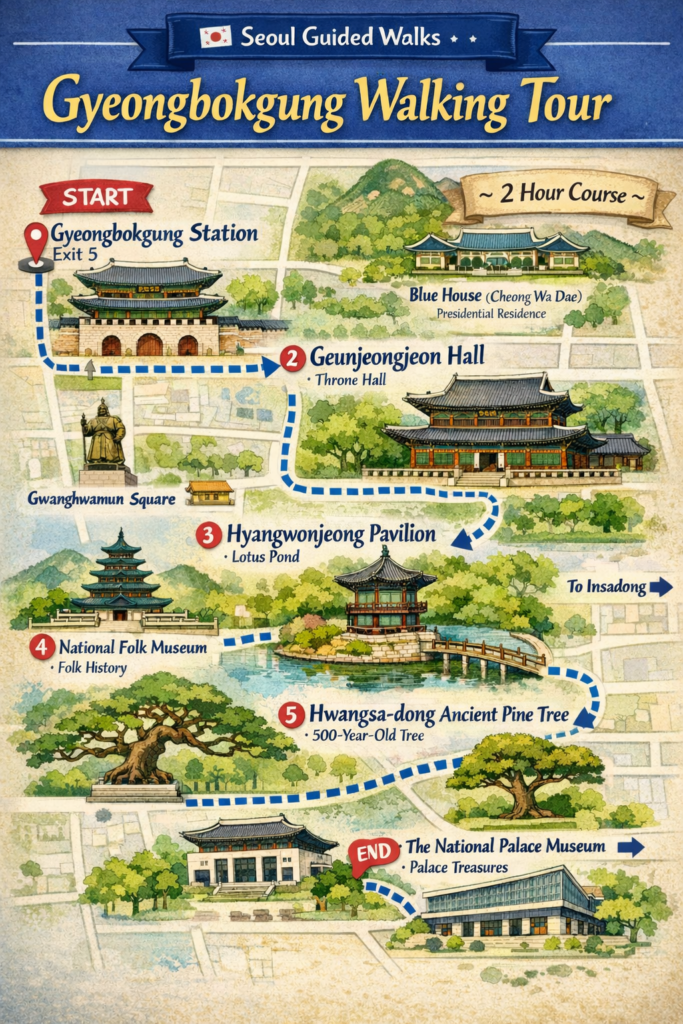
If this is your first time in Seoul, Gyeongbokgung is one of the strongest courses to recommend. Gyeongbokgung is the largest of Seoul’s royal palaces and one of the city’s clearest introductions to Joseon history, royal architecture, and traditional urban symbolism. As a first walking tour, it works especially well because visitors can immediately connect Seoul’s modern skyline with the city’s dynastic past.
This course fits travelers who want a classic “must-do in Seoul” experience. It is ideal for first-time visitors, history lovers, and travelers who want their first cultural activity in Seoul to feel iconic, easy to understand, and visually memorable.
2. Best for Traditional Atmosphere: Bukchon Hanok Village
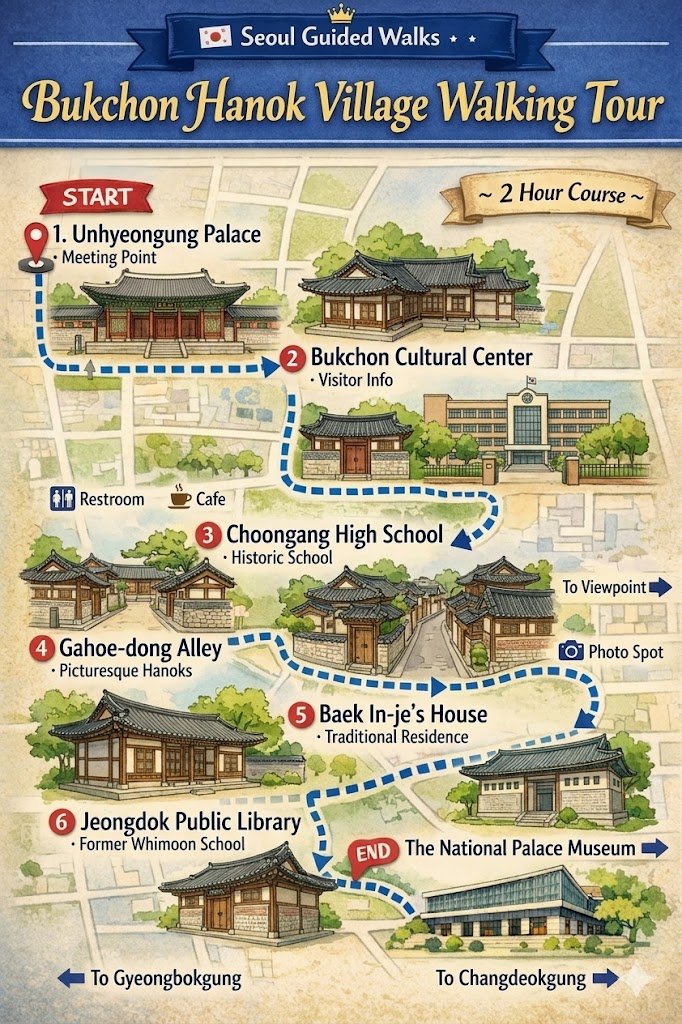
Bukchon Hanok Village is one of the best picks for travelers who want to feel the texture of old Seoul rather than just visit one landmark. The official route description presents Bukchon as the only area in Seoul where large clusters of traditional hanok homes remain together, along with museums, workshops, and cultural resources spread through its maze-like alleys.
This is a strong course for visitors who enjoy photography, architecture, slower walking, and a more emotional sense of place. It also pairs naturally with nearby palace areas, so it works well for travelers planning a half-day around Seoul’s historic center.
If you are planning to stay in a more traditional part of Seoul, you may also want to read our guide to Best Hanok Stays in Seoul for First-Time Visitors.
If you want to stay close to Bukchon, Gyeongbokgung, or Anguk for an easier walking itinerary, it helps to compare hotel locations before booking.

Compare Seoul hotel options near the historic center on Trip.com.
3. Best for Modern History: Deoksugung and Jeongdong
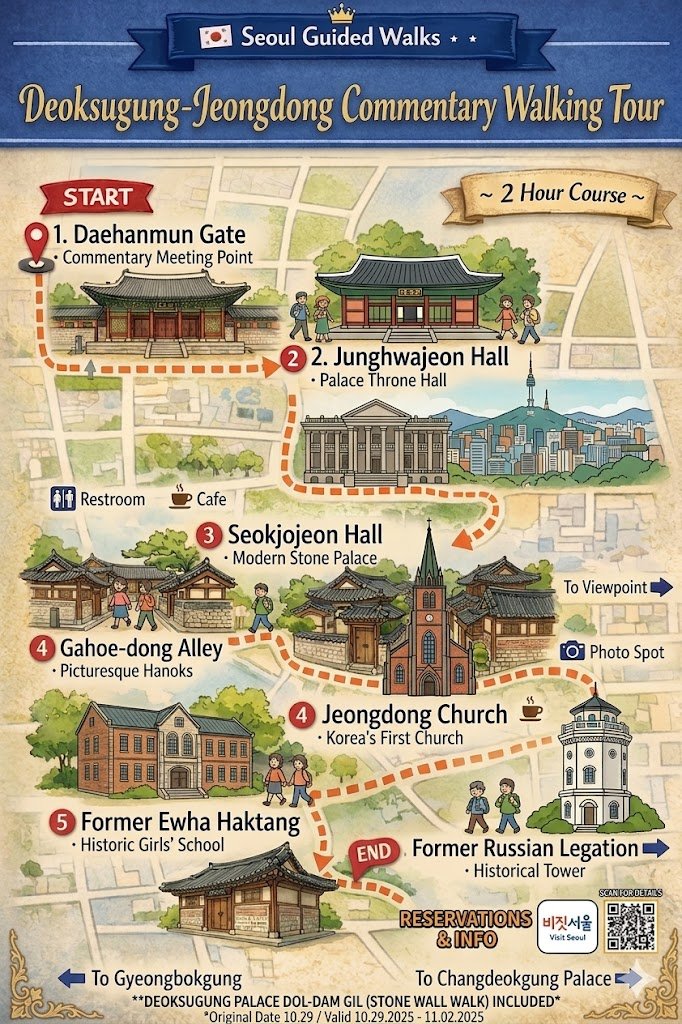
For visitors who want more than palace history, the Deoksugung-Jeongdong area is one of the most rewarding choices. Official route information describes Jeongdong as a walkable area where visitors can feel culture and history together in the center of Seoul, with strong links to Korea’s modern history.
This course is a great fit for travelers who are interested in the Korean Empire period, Western-style buildings, diplomatic history, and the layered transformation of Seoul into a modern capital. It feels quieter and more reflective than some of the city’s palace-heavy routes, which makes it especially appealing for thoughtful travelers.
4. Best for Views and Outdoor Walking: Namsan Fortress
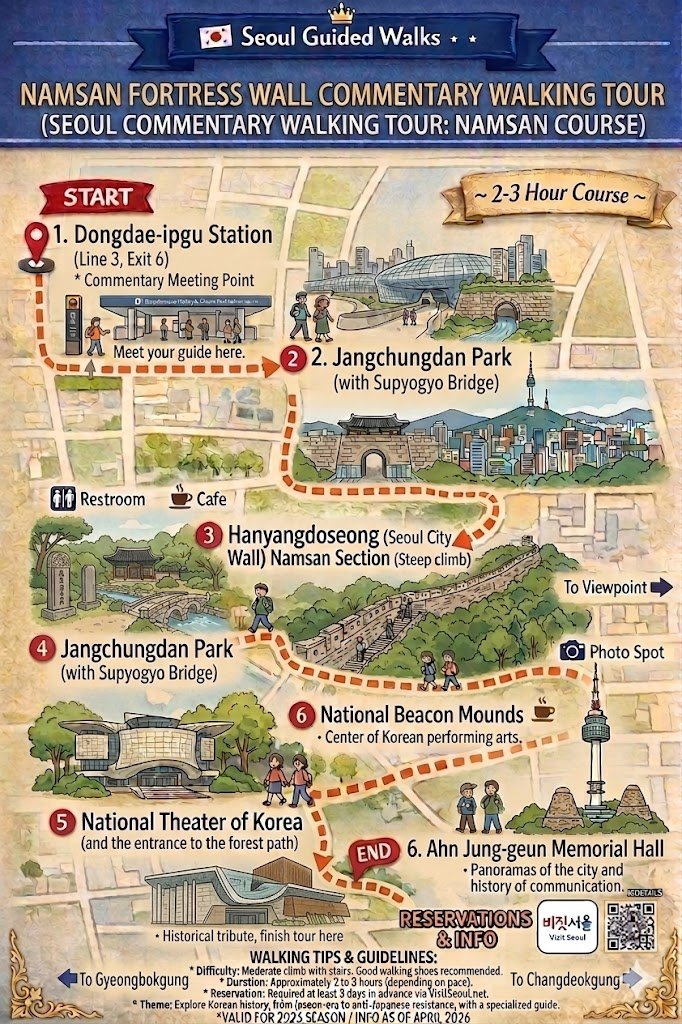
Namsan Fortress is one of the most attractive options for travelers who want a scenic walk with both history and city views. The official course description highlights a route that combines Joseon-era historic sites with modern cultural spaces such as the National Theater and N Seoul Tower, while also connecting to traditional elements like Namsangol Hanok Village.
This course works especially well for spring and autumn visitors, outdoor walkers, and anyone who wants a more panoramic and active version of Seoul sightseeing. Instead of focusing only on one monument, it gives travelers a broader sense of how Seoul’s landscape, fortifications, and city identity fit together.
5. Best for Hidden Seoul: Walk Along Seochon’s Old Alleys
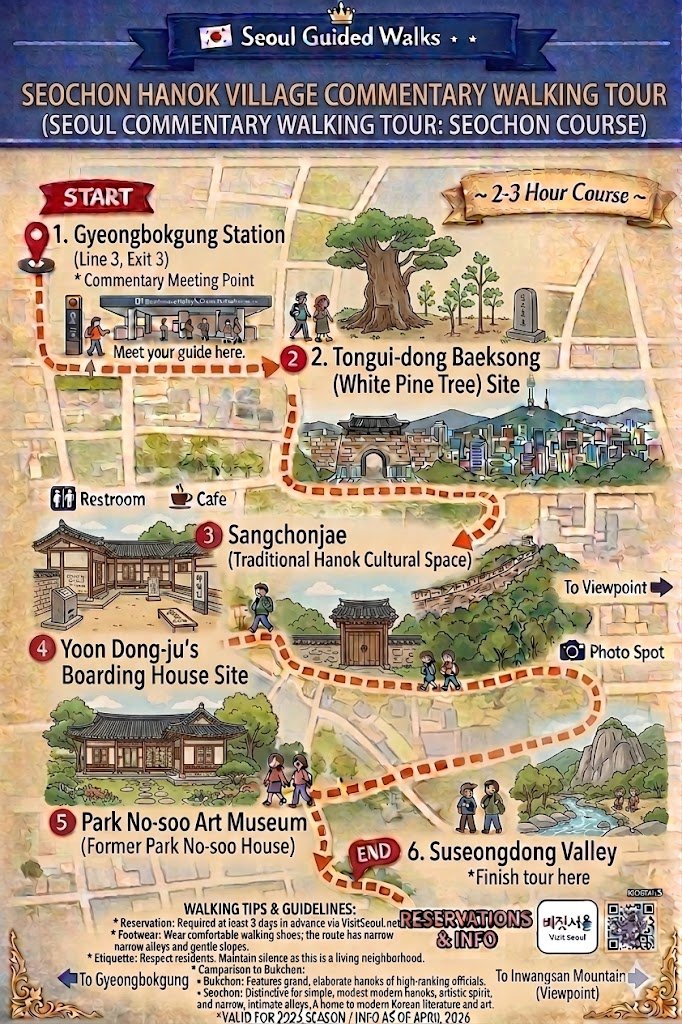
Seochon is a great recommendation for travelers who want a quieter, more local side of Seoul. The official route description says this walk follows traces from the Joseon Dynasty, the Japanese colonial period, and the present day, while also highlighting the marks left by many artists who lived in the area.
This makes Seochon especially attractive for travelers who prefer atmosphere over checklist tourism. It feels less like a “big attraction route” and more like a slow cultural walk through layers of memory, everyday life, and neighborhood character.
If you are interested in staying somewhere with more local atmosphere, you may also want to read Types of Accommodation in South Korea: Hotels, Guesthouses, Hanok Stays & More.
6. Best for Families and Accessible Travel: Family and Barrier-Free Courses
Seoul’s walking tour system is not limited to standard adult sightseeing routes. The program also includes family-focused and accessible options. Official route pages show a family course at Gyeongbokgung, and the barrier-free Gyeongbokgung course is specifically described as being designed for seniors, wheelchair users, and stroller users through routes without major physical obstacles such as steps or thresholds.
That makes this program especially useful for multigenerational travel, slower-paced family itineraries, and visitors who want an official cultural activity that is more inclusive than a typical walking route. For international travel blogs, this is a valuable point because many readers are actively looking for family-friendly or accessibility-conscious experiences in Seoul.
7. Best for Younger Travelers: K-pop Landmark Walking Tour
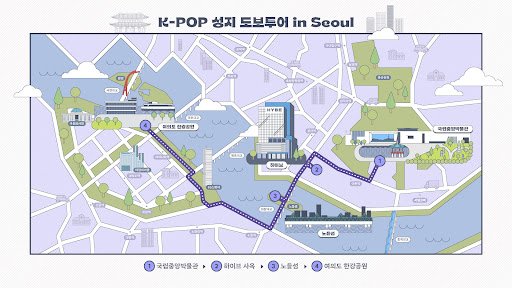
K-POP Landmark Walking Tour: Route 1
Title: Healing on the Han River: A Journey from History to K-POP
Tour Course Sequence
- START: National Museum of Korea
- (국립중앙박물관 / Meeting Point: Mirror Pond)
- HYBE Headquarters
- (하이브 사옥 / The landmark of Yongsan)
- Nodeul Island
- (노들섬 / Music & Art Island in the Han River)
- END: Yeouido Hangang Park
- (여의도 한강공원 / A scenic riverside rest area)
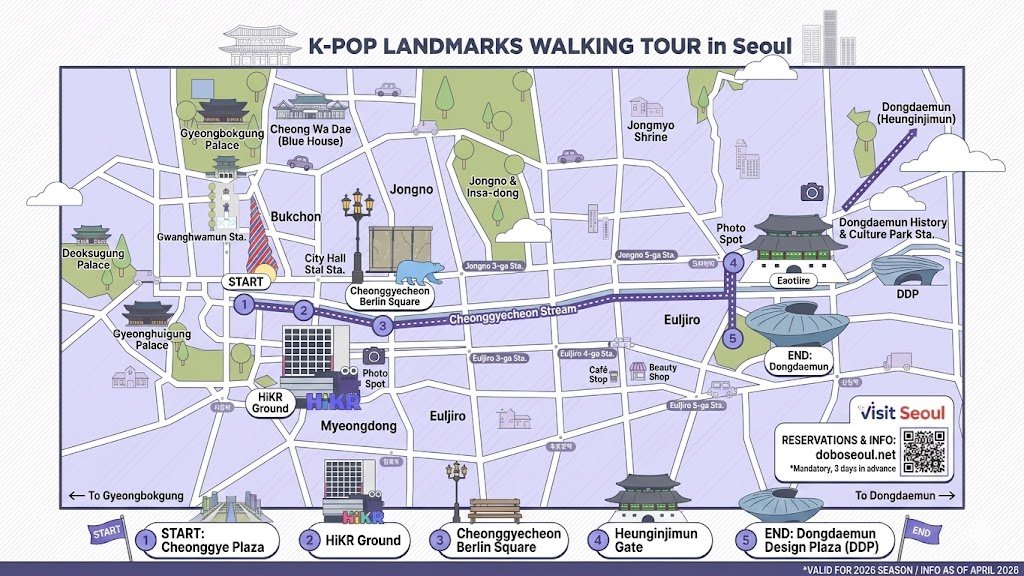
K-POP Landmark Walking Tour: Route 2
Title: K-Culture Hub: From Historic Gates to Interactive K-POP Experiences
Tour Course Sequence
- START: Cheonggye Plaza
- (청계광장 / The starting point of Cheonggyecheon Stream)
- HiKR Ground
- (하이커 그라운드 / Interactive K-Content & K-POP experience center)
- Cheonggyecheon Berlin Square
- (청계천 베를린광장 / A symbolic cultural space along the stream)
- Heunginjimun Gate
- (흥인지문 / Seoul’s historic East Gate)
- END: Dongdaemun Design Plaza (DDP)
- (동대문 디자인플라자 / An iconic landmark for fashion and modern K-Design)
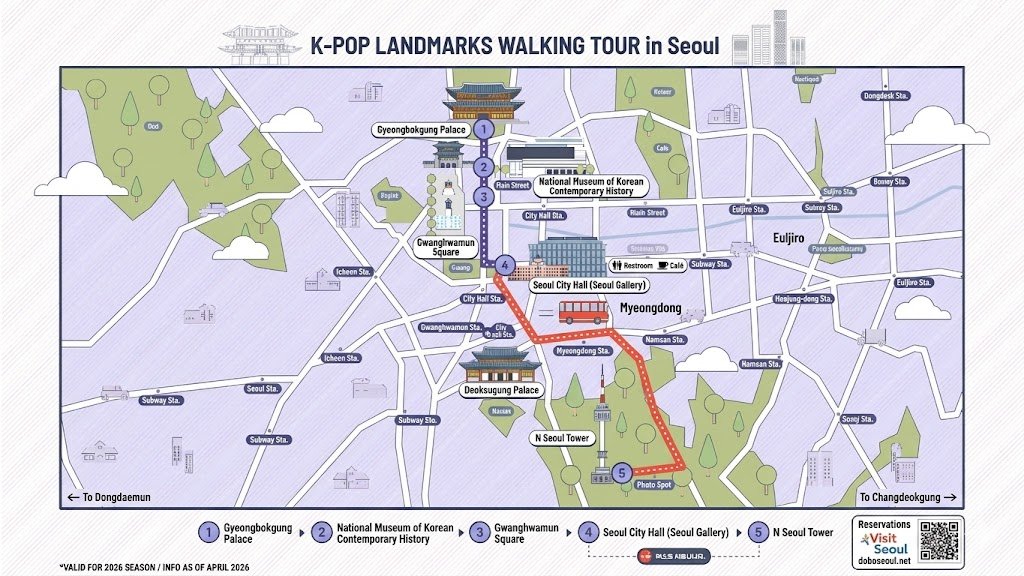
K-POP Landmark Walking Tour: Route 3
Title: Seoul’s Heritage & Future: From Royal Palaces to the Iconic N Seoul Tower
Tour Course Sequence
- START: Gyeongbokgung Palace
- (경복궁 / The grandest of the Five Grand Palaces)
- National Museum of Korean Contemporary History
- (대한민국역사박물관 / Features special K-Culture exhibitions)
- Gwanghwamun Square
- (광화문광장 / The historical and cultural heart of Seoul)
- Seoul City Hall (Seoul Gallery)
- (서울시청 서울갤러리 / A bridge between historical and modern Seoul)
- [Transfer to Bus]
- END: N Seoul Tower
- (N서울타워 / Located in Namsan Park, offering a panoramic view of the city)
For younger visitors and global K-pop fans, Seoul has also promoted a K-pop Landmark Walking Tour in Seoul as a special limited-time program. Seoul Metropolitan Government’s official event guide describes it as a guided walking program across three routes, where visitors explore well-known K-pop spots, including music video filming locations, together with some of Seoul’s best-known landmarks.
One official route example connects the National Museum of Korea, HYBE Headquarters, Nodeul Island, and Yeouido Hangang Park. Another highlighted route links Gyeongbokgung Palace, the National Museum of Korean Contemporary History, Gwanghwamun Square, Seoul City Hall, and N Seoul Tower. This kind of structure makes the K-pop section especially attractive for younger travelers because it blends fan interest, city storytelling, photo spots, and broader sightseeing into one experience.
Because these routes connect multiple parts of Seoul, it also helps to understand how public transportation works before you go. You can start with Transportation in Korea: Complete Guide for Tourists.
If you plan to use the subway or buses between tour areas, our T-Money Card in Korea: Complete 2026 Guide for Tourists (Including NAMANE Card & Discover Seoul Pass) will help you understand the easiest way to get around.
For a travel blog, this section is worth including because it modernizes the image of Seoul’s guided walking tours. It shows that the program is not only for palace lovers or history-focused travelers, but also for visitors who want trend-driven, pop-culture-friendly experiences in the city. Because these K-pop routes are presented as special programming, readers should always check the live booking page for current availability.
If you are looking for more K-culture experiences beyond the official walking tours, Seoul also offers bookable activities for international visitors.

Explore Seoul experiences on Creatrip.
How to Book
The official Seoul Guided Walking Tour system directs visitors to book through the dedicated reservation site. The booking pages show tabs for individual bookings, group bookings, and mobility-impaired/disabled visitors, and the site notes that tours operate when the minimum reservation requirement is met. The booking page also shows that maximum capacity depends on the course, with some palace routes allowing more participants than others.
Because course schedules, languages, and special seasonal routes can change, the safest advice is simple: check the live reservation page before making your plan. That is especially important for international visitors who want a specific language slot or want to join the K-pop routes while they are running.
Final Thoughts
If you want to experience Seoul beyond surface-level sightseeing, this is one of the most practical official activities to recommend. It is free, cultural, flexible, and varied enough to fit many travel styles—from first-time palace visits and hanok walks to scenic fortress routes, family-friendly options, and even K-pop-themed walks for younger travelers. Official public guidance currently presents the program as offering more than 40 courses, which is why it works so well as a broad “Activity” category topic rather than a single one-off attraction post.
Official Booking and Contact Information
Official overview:
https://english.visitseoul.net/walking-tour
Official reservation site:
https://dobo.visitseoul.net/main/index?lang=en
Inquiry phone:
02-6925-0777
Inquiry email:
walkingtours@sto.or.kr
General tourist helpline:
1330