Essential travel preparation guides for visiting South Korea.
Learn what to prepare before your trip including travel documents, packing tips, apps, internet access, and arrival information.
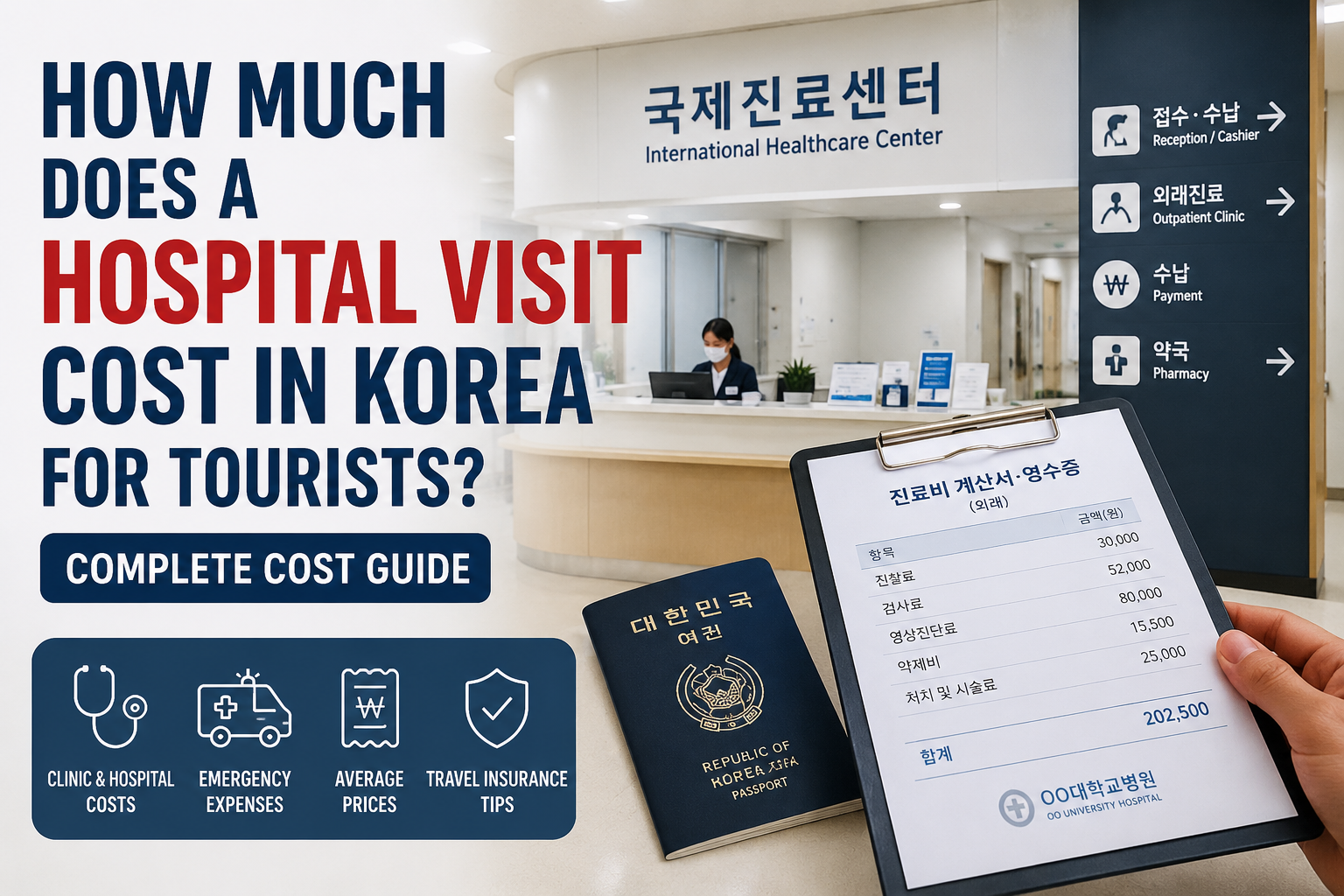
Getting sick while traveling is never part of the plan, but it can happen. A cold, food poisoning, an ankle injury, an allergic reaction, or sudden stomach pain can quickly turn a normal travel day into a hospital visit.
The good news is that South Korea has modern hospitals, efficient clinics, and many medical facilities in major cities that are used to helping foreign visitors. However, tourists are usually not covered by Korea’s National Health Insurance, so you should expect to pay the full bill first and claim reimbursement later if you have travel insurance.
This guide explains how much a hospital visit may cost in Korea for tourists, what types of medical expenses to expect, and how to prepare before your trip.
Is Healthcare Expensive in Korea for Tourists?
Compared with countries like the United States, basic healthcare in South Korea can feel relatively affordable. A simple clinic visit may not be extremely expensive, especially for minor symptoms such as a cold, sore throat, skin rash, or stomach discomfort.
However, the cost can increase quickly if you visit an emergency room, need medical tests, require an English-speaking international clinic, or stay overnight in a hospital.
Medical costs vary depending on the hospital, city, department, doctor, tests, treatment, and whether you visit a local clinic or a large university hospital.
Medical Service
Estimated Cost for Tourists
Basic clinic consultation
₩20,000–₩60,000
English-speaking clinic consultation
₩50,000–₩150,000
Specialist consultation
₩80,000–₩200,000+
Emergency room visit
₩100,000–₩500,000+
Blood test
₩20,000–₩100,000+
X-ray
₩30,000–₩100,000+
CT scan
₩200,000–₩600,000+
MRI
₩400,000–₩1,000,000+
One-day hospitalization
₩300,000–₩1,500,000+
These are general estimates only. Always confirm the expected cost with the hospital before receiving non-emergency treatment.
Common Medical Situations for Tourists
Cold, Flu, or Sore Throat
If you visit a local clinic for basic symptoms, the total cost may include a consultation fee and prescription medication. Many simple visits may cost around ₩30,000–₩80,000, depending on the clinic and medication.
Food Poisoning or Stomach Pain
For stomach problems, a doctor may prescribe medication or recommend IV fluids. Costs can vary widely, but a basic visit may cost around ₩50,000–₩150,000, while treatment with tests or IV fluids may cost more.
Minor Injury
If you sprain your ankle, fall while hiking, or need an X-ray, the bill may include consultation, imaging, bandaging, and medication. A minor injury visit may cost around ₩80,000–₩250,000 or more.
Emergency Room Visit
Emergency rooms are more expensive than regular clinics. Even if you are not hospitalized, the bill can increase if you need tests, scans, injections, or specialist care.
Yes. Tourists can visit clinics, hospitals, and emergency rooms in Korea. In major cities such as Seoul, Busan, and Incheon, large hospitals often have international healthcare centers or foreign patient services.
These services may help with appointments, interpretation, billing, medical records, and insurance documents.
How Do Tourists Pay for Hospital Treatment?
Most hospitals accept credit cards and Korean won cash. Some international clinics can also help prepare documents for insurance claims.
Before leaving the hospital, ask for:
Medical receipt
Detailed invoice
Doctor’s diagnosis or medical certificate
Prescription record
Test results, if needed
These documents may be required when you submit a claim to your travel insurance company.
Can You Go to a Pharmacy Instead?
For very minor symptoms, a Korean pharmacy may be enough. Pharmacists can recommend over-the-counter medicine for headaches, mild colds, allergies, or stomach discomfort.
However, antibiotics, stronger painkillers, and many specific medications require a doctor’s prescription. If symptoms are serious, sudden, or getting worse, visit a clinic or hospital instead.
Travel insurance is not just for major accidents. It can also help with hospital bills, emergency treatment, lost luggage, trip delays, and unexpected cancellations depending on the policy.
Even though basic healthcare in Korea may be cheaper than in some countries, serious treatment can still become expensive. A hospital stay, surgery, emergency scan, or medical evacuation can cost far more than a normal travel budget.
A hospital visit in Korea may be affordable for simple treatment, but tourists should still prepare carefully. The final cost depends on where you go, what treatment you need, and whether the visit is routine or urgent.
For minor symptoms, a local clinic or pharmacy may be enough. For serious pain, injury, breathing problems, allergic reactions, or emergency symptoms, go to a hospital or call 119 immediately.
The safest approach is simple: prepare travel insurance, keep your passport with you, save emergency numbers, and ask for all medical documents before leaving the hospital.
Frequently Asked Questions
How much does a doctor visit cost in Korea for tourists?
A simple clinic visit may cost around ₩20,000–₩60,000, but English-speaking clinics, specialists, tests, or hospital visits can cost more.
Are tourists covered by Korean health insurance?
Short-term tourists are usually not covered by Korea’s National Health Insurance, so they normally pay the full medical bill themselves.
Can I use a credit card at Korean hospitals?
Yes. Most hospitals accept major credit cards, although it is still useful to carry some Korean won for smaller clinics or pharmacies.
What number should I call in a medical emergency in Korea?
Call 119 for emergency medical assistance in Korea.
Should I buy travel insurance before visiting Korea?
Yes, it is strongly recommended. Even if basic treatment is not extremely expensive, emergency care, hospitalization, or surgery can become costly.
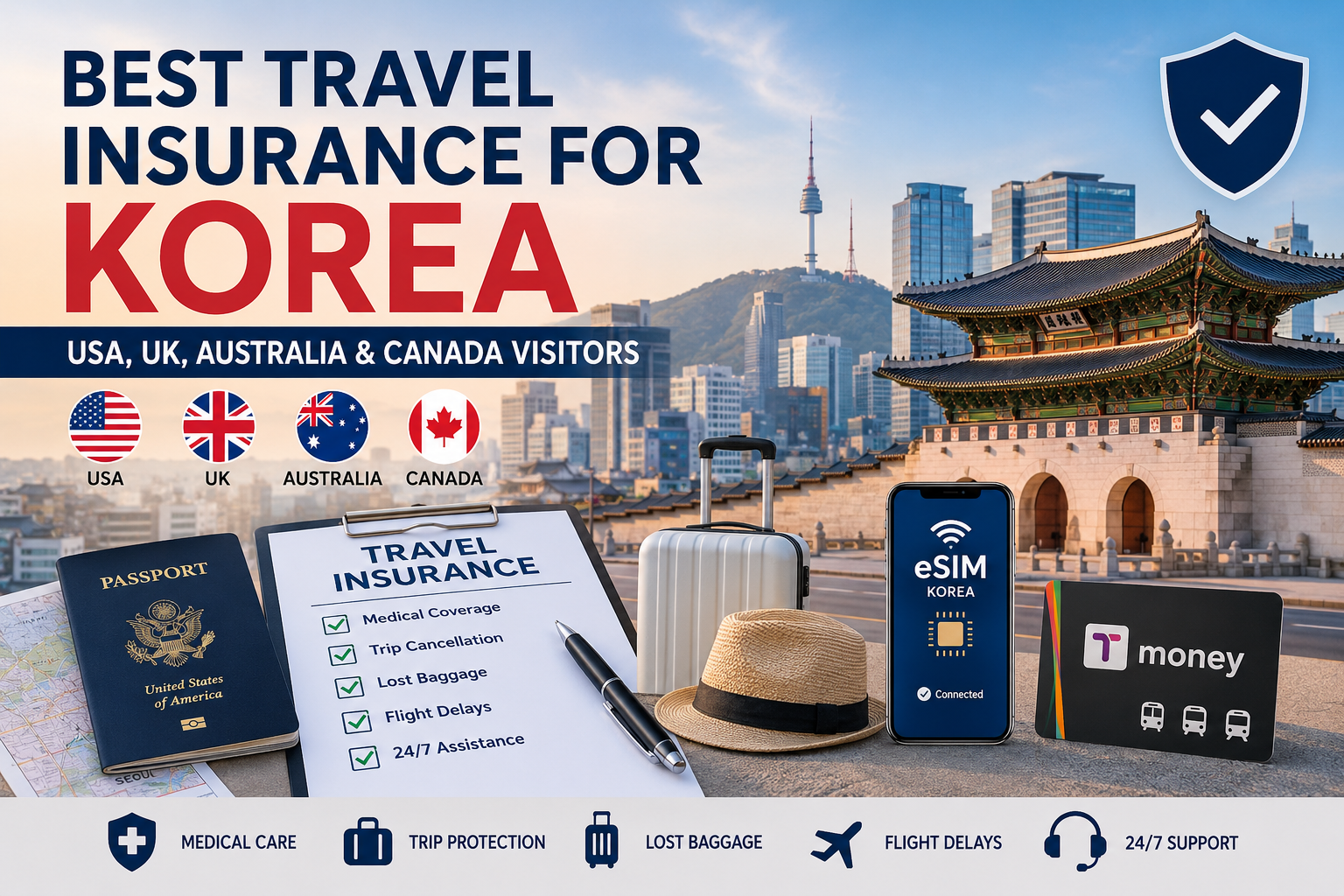
Planning a trip to South Korea from the USA, UK, Australia, or Canada? Travel insurance may not be the most exciting part of trip planning, but it can become very important if something unexpected happens before or during your Korea trip.
Many visitors focus on flights, hotels, eSIMs, T-money cards, and itineraries first. However, medical expenses, lost baggage, flight delays, trip interruptions, or emergency care can quickly affect your travel budget.
This guide explains what international travelers should look for when choosing travel insurance for South Korea, especially if you are visiting from the USA, UK, Australia, or Canada.
Why Travel Insurance Matters for South Korea
South Korea is generally a safe and convenient destination for international visitors, but travel problems can still happen. You might get sick, need a hospital visit, lose luggage, miss a connection, or face a weather-related travel delay.
When comparing travel insurance for Korea, do not only look at the price. A cheaper plan may not include the coverage you actually need.
Important coverage areas may include:
Emergency medical treatment
Hospital visits
Emergency evacuation
Trip cancellation or interruption
Flight delays
Lost or delayed baggage
Personal liability
24/7 assistance support
Before buying any plan, read the policy details carefully. Coverage can vary depending on your home country, trip length, age, pre-existing conditions, and travel activities.
Best Travel Insurance for Korea from the USA
Travelers from the USA often pay close attention to medical coverage because healthcare costs abroad can still be stressful without insurance. Even if Korea is often more affordable than the United States for some medical services, hospital visits, tests, prescriptions, or emergency care can still create unexpected costs.
For US visitors, it is wise to choose a policy that includes strong emergency medical coverage, hospital care, and travel delay protection.
UK travelers visiting South Korea should check whether their policy includes overseas medical treatment, trip cancellation, baggage protection, and emergency assistance.
Because South Korea is a long-haul destination from the UK, flight delays, missed connections, or schedule changes can also be important. If your trip includes multiple cities such as Seoul, Busan, Gyeongju, or Jeju, coverage for disruption can be useful.
Best Travel Insurance for Korea from Australia
Many Australian visitors travel to Korea for food, shopping, K-pop, skincare, skiing, hiking, or stopover trips. Depending on the season, your travel insurance needs may change.
Winter travelers should check coverage for snow-related activities if they plan to visit ski resorts. Summer travelers should consider weather disruption, especially if the itinerary includes Jeju, Busan, or domestic flights.
Best Travel Insurance for Korea from Canada
Canadian visitors should also compare travel insurance carefully before flying to South Korea. Important areas include emergency medical care, trip interruption, lost baggage, and support if you need help while abroad.
If your Korea trip includes long flights, multiple hotel bookings, or prepaid tours, cancellation and interruption coverage may be worth reviewing closely.
Is Travel Insurance Required to Visit Korea?
Travel insurance is not always required for every tourist visiting South Korea. However, requirements can change depending on nationality, visa type, travel purpose, or special situations.
Even when travel insurance is not mandatory, it can still be useful. A simple trip can become expensive if you need medical care, replace lost luggage, or change plans suddenly.
Travel Insurance for Seoul, Busan, Jeju, and Multi-City Trips
If your trip is only a short Seoul city break, your insurance needs may be different from someone visiting Seoul, Busan, Gyeongju, Jeju, and ski resorts in one itinerary.
Multi-city trips usually involve more transportation, more hotel bookings, and more opportunities for schedule changes. If you are using trains, buses, domestic flights, or ferries, travel delay and trip interruption coverage may be helpful.
For transportation planning, our ✅ T-money Card Korea Complete Guide can help you prepare for buses, subways, and everyday transportation before you arrive.
What Travel Insurance May Not Cover
Travel insurance does not cover everything. This is why reading the policy wording is important before buying.
Common exclusions may include:
Pre-existing medical conditions unless declared or covered
High-risk activities not included in the policy
Alcohol or drug-related incidents
Unattended baggage
Changing your mind about travel
Claims without proper receipts or documentation
If you are unsure about anything, contact the insurance provider before purchase.
Documents to Keep During Your Korea Trip
If you need to make a claim later, documents matter. Keep digital and physical copies of important paperwork whenever possible.
Useful documents include:
Insurance policy confirmation
Passport copy
Flight and hotel confirmations
Medical receipts
Hospital or clinic documents
Police report if needed
Photos of damaged or lost items
Proof of delays or cancellations
When Should You Buy Travel Insurance for Korea?
Many travelers buy insurance soon after booking major trip expenses such as flights or hotels. This can be useful because some cancellation benefits may only apply after the policy is active.
If your Korea trip includes expensive prepaid bookings, tours, hotels, domestic flights, or seasonal activities, buying earlier can give you more time to review your coverage.
Final Thoughts
The best travel insurance for Korea depends on where you are traveling from, how long you will stay, your health situation, your itinerary, and the activities you plan to do.
Visitors from the USA, UK, Australia, and Canada should compare medical coverage, emergency support, baggage protection, delay coverage, and cancellation benefits before choosing a plan.
Before your trip, take a few minutes to compare your options and choose a plan that matches your Korea itinerary. You can ✅ Compare Travel Insurance Plans for South Korea before departure so you are better prepared if something unexpected happens.
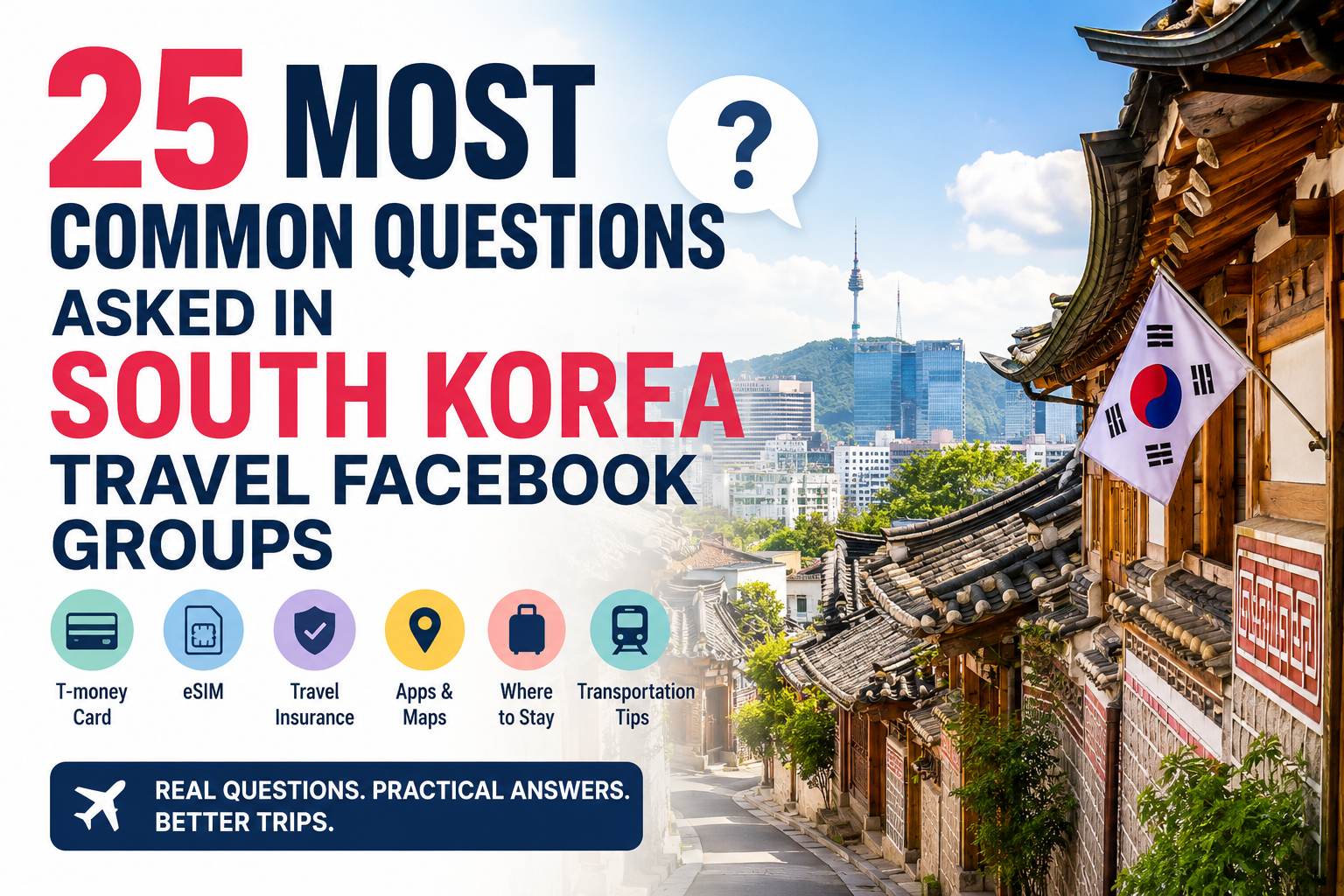
Planning a trip to South Korea can feel exciting, but also confusing. If you have joined a South Korea travel tips and planning Facebook group, you have probably seen the same questions appear again and again.
Travelers often ask about T-money cards, eSIMs, cash, taxis, Naver Map, safety, airport transfers, travel insurance, and where to stay in Seoul.
This guide brings those common questions together in one place so you can plan your Korea trip with more confidence.
1. Do I Need Cash in South Korea?
South Korea is very card-friendly, but carrying a small amount of Korean won is still useful. Cash can help at traditional markets, small food stalls, older local restaurants, and some rural areas.
For most travelers, using a credit card for hotels, shopping, restaurants, and cafés is normal. Still, it is smart to keep some cash for backup.
If you want a deeper breakdown of cards, cash, and mobile payments, our ✅ Complete Guide to Paying in South Korea explains what travelers should prepare before arriving.
2. Do I Need a T-money Card?
Yes, most visitors should get a T-money card or another Korean transportation card. Korea’s official tourism information explains that transportation cards are rechargeable prepaid cards that can be used for public transportation and often for payments at stores as well.
A T-money card is useful for subways, buses, some taxis, and convenience stores. It also makes transfers much easier than buying single tickets every time.
Planning to use public transportation? Our ✅ T-money Card Korea Complete Guide explains where to buy a card, how to top it up, and how to use it on buses and subways.
3. Which eSIM Should I Buy for Korea?
Many travelers prefer buying an eSIM before arriving in Korea. With an eSIM, you can connect to mobile data soon after landing without waiting in line for a physical SIM card.
This is especially helpful because you may need internet immediately for maps, taxi apps, hotel addresses, translation, and airport transfer details.
Need Mobile Internet in Korea?
Setting up an eSIM before departure lets you use maps, translation apps, and ride-hailing services as soon as you arrive.
Google Maps can be useful for checking places, but many travelers use Naver Map or KakaoMap for better local navigation. VisitKorea also lists Naver Map as a helpful app for route suggestions, estimated travel time, and local place information.
For Korea travel, it is best to install Naver Map before your trip and save your hotel, airport, stations, restaurants, and attractions in advance.
5. Is Korea Safe for Solo Travelers?
South Korea is generally considered a safe destination for solo travelers, including solo female travelers. Many visitors feel comfortable walking around busy areas at night.
However, normal travel caution is still important. Watch your belongings, avoid drinking too much in unfamiliar areas, and use official transportation when returning late at night.
6. Do I Need Travel Insurance for Korea?
Travel insurance is not something travelers should ignore. Even if your trip goes smoothly, unexpected illness, flight delays, lost luggage, or cancellations can create extra costs.
It can be especially useful if your Korea itinerary includes multiple cities, outdoor activities, winter travel, or expensive prepaid bookings.
7. What Apps Should I Download Before Going to Korea?
The most commonly recommended apps are Naver Map, KakaoMap, Kakao T, Papago, KakaoTalk, and a subway app. These apps help with navigation, taxis, translation, messaging, and public transportation.
If you only download one map app, choose Naver Map or KakaoMap. If you plan to take taxis, Kakao T is very helpful.
8. Can I Use Uber in Korea?
Uber is available in Korea in some form, but many locals and travelers use Kakao T for taxis. Kakao T is one of the most useful apps for airport rides, late-night returns, and areas where hailing a taxi is difficult.
9. Where Should First-Time Visitors Stay in Seoul?
For first-time visitors, popular areas include Myeongdong, Hongdae, Insadong, Jongno, Gangnam, and Seoul Station. The best area depends on your travel style.
Myeongdong is convenient for shopping and sightseeing. Hongdae is better for nightlife and cafés. Insadong and Jongno are good for culture, palaces, and traditional streets.
10. How Many Days Do I Need in Korea?
For a first trip, 5 to 7 days is a comfortable starting point. With 5 days, you can focus on Seoul and one day trip. With 7 to 10 days, you can add Busan, Gyeongju, Jeju, or another regional city.
11. Is Seoul Expensive?
Seoul can be affordable or expensive depending on your travel style. Public transportation is reasonably priced, convenience stores are useful, and casual Korean meals can be budget-friendly.
Hotels, cafés, shopping, skincare, theme parks, and nightlife can increase your total cost quickly.
12. Should I Book Airport Transfer in Advance?
If you arrive during the day and travel light, airport trains and buses are easy options. If you arrive late at night, travel with family, or carry heavy luggage, booking a private transfer or using a taxi may be more comfortable.
13. Can I Use My Foreign Credit Card Everywhere?
Visa and Mastercard are widely accepted in Korea. However, some smaller shops, machines, or local services may not accept foreign cards. This is why carrying a backup card and some cash is a good idea.
14. Is English Widely Spoken in Korea?
English is common in airports, hotels, major tourist attractions, and some restaurants in Seoul. Outside tourist areas, English may be limited.
Using Papago or another translation app can make your trip much easier.
15. What Should I Know About Korean Restaurants?
Some restaurants require one order per person. Some BBQ restaurants may require a minimum of two servings. In busy local restaurants, menus may be only in Korean, so a translation app is useful.
16. Do I Need to Tip in Korea?
Tipping is not a normal part of Korean culture. In most restaurants, cafés, taxis, and hotels, tipping is not expected.
17. Is Korea Good for Family Travel?
Yes. Korea is a strong family travel destination because public transportation is convenient, cities are clean, and there are many family-friendly attractions.
Families often enjoy aquariums, theme parks, palaces, parks, museums, cafés, shopping malls, and easy day trips from Seoul.
18. What Is the Best Season to Visit Korea?
Spring and autumn are the most popular seasons. Spring is famous for cherry blossoms, while autumn is known for cooler weather and fall foliage.
Summer can be hot and humid, while winter can be very cold but good for snow, ski trips, and winter festivals.
19. Should I Visit Busan or Jeju?
Busan is easier to add to a Seoul itinerary because it is connected by KTX train. Jeju is beautiful but usually requires a domestic flight and more planning.
If you have limited time, Busan may be easier. If you want nature, beaches, and a slower trip, Jeju can be worth it.
20. Are Convenience Stores Useful in Korea?
Yes. Korean convenience stores are extremely useful for travelers. You can buy drinks, snacks, simple meals, umbrellas, chargers, toiletries, and sometimes transportation card top-ups.
21. Can I Travel Korea Without Speaking Korean?
Yes, many travelers visit Korea without speaking Korean. However, learning a few simple phrases helps a lot.
Useful phrases include hello, thank you, excuse me, how much is it, and where is this place?
22. What Should I Pack for Korea?
Pack based on the season. Comfortable shoes are very important because travelers often walk much more than expected in Seoul.
Also bring a universal adapter, portable charger, medication, travel documents, and a backup payment card.
23. What Emergency Numbers Should I Know?
For emergencies in Korea, travelers should know 112 for police and 119 for fire or ambulance. Korea also has the 1330 Travel Helpline, which provides tourist information by phone and real-time chat.
24. What Is the Biggest Mistake First-Time Visitors Make?
The biggest mistake is trying to do too much in one day. Seoul looks easy on a map, but travel time, walking, crowds, and café or restaurant waiting times can slow you down.
Choose fewer places and enjoy them properly.
25. Are Facebook Travel Groups Useful for Korea Planning?
Yes, Facebook travel groups can be very useful because they show real questions from real travelers. You can learn from recent experiences, mistakes, and recommendations.
However, always double-check important information such as visa rules, entry requirements, medical advice, and transportation updates through official sources.
Final Thoughts
South Korea travel Facebook groups are helpful because they show what travelers are actually worried about before arriving. Most questions come down to a few practical topics: money, internet, transportation, safety, apps, accommodation, and itinerary planning.
If you prepare these basics before your trip, your Korea travel experience will feel much smoother from the moment you land.
Introduction: Should You Worry About Korea’s Rainy Season?
If you are planning to visit South Korea in summer, you will probably hear one word often: jangma.
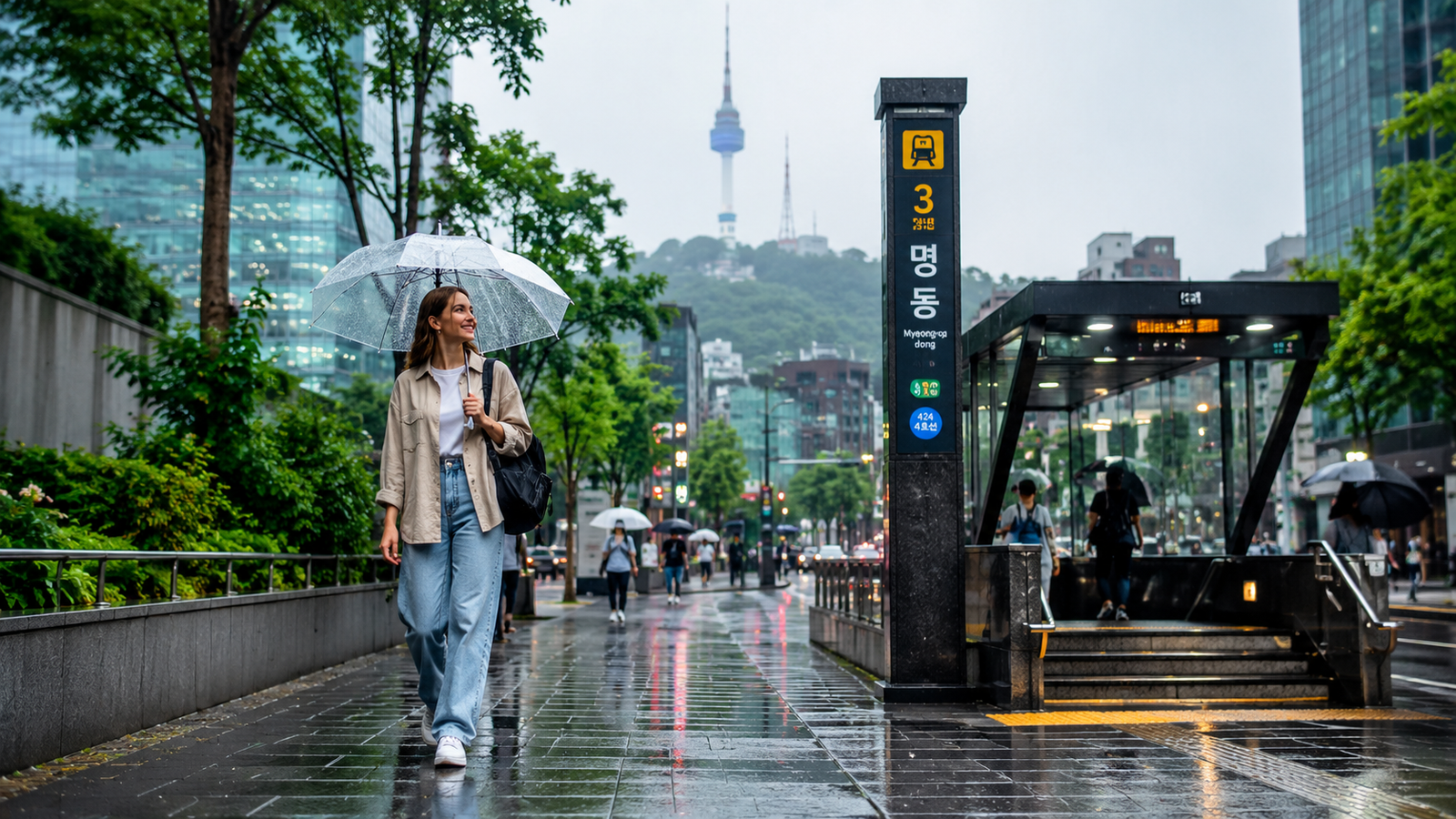
Jangma refers to Korea’s summer rainy season. It usually arrives around early to mid-summer and brings humid air, cloudy skies, sudden downpours, slippery streets, and occasional travel delays. For first-time visitors, it can feel confusing because Korea’s rainy season is not exactly the same as the tropical monsoon seasons in Southeast Asia.
The good news is that Korea is still very travel-friendly during the rainy season. Seoul’s subway system continues to run efficiently, convenience stores sell umbrellas almost everywhere, and many of Korea’s best indoor attractions are easy to reach by public transportation.
The key is not to cancel your trip. The key is to prepare differently.
This guide explains when Korea’s rainy season usually happens, what to pack, how to adjust your itinerary, where to stay, what to avoid during heavy rain, and how Korea’s rainy season is different from the rainy seasons in countries like Thailand, Vietnam, Japan, and Taiwan.
When Is the Rainy Season in Korea?
Korea’s rainy season is usually associated with June and July, especially from mid-June to mid-July. Visit Seoul describes summer in Seoul as hot and humid, with the Korean rainy season, or jangma, beginning around mid-June and continuing for about a month. It also notes that July is typically the month when precipitation peaks in Seoul.
However, travelers should not treat these dates as fixed.
Some years, the rainy season starts earlier. Some years, it arrives later. In recent years, weather patterns have become less predictable, and Korea’s summer weather can shift between long cloudy periods, intense rainfall, humid heat, and typhoon-related weather.
A realistic way to think about it is this:
June: Warm weather begins, and rainy days may increase toward the second half of the month.
July: Often the wettest and most humid month for travelers.
August: Usually hotter, with heat waves and possible typhoon influence.
September: Less like the main rainy season, but typhoons or localized heavy rain can still affect travel.
If you are visiting Korea between late June and August, you should prepare for both rain and heat.
Is Korea’s Rainy Season the Same Every Year?
No. Korea’s rainy season changes from year to year.
Many travel guides describe the rainy season as if it happens on the same dates every summer, but that is not how it works in real life. Korea’s summer rainfall depends on atmospheric conditions, seasonal fronts, typhoons, and regional weather patterns.
In 2026, Korean media reported that the Korea Meteorological Administration no longer gives a fixed official prediction for the exact timing of the monsoon season, partly because precipitation patterns have become more variable.
For travelers, this means one important thing:
Do not plan your Korea summer trip based only on average rainy-season dates. Check the weather forecast close to your travel dates.
A day that looks rainy two weeks in advance may become partly cloudy. A day that looks clear may suddenly bring heavy rain. This is why flexible planning is more important than perfect planning during Korea’s rainy season.
How Korea’s Rainy Season Is Different from Other Asian Monsoons
Many foreign visitors hear the word “monsoon” and imagine Southeast Asian-style tropical rain. But Korea’s rainy season feels different.
Korea’s rainy season is usually shorter and more concentrated than the long rainy seasons in many tropical destinations. It is also strongly connected to urban travel conditions: subway transfers, wet sidewalks, crowded taxi apps, flooded underpasses, slippery stairs, and sudden changes in outdoor plans.
Korea vs Other Rainy Seasons in Asia
Destination
Typical Rainy Season Pattern
What Travelers Should Know
South Korea
Usually concentrated around June and July, followed by hot, humid weather and possible typhoons later in summer
Rain can be sudden and heavy, but public transportation remains useful in major cities
Japan
Japan’s rainy season, called tsuyu, usually brings cloudy, wet weather before peak summer heat
Similar to Korea in some ways, but timing varies by region
Thailand
Longer tropical rainy season, often from around May to October
Rain may come as intense tropical showers, often with very humid conditions
Vietnam
Rainy season differs greatly by region because the country is long from north to south
You must check the specific city, such as Hanoi, Da Nang, or Ho Chi Minh City
Taiwan
Rainy periods and typhoon season can both affect travel
Typhoon planning is especially important for flights and coastal travel
Korea is not a tropical country. It has four distinct seasons. Summer is hot and humid, but the rainy season is not usually a six-month travel condition like in some tropical destinations. Visit Korea describes Korea as a mid-latitude country with four distinct seasons, with summer characterized by hot and humid weather.
So, if you have traveled in Thailand or Vietnam during the rainy season, do not assume Korea will feel exactly the same.
In Korea, the problem is often not just the rain itself. It is the combination of:
sudden downpours,
humid air,
wet shoes,
crowded subway stations,
delayed taxis,
slippery sidewalks,
and outdoor plans that need a backup.
Does It Rain All Day During Korea’s Rainy Season?
Not always.
Some rainy-season days are wet from morning to night. But many days are more mixed. You may wake up to cloudy skies, see sunshine for a few hours, experience sudden heavy rain in the afternoon, and then walk outside again in humid evening air.
This is why Korea’s rainy season can be tricky for tourists. It may not look serious in the morning, but the weather can change quickly.
A smart rainy-season itinerary should not be completely outdoor or completely indoor. The best approach is:
one main outdoor plan + one indoor backup plan each day.
For example:
Visit Gyeongbokgung Palace in the morning.
Keep a museum, shopping mall, or café area as your backup.
Plan a subway-friendly dinner location.
Avoid long outdoor transfers late at night if heavy rain is expected.
This style of planning keeps your trip flexible without making it feel limited.
What Makes Korea’s Rainy Season Difficult for Tourists?
Korea’s rainy season is not impossible to travel in, but it can create small problems that affect your daily comfort.
1. High Humidity
The rain is only part of the problem. Humidity can make your clothes feel damp, your hair lose shape, and your body feel tired faster than usual.
Even if the temperature is not extremely high, the air can feel heavy.
2. Wet Shoes and Socks
This is one of the most common mistakes travelers make. They pack nice sneakers or fashion shoes, but those shoes become wet on the first rainy day and stay uncomfortable for the rest of the trip.
During Korea’s rainy season, shoes matter more than many visitors expect.
3. Slippery Sidewalks and Subway Stairs
Korea has many underground stations, stairs, slopes, tiled sidewalks, and wet crosswalks. These can become slippery during heavy rain.
If you are carrying luggage, shopping bags, camera gear, or children’s items, rainy-day movement can feel much harder.
4. Crowded Subway Entrances
Seoul’s subway system is one of the best ways to travel during rainy weather. But station entrances can become crowded when everyone stops to open umbrellas, shake off rain, or wait for the rain to weaken.
5. Taxi Demand Increases
When it rains heavily, more people try to call taxis. Apps like Kakao T or Uber can become harder to use during peak rain hours, especially around stations, nightlife areas, hotels, and business districts.
6. Outdoor Attractions May Become Less Comfortable
Palaces, hanok villages, hiking trails, traditional markets, riverside parks, and coastal areas can still be beautiful in light rain. But during heavy rain, they may become uncomfortable or unsafe.
What to Pack for Korea’s Rainy Season
Packing well can make a big difference. You do not need to bring too much, but you should bring the right items.
Essential Rainy-Season Packing List
Item
Why You Need It
Compact umbrella
Easy to carry and useful almost every day
Quick-dry T-shirts
Cotton can stay damp for a long time
Light rain jacket
Better than an umbrella during windy rain
Water-resistant shoes
Wet shoes can ruin a travel day
Extra socks
Small item, big comfort difference
Waterproof phone pouch
Useful during sudden heavy rain
Zip bags
Good for wet clothes, receipts, and electronics
Small towel
Helpful before entering cafés, trains, or hotels
Portable fan
Useful in humid subway stations and outdoor queues
Lightweight backpack cover
Protects camera gear, documents, and chargers
You do not need to overpack. In Korea, umbrellas, socks, towels, rain ponchos, waterproof pouches, and basic travel items are easy to buy at convenience stores, Daiso, subway shopping areas, and large supermarkets.
But if you are arriving late at night, traveling with children, or going directly from the airport to another city, it is better to prepare the basics before arrival.
What Not to Wear During Korea’s Rainy Season
The biggest mistake is not simply getting wet. The real problem is wearing clothes and shoes that stay wet for the rest of the day.
Try to avoid:
thick jeans,
heavy cotton hoodies,
leather shoes,
slippery flip-flops,
white fabric sneakers,
long pants that touch the ground,
heavy backpacks without rain covers,
and clothes that are difficult to dry in a hotel room.
Instead, choose:
breathable shirts,
quick-dry pants,
comfortable walking sandals or water-resistant sneakers,
thin layers,
and a small crossbody bag or backpack that can handle rain.
For Korea summer travel, comfort usually matters more than perfect styling. You can still dress nicely, but rainy-season outfits should be practical enough for subway stairs, wet sidewalks, and sudden weather changes.
Transportation Tips During Heavy Rain in Korea
Subway
The subway is usually the best transportation option during the rainy season, especially in Seoul.
It is not completely free from delays or crowding, but it is generally more reliable than road traffic during heavy rain. Subway stations also connect many shopping malls, department stores, underground passages, and tourist areas.
Rainy-season tip:
Choose routes with fewer outdoor transfers.
Even if one route is slightly longer, it may be better if it keeps you underground for most of the journey.
For a broader overview of subway routes, buses, taxis, and airport transfers, read our Transportation in Korea: Complete Guide for Tourists before planning your rainy-season itinerary.
Bus
Buses can be useful, but they are more affected by road traffic. During heavy rain, buses may be delayed, and waiting at bus stops can be uncomfortable.
Taxis are convenient, but rainy days can make them harder to catch.
When heavy rain starts, many people request taxis at the same time. This can increase waiting times, especially in areas like Myeongdong, Hongdae, Gangnam, Itaewon, Seoul Station, and major hotel districts.
If you plan to use taxi apps, make sure your mobile data works well.
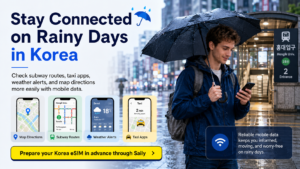
Rainy days in Korea often mean checking subway routes, taxi apps, weather alerts, and map directions more often than usual. Having mobile data ready before arrival can make your rainy-season trip much easier.
영prepare your Korea eSIM in advance through Saily
Airport Transfer
If you are arriving or leaving Korea during the rainy season, give yourself more time than usual.
The AREX train between Incheon Airport and Seoul Station is often a stable option because it is less affected by road traffic. Airport buses and taxis can still be useful, but they may be affected by heavy rain, road congestion, or local flooding.
Where to Stay During Korea’s Rainy Season
Where you stay matters more during rainy season than during dry weather.
In spring or autumn, it may be fine to stay in a quiet neighborhood 15 minutes from the nearest subway station. But during heavy summer rain, that 15-minute walk can feel much longer, especially with luggage.
Good access to palaces, museums, and central Seoul
Best Indoor Backup Ideas for Rainy Days in Korea
Rainy days do not have to ruin your trip. Korea has many excellent indoor places that are easy to combine with outdoor sightseeing.
Seoul Rainy-Day Ideas
National Museum of Korea
COEX Mall
Starfield Library
The Hyundai Seoul
Lotte World Mall
Seoul Museum of History
War Memorial of Korea
Myeongdong shopping streets and underground shopping
Hongdae cafés and photo booths
Gangnam beauty and shopping areas
Busan Rainy-Day Ideas
Shinsegae Centum City
Busan Museum of Art
Spa Land
Local cafés
Jagalchi Market nearby indoor food areas
Jeju Rainy-Day Ideas
Museums
Cafés
Indoor markets
Tea museums
Wellness spas
However, Jeju requires extra caution during heavy rain or strong wind because flights, ferries, coastal roads, and outdoor attractions may be affected.
The best rainy-season itinerary is not an indoor-only itinerary. It is a flexible itinerary with indoor backup options.
Places to Avoid During Heavy Rain in Korea
During light rain, many places are still fine to visit. A palace in gentle rain can be beautiful. A café street on a cloudy day can feel cozy. A traditional market can still be fun.
But during heavy rain, some places should be avoided.
Avoid These During Heavy Rain
riverside walking paths,
streams and creeks,
underpasses,
low-lying roads,
mountain trails,
valleys,
waterfalls,
coastal rocks and breakwaters,
construction areas,
and steep alleys with slippery surfaces.
The UK Foreign, Commonwealth & Development Office warns that South Korea can experience heavy rainfall during the summer rainy season, usually in June and July, and that torrential rain may cause flooding near rivers and creeks, including built-up areas. It also notes that landslides are possible in hilly and mountainous areas.
This is especially important for travelers planning hiking, riverside cycling, camping, island trips, or rural day trips.
If a heavy rain warning is issued, change your plan. Do not try to “push through” bad weather just because the attraction was on your itinerary.
Typhoons and Late-Summer Weather
Korea’s main rainy season is usually associated with June and July, but travelers should also understand late-summer typhoon risk.
Typhoons do not affect every traveler, every city, or every summer trip. But when they do affect Korea, they can cause flight delays, ferry cancellations, strong winds, heavy rain, coastal danger, and temporary closure of outdoor attractions.
This is more relevant if you are visiting:
Jeju Island,
Busan,
coastal areas,
islands,
mountain regions,
or multiple cities by domestic flight.
If you are traveling in August or September, check the forecast more carefully before booking tight transportation schedules.
Travel Insurance Tips for Korea’s Rainy Season
Most travelers do not need to panic about Korea’s rainy season. But travel insurance can be worth considering if your trip includes:
domestic flights,
island travel,
hiking,
expensive hotel bookings,
multiple city transfers,
medical concerns,
or a tight schedule that could be affected by weather delays.
Heavy rain can sometimes cause transportation disruption, route changes, or unexpected cancellations. In 2025, South Korea experienced severe torrential rain events that caused flooding, evacuations, infrastructure damage, and landslides in some regions. Reuters reported deadly flooding and landslide damage after days of heavy rain in July 2025.
For ordinary city travelers, this does not mean Korea is unsafe. It simply means that summer weather should be treated seriously.
If you are visiting Korea during the rainy season, especially with domestic flights, hiking plans, island trips, or multiple city transfers, it may be worth comparing travel insurance before departure.
If you are not sure whether travel insurance is necessary for your Korea trip, our full guide to Travel Insurance for South Korea – Complete 2026 Guide explains what travelers should consider before departure.
Useful Weather and Safety Apps for Korea’s Rainy Season
During Korea’s rainy season, you may check your phone more often than usual.
Useful app categories include:
weather forecast apps,
subway route apps,
map apps,
taxi apps,
translation apps,
and emergency alert notifications.
In Korea, weather can change quickly during summer. Checking the forecast once in the morning is helpful, but checking it again before long outdoor activities is even better.
The Korea Meteorological Administration provides official weather information and severe weather alerts, including heavy rain, typhoon, heatwave, strong wind, and other warning categories.
Before leaving your hotel, check:
chance of rain,
hourly precipitation,
wind,
humidity,
heat index,
and any heavy rain warnings.
Final Rainy Season Checklist for Korea
Before your summer trip to Korea, use this checklist.
Before You Fly
Check Korea’s weather forecast close to your travel dates.
Pack quick-dry clothes.
Bring or plan to buy a compact umbrella.
Prepare water-resistant shoes.
Set up mobile data or eSIM before arrival.
Consider travel insurance if your itinerary includes flights, islands, hiking, or multiple cities.
Choose accommodation near a subway station.
During Your Trip
Check the hourly forecast each morning.
Keep one indoor backup plan each day.
Use the subway when roads are affected by rain.
Avoid rivers, streams, mountains, and underpasses during heavy rain.
Carry extra socks or a small towel.
Do outdoor attractions early if the forecast shows afternoon rain.
Give yourself extra time for airport transfers.
When Heavy Rain Is Forecast
Do not hike.
Avoid riverside parks and low-lying areas.
Avoid coastal rocks and breakwaters.
Move indoor plans earlier.
Check transportation updates.
Do not ignore local alerts.
Final Thoughts: Is Korea Worth Visiting During the Rainy Season?
Yes, Korea is still worth visiting during the rainy season.
You may not get perfect blue skies every day. You may need to change outdoor plans. Your shoes may get wet. You may spend more time checking weather apps than expected.
But Korea is also one of the easiest countries to travel in during bad weather because major cities have excellent subway systems, many indoor attractions, convenient stores everywhere, and dense neighborhoods where food, shopping, cafés, and transportation are close together.
The secret is to travel with flexibility.
Do not build a summer Korea itinerary that depends on perfect weather every day. Build an itinerary that works even when it rains.
If you prepare well, Korea’s rainy season can still be a memorable part of your trip — not because the weather is perfect, but because you know how to move, where to stay, what to pack, and how to adjust your plans like a smart traveler.
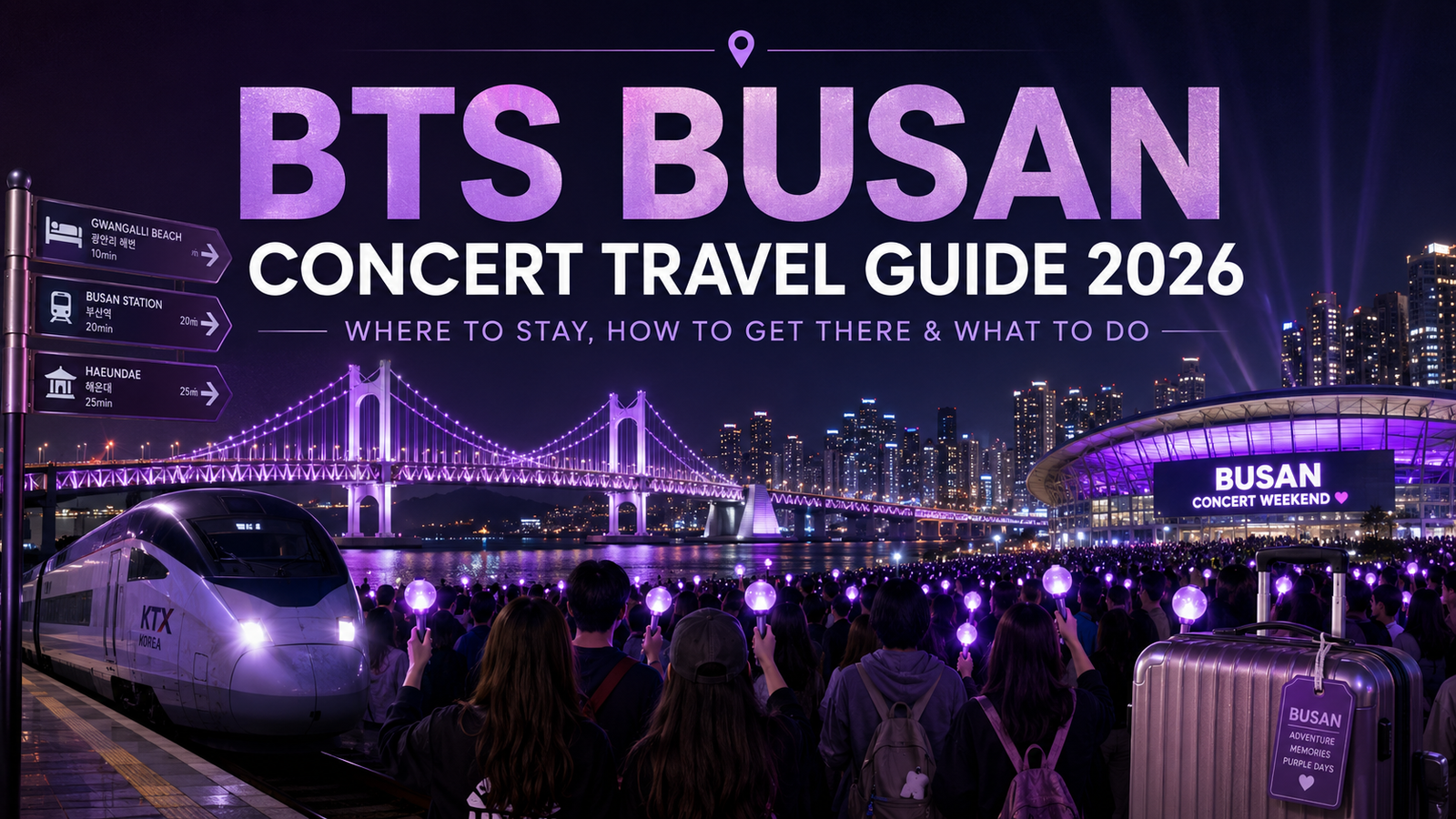
BTS is returning to Busan in June 2026, and for ARMY around the world, this is not just another concert trip.
It is a chance to experience BTS in Korea, feel the energy of Busan, meet fans from different countries, and turn one concert weekend into a meaningful travel memory.
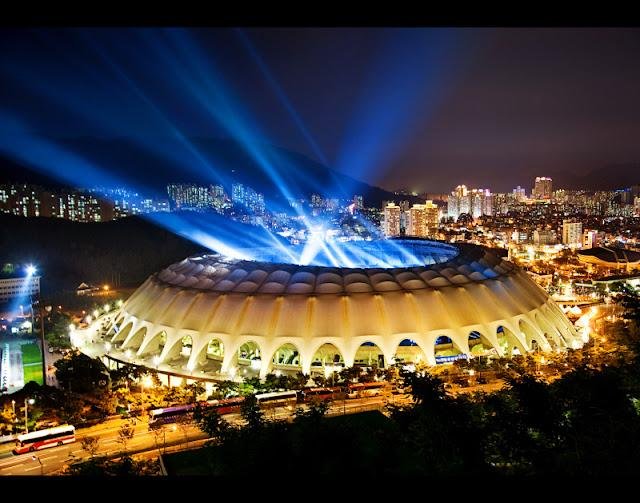
The BTS WORLD TOUR ‘ARIRANG’ IN BUSAN is scheduled for June 12 and June 13, 2026, at Busan Asiad Main Stadium, with both shows starting at 7:00 PM KST. The official BTS tour page lists Busan Asiad Main Stadium for June 12 and June 13, and Korean ticket information confirms the venue, time, age limit, and NOL Ticket as the official ticket seller.
This guide is written for international ARMY members who are planning to travel to Korea for the Busan concert. Instead of only explaining the concert venue, this guide will help you plan the full journey: where to stay, how to get to Busan, how to reach the stadium, what to do before and after the show, and how to prepare for a very busy concert weekend in Korea.
BTS Busan Concert 2026: Key Details
Here are the basic details confirmed so far.
Item
Details
Event
BTS WORLD TOUR ‘ARIRANG’ IN BUSAN
Dates
June 12–13, 2026
Time
7:00 PM KST
Venue
Busan Asiad Main Stadium
City
Busan, South Korea
Official ticket seller
NOL Ticket
Online streaming
Available through Weverse Concerts
Age limit
9 years and older
The Weverse Concerts page also lists online live streaming for both June 12 and June 13, opening at 6:00 PM KST and starting at 7:00 PM KST. This means fans who cannot attend in person may still have an official way to watch the show online.
However, if you are planning to attend in person, you should prepare early. Busan will likely be extremely busy around the concert dates, especially near the stadium, Busan Station, Seomyeon, Haeundae, and Gwangalli.
Why Busan Is Special for BTS Fans
Busan is already one of South Korea’s most loved travel cities, but for BTS fans, it has even more meaning.
It is the hometown of Jimin and Jungkook, and many international ARMY members already include Busan in their Korea travel plans because of its connection to BTS, its ocean views, night scenery, seafood markets, and relaxed coastal atmosphere.
During the concert period, Busan is expected to become a citywide festival destination. Busan Metropolitan City has announced large-scale entertainment content connected to BTS WORLD TOUR ‘ARIRANG’ in Busan, aiming to create a citywide atmosphere for fans before and during the concert weekend.
This is why your trip should not be planned as only “go to the stadium and leave.” If you plan well, Busan can become one of the most memorable parts of your entire Korea trip.
Where Is Busan Asiad Main Stadium?
Busan Asiad Main Stadium is located in Yeonje-gu, Busan. It is part of the Busan Sports Complex area and is one of the city’s major stadium venues.
For public transportation, the most practical subway stations are usually:
Both are connected to the stadium area, but on concert day, you should expect heavy crowds, long walking lines, controlled entrances, and possible route guidance from staff.
Do not plan to arrive at the venue at the last minute. For a major BTS concert, arriving “just one hour before” may feel too rushed, especially if you need to find your gate, use the restroom, buy merchandise, take photos, or meet friends.
A safer plan is to arrive in the stadium area several hours before the show.
Best Areas to Stay in Busan for the BTS Concert
Choosing the right area to stay in Busan is one of the most important decisions for this trip.
If you are still comparing hotel areas, budget ranges, and booking timing for your Korea trip, our How Much Does Accommodation Cost in South Korea in 2026? guide can help you understand typical accommodation prices before concert demand increases.
The best area depends on your travel style: convenience, nightlife, beach views, shopping, or easy transport.
1. Seomyeon: Best Overall Area for First-Time Visitors
Seomyeon is one of the best areas to stay for international fans because it is central, lively, and well connected by subway
.
It is not directly next to the stadium, but it gives you easier access to many parts of Busan. You can reach shopping streets, restaurants, cafes, convenience stores, and subway lines easily.
Seomyeon is especially good if:
This is your first time in Busan
You want restaurants and cafes near your hotel
You plan to explore Busan before or after the concert
You want a balanced location between the stadium, Busan Station, and beach areas
For many international visitors, Seomyeon is the safest choice because it is practical rather than too isolated.
Best for: first-time visitors, solo travelers, friends, fans who want convenience.
2. Busan Station Area: Best for KTX Travelers
If you are coming from Seoul by KTX, staying near Busan Station can be very convenient.
This area is practical for travelers who arrive late, leave early, or plan to move between Seoul and Busan quickly. It is also useful if your Korea itinerary includes Seoul before or after the BTS concert.
Busan Station is not the most “beautiful” area of the city, but it is one of the most convenient transport bases.
Stay near Busan Station if:
You are arriving by KTX from Seoul
You have large luggage
You are leaving Busan early the next morning
You want easy access to trains and taxis
Best for: KTX travelers, short stays, practical itineraries.
3. Haeundae: Best for Beach, Hotels, and a Vacation Feeling
Haeundae is Busan’s most famous beach area. It has many hotels, restaurants, cafes, and a more international vacation atmosphere.
It is farther from the stadium than Seomyeon, but many visitors still choose Haeundae because it feels like a proper Busan trip. If you are staying several nights, Haeundae can make your concert trip feel more like a holiday.
Haeundae is especially good if:
You want to enjoy the beach
You prefer modern hotels
You are staying in Busan for more than one night
You want to relax before or after the concert
The downside is that travel time to and from the stadium may be longer, especially after the concert when many fans are trying to move at the same time.
Best for: beach lovers, couples, longer stays, fans who want a vacation mood.
4. Gwangalli: Best for Night Views and Post-Concert Atmosphere
Gwangalli is famous for its view of Gwangan Bridge, also called Diamond Bridge. It has a beautiful night view, many cafes, restaurants, and a youthful atmosphere.
During the BTS concert period, Gwangalli may become even more meaningful because BTS THE CITY ARIRANG Busan includes a drone light show at Gwangandaegyo Bridge on June 12 and June 13, according to the Weverse notice.
Gwangalli is a great choice if you want to enjoy Busan’s night scenery after the concert weekend, but you should not assume it will be quiet. It may be crowded with fans and tourists.
Best for: night views, photos, cafes, emotional post-concert memories.
5. Sajik / Sports Complex Area: Best for Stadium Proximity
Staying near the stadium can reduce your travel stress on concert day.
However, this area may have fewer hotel options compared with Seomyeon, Haeundae, or Busan Station. It may also become expensive or fully booked early.
Stay near Sajik or the Sports Complex area if:
Your top priority is being close to the venue
You do not care much about beach or nightlife
You want to minimize subway movement after the show
Best for: concert-first travelers, fans who want the simplest stadium access.
Recommended Hotel Strategy for ARMY
For most international ARMY members, I would recommend this order:
Seomyeon if you want the best balance
Busan Station if you are using KTX
Haeundae if you want a beach vacation feeling
Gwangalli if you want night views and photo spots
Sajik / Sports Complex if you want to stay close to the stadium
Concert weekends can make hotels in Busan more expensive or harder to book, especially near major transport areas and tourist districts.
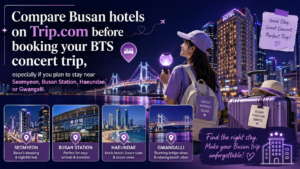
Compare Busan hotels on Trip.com before booking your BTS concert trip, especially if you plan to stay near Seomyeon, Busan Station, Haeundae, or Gwangalli.
Some travelers may also fly directly to Gimhae International Airport, which is the main airport for Busan.
Option 1: Seoul to Busan by KTX
The KTX is one of the most popular ways to travel from Seoul to Busan.
You can take the KTX from Seoul Station to Busan Station. The journey usually takes around 2.5 to 3 hours depending on the train.
This is often the best option if:
You arrive in Korea through Incheon Airport
You want to spend time in Seoul before Busan
You prefer city-center to city-center travel
You have a clear schedule
For concert week, book your train as early as possible. Seats may sell out or become limited because many fans may travel from Seoul to Busan around the same dates.
Option 2: Fly to Gimhae International Airport
If you can find a direct or connecting flight to Gimhae International Airport, this may be easier because you arrive directly in the Busan area.
From Gimhae Airport, you can move into Busan by light rail, subway, taxi, or airport transport depending on your hotel location.
This option may be better if:
You are flying from another Asian city
You do not need to visit Seoul first
You want to reduce long-distance travel inside Korea
Option 3: Express Bus from Seoul to Busan
Express buses are usually cheaper than KTX, but the travel time is much longer.
This option is possible, but for a major concert trip, it may not be the most comfortable choice unless you are on a tight budget.
If you take a bus, avoid arriving in Busan too close to the concert time. Traffic, fatigue, and luggage can make the day stressful.
How to Get from Busan Station to the Stadium
If you arrive at Busan Station by KTX, you can use the subway, taxi, or shuttle services if available.
On normal days, taxis may be convenient. But on BTS concert day, you should be careful. Traffic around the stadium may be controlled, and taxis may not be able to drop you exactly where you want.
A better approach is:
Use subway as close as possible to the stadium area
Follow official crowd guidance
Arrive early
Avoid relying only on taxis after the show
Some travel platforms are already listing concert shuttle bus options between downtown Busan and the BTS concert venue, including boarding points such as Busan Station, Seomyeon, and Haeundae. Klook, for example, lists a round-trip shuttle bus service for the 2026 BTS Busan concert.
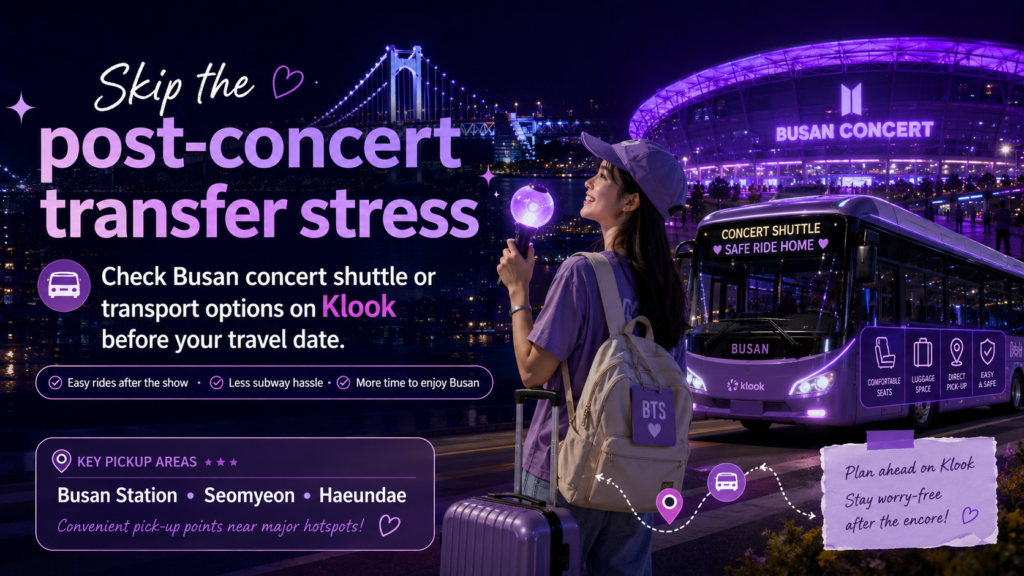
If you prefer not to worry about subway transfers after the concert, check whether a Busan concert shuttle or transport option is available through Klook before your travel date.
Concert Day Tips for International ARMY
A BTS concert in Korea is exciting, emotional, and unforgettable. But it can also be physically tiring if you are not prepared.
Here are practical tips to make your concert day smoother.
Arrive Early
Do not arrive just before the show.
You may need time for:
Subway exit crowds
Walking to the stadium
Ticket or entry checks
Bag checks
Restrooms
Merchandise lines
Meeting friends
Taking photos
For a 7:00 PM show, it is wise to be in the stadium area by mid-afternoon or earlier, depending on your plans.
Prepare Mobile Data Before You Go
Mobile data is essential in Korea, especially on concert day.
You may need it for:
Maps
Subway routes
Translation apps
Messaging friends
Checking official notices
Calling taxis
Finding your hotel
Accessing QR codes or booking confirmations
Do not depend only on free Wi-Fi. Stadium areas and crowded places can be difficult, and public Wi-Fi may not be stable enough when thousands of fans are using their phones.
Before traveling to Korea, prepare an eSIM so you can use maps, translation apps, and transport information as soon as you arrive. Check South Korea eSIM options with Saily before your trip.
Bring a Portable Charger
Your phone battery will disappear faster than you expect.
You may use your phone for photos, videos, maps, ticket information, chat messages, translations, and social media. A portable charger is not optional for a concert day in Korea. It is essential.
Wear Comfortable Shoes
You may stand, walk, wait, queue, and walk again.
Even if your outfit is important, choose shoes that you can actually wear for a long day. Busan has hills in many areas, and concert crowds can make movement slower than usual.
Check Official Notices Often
Concert rules can change.
Bag rules, entry gates, merchandise hours, event zones, and safety instructions may be updated close to the concert date. Always check official sources such as Weverse, the official BTS tour page, and the official ticket seller before your concert day.
BTS THE CITY ARIRANG Busan: What to Know
The Busan concert is not only about the stadium.
BTS THE CITY ARIRANG Busan includes citywide programs such as a welcome center, ARMY-related events, stamp rally elements, landmark lighting, and a drone light show. Forbes reported that THE CITY ARIRANG Busan includes installations, hotel packages, off-site events, a stamp rally, and other programs across Busan, with some activities requiring advance reservations.
The Weverse notice also lists a Drone Light Show at Gwangandaegyo Bridge on June 12 and June 13 at 10:00 PM KST.
This means you should not plan your Busan trip too tightly. If possible, stay at least two nights so you can enjoy both the concert and the citywide BTS atmosphere.
What to Do in Busan Before or After the BTS Concert
Busan is one of the best cities in Korea for a concert trip because it has beaches, seafood, night views, markets, cafes, and cultural neighborhoods.
Here are some places to consider.
Haeundae Beach
Haeundae is Busan’s most famous beach.
It is a good place to walk, relax, take photos, and enjoy the ocean before or after the concert. If your concert day is too busy, visit Haeundae the next morning.
This area is also full of hotels, cafes, and restaurants, making it a comfortable base for international travelers.
Gwangalli Beach
Gwangalli is one of the most beautiful night-view spots in Busan.
The view of Gwangan Bridge is especially popular, and during the BTS concert period, the area may feel even more special because of BTS-related city events.
If you want emotional post-concert photos, Gwangalli is one of the best places to go.
Gamcheon Culture Village
Gamcheon Culture Village is known for colorful houses, murals, small alleys, cafes, and photo spots.
It is not next to the stadium, so do not visit it right before the concert unless you have plenty of time. It is better for the day before or the day after the show.
Jagalchi Market
Jagalchi Market is one of Korea’s most famous seafood markets.
If you want a very Busan-style food experience, this is a classic place to visit. It is near Nampo-dong, so you can combine both areas in one trip.
Nampo-dong and BIFF Square
Nampo-dong is good for street food, shopping, and an older downtown Busan atmosphere.
BIFF Square is famous for snacks and a lively street mood. It is a good choice if you want a more local and casual Busan experience.
Busan Tower and Yongdusan Park
If you want a city view without going too far into nature, Busan Tower and Yongdusan Park can be a simple addition to your itinerary.
It works well with Nampo-dong and Jagalchi Market.
Sample 3-Day BTS Busan Concert Itinerary
Here is a simple itinerary for international ARMY.
Day 1: Arrive in Busan
Arrive at Busan Station or Gimhae Airport.
Check into your hotel in Seomyeon, Busan Station, Haeundae, or Gwangalli.
In the evening, take a light walk around your hotel area. Do not over-plan the first day, especially if you have a long flight or train journey.
Recommended areas:
Seomyeon for food and cafes
Haeundae for beach
Gwangalli for night views
Nampo-dong for street food
Day 2: Concert Day
Start slowly in the morning.
Eat properly, charge your phone, prepare your ticket information, check your bag, and leave early for the stadium.
Arrive in the stadium area several hours before the concert.
After the show, do not rush. Follow crowd control instructions and expect subway stations and roads to be crowded.
If you plan to see the Gwangalli drone light show or night view, check the timing carefully and make sure you can move safely.
Day 3: Busan Travel Day
Use the day after the concert to enjoy Busan more slowly.
Recommended routes:
Haeundae + Gwangalli
Gamcheon Culture Village + Nampo-dong + Jagalchi Market
Busan Station area + local cafes + shopping
Relaxed brunch and souvenir shopping before returning to Seoul
June in Korea can be warm and humid, and rain is possible. Check the weather before you leave your hotel.
Safety Tips for Solo ARMY Travelers
Many international fans travel alone for K-pop concerts in Korea. Busan is generally a popular tourist city, but you should still prepare carefully.
Share your hotel location with someone you trust
Keep your passport safe
Do not carry too much cash
Save your hotel address in Korean
Use official taxis or reliable transport apps
Avoid following strangers to unofficial ticket or merchandise deals
Stay in public areas after the concert
Check the last subway time if you are not using a shuttle
If you are traveling from far away, travel insurance can also be useful, especially if your trip includes flights, hotel bookings, crowds, weather changes, or medical concerns.
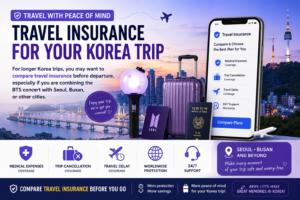
For longer Korea trips, you may want to compare travel insurance before departure, especially if you are combining the BTS concert with Seoul, Busan, or other cities.
Important Reminder About Tickets
Only use official ticketing channels and official announcements.
For the Busan concert, official Korean ticket information lists NOL Ticket as the exclusive ticket seller.
Be very careful with unofficial resale offers, social media messages, and unknown payment links. BTS tickets are extremely high-demand, and scammers may target international fans who are unfamiliar with Korean ticketing systems.
Before paying for anything, check:
Official BTS channels
Weverse notices
NOL Ticket
Official tour page
Your ARMY Membership instructions if applicable
Should You Stay in Seoul or Busan?
If your main purpose is the BTS Busan concert, you should stay in Busan at least for the concert night.
Trying to return to Seoul immediately after the show is not recommended. The concert ends late, transport will be crowded, and you may feel tired.
A better plan is:
Arrive in Korea through Seoul
Spend 1–3 days in Seoul
Take KTX or a flight to Busan
Stay in Busan for the concert
Return to Seoul after the concert weekend
This gives you a much more comfortable trip.
If you are visiting Korea for the first time, combining Seoul and Busan is a great idea. Seoul gives you palaces, shopping, K-pop-related spots, cafes, and city energy. Busan gives you beaches, seafood, night views, and a more relaxed coastal atmosphere.
Final Thoughts: Make It More Than a Concert
The BTS Busan concert in 2026 is more than a music event.
For many ARMY members, it may be their first time visiting Korea. For others, it may be a long-awaited return. Either way, Busan can become a powerful memory if you plan the trip carefully.
Choose your hotel area wisely. Prepare your mobile data before arrival. Book transport early. Arrive at the stadium with enough time. Leave room in your schedule for Busan’s beaches, night views, food, and BTS-themed city events.
Most importantly, do not make your trip too rushed.
A concert lasts a few hours, but the journey around it can become something you remember for years.
Busan in June 2026 will not just be a city hosting BTS.
For a few unforgettable days, it may become one of the most emotional places in the world for ARMY.
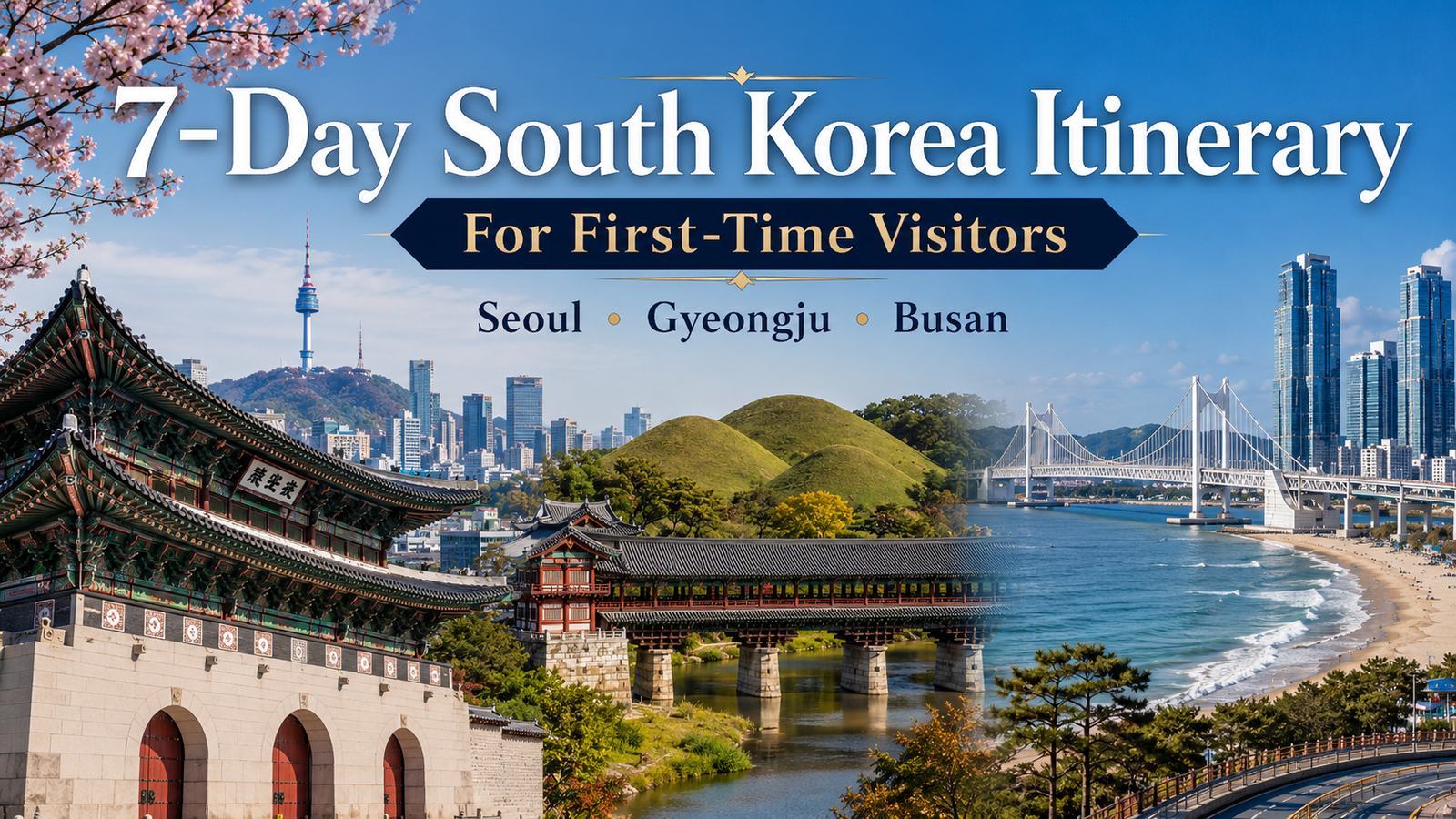
Planning your first trip to South Korea can feel exciting, but also a little overwhelming.
There are palaces, food markets, mountain views, K-pop spots, skincare shops, beach cities, historic temples, fast trains, local apps, transportation cards, and endless neighborhoods to explore. If you only have one week in Korea, the key is not to see everything. The key is to choose a simple route that gives you the best first impression of the country.
This 7-day South Korea itinerary is designed for first-time visitors who want to experience three different sides of Korea:
Seoul, the modern capital full of palaces, shopping, food, cafés, K-beauty, and nightlife.
Gyeongju, Korea’s historic city where you can see royal tombs, hanok streets, ancient temples, and UNESCO World Heritage sites.
Busan, Korea’s coastal city known for beaches, seafood markets, colorful villages, and a more relaxed atmosphere.
This route keeps the trip realistic. You will not change hotels every night, and you will not try to squeeze too many cities into one week. Instead, you will spend enough time in each place to enjoy it properly.
Is 7 Days Enough for South Korea?
Seven days is enough for a first taste of South Korea, but it is not enough to see the entire country.
For a first-time visitor, the best strategy is to focus on a clear route instead of adding too many destinations. Korea has excellent public transportation, and the train network makes it possible to travel between major cities efficiently. However, every hotel change, train ride, airport transfer, and new city still takes time and energy.
For most first-time visitors, the best 7-day route is:
Seoul → Gyeongju → Busan
This gives you a strong mix of modern Korea, traditional Korea, and coastal Korea.
If you prefer a slower trip, you can also stay in Seoul for the full week and add one or two day trips. I will include a Seoul-only alternative later in this guide.
Best 7-Day South Korea Route for First-Time Visitors
Here is the simple version of this itinerary.
Day
Base
Main Plan
Overnight
Day 1
Seoul
Arrival, Myeongdong, N Seoul Tower, easy first night
Train to Gyeongju, Daereungwon, Hwangnidan-gil, Woljeonggyo Bridge
Gyeongju
Day 5
Busan
Bulguksa or Seokguram, travel to Busan
Busan
Day 6
Busan
Gamcheon Culture Village, Jagalchi Market, BIFF Square, Gwangalli or Haeundae
Busan
Day 7
Busan or Seoul
Beach morning, shopping, return to Seoul or fly out
Seoul or Busan
This route works best if you arrive through Incheon International Airport and either return to Seoul before flying out or depart from Busan’s Gimhae International Airport, depending on your flight schedule.
Before You Start: What to Prepare for This Itinerary
Before starting this 7-day Korea itinerary, there are a few things that will make your trip much easier.
1. Mobile data or eSIM
You will use map apps, subway apps, taxi apps, translation tools, hotel booking apps, and train ticket pages throughout the trip. Having mobile data ready before arrival can make your first day much smoother.
This itinerary uses mobile data almost every day for maps, train routes, taxi apps, translation, and restaurant searches. If you want to prepare before landing, you can check South Korea eSIM options with Saily.
2. Transportation card
A transportation card is very useful in Korea, especially for subways and buses. Foreign travelers often use T-money, WOWPASS, NAMANE, or similar prepaid travel cards. VisitKorea explains that transportation cards such as Tmoney, EZL, WOWPASS, and others are useful prepaid options for travelers in Korea.
Naver Map or KakaoMap Papago translation app Kakao T or another taxi app KORAIL or train booking access A subway map app Your hotel booking app Your eSIM app
For a 7-day trip, do not move hotels too many times. A simple plan is:
3 nights in Seoul 1 night in Gyeongju 2 nights in Busan Optional final night in Seoul if your return flight leaves from Incheon
For first-time visitors, it is usually easier to book your first three nights in Seoul before arranging Busan or Gyeongju. You can compare hotels in Seoul and Busan on Trip.com before finalizing your route.
5. Train planning
The Seoul–Gyeongju–Busan route is practical by train. KORAIL provides train services across Korea, and the KORAIL PASS is available for foreign visitors traveling by rail for a set period. VisitKorea also notes that the Gyeongbu Line connects Seoul and Busan and gives travelers access to culture-rich cities such as Gyeongju, making it useful for short trips.
If you travel during weekends, Korean holidays, cherry blossom season, autumn foliage season, or major events, book trains earlier.
Day 1 – Arrival in Seoul: Myeongdong, N Seoul Tower & Easy First Night
Your first day in Korea should be simple.
After a long flight, do not plan too much. Focus on airport transfer, hotel check-in, getting your transportation card ready, checking your mobile data, and enjoying one easy evening area.
For most first-time visitors, Myeongdong is a convenient first-night area because it has shopping streets, restaurants, currency exchange counters, street food, and easy access to public transportation.
Suggested Day 1 Plan
Arrive at Incheon International Airport Travel to Seoul by AREX, airport bus, taxi, or private transfer Check into your hotel Walk around Myeongdong Visit N Seoul Tower if you still have energy Have a simple Korean dinner Rest early
Korean BBQ Myeongdong kalguksu Gimbap and tteokbokki Korean fried chicken Street food in Myeongdong
If you arrive late, convenience stores in Korea are also surprisingly useful. You can buy drinks, snacks, instant noodles, sandwiches, ready-to-eat meals, and basic travel items.
Day 1 Tip
Do not schedule a palace, museum, or long walking tour on your arrival day. Your first goal is to settle in comfortably.
Day 2 – Classic Seoul: Gyeongbokgung, Bukchon, Insadong & Ikseon-dong
Day 2 is your classic Seoul day.
This is the day to experience royal palaces, traditional architecture, old streets, tea houses, cafés, and central Seoul’s cultural atmosphere.
Suggested Day 2 Route
Gyeongbokgung Palace Bukchon Hanok Village Insadong Ikseon-dong Cheonggyecheon Stream or Gwanghwamun Square
Start in the morning at Gyeongbokgung Palace. If you want to rent hanbok, this is one of the most popular areas to do it. After the palace, walk toward Bukchon Hanok Village, where you can see traditional Korean houses and narrow hillside streets.
Bukchon is beautiful, but it is also a real residential area. Keep your voice low, avoid blocking doorways, and follow local signs.
From Bukchon, move toward Insadong for traditional crafts, tea houses, souvenirs, and galleries. Later, continue to Ikseon-dong, a compact hanok-style neighborhood filled with cafés, small restaurants, and photo-friendly alleys.
What to Eat on Day 2
Traditional tea in Insadong Korean set meal near Jongno Hotteok or street snacks Café desserts in Ikseon-dong Optional evening food market visit
If you still have energy in the evening, you can add Gwangjang Market. However, do not force too much into one day. Seoul is more enjoyable when you leave time to wander.
Day 3 – Modern Seoul: Seongsu, Gangnam, K-Beauty or Han River
Day 3 is about modern Seoul.
This is where you can experience the Korea that many visitors know through fashion, beauty, cafés, shopping, music, design, and lifestyle trends.
You can choose between two versions depending on your travel style.
Option A: K-Beauty and Shopping Day
This option is best if you are interested in skincare, personal color, beauty clinics, makeup, hair, or Korean cosmetics.
Suggested route:
Gangnam Apgujeong or Cheongdam Olive Young flagship-style shopping Personal color analysis or head spa Evening in COEX, Garosu-gil, or Hongdae
K-beauty is not only about buying skincare products. Many travelers now visit Korea for personal color analysis, head spa treatments, skin consultations, makeup sessions, and beauty shopping.
If K-beauty is one of your main reasons for visiting Korea, consider booking one beginner-friendly experience such as personal color analysis, head spa, or a skin clinic consultation before your trip.
Option B: Local Seoul Day – Seongsu, Seoul Forest and Han River
This option is better if you prefer cafés, design shops, walking, and a more local Seoul atmosphere.
Suggested route:
Seongsu-dong cafés Seoul Forest Ttukseom or Han River area Evening in Hongdae or Yeonnam-dong
Seongsu has become one of Seoul’s most interesting neighborhoods for fashion brands, pop-ups, cafés, design stores, and casual walking. It feels different from palace areas and gives you a look at Seoul’s newer lifestyle scene.
In the evening, you can go to the Han River for a relaxed sunset walk. If you want more energy, continue to Hongdae for street performances, restaurants, bars, and nightlife.
Do not try to visit Gangnam, Seongsu, Hongdae, Myeongdong, and the Han River all in one day. Choose two or three areas and enjoy them slowly.
Day 4 – Seoul to Gyeongju: Korea’s Historic Capital
Day 4 is when your trip changes mood.
After three days in Seoul, travel to Gyeongju, one of Korea’s most important historic cities. Gyeongju was the capital of the ancient Silla Kingdom, and today it is known for royal tombs, traditional streets, historic sites, and a quieter atmosphere than Seoul.
The easiest way is usually to take a train from Seoul toward Gyeongju. Depending on your ticket and station choice, you may arrive at Singyeongju Station and then take a bus or taxi into the central tourist area.
Suggested Day 4 Plan
Morning train from Seoul to Gyeongju Check into accommodation near Hwangnidan-gil or central Gyeongju Visit Daereungwon Ancient Tomb Complex Walk to Cheomseongdae Observatory Explore Hwangnidan-gil Visit Woljeonggyo Bridge in the evening
VisitKorea highlights Gyeongju attractions such as Daereungwon Ancient Tomb Complex, Cheomseongdae, Woljeonggyo Bridge, and Hwangnidan Street as part of the city’s cultural travel appeal.
Why Gyeongju Is Worth It
Gyeongju gives your trip balance.
Seoul shows modern Korea. Busan shows coastal Korea. Gyeongju shows historical Korea.
Instead of adding another big city, Gyeongju gives you a slower and more cultural middle point between Seoul and Busan.
What to Eat in Gyeongju
Gyeongju bread Ssambap Korean traditional set meal Cafés in Hwangnidan-gil Local snacks near historic sites
Day 4 Tip
Gyeongju is more spread out than some visitors expect. Walking is possible in the central historic area, but taxis can be very helpful when moving between the train station, hotel, and major sites.
Day 5 – Bulguksa, Seokguram & Travel to Busan
Day 5 starts with one of Korea’s most important cultural sites.
Bulguksa Temple and Seokguram Grotto are UNESCO World Heritage sites and among the most famous historic places in Gyeongju. UNESCO describes Bulguksa and Seokguram as a religious architectural complex of exceptional significance, with Seokguram containing a monumental Buddha statue and Bulguksa representing important Buddhist architecture.
Suggested Day 5 Plan
Morning visit to Bulguksa Temple Optional visit to Seokguram Grotto Return to central Gyeongju Travel to Busan Check into your Busan hotel Evening walk at Gwangalli or Haeundae Beach
If you only want one major cultural stop, choose Bulguksa first. It is easier for many travelers to understand and enjoy as a temple visit.
If you enjoy history, Buddhist art, or UNESCO sites, add Seokguram as well. Just remember that visiting both takes more time and energy.
Easy Version
If you feel tired after Seoul and Gyeongju, skip Seokguram and visit only Bulguksa in the morning. Then travel to Busan earlier and enjoy a relaxed beach evening.
What to Eat on Day 5
Simple breakfast near your hotel Lunch in Gyeongju Dinner in Busan Optional seafood or dwaeji gukbap in Busan
Day 5 Tip
Do not plan too much in Busan on the same day you visit Bulguksa and travel from Gyeongju. A beach walk and dinner are enough.
Day 6 – Busan Highlights: Gamcheon, Jagalchi, BIFF & Beach Night
Day 6 is your full Busan day.
Busan feels very different from Seoul. It is still a large city, but the ocean, hills, bridges, beaches, markets, and seafood culture give it a more open and relaxed atmosphere.
Suggested Day 6 Route
Gamcheon Culture Village Jagalchi Fish Market BIFF Square Gukje Market Gwangalli Beach or Haeundae Beach in the evening
Start with Gamcheon Culture Village, known for colorful hillside houses, murals, alleys, cafés, and photo spots. Then move toward Nampo-dong, where you can visit Jagalchi Fish Market, BIFF Square, and Gukje Market.
In the evening, choose either Gwangalli or Haeundae.
Gwangalli is great for night views of Gwangan Bridge. Haeundae is better if you want a famous beach area with hotels, restaurants, and a more resort-like feel.
What to Eat in Busan
Dwaeji gukbap Milmyeon Seafood at Jagalchi Ssiat hotteok Korean street food around BIFF Square
Day 6 Tip
Busan is larger than it looks on a map. Travel times between neighborhoods can be longer than expected. If your hotel is in Haeundae, visiting Gamcheon and Nampo-dong will take more time. If your hotel is in Seomyeon, it is easier to move in different directions.
Day 7 – Easy Final Day: Beach Morning, Shopping or Return to Seoul
Your final day depends on your flight.
There are three good options.
Option 1: Fly Out from Busan
If your international or domestic flight leaves from Busan, keep your final morning simple.
Good ideas:
Morning walk at Haeundae or Gwangalli Coffee near the beach Last-minute shopping Travel to Gimhae International Airport
Option 2: Return to Seoul by Train
If your return flight leaves from Incheon, you may need to go back to Seoul.
If your flight is late at night, you can return to Seoul on Day 7. If your flight is early the next morning, it is safer to return to Seoul on the evening of Day 6 or book a final night near Seoul Station, Hongdae, Myeongdong, or Incheon Airport.
Option 3: Add One More Seoul Night
This is often the most comfortable option.
You can return to Seoul, check into a final hotel, do last-minute shopping, and leave for the airport the next day with less stress.
Good final Seoul activities:
Myeongdong shopping Olive Young shopping Hongdae evening walk Namdaemun Market Relaxed Korean BBQ dinner Packing and airport preparation
Day 7 Tip
Do not book a tight same-day connection from Busan to Incheon Airport unless you are very confident with the timing. Leave extra time for train delays, luggage movement, airport check-in, and security.
Seoul-Only 7-Day Alternative
Not every traveler wants to move between cities.
If this is your first time in Korea and you prefer to stay in one hotel, a Seoul-only 7-day itinerary can still be excellent. Seoul has enough palaces, markets, mountains, cafés, shopping areas, food neighborhoods, museums, beauty experiences, and day trips to fill a full week.
Day
Seoul-Only Plan
Day 1
Arrival, Myeongdong, easy first night
Day 2
Gyeongbokgung, Bukchon, Insadong, Ikseon-dong
Day 3
Hongdae, Yeonnam-dong, Mangwon Market
Day 4
Gangnam, Seongsu, K-beauty, Seoul Forest
Day 5
Suwon, DMZ, or another day trip from Seoul
Day 6
Seoul hiking, Han River, or hidden nature spots
Day 7
Shopping, cafés, final food stops, airport preparation
[Internal Link]
Read next: Best Day Trips from Seoul in 2026: Where to Go, How to Get There, and What to Eat
[Internal Link]
Read next: Best Mountains to Hike in Seoul for First-Time Visitors
This version is better if you dislike packing, have young children, travel with older family members, or want a slower trip.
What to Skip on a 7-Day First Korea Trip
A good itinerary is not only about what to include. It is also about what to skip.
For a first 7-day trip to Korea, I would be careful with the following.
1. Jeju Island
Jeju is beautiful, but it usually deserves its own trip or at least two to three full days. Adding Jeju to a 7-day Seoul–Busan itinerary often creates too much airport time and not enough relaxed travel time.
2. Too Many Day Trips
DMZ, Suwon, Nami Island, Jeonju, Sokcho, and other day trips are all interesting. But if you are already visiting Seoul, Gyeongju, and Busan, adding too many day trips can make your schedule exhausting.
3. Moving Hotels Every Night
Changing hotels too often makes the trip feel busy. For one week, keep the structure simple.
Three nights in Seoul, one night in Gyeongju, and two nights in Busan is already enough movement.
4. Overbooking Tours
Korea is a country where spontaneous walking, cafés, markets, and neighborhood exploration can be just as memorable as paid tours. Leave some open time.
5. Trying to See Every Famous Place
You do not need to visit every palace, every market, every beach, and every shopping district on your first trip. Choose the places that match your travel style.
Where to Stay for This 7-Day Korea Itinerary
Choosing the right hotel area can make your trip much easier.
Seoul
Best areas for first-time visitors:
Myeongdong Jongno Euljiro Hongdae Seoul Station area
Myeongdong and Jongno are convenient for palaces, shopping, food, and central sightseeing. Hongdae is better for nightlife, younger energy, cafés, and easy airport train access. Seoul Station can be practical if you plan to take trains to other cities.
This makes it easier to walk to cafés, tombs, restaurants, and evening photo spots.
Busan
Good areas include:
Seomyeon Haeundae Gwangalli Nampo-dong
Seomyeon is convenient for transportation. Haeundae is good for a beach hotel experience. Gwangalli is great for bridge views and evening atmosphere. Nampo-dong is useful for markets, seafood, and older Busan attractions.
For this itinerary, compare hotels by city rather than booking everything in one area. A practical setup is three nights in Seoul, one night in Gyeongju, and two nights in Busan. You can compare Seoul, Gyeongju, and Busan hotels on Trip.com before choosing your final route.
Transportation Tips for Seoul, Gyeongju and Busan
Use trains for long-distance travel
For Seoul to Gyeongju and Gyeongju to Busan, trains are usually the most practical choice. KORAIL operates Korea’s major rail network, and foreign visitors can also review KORAIL PASS options if they plan multiple train rides.
Use subways and buses inside Seoul and Busan
Seoul and Busan both have subway systems that are useful for travelers. Buses can also be helpful, but first-time visitors may find subways easier.
Use taxis when needed in Gyeongju
Gyeongju is not as subway-friendly as Seoul or Busan. Taxis can save time, especially when visiting places outside the central historic area.
Prepare map apps
Google Maps can be limited for walking and transit details in Korea. Many travelers use Naver Map or KakaoMap for better local navigation.
Keep some schedule flexibility
Rain, heat, crowds, train times, and tiredness can change your plan. This itinerary is designed so you can remove one or two activities without ruining the trip.
7-Day South Korea Itinerary FAQ
Is 7 days enough for South Korea?
Yes, 7 days is enough for a first visit if you choose a simple route. Seoul, Gyeongju, and Busan make a good first-time itinerary because they show modern, historic, and coastal sides of Korea.
Should I visit Seoul only or add Busan?
If you want a slower trip, stay in Seoul for the full week. If you want to see more variety, add Gyeongju and Busan. For most active first-time travelers, Seoul–Gyeongju–Busan is a strong route.
Is Gyeongju worth visiting on a first trip?
Yes. Gyeongju gives your Korea trip historical depth. It is very different from Seoul and Busan, and it helps you understand Korea beyond shopping, food, and city life.
Should I add Jeju Island to a 7-day Korea itinerary?
For most first-time visitors, I would not add Jeju to a 7-day Seoul–Gyeongju–Busan route. Jeju is better for a longer trip because it requires flights and more local transportation planning.
Is it easy to travel in Korea without speaking Korean?
Yes, but you should prepare apps. Translation apps, map apps, subway apps, and hotel addresses in Korean can make the trip much easier.
Do I need a T-money card?
A transportation card is highly recommended for subway and bus travel. T-money and other travel cards are widely used by visitors in Korea.
Should I book KTX tickets in advance?
Yes, especially for weekends, holidays, cherry blossom season, autumn foliage season, and major event periods.
Where should I stay in Seoul for this itinerary?
For first-time visitors, Myeongdong, Jongno, Euljiro, Hongdae, and Seoul Station are practical choices. Choose based on your travel style and train plans.
Is this itinerary good for families?
Yes, but families may want to slow it down. Consider staying in Seoul for more nights, reducing late-night activities, and choosing fewer hotel changes.
What is the best season for this route?
Spring and autumn are usually the most comfortable seasons for this route. Summer can be hot and humid, while winter can be cold, but each season has its own advantages.
Final Thoughts
A 7-day trip to South Korea is not enough to see everything, but it is enough to experience the country’s strongest contrasts.
With this route, you can start in Seoul, where modern Korea moves fast through subways, cafés, shopping streets, palaces, and beauty trends. Then you can slow down in Gyeongju, where ancient tombs, temples, and hanok streets show Korea’s deeper history. Finally, you can finish in Busan, where beaches, seafood, markets, and ocean views give the trip a more relaxed ending.
For a first-time visitor, the best Korea itinerary is not the busiest one. It is the one that feels exciting but still manageable.
Start with Seoul. Add Gyeongju for history. Finish with Busan for the coast.
That is one of the easiest and most rewarding ways to experience South Korea in one week.
Planning a trip to South Korea in 2026? Then it is worth checking the Korean holiday calendar before you book your flights, hotels, trains, or tours.
Korean holidays can be beautiful times to visit. You may see traditional events, seasonal festivals, lantern displays, family celebrations, and quieter city streets. But some holidays can also affect transportation, restaurant hours, museum schedules, shopping areas, and hotel availability.
This guide explains the major public holidays in South Korea in 2026, what they mean for tourists, which holidays are great for travel, and which ones require extra planning.
If this is your first trip to Korea, this guide will help you understand not only when Korean holidays happen, but also how they may affect your actual travel experience.
Before finalizing your itinerary, you may also want to read our South Korea Travel Checklist Before You Fly to make sure your passport, mobile data, payment methods, airport arrival plan, and essential travel preparations are ready.
What Does “Korea Holiday” Mean?
When travelers search for “Korea holiday,” they may be looking for different things.
Some people want to know the public holiday dates in South Korea. Others want to know whether shops and restaurants are open. Some are checking whether it is a good time to visit Seoul, Busan, Jeju, or other parts of Korea.
In this guide, “Korea holiday” means three things:
Public holidays in South Korea
Traditional Korean holidays such as Seollal and Chuseok
Practical travel tips for tourists visiting Korea during holiday periods
This is important because not every Korean holiday affects travelers in the same way. Some holidays are easy and enjoyable for tourists. Others, especially Seollal and Chuseok, can make transportation and bookings much more difficult.
South Korea Public Holidays 2026 Calendar
Here is a quick calendar of major Korean holidays in 2026, with simple travel notes for foreign visitors.
Holiday
2026 Date
Tourist Impact
New Year’s Day
January 1
Some businesses may close or open late. Sunrise spots can be popular.
Seollal Holiday
February 16–18
One of Korea’s biggest family holidays. Trains, buses, and highways can be very crowded.
Independence Movement Day / Substitute Holiday
March 1 / March 2
Historical sites and central Seoul areas may be meaningful to visit.
Labor Day
May 1
Some workplaces and businesses may close, but tourist areas often remain active.
Children’s Day
May 5
Family attractions, amusement parks, zoos, and kid-friendly places can be crowded.
Buddha’s Birthday / Substitute Holiday
May 24 / May 25
Temples, lantern displays, and cultural sites can be especially beautiful.
Local Election Day
June 3
Public holiday for voting. Some services and institutions may operate differently.
Memorial Day
June 6
A solemn national day. Some ceremonies may take place.
Constitution Day
July 17
National observance with limited direct impact on most tourists.
Liberation Day / Substitute Holiday
August 15 / August 17
Historical and patriotic events may take place.
Chuseok Holiday
September 24–26
One of Korea’s biggest family holidays. Transportation can be very crowded.
National Foundation Day / Substitute Holiday
October 3 / October 5
Cultural and national events may take place.
Hangeul Day
October 9
A great day to learn about the Korean alphabet and Korean culture.
Christmas Day
December 25
Shopping streets, churches, and city lights can be popular.
For tourists, the most important holidays to plan around are usually Seollal, Chuseok, Children’s Day, Buddha’s Birthday, and Christmas.
Best Korean Holidays for Tourists
Not all public holidays are difficult for travelers. Some Korean holidays can actually make your trip more memorable.
Here are some of the best Korean holidays for tourists.
1. Buddha’s Birthday
Buddha’s Birthday is one of the most visually beautiful holidays in Korea. In 2026, Buddha’s Birthday falls on May 24, with a substitute holiday on May 25.
Around this period, many temples are decorated with colorful lanterns. In Seoul, places such as Jogyesa Temple, Bongeunsa Temple, and nearby cultural areas can feel especially atmospheric.
For tourists, this is one of the best holidays because it gives you a chance to experience Korean Buddhist culture, night lanterns, temple decorations, and peaceful city walks.
What tourists may enjoy:
Colorful lantern displays
Temple visits
Cultural events
Evening walks in central Seoul
Photography opportunities
Travel tip: Temple areas may be more crowded than usual, especially in the evening. Try to visit earlier in the day if you prefer a quieter experience.
2. Hangeul Day
Hangeul Day is celebrated on October 9. It honors the creation of Hangeul, the Korean writing system.
For foreign visitors, this is a great holiday because Hangeul is one of the most important parts of Korean culture. Even if you do not speak Korean, learning a few letters before or during your trip can make travel more fun.
Good places to connect with Hangeul Day include:
Gwanghwamun Square
King Sejong statue area
National museums
Korean language exhibitions
Cultural experience centers
This holiday is especially useful for travelers who are interested in Korean culture, history, language, K-pop lyrics, Korean dramas, or Korean food menus.
3. Liberation Day
Liberation Day is observed on August 15, with a substitute holiday on August 17 in 2026.
This holiday commemorates Korea’s liberation from Japanese colonial rule in 1945. It is a meaningful day for understanding modern Korean history.
For tourists, this can be a good time to visit places such as:
Gwanghwamun Square
Seodaemun Prison History Hall
The War Memorial of Korea
National Museum of Korean Contemporary History
Historical walking routes in central Seoul
Travel tip: This holiday can include ceremonies and patriotic events. Some areas may be busier than usual, but it can also be a meaningful time to understand Korea beyond shopping and sightseeing.
4. Christmas in Korea
Christmas is a public holiday in South Korea, but it feels different from Seollal or Chuseok. It is not usually a large family migration holiday. Instead, it is often associated with churches, shopping, restaurants, dates, lights, and winter city atmosphere.
Popular areas during Christmas season may include:
Myeongdong
Hongdae
Seongsu
Gangnam
COEX
Lotte World Tower area
Major department stores
For tourists, Christmas can be a fun time to visit Seoul, especially if you enjoy winter lights, shopping streets, cafes, and festive city walks.
Travel tip: Restaurants and popular cafes may be busy, especially in central Seoul. Book in advance if you plan to visit a popular restaurant.
5. New Year’s Day
New Year’s Day is January 1. In Korea, some people welcome the new year by watching the first sunrise of the year.
For many Koreans, this is more than just a beautiful view. The first sunrise symbolizes a fresh start, new hopes, good luck, and personal wishes for the year ahead. That is why some people leave Seoul on the evening of December 31 and travel overnight to the east coast, especially to Gangwon-do, to see the first rising sun of the new year.
Gangwon-do is popular because it faces the East Sea, where the sunrise appears clearly over the ocean. Compared with inland cities, the eastern coastline gives visitors a wide, open view of the sun rising from the horizon. For many Koreans, watching the first sunrise over the sea feels more symbolic and emotional than seeing it from the city.
One of the most famous places is Jeongdongjin in Gangneung. Jeongdongjin is widely known as a sunrise destination, and the Korea Tourism Organization describes the Jeongdongjin Sunrise Festival as an event where many people gather on New Year’s Eve and New Year’s Day at Sandglass Park to celebrate a fresh start.
Jeongdongjin is also famous for its seaside train station and its close connection to the ocean. Visit Korea notes that Jeongdongjin Station is known as one of the train stations closest to the sea in the world, and the area attracts many sunrise spectators.
Recommended sunrise spots in Gangwon-do include:
Jeongdongjin Beach, Gangneung — Korea’s most iconic New Year sunrise spot, famous for its beach, train station, Sandglass Park, and sunrise festival.
Gyeongpo Beach, Gangneung — a wide beach area that is easier to combine with cafes, lake views, and Gangneung city travel.
Anmok Beach, Gangneung — good for travelers who want a sunrise view plus Gangneung’s famous coffee street atmosphere.
Sokcho Beach, Sokcho — a good choice if you also want to visit Seoraksan, Sokcho Jungang Market, or the East Sea coast.
Naksan Beach and Naksansa Temple, Yangyang — a beautiful option for travelers who want both a sunrise view and a temple atmosphere.
Chuam Chotdaebawi Rock, Donghae — known for dramatic rock formations and a photogenic sunrise scene.
Travel tip: If you want to see the first sunrise of the year on the Gangwon coast, do not treat it like a normal day trip. Roads, trains, beaches, parking areas, and sunrise viewpoints can become extremely crowded around New Year’s Eve and early New Year’s morning. Book transportation and accommodation early, dress very warmly, and arrive much earlier than sunrise time.
For tourists, this can be a memorable Korean winter experience. But if you prefer a quieter New Year’s Day, it may be better to stay in Seoul and visit a local park, riverside area, or viewpoint instead.
Korean Holidays Tourists Should Plan Around: Seollal and Chuseok
The two most important traditional holidays in Korea are Seollal and Chuseok.
These are beautiful and meaningful holidays, but they also require extra planning if you are traveling in Korea.
What Is Seollal?
Seollal is Korean Lunar New Year. In 2026, the Seollal holiday period runs from February 16 to February 18.
During Seollal, many Koreans travel to their hometowns to spend time with family. Traditional activities may include family gatherings, ancestral rituals, traditional food, and New Year greetings.
For tourists, Seollal can be interesting because you may see a quieter version of Seoul. Some palaces and cultural sites may also offer special holiday programs.
However, Seollal can also create travel challenges.
Possible tourist impacts:
KTX and intercity train tickets can sell out quickly
Express buses may be very busy
Highways can be heavily congested
Some small restaurants and local shops may close
Family attractions may be crowded before or after the holiday
Airports can be busy around the holiday period
If you plan to travel outside Seoul during Seollal, book transportation early.
What Is Chuseok?
Chuseok is often described as Korean Thanksgiving. In 2026, the Chuseok holiday period runs from September 24 to September 26.
Chuseok is one of Korea’s biggest family holidays. Many Koreans visit their hometowns, prepare traditional food, and spend time with relatives.
For tourists, Chuseok can be a unique time to experience Korean culture. Seoul may feel quieter than usual because many residents leave the city. Some cultural sites may hold special programs, and traditional palaces can be enjoyable to visit.
But like Seollal, Chuseok can affect transportation and business hours.
Possible tourist impacts:
Intercity trains and buses can become fully booked
Highways can be extremely crowded
Some restaurants, cafes, and small shops may close
Traditional markets may have special pre-holiday shopping crowds
Hotels in popular areas may become more expensive or limited
Domestic travel to Busan, Jeju, or other regions can be harder to book
If you are staying in Seoul during Chuseok, the trip can still be enjoyable. If you are traveling between cities, plan much earlier than usual.
Is It Good to Visit Korea During Seollal or Chuseok?
Yes, it can be good — but it depends on your travel style.
If you want a calm Seoul experience, Seollal or Chuseok can be interesting. Some parts of the city may feel quieter, and cultural attractions may offer holiday-themed programs.
However, if your plan includes moving between cities, taking trains, visiting multiple regions, or doing a packed itinerary, Seollal and Chuseok can be difficult.
Best for:
Staying mostly in Seoul
Visiting palaces and cultural sites
Enjoying quieter city streets
Experiencing traditional holiday atmosphere
Not ideal for:
Last-minute domestic travel
KTX or express bus trips between cities
Tight itineraries
Road trips during peak migration days
Travelers who need every restaurant and shop to be open
The safest approach is simple: if you visit Korea during Seollal or Chuseok, stay flexible and book important transportation early.
What Stays Open During Korean Public Holidays?
One of the most common questions travelers ask is whether shops and restaurants stay open during Korean holidays.
The answer depends on the holiday and the type of business.
In general, large tourist areas in Seoul often remain active, especially places like Myeongdong, Hongdae, Gangnam, Itaewon, and major shopping malls. However, smaller local restaurants, family-owned shops, traditional markets, clinics, offices, and some local businesses may close or change their hours.
During Seollal and Chuseok, closures are more common than during holidays like Christmas or Hangeul Day.
Usually more likely to stay open:
Major hotels
Convenience stores
Some cafes
Large shopping malls
Tourist attractions in central Seoul
Chain restaurants in busy areas
Airport facilities
Some subway and bus services
More likely to close or change hours:
Small local restaurants
Family-owned shops
Traditional neighborhood businesses
Clinics and offices
Government offices
Some museums or cultural facilities
Small markets outside major tourist zones
Travel tip: Always check opening hours on Naver Map, KakaoMap, Google Maps, or the official website before visiting during a holiday.
Is Public Transportation Available During Korean Holidays?
Yes. Public transportation usually continues to operate during Korean holidays, especially subways and city buses in Seoul.
However, long-distance transportation can become much harder during Seollal and Chuseok.
In Seoul, tourists can usually still use:
Subway
City buses
Airport Railroad
Taxis
Airport buses
Local trains
But for intercity travel, you should be careful with:
KTX
Express buses
Intercity buses
Domestic flights
Highway travel
During Seollal and Chuseok, many Koreans travel across the country. This means tickets can sell out quickly, roads can become very congested, and travel times can become much longer than usual.
Should Tourists Book Hotels Early During Korean Holidays?
Yes, especially during major holiday periods, long weekends, and popular event seasons.
Hotel prices and availability can change quickly around Korean holidays such as Seollal, Chuseok, Children’s Day, Christmas, and long weekends.
This is especially important if you are staying in:
Myeongdong
Hongdae
Gangnam
Seoul Station area
Jamsil
Busan
Jeju
Popular hanok stay areas
Festival or event districts
If you already know your travel dates, compare hotel options before the holiday period gets busy.
Compare Seoul hotels on Trip.com.
What Should Tourists Do Before Traveling During a Korean Holiday?
Before traveling during a Korean holiday, prepare a little more carefully than usual.
Here is a simple checklist.
Check the holiday dates before booking your flight
Book hotels earlier if traveling during a long weekend
Reserve KTX or intercity bus tickets early
Check restaurant opening hours
Prepare mobile data before arrival
Save your hotel address in Korean
Download map and taxi apps
Keep some flexibility in your itinerary
Avoid tight same-day city-to-city transfers
Check official attraction websites before visiting
During Korean holidays, you may need maps, taxi apps, translation tools, and restaurant search apps more than usual.
Having mobile data ready before you arrive can make holiday travel much easier, especially when opening hours, transportation routes, and restaurant availability change during public holidays.
Check South Korea eSIM options with Saily.
Best Places to Visit During Korean Holidays
If you are in Seoul during a public holiday, you can still enjoy many places.
Good options include:
Gyeongbokgung Palace
Changdeokgung Palace
Bukchon Hanok Village
Insadong
Jogyesa Temple
Gwanghwamun Square
Namsan Seoul Tower
Han River parks
Myeongdong
Hongdae
COEX
Lotte World Tower area
For traditional holidays such as Seollal and Chuseok, palaces and cultural sites can be especially meaningful. Some places may offer traditional games, performances, or holiday-themed experiences.
However, always check the official opening schedule before visiting. Holiday hours can change.
Korean Holidays That Can Be Crowded
Some holidays are especially busy for certain types of places.
Children’s Day can be crowded at:
Lotte World
Everland
Seoul Children’s Grand Park
Aquariums
Zoos
Family museums
Indoor playgrounds
Large shopping malls
Christmas can be crowded at:
Myeongdong
Hongdae
Gangnam
Seongsu
COEX
Department stores
Popular restaurants and cafes
Seollal and Chuseok can be crowded at:
Train stations
Express bus terminals
Highways
Airports
Traditional markets before the holiday
Some family attractions after the main holiday
If you dislike crowds, avoid major transport hubs on the first and last days of long holidays.
Korean Holidays That Are Great for Culture Lovers
If you are interested in Korean culture, some holidays are especially good for your itinerary.
Recommended holidays:
Buddha’s Birthday
Hangeul Day
Liberation Day
National Foundation Day
Seollal
Chuseok
These holidays can help you understand Korea beyond shopping, food, and K-pop. They connect to Korean history, family traditions, language, religion, and national identity.
For example, Hangeul Day is a great reason to visit Gwanghwamun and learn about King Sejong. Buddha’s Birthday is a beautiful time to visit temples. Chuseok and Seollal are important for understanding Korean family culture.
Are Museums and Palaces Open During Korean Holidays?
Many major attractions may remain open during public holidays, but schedules can vary.
Some palaces, museums, and cultural sites may open on holidays and sometimes offer special programs. However, others may close on certain days or adjust their hours.
Before visiting, check:
Official website
Naver Map listing
Google Maps listing
Recent reviews
Social media updates
Hotel concierge information
Do not assume that every attraction is open just because it is a tourist destination.
During major holidays such as Seollal and Chuseok, it is always safer to confirm in advance.
Are Restaurants Open During Korean Holidays?
Some restaurants are open, but not all.
In tourist areas, you can usually find food. Large hotels, chain restaurants, shopping malls, and popular neighborhoods often have dining options.
But during Seollal and Chuseok, many family-owned restaurants may close because staff and owners also spend time with family.
If you are traveling during Seollal or Chuseok, it is smart to:
Save several restaurant options in advance
Check recent opening-hour updates
Eat in major tourist areas if unsure
Use hotel restaurants as backup
Keep convenience stores in mind for simple meals
Avoid relying on one specific small restaurant
Convenience stores in Korea are very useful during holidays. Even if many small restaurants close, convenience stores usually provide snacks, drinks, ready-to-eat meals, coffee, and basic travel items.
Are Shops Open During Korean Holidays?
Large shopping malls and department stores may open during many holidays, but their schedules can vary.
During Seollal and Chuseok, some malls may close for one day or adjust hours. Traditional markets may also have different schedules.
Shopping areas such as Myeongdong, Hongdae, Gangnam, and COEX are often active, but individual shops can still close or open late.
If shopping is an important part of your trip, check hours before going.
This is especially important for:
Department stores
Beauty stores
Traditional markets
Small boutiques
Local pharmacies
Clinics
Specialty stores
Is Seoul Quiet During Korean Holidays?
Sometimes, yes.
During Seollal and Chuseok, many Seoul residents leave the city to visit their hometowns. This can make certain neighborhoods feel quieter than usual.
For tourists, this can be a good thing. Palaces, city streets, and some neighborhoods may feel calmer. But the trade-off is that some restaurants and shops may be closed.
Seoul during Seollal or Chuseok can be enjoyable if you plan your days around major attractions, cultural sites, hotels, parks, and areas that are likely to remain open.
Best Travel Strategy for Korea Holiday Periods
The best strategy depends on your itinerary.
If you are staying mostly in Seoul:
Korean holidays can be manageable
Use subway and taxis for local travel
Check restaurant hours
Visit palaces, parks, temples, and major districts
Keep your schedule flexible
If you are traveling between cities:
Book trains early
Avoid peak departure and return days
Consider staying in one city longer
Avoid same-day long-distance transfers
Check domestic flight prices early
If you are visiting with family:
Avoid Children’s Day attractions unless you are ready for crowds
Book family rooms early
Choose hotels near subway stations
Keep backup indoor plans
Make restaurant reservations when possible
If you are visiting during winter holidays:
Check opening hours around New Year’s Day and Christmas
Prepare warm clothing
Book popular restaurants early
Expect festive crowds in central Seoul
FAQ: Korea Holidays for Tourists
What is the biggest holiday in Korea?
The two biggest traditional holidays in Korea are Seollal and Chuseok. Seollal is Korean Lunar New Year, and Chuseok is often described as Korean Thanksgiving. Both are major family holidays and can strongly affect transportation.
Is Korea good to visit during public holidays?
Yes, Korea can be good to visit during public holidays, especially if you are staying in Seoul and planning cultural activities. However, during Seollal and Chuseok, long-distance transportation can be very crowded, and some restaurants or shops may close.
Are shops open during Korean public holidays?
Many shops in tourist areas may remain open, but some local shops, markets, clinics, and small businesses may close or change hours. During Seollal and Chuseok, closures are more common.
Do restaurants close during Seollal or Chuseok?
Some restaurants close during Seollal and Chuseok, especially small family-owned restaurants. However, tourist areas, hotels, malls, chain restaurants, and convenience stores usually provide options.
Is public transportation available during Korean holidays?
Yes, subways, buses, taxis, and airport transportation usually continue to operate. However, intercity trains, express buses, highways, and domestic flights can become very crowded during Seollal and Chuseok.
Is it a good idea to visit Korea during Chuseok?
It can be a good idea if you stay mostly in Seoul and plan a flexible itinerary. But if you want to travel between cities, Chuseok can be difficult because many Koreans travel to their hometowns.
What is the difference between Seollal and Chuseok?
Seollal is Korean Lunar New Year and usually takes place in winter. Chuseok is a harvest holiday and usually takes place in autumn. Both are major family holidays in Korea.
Do tourists need to book hotels early during Korean holidays?
Yes. It is better to book hotels early during major holidays, long weekends, and popular travel periods. This is especially important for Seoul, Busan, Jeju, and popular tourist districts.
Final Thoughts
Korean holidays can make your trip more meaningful, but they can also affect transportation, opening hours, and hotel availability.
For most tourists, holidays such as Buddha’s Birthday, Hangeul Day, Christmas, and Liberation Day can be enjoyable and culturally interesting. Seollal and Chuseok are also meaningful, but they require more planning because many Koreans travel across the country during these periods.
If you are visiting Korea in 2026, check the holiday calendar before booking your itinerary. Plan early for major holidays, stay flexible, and use Korea’s public transportation and travel apps wisely.
A little preparation can help you enjoy Korea even during the busiest holiday seasons.
South Korea is not only popular for food, shopping, and famous attractions.
For many travelers, one of the biggest surprises is how convenient daily life feels.
Sometimes it is not one major attraction that stands out most. Instead, it is the small systems that make everyday travel easier.
You notice it when public transportation works smoothly, when ordering food feels less stressful, when convenience stores solve small problems quickly, or when useful services are available faster than expected.
These details may seem small at first, but together they make South Korea feel easier to navigate than many travelers expect.
1. Public Transportation Feels Efficient and Connected
One of the first things many travelers notice in Korea is how practical public transportation feels.
In Seoul and other major cities, it is often possible to move around easily without renting a car. Subways, buses, taxis, and walking routes connect well, which makes daily travel feel more manageable. Seoul’s public transportation system is also designed to work as an integrated system rather than a series of completely separate rides.
The system also feels efficient in a very practical way.
Bus arrival information is usually easy to check. Subway stations are organized clearly. Transfers are part of daily movement instead of feeling confusing or stressful. Official Seoul guidance explains that when you use a transportation card and transfer within the allowed time, transfer discounts apply rather than charging a completely separate full fare every time. In general, the transfer window is 30 minutes, or 1 hour between 9 PM and 7 AM the next day, and riders need to tap when getting off the bus for the discount to apply.
That makes a real difference for travelers. When buses and subways feel connected in both movement and cost, getting around Seoul feels smoother and often more budget-friendly too. Seoul’s official English transportation guide also notes that T-money users can transfer between bus and subway lines, which helps daily travel feel more seamless.
One important detail to remember is that transfer discounts in Korea generally apply when you use a transportation card such as T-money. That is one reason many travelers choose to get a transport card early in the trip, especially if they plan to use both buses and subways in Seoul.
Want easier transfers in Seoul? Check Korea transport card options on Klook before your trip.
2. Small Street Details Can Feel Surprisingly Smart
Korea also stands out because of the small details built into city life.
A simple example is the floor-level traffic light system seen in some areas. For pedestrians checking a map or looking at a phone, these lights make it easier to notice when the signal changes.
It may sound minor, but details like this leave a strong impression.
They make travelers feel that the city is designed around real daily behavior.
Another example appears in winter. Some bus stops have heated seats, which can make waiting outside much more comfortable on cold days.
These are not famous tourist attractions, but they are the kind of everyday details visitors often remember.
3. Staying Online Feels Easier Than Many Travelers Expect
A lot of travelers worry about internet access as soon as they land.
They need it for maps, translation apps, taxi apps, hotel messages, and booking confirmations. That is one reason digital convenience matters so much during a trip.
In Korea, staying connected often feels easier than expected.
Mobile service is strong, digital tools are widely used, and public Wi-Fi can also help travelers feel less disconnected when they need quick online access.
This makes a real difference during the trip. Being online is not just a bonus anymore. It affects navigation, food ordering, communication, and everyday movement.
For first-time visitors especially, that digital convenience can make Korea feel much easier to handle.
To use maps, taxi apps, translation tools, and booking confirmations smoothly throughout your trip, it helps to stay connected from the moment you arrive.
Check South Korea eSIM options with Saily before your trip.
Ordering food in a new country can be uncomfortable for many travelers.
Some worry about pronunciation. Others worry about ordering the wrong item or not understanding the menu clearly.
In Korea, self-service ordering systems often make that easier.
In many casual restaurants, cafes, and fast-food places, ordering through a kiosk is already normal. That means travelers often do not need to explain everything out loud first.
Instead, they can take their time, look through the menu, choose what they want, and pay step by step.
For solo travelers, this can feel especially convenient. It makes eating alone feel simpler and less awkward.
5. Convenience Stores Are More Useful Than Many Travelers Expect
Convenience stores in Korea are not just for grabbing a quick drink.
For many travelers, they become one of the most useful parts of daily travel.
You can quickly buy snacks, drinks, simple meals, toiletries, and small travel essentials. In some places, you can also prepare food right there, which makes convenience stores feel much more practical than many visitors expect.
That is one reason so many travelers become interested in Korean convenience store culture.
It is not only accessible. It is also efficient.
If you need a simple breakfast, a late-night snack, a quick drink, or a fast solution to a small problem, convenience stores are often one of the easiest answers.
6. Han River Food Culture Feels Especially Easy and Fun
Another thing that surprises many visitors is how easy outdoor food culture can feel in Korea.
At the Han River, people enjoy picnics, instant ramen, drinks, and even delivery food in a relaxed public space. For foreign travelers, this can feel both practical and memorable.
It is one of those experiences that feels very Korean.
Convenience stores are nearby. Public space is easy to use. Food options are accessible. Delivery culture is strong.
As a result, even a simple afternoon by the river can feel easy to plan and enjoyable to experience.
One especially memorable example is cooking instant ramen from a convenience store and eating it by the Han River. For many young travelers, that becomes one of the most fun and local-feeling parts of the trip.
7. Shared Bikes and Scooters Help With Short Trips
Korea also feels convenient because short-distance movement inside the city can be easier than expected.
Shared bikes and electric scooters can help with that final short distance between a subway station, a cafe street, a park, or a riverside area.
Sometimes a place feels too far to walk comfortably, but too short for a taxi. In those situations, shared mobility can feel very useful.
This kind of system makes city exploration feel lighter and more flexible.
For travelers exploring Seoul, it adds to the feeling that the city is designed for practical daily movement.
8. Fast Service Culture Shows Up in Everyday Life
Some of Korea’s convenience does not come from tourism infrastructure at all.
It comes from everyday service culture.
One example is eyewear. In many countries, getting glasses can take a long time. In Korea, some travelers are surprised by how quickly vision tests and glasses preparation can happen compared with what they are used to at home.
Another example is fast delivery culture.
Many travelers already know that Korea is fast, but they often do not fully understand that until they see how quickly items can arrive or how easy it is to get something delivered.
This creates a strong impression that Korea is not just modern. It is organized around saving time in daily life.
9. Daily Travel Often Feels Easy Without a Car
One of the most impressive things about Korea for many travelers is that daily life in major cities can feel very functional without driving.
You can arrive from the airport, reach your hotel, use public transportation, buy what you need, eat well, and move between neighborhoods without depending on a car.
That matters because in many destinations, transportation becomes one of the biggest sources of stress.
In Korea, the system often reduces that stress instead of adding to it.
This is especially useful for first-time visitors, solo travelers, and people planning shorter city trips.
It is also about feeling supported when something goes wrong.
That is another reason Korea can feel easier for travelers. Public systems, emergency response, and organized urban environments can help visitors feel more secure during the trip.
In urgent situations, emergency services are available, which can be reassuring for travelers dealing with unexpected problems.
However, emergency response is only one part of the picture. If you need hospital treatment, tests, or follow-up care, costs can still add up for international visitors. That is why travel medical insurance is worth considering before your trip.
Check travel medical insurance options with SafetyWing before your trip.
11. Korea Feels Convenient Because Many Small Systems Work Together
What makes travel in Korea feel easy is not just one attraction or one useful app.
It is the way many small systems work together.
Public transportation saves time. Convenience stores solve everyday problems. Kiosks reduce language stress. Public Wi-Fi and digital tools help travelers stay connected. Delivery culture adds flexibility. Shared mobility helps with short trips.
Even small details like heated bus stop seats or floor-level traffic lights can make a difference.
None of these things alone defines the whole trip.
But together, they create a strong feeling that daily life in Korea is organized in a practical, traveler-friendly way.
That is one reason many visitors leave with the same impression:
South Korea is not only exciting to visit. It is also surprisingly easy to navigate once you are here.
Flights are usually the largest expense of a trip to South Korea. The good news is that with the right strategy, you can often save hundreds of dollars on your ticket.
This guide explains how travelers find the cheapest flights to Korea in 2026.
Ready to find your deal? Check the latest flight prices to South Korea on [Trip.com] to lock in the best rates today.
When Is the Cheapest Time to Fly to South Korea?
Flight prices change dramatically depending on the season.
Cheapest months
March
April
November
These months are outside peak tourism seasons.
Expensive months
July
August
Late December
Summer vacation and holiday travel cause prices to increase significantly.
Travelers who are flexible with their dates can often save 30–40% on airfare.
Average Flight Price to South Korea
Typical round-trip prices in 2026:
From North America $700 – $1,200
From Europe $600 – $1,000
From Southeast Asia $250 – $600
Prices depend on season, airline, and booking timing.
Booking 6–10 weeks before departure usually offers the best deals.
We recommend comparing prices across multiple platforms like [[Expedia]] and [[Kiwi.com]] to ensure you’re getting the absolute lowest price available.
To find the absolute lowest price, we recommend comparing real-time rates across these top-rated platforms
You can check and compare the real-time prices on their official sites here: [Expedia] | [Kiwi.com]
Flights to South Korea are widely available from major international airports.
By comparing airlines, choosing flexible dates, and booking at the right time, travelers can find affordable tickets and start their trip with confidence.
Credit cards are widely accepted in hotels, restaurants, and shops, but it is still useful to carry a small amount of cash for local markets or small businesses.
Understanding how payments work in Korea can make daily travel much easier.
“Don’t forget to pre-book your T-money card, AREX airport train tickets, or popular tours through [Klook] to save time and money.”
[Bonus Tip] : K-Beauty Shopping] Shopping
“Want to glow like a Korean celebrity? You don’t have to wait until you land. You can shop for the best K-beauty brands like Anua, Beauty of Joseon, and COSRX at [YesStyle] and have them delivered to your door before your trip!”
Travel budgets vary depending on accommodation choices, transportation, and daily spending.
Some travelers visit South Korea on a tight budget, while others prefer more comfortable travel experiences.
If you want to estimate your travel expenses, read our full guide “How Much Does a Trip to South Korea Cost in 2026?” which explains average travel costs for flights, hotels, food, and transportation.
To get the best deals on flights and accommodation for your trip, check the latest rates on [Trip.com].
7. Review Safety Information
South Korea is widely considered one of the safest travel destinations in the world.
Major cities such as Seoul and Busan have low crime rates, modern infrastructure, and reliable public transportation.