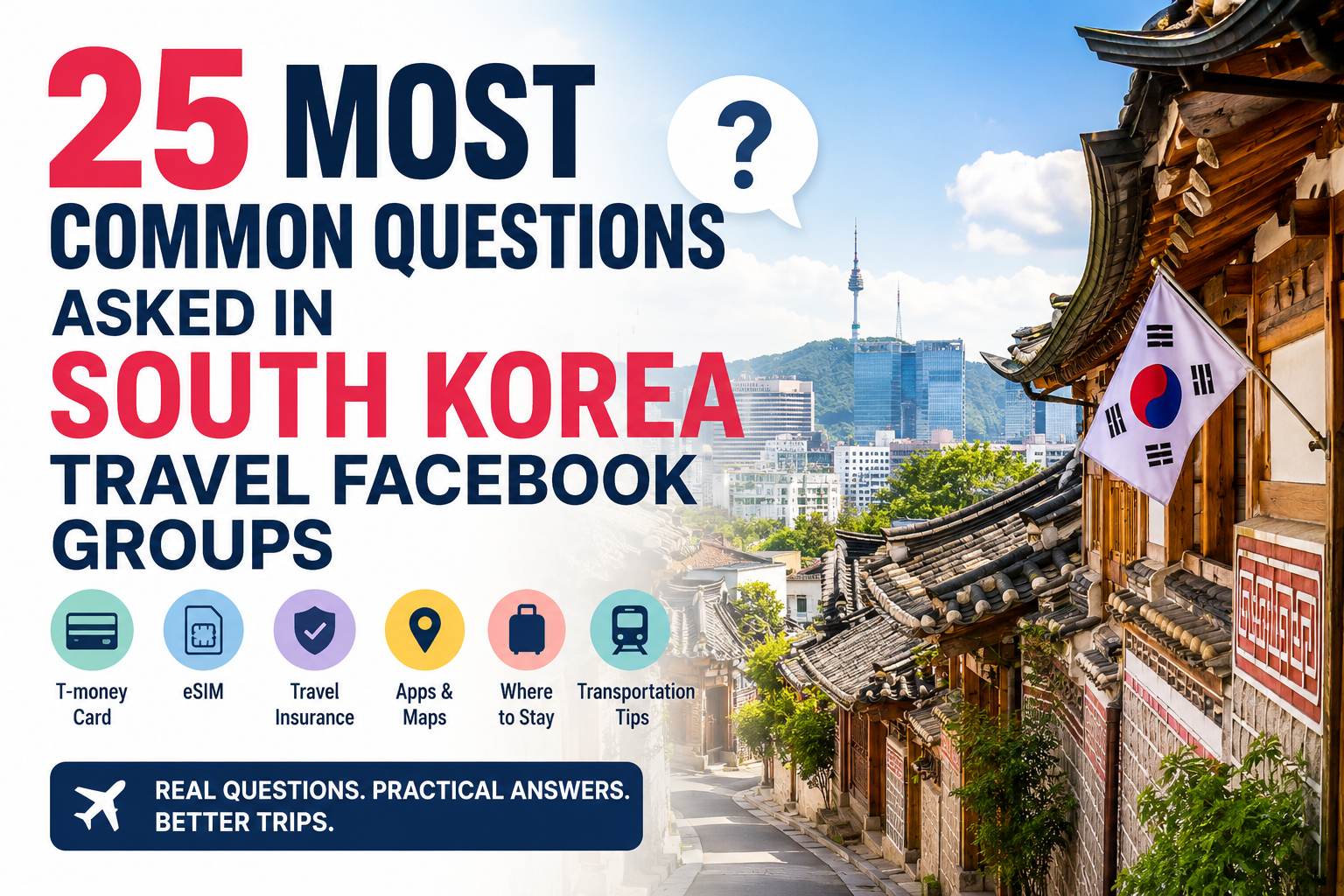
Planning a trip to South Korea can feel exciting, but also confusing. If you have joined a South Korea travel tips and planning Facebook group, you have probably seen the same questions appear again and again.
Travelers often ask about T-money cards, eSIMs, cash, taxis, Naver Map, safety, airport transfers, travel insurance, and where to stay in Seoul.
This guide brings those common questions together in one place so you can plan your Korea trip with more confidence.
1. Do I Need Cash in South Korea?
South Korea is very card-friendly, but carrying a small amount of Korean won is still useful. Cash can help at traditional markets, small food stalls, older local restaurants, and some rural areas.
For most travelers, using a credit card for hotels, shopping, restaurants, and cafés is normal. Still, it is smart to keep some cash for backup.
If you want a deeper breakdown of cards, cash, and mobile payments, our ✅ Complete Guide to Paying in South Korea explains what travelers should prepare before arriving.
2. Do I Need a T-money Card?
Yes, most visitors should get a T-money card or another Korean transportation card. Korea’s official tourism information explains that transportation cards are rechargeable prepaid cards that can be used for public transportation and often for payments at stores as well.
A T-money card is useful for subways, buses, some taxis, and convenience stores. It also makes transfers much easier than buying single tickets every time.
Planning to use public transportation? Our ✅ T-money Card Korea Complete Guide explains where to buy a card, how to top it up, and how to use it on buses and subways.
3. Which eSIM Should I Buy for Korea?
Many travelers prefer buying an eSIM before arriving in Korea. With an eSIM, you can connect to mobile data soon after landing without waiting in line for a physical SIM card.
This is especially helpful because you may need internet immediately for maps, taxi apps, hotel addresses, translation, and airport transfer details.
Need Mobile Internet in Korea?
Setting up an eSIM before departure lets you use maps, translation apps, and ride-hailing services as soon as you arrive.
Google Maps can be useful for checking places, but many travelers use Naver Map or KakaoMap for better local navigation. VisitKorea also lists Naver Map as a helpful app for route suggestions, estimated travel time, and local place information.
For Korea travel, it is best to install Naver Map before your trip and save your hotel, airport, stations, restaurants, and attractions in advance.
5. Is Korea Safe for Solo Travelers?
South Korea is generally considered a safe destination for solo travelers, including solo female travelers. Many visitors feel comfortable walking around busy areas at night.
However, normal travel caution is still important. Watch your belongings, avoid drinking too much in unfamiliar areas, and use official transportation when returning late at night.
6. Do I Need Travel Insurance for Korea?
Travel insurance is not something travelers should ignore. Even if your trip goes smoothly, unexpected illness, flight delays, lost luggage, or cancellations can create extra costs.
It can be especially useful if your Korea itinerary includes multiple cities, outdoor activities, winter travel, or expensive prepaid bookings.
7. What Apps Should I Download Before Going to Korea?
The most commonly recommended apps are Naver Map, KakaoMap, Kakao T, Papago, KakaoTalk, and a subway app. These apps help with navigation, taxis, translation, messaging, and public transportation.
If you only download one map app, choose Naver Map or KakaoMap. If you plan to take taxis, Kakao T is very helpful.
8. Can I Use Uber in Korea?
Uber is available in Korea in some form, but many locals and travelers use Kakao T for taxis. Kakao T is one of the most useful apps for airport rides, late-night returns, and areas where hailing a taxi is difficult.
9. Where Should First-Time Visitors Stay in Seoul?
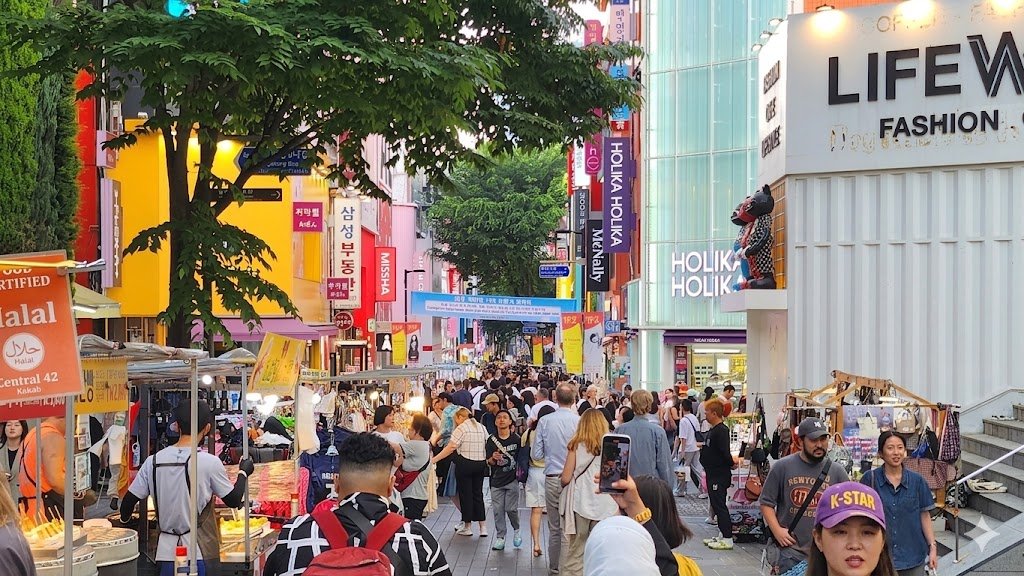
For first-time visitors, popular areas include Myeongdong, Hongdae, Insadong, Jongno, Gangnam, and Seoul Station. The best area depends on your travel style.
Myeongdong is convenient for shopping and sightseeing. Hongdae is better for nightlife and cafés. Insadong and Jongno are good for culture, palaces, and traditional streets.
10. How Many Days Do I Need in Korea?
For a first trip, 5 to 7 days is a comfortable starting point. With 5 days, you can focus on Seoul and one day trip. With 7 to 10 days, you can add Busan, Gyeongju, Jeju, or another regional city.
11. Is Seoul Expensive?
Seoul can be affordable or expensive depending on your travel style. Public transportation is reasonably priced, convenience stores are useful, and casual Korean meals can be budget-friendly.
Hotels, cafés, shopping, skincare, theme parks, and nightlife can increase your total cost quickly.
12. Should I Book Airport Transfer in Advance?
If you arrive during the day and travel light, airport trains and buses are easy options. If you arrive late at night, travel with family, or carry heavy luggage, booking a private transfer or using a taxi may be more comfortable.
13. Can I Use My Foreign Credit Card Everywhere?
Visa and Mastercard are widely accepted in Korea. However, some smaller shops, machines, or local services may not accept foreign cards. This is why carrying a backup card and some cash is a good idea.
14. Is English Widely Spoken in Korea?
English is common in airports, hotels, major tourist attractions, and some restaurants in Seoul. Outside tourist areas, English may be limited.
Using Papago or another translation app can make your trip much easier.
15. What Should I Know About Korean Restaurants?
Some restaurants require one order per person. Some BBQ restaurants may require a minimum of two servings. In busy local restaurants, menus may be only in Korean, so a translation app is useful.
16. Do I Need to Tip in Korea?
Tipping is not a normal part of Korean culture. In most restaurants, cafés, taxis, and hotels, tipping is not expected.
17. Is Korea Good for Family Travel?
Yes. Korea is a strong family travel destination because public transportation is convenient, cities are clean, and there are many family-friendly attractions.
Families often enjoy aquariums, theme parks, palaces, parks, museums, cafés, shopping malls, and easy day trips from Seoul.
18. What Is the Best Season to Visit Korea?
Spring and autumn are the most popular seasons. Spring is famous for cherry blossoms, while autumn is known for cooler weather and fall foliage.
Summer can be hot and humid, while winter can be very cold but good for snow, ski trips, and winter festivals.
19. Should I Visit Busan or Jeju?
Busan is easier to add to a Seoul itinerary because it is connected by KTX train. Jeju is beautiful but usually requires a domestic flight and more planning.
If you have limited time, Busan may be easier. If you want nature, beaches, and a slower trip, Jeju can be worth it.
20. Are Convenience Stores Useful in Korea?
Yes. Korean convenience stores are extremely useful for travelers. You can buy drinks, snacks, simple meals, umbrellas, chargers, toiletries, and sometimes transportation card top-ups.
21. Can I Travel Korea Without Speaking Korean?
Yes, many travelers visit Korea without speaking Korean. However, learning a few simple phrases helps a lot.
Useful phrases include hello, thank you, excuse me, how much is it, and where is this place?
22. What Should I Pack for Korea?
Pack based on the season. Comfortable shoes are very important because travelers often walk much more than expected in Seoul.
Also bring a universal adapter, portable charger, medication, travel documents, and a backup payment card.
23. What Emergency Numbers Should I Know?
For emergencies in Korea, travelers should know 112 for police and 119 for fire or ambulance. Korea also has the 1330 Travel Helpline, which provides tourist information by phone and real-time chat.
24. What Is the Biggest Mistake First-Time Visitors Make?
The biggest mistake is trying to do too much in one day. Seoul looks easy on a map, but travel time, walking, crowds, and café or restaurant waiting times can slow you down.
Choose fewer places and enjoy them properly.
25. Are Facebook Travel Groups Useful for Korea Planning?
Yes, Facebook travel groups can be very useful because they show real questions from real travelers. You can learn from recent experiences, mistakes, and recommendations.
However, always double-check important information such as visa rules, entry requirements, medical advice, and transportation updates through official sources.
Final Thoughts
South Korea travel Facebook groups are helpful because they show what travelers are actually worried about before arriving. Most questions come down to a few practical topics: money, internet, transportation, safety, apps, accommodation, and itinerary planning.
If you prepare these basics before your trip, your Korea travel experience will feel much smoother from the moment you land.
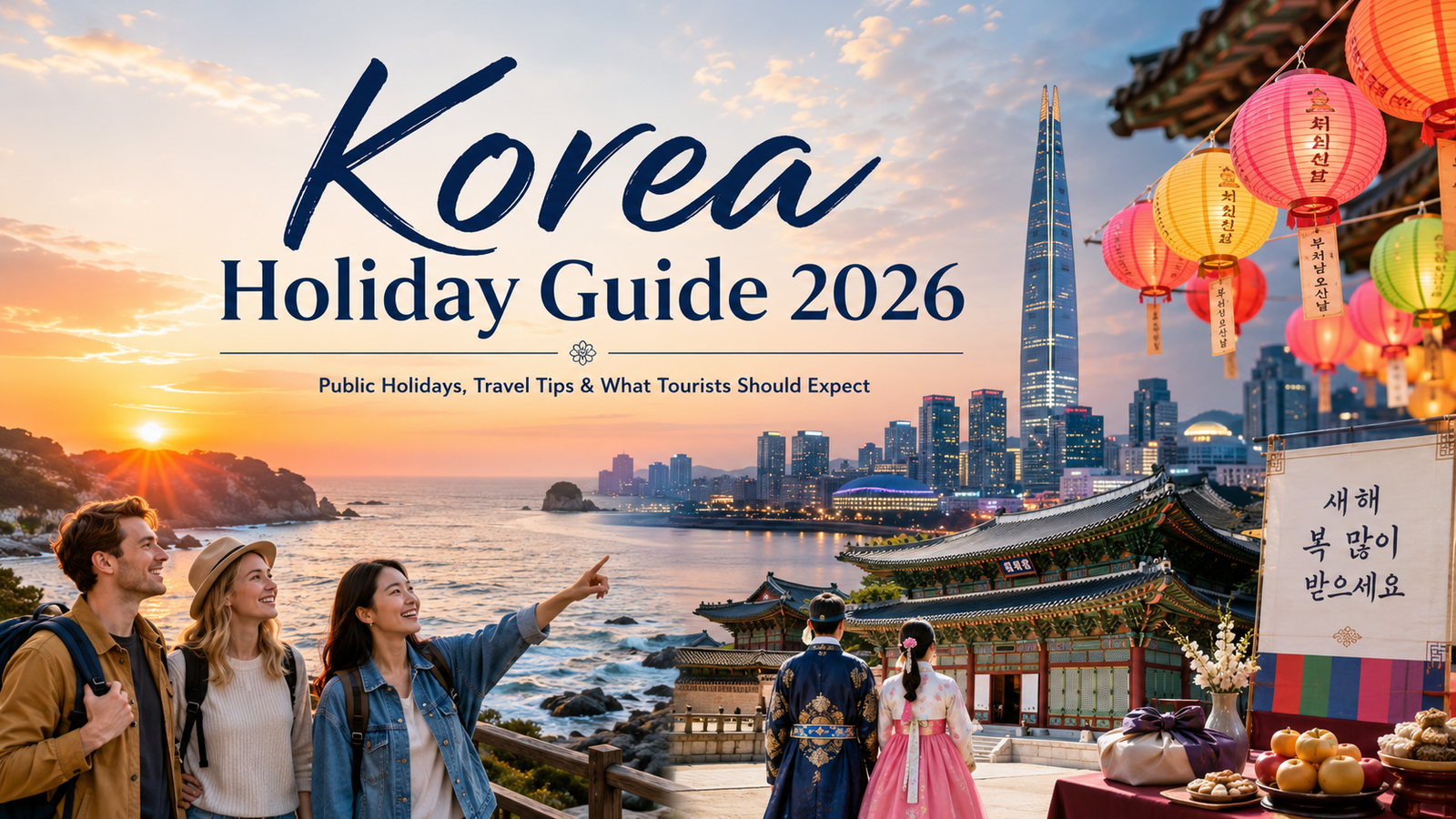
Planning a trip to South Korea in 2026? Then it is worth checking the Korean holiday calendar before you book your flights, hotels, trains, or tours.
Korean holidays can be beautiful times to visit. You may see traditional events, seasonal festivals, lantern displays, family celebrations, and quieter city streets. But some holidays can also affect transportation, restaurant hours, museum schedules, shopping areas, and hotel availability.
This guide explains the major public holidays in South Korea in 2026, what they mean for tourists, which holidays are great for travel, and which ones require extra planning.
If this is your first trip to Korea, this guide will help you understand not only when Korean holidays happen, but also how they may affect your actual travel experience.
Before finalizing your itinerary, you may also want to read our South Korea Travel Checklist Before You Fly to make sure your passport, mobile data, payment methods, airport arrival plan, and essential travel preparations are ready.
What Does “Korea Holiday” Mean?
When travelers search for “Korea holiday,” they may be looking for different things.
Some people want to know the public holiday dates in South Korea. Others want to know whether shops and restaurants are open. Some are checking whether it is a good time to visit Seoul, Busan, Jeju, or other parts of Korea.
In this guide, “Korea holiday” means three things:
Public holidays in South Korea
Traditional Korean holidays such as Seollal and Chuseok
Practical travel tips for tourists visiting Korea during holiday periods
This is important because not every Korean holiday affects travelers in the same way. Some holidays are easy and enjoyable for tourists. Others, especially Seollal and Chuseok, can make transportation and bookings much more difficult.
South Korea Public Holidays 2026 Calendar
Here is a quick calendar of major Korean holidays in 2026, with simple travel notes for foreign visitors.
Holiday
2026 Date
Tourist Impact
New Year’s Day
January 1
Some businesses may close or open late. Sunrise spots can be popular.
Seollal Holiday
February 16–18
One of Korea’s biggest family holidays. Trains, buses, and highways can be very crowded.
Independence Movement Day / Substitute Holiday
March 1 / March 2
Historical sites and central Seoul areas may be meaningful to visit.
Labor Day
May 1
Some workplaces and businesses may close, but tourist areas often remain active.
Children’s Day
May 5
Family attractions, amusement parks, zoos, and kid-friendly places can be crowded.
Buddha’s Birthday / Substitute Holiday
May 24 / May 25
Temples, lantern displays, and cultural sites can be especially beautiful.
Local Election Day
June 3
Public holiday for voting. Some services and institutions may operate differently.
Memorial Day
June 6
A solemn national day. Some ceremonies may take place.
Constitution Day
July 17
National observance with limited direct impact on most tourists.
Liberation Day / Substitute Holiday
August 15 / August 17
Historical and patriotic events may take place.
Chuseok Holiday
September 24–26
One of Korea’s biggest family holidays. Transportation can be very crowded.
National Foundation Day / Substitute Holiday
October 3 / October 5
Cultural and national events may take place.
Hangeul Day
October 9
A great day to learn about the Korean alphabet and Korean culture.
Christmas Day
December 25
Shopping streets, churches, and city lights can be popular.
For tourists, the most important holidays to plan around are usually Seollal, Chuseok, Children’s Day, Buddha’s Birthday, and Christmas.
Best Korean Holidays for Tourists
Not all public holidays are difficult for travelers. Some Korean holidays can actually make your trip more memorable.
Here are some of the best Korean holidays for tourists.
1. Buddha’s Birthday
Buddha’s Birthday is one of the most visually beautiful holidays in Korea. In 2026, Buddha’s Birthday falls on May 24, with a substitute holiday on May 25.
Around this period, many temples are decorated with colorful lanterns. In Seoul, places such as Jogyesa Temple, Bongeunsa Temple, and nearby cultural areas can feel especially atmospheric.
For tourists, this is one of the best holidays because it gives you a chance to experience Korean Buddhist culture, night lanterns, temple decorations, and peaceful city walks.
What tourists may enjoy:
Colorful lantern displays
Temple visits
Cultural events
Evening walks in central Seoul
Photography opportunities
Travel tip: Temple areas may be more crowded than usual, especially in the evening. Try to visit earlier in the day if you prefer a quieter experience.
2. Hangeul Day
Hangeul Day is celebrated on October 9. It honors the creation of Hangeul, the Korean writing system.
For foreign visitors, this is a great holiday because Hangeul is one of the most important parts of Korean culture. Even if you do not speak Korean, learning a few letters before or during your trip can make travel more fun.
Good places to connect with Hangeul Day include:
Gwanghwamun Square
King Sejong statue area
National museums
Korean language exhibitions
Cultural experience centers
This holiday is especially useful for travelers who are interested in Korean culture, history, language, K-pop lyrics, Korean dramas, or Korean food menus.
3. Liberation Day
Liberation Day is observed on August 15, with a substitute holiday on August 17 in 2026.
This holiday commemorates Korea’s liberation from Japanese colonial rule in 1945. It is a meaningful day for understanding modern Korean history.
For tourists, this can be a good time to visit places such as:
Gwanghwamun Square
Seodaemun Prison History Hall
The War Memorial of Korea
National Museum of Korean Contemporary History
Historical walking routes in central Seoul
Travel tip: This holiday can include ceremonies and patriotic events. Some areas may be busier than usual, but it can also be a meaningful time to understand Korea beyond shopping and sightseeing.
4. Christmas in Korea
Christmas is a public holiday in South Korea, but it feels different from Seollal or Chuseok. It is not usually a large family migration holiday. Instead, it is often associated with churches, shopping, restaurants, dates, lights, and winter city atmosphere.
Popular areas during Christmas season may include:
Myeongdong
Hongdae
Seongsu
Gangnam
COEX
Lotte World Tower area
Major department stores
For tourists, Christmas can be a fun time to visit Seoul, especially if you enjoy winter lights, shopping streets, cafes, and festive city walks.
Travel tip: Restaurants and popular cafes may be busy, especially in central Seoul. Book in advance if you plan to visit a popular restaurant.
5. New Year’s Day
New Year’s Day is January 1. In Korea, some people welcome the new year by watching the first sunrise of the year.
For many Koreans, this is more than just a beautiful view. The first sunrise symbolizes a fresh start, new hopes, good luck, and personal wishes for the year ahead. That is why some people leave Seoul on the evening of December 31 and travel overnight to the east coast, especially to Gangwon-do, to see the first rising sun of the new year.
Gangwon-do is popular because it faces the East Sea, where the sunrise appears clearly over the ocean. Compared with inland cities, the eastern coastline gives visitors a wide, open view of the sun rising from the horizon. For many Koreans, watching the first sunrise over the sea feels more symbolic and emotional than seeing it from the city.
One of the most famous places is Jeongdongjin in Gangneung. Jeongdongjin is widely known as a sunrise destination, and the Korea Tourism Organization describes the Jeongdongjin Sunrise Festival as an event where many people gather on New Year’s Eve and New Year’s Day at Sandglass Park to celebrate a fresh start.
Jeongdongjin is also famous for its seaside train station and its close connection to the ocean. Visit Korea notes that Jeongdongjin Station is known as one of the train stations closest to the sea in the world, and the area attracts many sunrise spectators.
Recommended sunrise spots in Gangwon-do include:
Jeongdongjin Beach, Gangneung — Korea’s most iconic New Year sunrise spot, famous for its beach, train station, Sandglass Park, and sunrise festival.
Gyeongpo Beach, Gangneung — a wide beach area that is easier to combine with cafes, lake views, and Gangneung city travel.
Anmok Beach, Gangneung — good for travelers who want a sunrise view plus Gangneung’s famous coffee street atmosphere.
Sokcho Beach, Sokcho — a good choice if you also want to visit Seoraksan, Sokcho Jungang Market, or the East Sea coast.
Naksan Beach and Naksansa Temple, Yangyang — a beautiful option for travelers who want both a sunrise view and a temple atmosphere.
Chuam Chotdaebawi Rock, Donghae — known for dramatic rock formations and a photogenic sunrise scene.
Travel tip: If you want to see the first sunrise of the year on the Gangwon coast, do not treat it like a normal day trip. Roads, trains, beaches, parking areas, and sunrise viewpoints can become extremely crowded around New Year’s Eve and early New Year’s morning. Book transportation and accommodation early, dress very warmly, and arrive much earlier than sunrise time.
For tourists, this can be a memorable Korean winter experience. But if you prefer a quieter New Year’s Day, it may be better to stay in Seoul and visit a local park, riverside area, or viewpoint instead.
Korean Holidays Tourists Should Plan Around: Seollal and Chuseok
The two most important traditional holidays in Korea are Seollal and Chuseok.
These are beautiful and meaningful holidays, but they also require extra planning if you are traveling in Korea.
What Is Seollal?
Seollal is Korean Lunar New Year. In 2026, the Seollal holiday period runs from February 16 to February 18.
During Seollal, many Koreans travel to their hometowns to spend time with family. Traditional activities may include family gatherings, ancestral rituals, traditional food, and New Year greetings.
For tourists, Seollal can be interesting because you may see a quieter version of Seoul. Some palaces and cultural sites may also offer special holiday programs.
However, Seollal can also create travel challenges.
Possible tourist impacts:
KTX and intercity train tickets can sell out quickly
Express buses may be very busy
Highways can be heavily congested
Some small restaurants and local shops may close
Family attractions may be crowded before or after the holiday
Airports can be busy around the holiday period
If you plan to travel outside Seoul during Seollal, book transportation early.
What Is Chuseok?
Chuseok is often described as Korean Thanksgiving. In 2026, the Chuseok holiday period runs from September 24 to September 26.
Chuseok is one of Korea’s biggest family holidays. Many Koreans visit their hometowns, prepare traditional food, and spend time with relatives.
For tourists, Chuseok can be a unique time to experience Korean culture. Seoul may feel quieter than usual because many residents leave the city. Some cultural sites may hold special programs, and traditional palaces can be enjoyable to visit.
But like Seollal, Chuseok can affect transportation and business hours.
Possible tourist impacts:
Intercity trains and buses can become fully booked
Highways can be extremely crowded
Some restaurants, cafes, and small shops may close
Traditional markets may have special pre-holiday shopping crowds
Hotels in popular areas may become more expensive or limited
Domestic travel to Busan, Jeju, or other regions can be harder to book
If you are staying in Seoul during Chuseok, the trip can still be enjoyable. If you are traveling between cities, plan much earlier than usual.
Is It Good to Visit Korea During Seollal or Chuseok?
Yes, it can be good — but it depends on your travel style.
If you want a calm Seoul experience, Seollal or Chuseok can be interesting. Some parts of the city may feel quieter, and cultural attractions may offer holiday-themed programs.
However, if your plan includes moving between cities, taking trains, visiting multiple regions, or doing a packed itinerary, Seollal and Chuseok can be difficult.
Best for:
Staying mostly in Seoul
Visiting palaces and cultural sites
Enjoying quieter city streets
Experiencing traditional holiday atmosphere
Not ideal for:
Last-minute domestic travel
KTX or express bus trips between cities
Tight itineraries
Road trips during peak migration days
Travelers who need every restaurant and shop to be open
The safest approach is simple: if you visit Korea during Seollal or Chuseok, stay flexible and book important transportation early.
What Stays Open During Korean Public Holidays?
One of the most common questions travelers ask is whether shops and restaurants stay open during Korean holidays.
The answer depends on the holiday and the type of business.
In general, large tourist areas in Seoul often remain active, especially places like Myeongdong, Hongdae, Gangnam, Itaewon, and major shopping malls. However, smaller local restaurants, family-owned shops, traditional markets, clinics, offices, and some local businesses may close or change their hours.
During Seollal and Chuseok, closures are more common than during holidays like Christmas or Hangeul Day.
Usually more likely to stay open:
Major hotels
Convenience stores
Some cafes
Large shopping malls
Tourist attractions in central Seoul
Chain restaurants in busy areas
Airport facilities
Some subway and bus services
More likely to close or change hours:
Small local restaurants
Family-owned shops
Traditional neighborhood businesses
Clinics and offices
Government offices
Some museums or cultural facilities
Small markets outside major tourist zones
Travel tip: Always check opening hours on Naver Map, KakaoMap, Google Maps, or the official website before visiting during a holiday.
Is Public Transportation Available During Korean Holidays?
Yes. Public transportation usually continues to operate during Korean holidays, especially subways and city buses in Seoul.
However, long-distance transportation can become much harder during Seollal and Chuseok.
In Seoul, tourists can usually still use:
Subway
City buses
Airport Railroad
Taxis
Airport buses
Local trains
But for intercity travel, you should be careful with:
KTX
Express buses
Intercity buses
Domestic flights
Highway travel
During Seollal and Chuseok, many Koreans travel across the country. This means tickets can sell out quickly, roads can become very congested, and travel times can become much longer than usual.
Should Tourists Book Hotels Early During Korean Holidays?
Yes, especially during major holiday periods, long weekends, and popular event seasons.
Hotel prices and availability can change quickly around Korean holidays such as Seollal, Chuseok, Children’s Day, Christmas, and long weekends.
This is especially important if you are staying in:
Myeongdong
Hongdae
Gangnam
Seoul Station area
Jamsil
Busan
Jeju
Popular hanok stay areas
Festival or event districts
If you already know your travel dates, compare hotel options before the holiday period gets busy.
Compare Seoul hotels on Trip.com.
What Should Tourists Do Before Traveling During a Korean Holiday?
Before traveling during a Korean holiday, prepare a little more carefully than usual.
Here is a simple checklist.
Check the holiday dates before booking your flight
Book hotels earlier if traveling during a long weekend
Reserve KTX or intercity bus tickets early
Check restaurant opening hours
Prepare mobile data before arrival
Save your hotel address in Korean
Download map and taxi apps
Keep some flexibility in your itinerary
Avoid tight same-day city-to-city transfers
Check official attraction websites before visiting
During Korean holidays, you may need maps, taxi apps, translation tools, and restaurant search apps more than usual.
Having mobile data ready before you arrive can make holiday travel much easier, especially when opening hours, transportation routes, and restaurant availability change during public holidays.
Check South Korea eSIM options with Saily.
Best Places to Visit During Korean Holidays
If you are in Seoul during a public holiday, you can still enjoy many places.
Good options include:
Gyeongbokgung Palace
Changdeokgung Palace
Bukchon Hanok Village
Insadong
Jogyesa Temple
Gwanghwamun Square
Namsan Seoul Tower
Han River parks
Myeongdong
Hongdae
COEX
Lotte World Tower area
For traditional holidays such as Seollal and Chuseok, palaces and cultural sites can be especially meaningful. Some places may offer traditional games, performances, or holiday-themed experiences.
However, always check the official opening schedule before visiting. Holiday hours can change.
Korean Holidays That Can Be Crowded
Some holidays are especially busy for certain types of places.
Children’s Day can be crowded at:
Lotte World
Everland
Seoul Children’s Grand Park
Aquariums
Zoos
Family museums
Indoor playgrounds
Large shopping malls
Christmas can be crowded at:
Myeongdong
Hongdae
Gangnam
Seongsu
COEX
Department stores
Popular restaurants and cafes
Seollal and Chuseok can be crowded at:
Train stations
Express bus terminals
Highways
Airports
Traditional markets before the holiday
Some family attractions after the main holiday
If you dislike crowds, avoid major transport hubs on the first and last days of long holidays.
Korean Holidays That Are Great for Culture Lovers
If you are interested in Korean culture, some holidays are especially good for your itinerary.
Recommended holidays:
Buddha’s Birthday
Hangeul Day
Liberation Day
National Foundation Day
Seollal
Chuseok
These holidays can help you understand Korea beyond shopping, food, and K-pop. They connect to Korean history, family traditions, language, religion, and national identity.
For example, Hangeul Day is a great reason to visit Gwanghwamun and learn about King Sejong. Buddha’s Birthday is a beautiful time to visit temples. Chuseok and Seollal are important for understanding Korean family culture.
Are Museums and Palaces Open During Korean Holidays?
Many major attractions may remain open during public holidays, but schedules can vary.
Some palaces, museums, and cultural sites may open on holidays and sometimes offer special programs. However, others may close on certain days or adjust their hours.
Before visiting, check:
Official website
Naver Map listing
Google Maps listing
Recent reviews
Social media updates
Hotel concierge information
Do not assume that every attraction is open just because it is a tourist destination.
During major holidays such as Seollal and Chuseok, it is always safer to confirm in advance.
Are Restaurants Open During Korean Holidays?
Some restaurants are open, but not all.
In tourist areas, you can usually find food. Large hotels, chain restaurants, shopping malls, and popular neighborhoods often have dining options.
But during Seollal and Chuseok, many family-owned restaurants may close because staff and owners also spend time with family.
If you are traveling during Seollal or Chuseok, it is smart to:
Save several restaurant options in advance
Check recent opening-hour updates
Eat in major tourist areas if unsure
Use hotel restaurants as backup
Keep convenience stores in mind for simple meals
Avoid relying on one specific small restaurant
Convenience stores in Korea are very useful during holidays. Even if many small restaurants close, convenience stores usually provide snacks, drinks, ready-to-eat meals, coffee, and basic travel items.
Are Shops Open During Korean Holidays?
Large shopping malls and department stores may open during many holidays, but their schedules can vary.
During Seollal and Chuseok, some malls may close for one day or adjust hours. Traditional markets may also have different schedules.
Shopping areas such as Myeongdong, Hongdae, Gangnam, and COEX are often active, but individual shops can still close or open late.
If shopping is an important part of your trip, check hours before going.
This is especially important for:
Department stores
Beauty stores
Traditional markets
Small boutiques
Local pharmacies
Clinics
Specialty stores
Is Seoul Quiet During Korean Holidays?
Sometimes, yes.
During Seollal and Chuseok, many Seoul residents leave the city to visit their hometowns. This can make certain neighborhoods feel quieter than usual.
For tourists, this can be a good thing. Palaces, city streets, and some neighborhoods may feel calmer. But the trade-off is that some restaurants and shops may be closed.
Seoul during Seollal or Chuseok can be enjoyable if you plan your days around major attractions, cultural sites, hotels, parks, and areas that are likely to remain open.
Best Travel Strategy for Korea Holiday Periods
The best strategy depends on your itinerary.
If you are staying mostly in Seoul:
Korean holidays can be manageable
Use subway and taxis for local travel
Check restaurant hours
Visit palaces, parks, temples, and major districts
Keep your schedule flexible
If you are traveling between cities:
Book trains early
Avoid peak departure and return days
Consider staying in one city longer
Avoid same-day long-distance transfers
Check domestic flight prices early
If you are visiting with family:
Avoid Children’s Day attractions unless you are ready for crowds
Book family rooms early
Choose hotels near subway stations
Keep backup indoor plans
Make restaurant reservations when possible
If you are visiting during winter holidays:
Check opening hours around New Year’s Day and Christmas
Prepare warm clothing
Book popular restaurants early
Expect festive crowds in central Seoul
FAQ: Korea Holidays for Tourists
What is the biggest holiday in Korea?
The two biggest traditional holidays in Korea are Seollal and Chuseok. Seollal is Korean Lunar New Year, and Chuseok is often described as Korean Thanksgiving. Both are major family holidays and can strongly affect transportation.
Is Korea good to visit during public holidays?
Yes, Korea can be good to visit during public holidays, especially if you are staying in Seoul and planning cultural activities. However, during Seollal and Chuseok, long-distance transportation can be very crowded, and some restaurants or shops may close.
Are shops open during Korean public holidays?
Many shops in tourist areas may remain open, but some local shops, markets, clinics, and small businesses may close or change hours. During Seollal and Chuseok, closures are more common.
Do restaurants close during Seollal or Chuseok?
Some restaurants close during Seollal and Chuseok, especially small family-owned restaurants. However, tourist areas, hotels, malls, chain restaurants, and convenience stores usually provide options.
Is public transportation available during Korean holidays?
Yes, subways, buses, taxis, and airport transportation usually continue to operate. However, intercity trains, express buses, highways, and domestic flights can become very crowded during Seollal and Chuseok.
Is it a good idea to visit Korea during Chuseok?
It can be a good idea if you stay mostly in Seoul and plan a flexible itinerary. But if you want to travel between cities, Chuseok can be difficult because many Koreans travel to their hometowns.
What is the difference between Seollal and Chuseok?
Seollal is Korean Lunar New Year and usually takes place in winter. Chuseok is a harvest holiday and usually takes place in autumn. Both are major family holidays in Korea.
Do tourists need to book hotels early during Korean holidays?
Yes. It is better to book hotels early during major holidays, long weekends, and popular travel periods. This is especially important for Seoul, Busan, Jeju, and popular tourist districts.
Final Thoughts
Korean holidays can make your trip more meaningful, but they can also affect transportation, opening hours, and hotel availability.
For most tourists, holidays such as Buddha’s Birthday, Hangeul Day, Christmas, and Liberation Day can be enjoyable and culturally interesting. Seollal and Chuseok are also meaningful, but they require more planning because many Koreans travel across the country during these periods.
If you are visiting Korea in 2026, check the holiday calendar before booking your itinerary. Plan early for major holidays, stay flexible, and use Korea’s public transportation and travel apps wisely.
A little preparation can help you enjoy Korea even during the busiest holiday seasons.
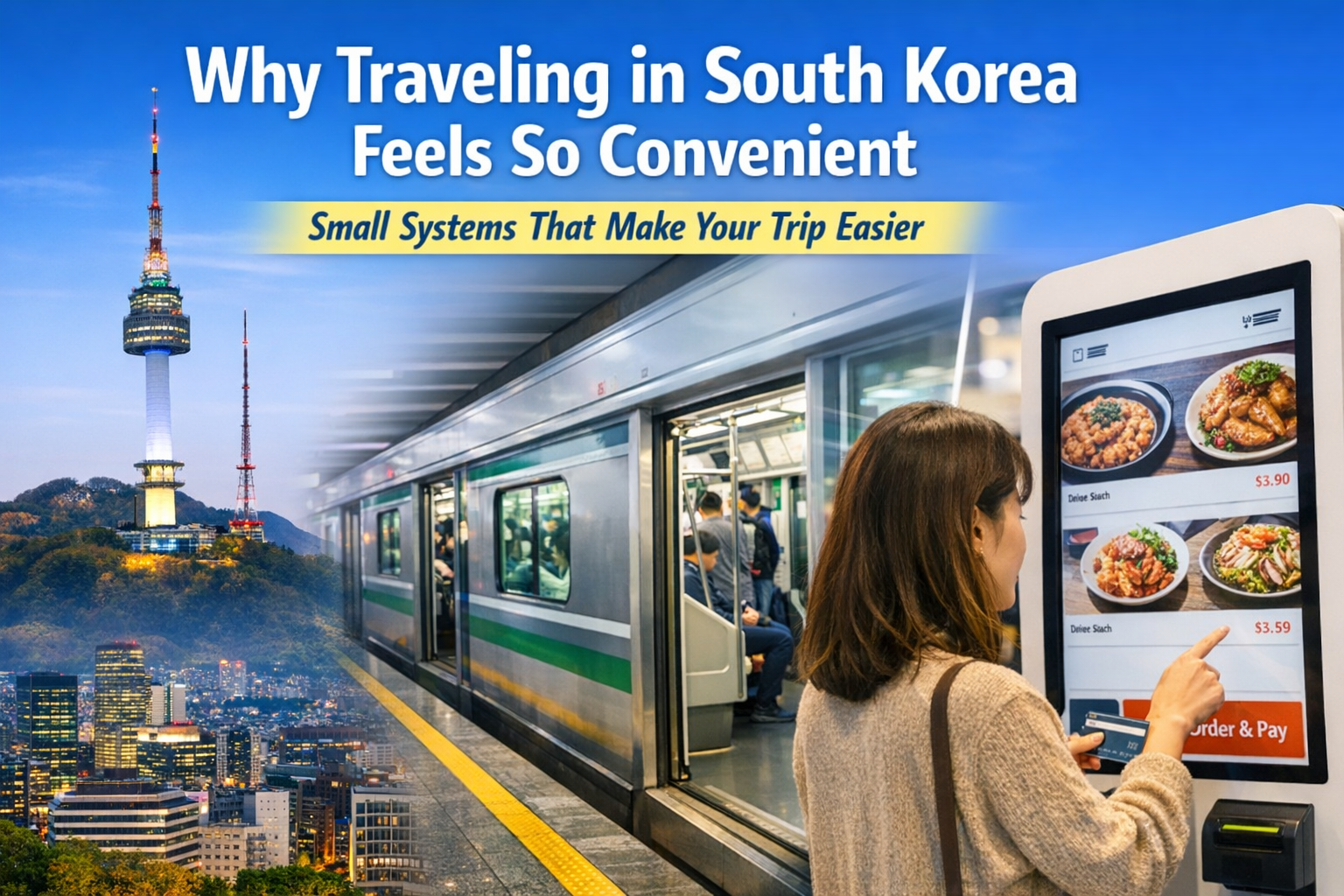
South Korea is not only popular for food, shopping, and famous attractions.
For many travelers, one of the biggest surprises is how convenient daily life feels.
Sometimes it is not one major attraction that stands out most. Instead, it is the small systems that make everyday travel easier.
You notice it when public transportation works smoothly, when ordering food feels less stressful, when convenience stores solve small problems quickly, or when useful services are available faster than expected.
These details may seem small at first, but together they make South Korea feel easier to navigate than many travelers expect.
1. Public Transportation Feels Efficient and Connected
One of the first things many travelers notice in Korea is how practical public transportation feels.
In Seoul and other major cities, it is often possible to move around easily without renting a car. Subways, buses, taxis, and walking routes connect well, which makes daily travel feel more manageable. Seoul’s public transportation system is also designed to work as an integrated system rather than a series of completely separate rides.
The system also feels efficient in a very practical way.
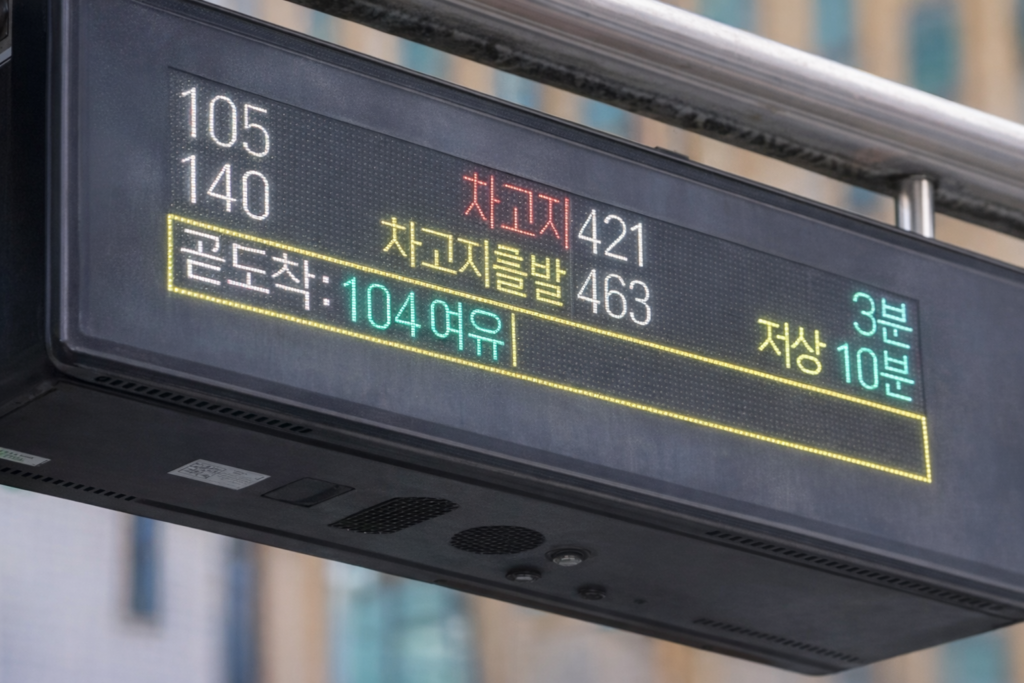
Bus arrival information is usually easy to check. Subway stations are organized clearly. Transfers are part of daily movement instead of feeling confusing or stressful. Official Seoul guidance explains that when you use a transportation card and transfer within the allowed time, transfer discounts apply rather than charging a completely separate full fare every time. In general, the transfer window is 30 minutes, or 1 hour between 9 PM and 7 AM the next day, and riders need to tap when getting off the bus for the discount to apply.
That makes a real difference for travelers. When buses and subways feel connected in both movement and cost, getting around Seoul feels smoother and often more budget-friendly too. Seoul’s official English transportation guide also notes that T-money users can transfer between bus and subway lines, which helps daily travel feel more seamless.
One important detail to remember is that transfer discounts in Korea generally apply when you use a transportation card such as T-money. That is one reason many travelers choose to get a transport card early in the trip, especially if they plan to use both buses and subways in Seoul.
Want easier transfers in Seoul? Check Korea transport card options on Klook before your trip.
2. Small Street Details Can Feel Surprisingly Smart
Korea also stands out because of the small details built into city life.
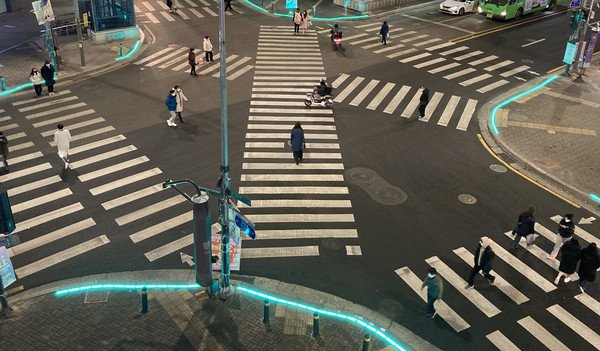
A simple example is the floor-level traffic light system seen in some areas. For pedestrians checking a map or looking at a phone, these lights make it easier to notice when the signal changes.
It may sound minor, but details like this leave a strong impression.
They make travelers feel that the city is designed around real daily behavior.
Another example appears in winter. Some bus stops have heated seats, which can make waiting outside much more comfortable on cold days.
These are not famous tourist attractions, but they are the kind of everyday details visitors often remember.
3. Staying Online Feels Easier Than Many Travelers Expect
A lot of travelers worry about internet access as soon as they land.
They need it for maps, translation apps, taxi apps, hotel messages, and booking confirmations. That is one reason digital convenience matters so much during a trip.
In Korea, staying connected often feels easier than expected.
Mobile service is strong, digital tools are widely used, and public Wi-Fi can also help travelers feel less disconnected when they need quick online access.
This makes a real difference during the trip. Being online is not just a bonus anymore. It affects navigation, food ordering, communication, and everyday movement.
For first-time visitors especially, that digital convenience can make Korea feel much easier to handle.
To use maps, taxi apps, translation tools, and booking confirmations smoothly throughout your trip, it helps to stay connected from the moment you arrive.
Check South Korea eSIM options with Saily before your trip.
Ordering food in a new country can be uncomfortable for many travelers.
Some worry about pronunciation. Others worry about ordering the wrong item or not understanding the menu clearly.
In Korea, self-service ordering systems often make that easier.
In many casual restaurants, cafes, and fast-food places, ordering through a kiosk is already normal. That means travelers often do not need to explain everything out loud first.
Instead, they can take their time, look through the menu, choose what they want, and pay step by step.
For solo travelers, this can feel especially convenient. It makes eating alone feel simpler and less awkward.
5. Convenience Stores Are More Useful Than Many Travelers Expect
Convenience stores in Korea are not just for grabbing a quick drink.
For many travelers, they become one of the most useful parts of daily travel.
You can quickly buy snacks, drinks, simple meals, toiletries, and small travel essentials. In some places, you can also prepare food right there, which makes convenience stores feel much more practical than many visitors expect.
That is one reason so many travelers become interested in Korean convenience store culture.
It is not only accessible. It is also efficient.
If you need a simple breakfast, a late-night snack, a quick drink, or a fast solution to a small problem, convenience stores are often one of the easiest answers.
6. Han River Food Culture Feels Especially Easy and Fun
Another thing that surprises many visitors is how easy outdoor food culture can feel in Korea.
At the Han River, people enjoy picnics, instant ramen, drinks, and even delivery food in a relaxed public space. For foreign travelers, this can feel both practical and memorable.
It is one of those experiences that feels very Korean.
Convenience stores are nearby. Public space is easy to use. Food options are accessible. Delivery culture is strong.
As a result, even a simple afternoon by the river can feel easy to plan and enjoyable to experience.
One especially memorable example is cooking instant ramen from a convenience store and eating it by the Han River. For many young travelers, that becomes one of the most fun and local-feeling parts of the trip.
7. Shared Bikes and Scooters Help With Short Trips
Korea also feels convenient because short-distance movement inside the city can be easier than expected.
Shared bikes and electric scooters can help with that final short distance between a subway station, a cafe street, a park, or a riverside area.
Sometimes a place feels too far to walk comfortably, but too short for a taxi. In those situations, shared mobility can feel very useful.
This kind of system makes city exploration feel lighter and more flexible.
For travelers exploring Seoul, it adds to the feeling that the city is designed for practical daily movement.
8. Fast Service Culture Shows Up in Everyday Life
Some of Korea’s convenience does not come from tourism infrastructure at all.
It comes from everyday service culture.
One example is eyewear. In many countries, getting glasses can take a long time. In Korea, some travelers are surprised by how quickly vision tests and glasses preparation can happen compared with what they are used to at home.
Another example is fast delivery culture.
Many travelers already know that Korea is fast, but they often do not fully understand that until they see how quickly items can arrive or how easy it is to get something delivered.
This creates a strong impression that Korea is not just modern. It is organized around saving time in daily life.
9. Daily Travel Often Feels Easy Without a Car
One of the most impressive things about Korea for many travelers is that daily life in major cities can feel very functional without driving.
You can arrive from the airport, reach your hotel, use public transportation, buy what you need, eat well, and move between neighborhoods without depending on a car.
That matters because in many destinations, transportation becomes one of the biggest sources of stress.
In Korea, the system often reduces that stress instead of adding to it.
This is especially useful for first-time visitors, solo travelers, and people planning shorter city trips.
It is also about feeling supported when something goes wrong.
That is another reason Korea can feel easier for travelers. Public systems, emergency response, and organized urban environments can help visitors feel more secure during the trip.
In urgent situations, emergency services are available, which can be reassuring for travelers dealing with unexpected problems.
However, emergency response is only one part of the picture. If you need hospital treatment, tests, or follow-up care, costs can still add up for international visitors. That is why travel medical insurance is worth considering before your trip.
Check travel medical insurance options with SafetyWing before your trip.
11. Korea Feels Convenient Because Many Small Systems Work Together
What makes travel in Korea feel easy is not just one attraction or one useful app.
It is the way many small systems work together.
Public transportation saves time. Convenience stores solve everyday problems. Kiosks reduce language stress. Public Wi-Fi and digital tools help travelers stay connected. Delivery culture adds flexibility. Shared mobility helps with short trips.
Even small details like heated bus stop seats or floor-level traffic lights can make a difference.
None of these things alone defines the whole trip.
But together, they create a strong feeling that daily life in Korea is organized in a practical, traveler-friendly way.
That is one reason many visitors leave with the same impression:
South Korea is not only exciting to visit. It is also surprisingly easy to navigate once you are here.
Accommodation is usually the second biggest expense after flights when traveling to South Korea. Prices vary depending on the city, season, and type of accommodation. Seoul is usually the most expensive, while cities like Busan or Daegu are often more affordable.
If you are still deciding which part of Seoul fits your trip best, this guide will provide a realistic breakdown of accommodation costs and the best areas to stay in 2026.
1. Realistic Hotel Prices in Seoul (2026)
Average nightly prices for a standard double room in central Seoul:
Budget Hotels / Guesthouses: $60 – $100
3-Star (Mid-range) Hotels: $100 – $180
4 to 5-Star (Luxury) Hotels: $200 – $400+
Note: Peak seasons such as April (Cherry Blossoms), July–August (Summer Vacation), and October (Autumn Leaves) can increase prices by 20–40%.
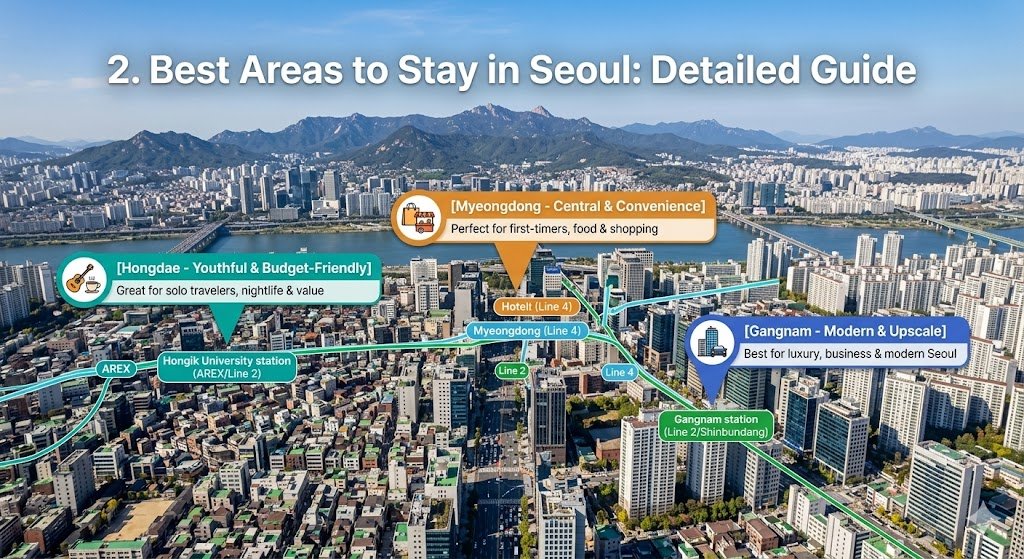
2. Best Areas to Stay in Seoul: Detailed Guide
Choosing the right neighborhood is key to saving money and time. Here are the most popular districts for tourists:
Myeongdong (The Heart of Shopping & Convenience)
Best for: First-time visitors and foodies.
Vibe: Vibrant neon lights and endless street food.
Pros: Extremely central with English-speaking staff in most hotels.
Budget: $120 – $200 per night.
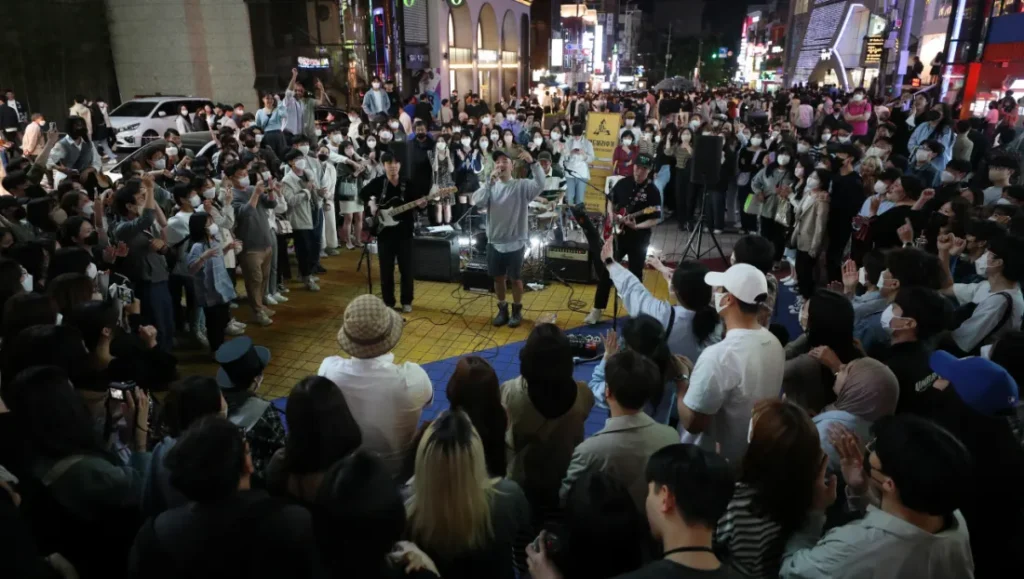
Hongdae (Youthful Energy & Budget-Friendly)
Best for: Solo travelers, night owls, and budget hunters.
Vibe: Indie music, street performances, and trendy cafes.
Pros: Directly connected to Incheon Airport via AREX. Many affordable studios.
Budget: $70 – $130 per night.
Gangnam (Modern Luxury & Sophistication)
Best for: Business travelers and luxury seekers.
Vibe: Skyscrapers, high-end fashion, and fine dining.
Pros: World-class 5-star hotel chains and high-tech amenities.
Budget: $200 – $400+ per night.
3. Unique Stays: Experience Korea Like a Local
If you want more than just a standard hotel room, consider these iconic “Only in Korea” experiences.
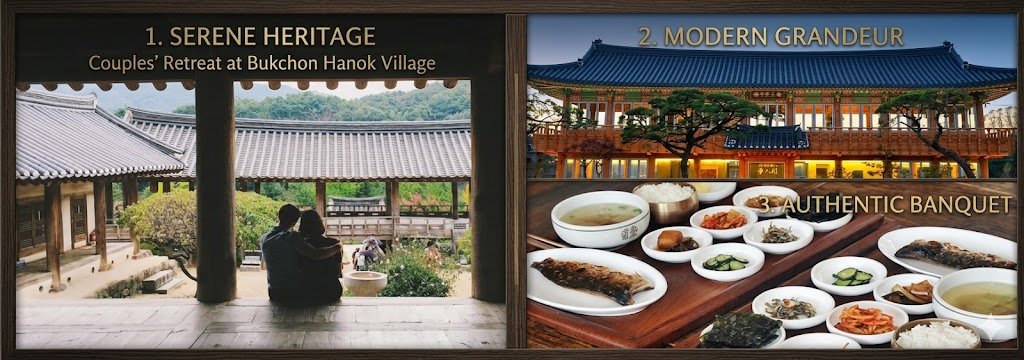
Rakkojae Seoul (Traditional Hanok): Stay in a 130-year-old restored Korean house in Bukchon. Experience Ondol (floor heating) and traditional tea ceremonies. (Approx. $250 – $450)
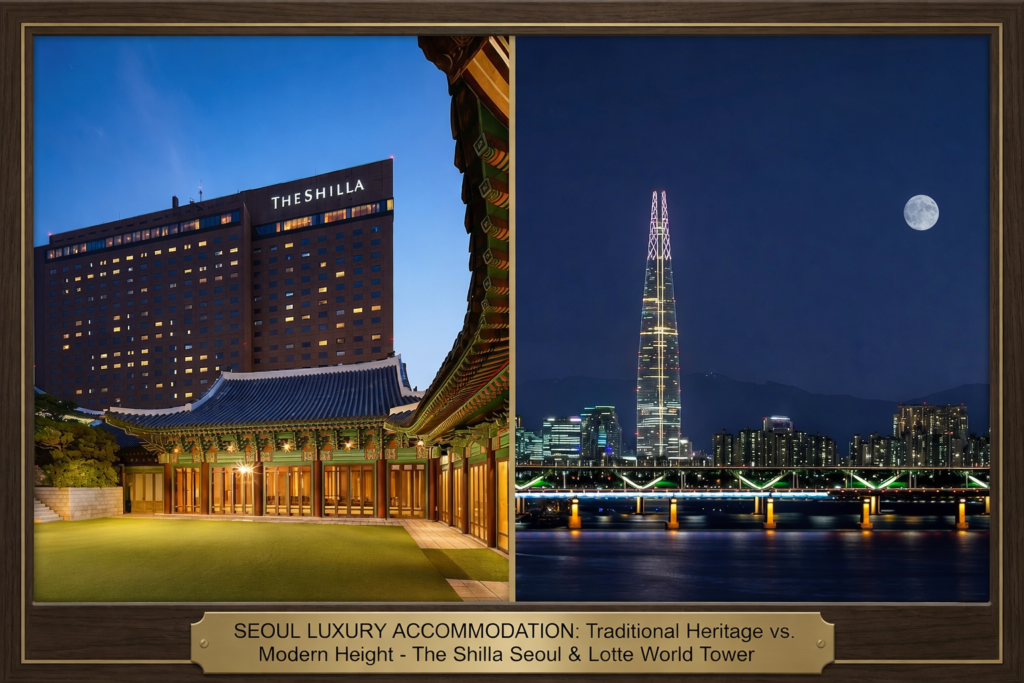
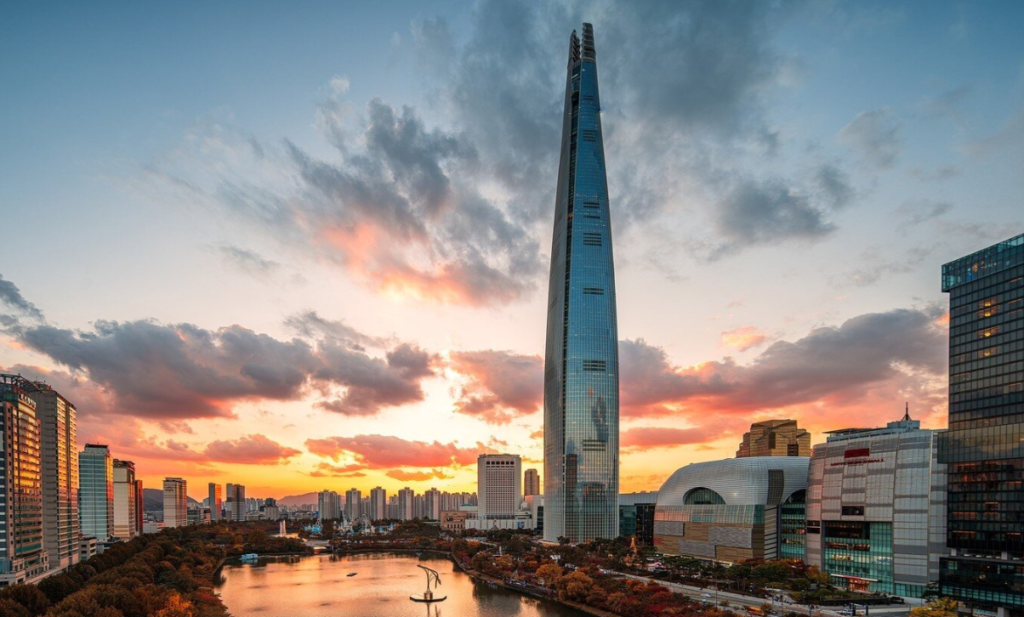
SIGNIEL SEOUL (Sky-High Luxury): Located on the 76th–101st floors of Lotte World Tower. Sleep above the clouds with a panoramic city view. (Approx. $600 – $1,200+)
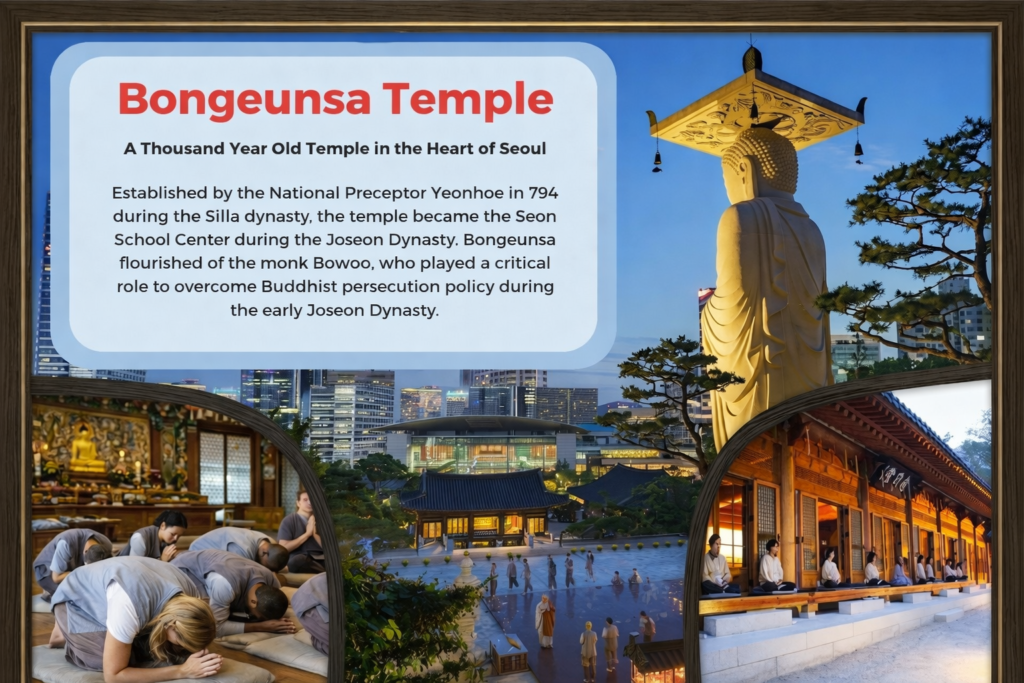
Bongeunsa Temple Stay (Spiritual Escape): A peaceful Buddhist temple in the middle of busy Gangnam. Learn Zen meditation and tea with monks. (Approx. $70 – $100 per person)
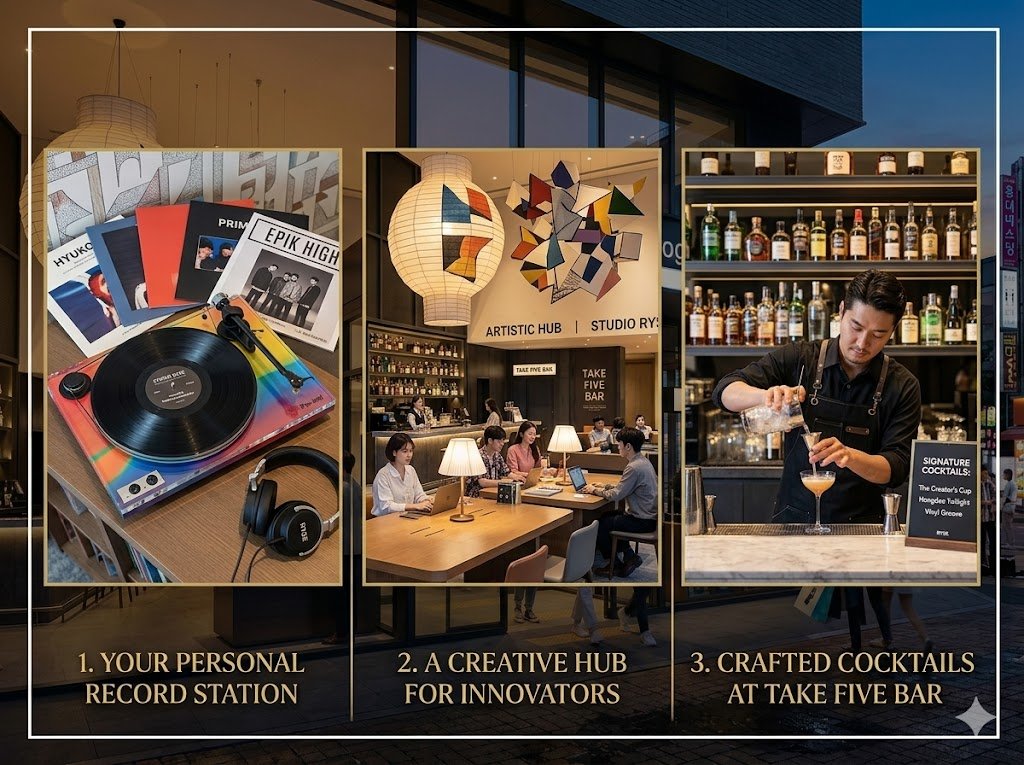
RYSE, Autograph Collection (Artistic Hub): A lifestyle hotel in Hongdae designed for creators, featuring custom artwork and vinyl players. (Approx. $180 – $300)
📺 Want to see more? Check out this detailed video tour of RYSE, Autograph Collection to see why it’s the trendiest spot in Hongdae:
Experience Korea’s Temple Stay — Book on Trip.com
4. How to Save on Accommodation in 2026
Book 6–8 Weeks in Advance: Popular spots like Hanok stays or luxury towers fill up fast.
Avoid National Holidays: Prices spike during Seollal (Lunar New Year) and Chuseok.
Stay Near Subway Stations: You don’t need to stay in the city center if you are near a Line 2 or Line 5 station.
Compare Total Prices: Always check for hidden cleaning fees (on Airbnb) or taxes (on some booking sites).
Compare Prices Before You Book
Affiliate disclosure: This article may contain affiliate links. If you book through these links, we may earn a commission at no extra cost to you.
Accommodation prices in South Korea change depending on the season and district. If you are planning your trip, it helps to compare current rates before reserving your stay.