Tag: Seoul Travel Tips

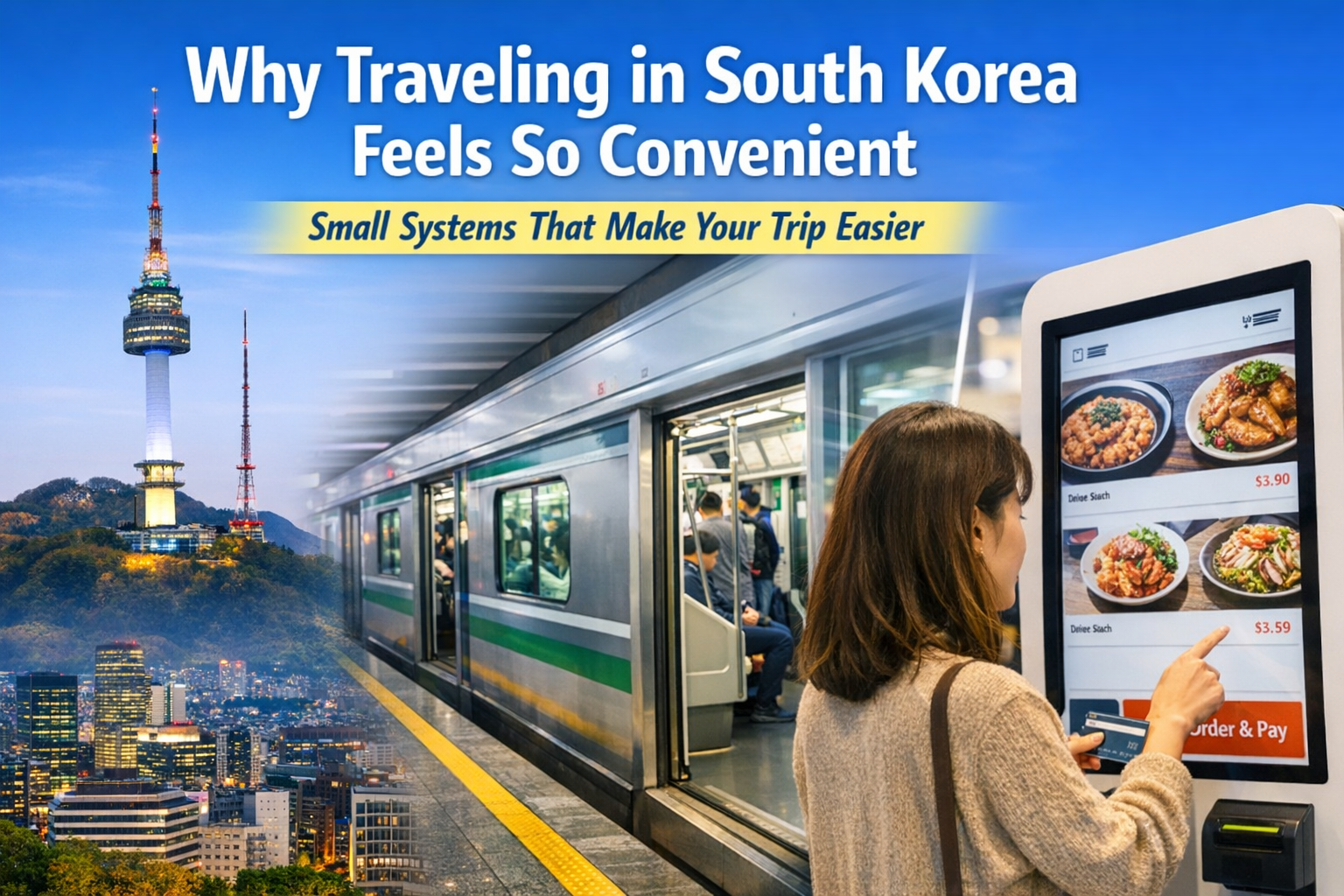
  • Why Traveling in South Korea Feels So Convenient: Small Everyday Systems Tourists Notice Right Away

    Why Traveling in South Korea Feels So Convenient: Small Everyday Systems Tourists Notice Right Away

    South Korea is not only popular for food, shopping, and famous attractions.

    For many travelers, one of the biggest surprises is how convenient daily life feels.

    Sometimes it is not one major attraction that stands out most. Instead, it is the small systems that make everyday travel easier.

    You notice it when public transportation works smoothly, when ordering food feels less stressful, when convenience stores solve small problems quickly, or when useful services are available faster than expected.

    These details may seem small at first, but together they make South Korea feel easier to navigate than many travelers expect.

    1. Public Transportation Feels Efficient and Connected
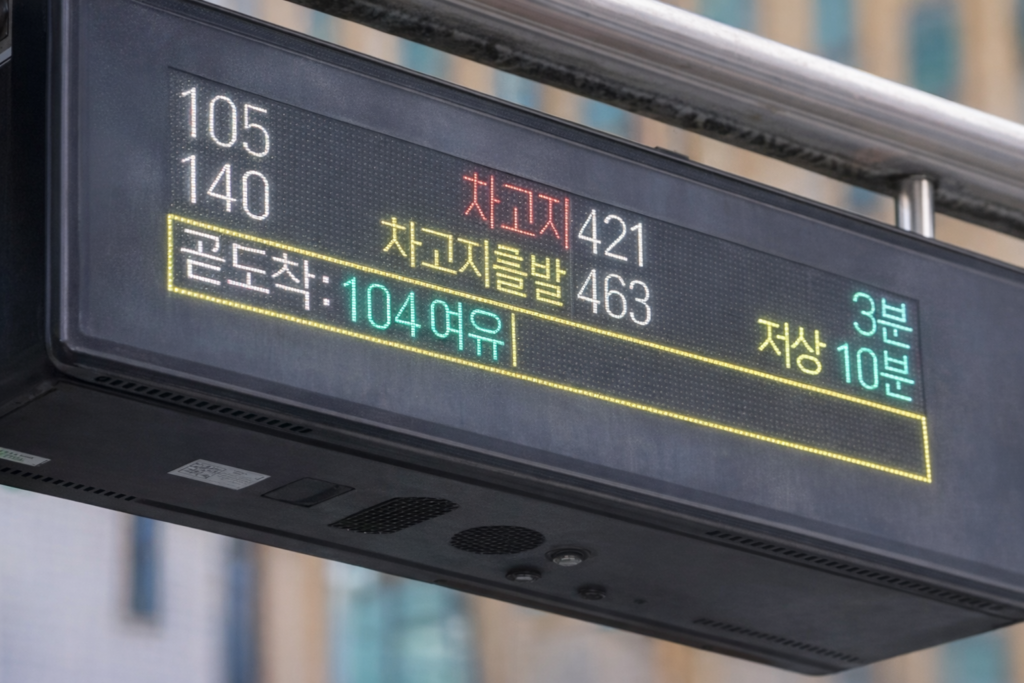
    Electronic bus information display in Seoul showing real-time bus arrival times, route numbers, and destination details at a bus stop.

    One of the first things many travelers notice in Korea is how practical public transportation feels.

    In Seoul and other major cities, it is often possible to move around easily without renting a car. Subways, buses, taxis, and walking routes connect well, which makes daily travel feel more manageable. Seoul’s public transportation system is also designed to work as an integrated system rather than a series of completely separate rides.

    The system also feels efficient in a very practical way.

    Bus arrival information is usually easy to check. Subway stations are organized clearly. Transfers are part of daily movement instead of feeling confusing or stressful. Official Seoul guidance explains that when you use a transportation card and transfer within the allowed time, transfer discounts apply rather than charging a completely separate full fare every time. In general, the transfer window is 30 minutes, or 1 hour between 9 PM and 7 AM the next day, and riders need to tap when getting off the bus for the discount to apply.

    That makes a real difference for travelers. When buses and subways feel connected in both movement and cost, getting around Seoul feels smoother and often more budget-friendly too. Seoul’s official English transportation guide also notes that T-money users can transfer between bus and subway lines, which helps daily travel feel more seamless.

    One important detail to remember is that transfer discounts in Korea generally apply when you use a transportation card such as T-money. That is one reason many travelers choose to get a transport card early in the trip, especially if they plan to use both buses and subways in Seoul.
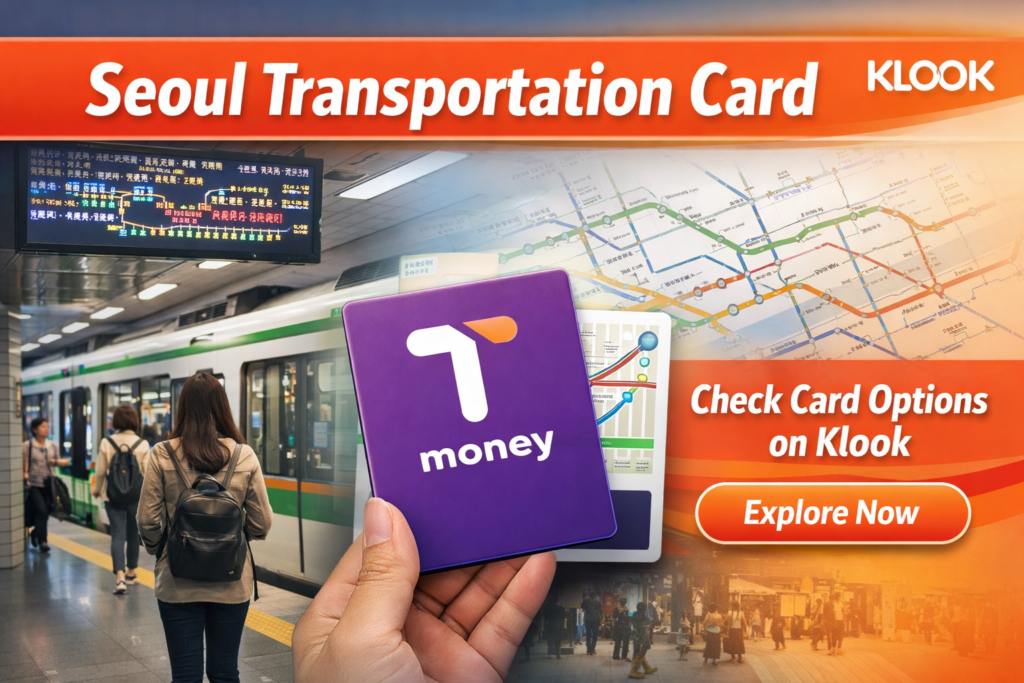
    Horizontal Klook banner promoting Seoul transport card options, featuring a subway station scene, a T-money card, and a call to check transport card options on Klook.

    Want easier transfers in Seoul? Check Korea transport card options on Klook before your trip.

    If you want to understand the system better before your trip, read Transportation in Korea: Complete Guide for Tourists and How to Use the Seoul Subway as a Tourist (2026 Guide).

    2. Small Street Details Can Feel Surprisingly Smart
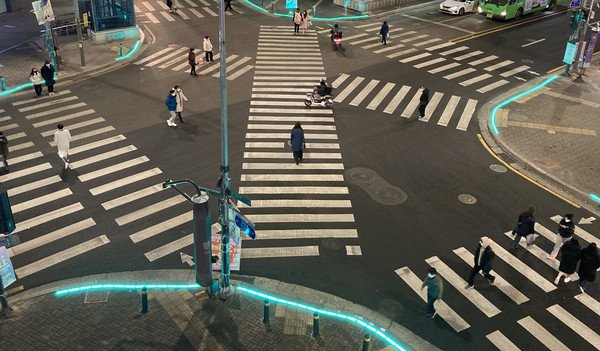
    Seoul crosswalk with floor-level traffic lights embedded along the curb to help pedestrians notice traffic signals more easily at night.

    Korea also stands out because of the small details built into city life.

    A simple example is the floor-level traffic light system seen in some areas. For pedestrians checking a map or looking at a phone, these lights make it easier to notice when the signal changes.

    It may sound minor, but details like this leave a strong impression.

    They make travelers feel that the city is designed around real daily behavior.

    Another example appears in winter. Some bus stops have heated seats, which can make waiting outside much more comfortable on cold days.

    These are not famous tourist attractions, but they are the kind of everyday details visitors often remember.

    3. Staying Online Feels Easier Than Many Travelers Expect

    A lot of travelers worry about internet access as soon as they land.

    They need it for maps, translation apps, taxi apps, hotel messages, and booking confirmations. That is one reason digital convenience matters so much during a trip.

    In Korea, staying connected often feels easier than expected.

    Mobile service is strong, digital tools are widely used, and public Wi-Fi can also help travelers feel less disconnected when they need quick online access.

    This makes a real difference during the trip. Being online is not just a bonus anymore. It affects navigation, food ordering, communication, and everyday movement.

    For first-time visitors especially, that digital convenience can make Korea feel much easier to handle.

    To use maps, taxi apps, translation tools, and booking confirmations smoothly throughout your trip, it helps to stay connected from the moment you arrive.

    Check South Korea eSIM options with Saily before your trip.
    Horizontal Saily eSIM banner in English showing a traveler with a smartphone, instant global connection, low-cost plans, and data refund benefits for South Korea travel.

    You can also read Do You Need an eSIM for South Korea in 2026? (Best Options Explained) and SIM vs eSIM for South Korea in 2026: Which One Should You Choose?

    4. Ordering Food Can Feel Less Stressful

    Ordering food in a new country can be uncomfortable for many travelers.

    Some worry about pronunciation. Others worry about ordering the wrong item or not understanding the menu clearly.

    In Korea, self-service ordering systems often make that easier.

    In many casual restaurants, cafes, and fast-food places, ordering through a kiosk is already normal. That means travelers often do not need to explain everything out loud first.

    Instead, they can take their time, look through the menu, choose what they want, and pay step by step.

    For solo travelers, this can feel especially convenient. It makes eating alone feel simpler and less awkward.

    5. Convenience Stores Are More Useful Than Many Travelers Expect

    Convenience stores in Korea are not just for grabbing a quick drink.

    For many travelers, they become one of the most useful parts of daily travel.

    You can quickly buy snacks, drinks, simple meals, toiletries, and small travel essentials. In some places, you can also prepare food right there, which makes convenience stores feel much more practical than many visitors expect.

    That is one reason so many travelers become interested in Korean convenience store culture.

    It is not only accessible. It is also efficient.

    If you need a simple breakfast, a late-night snack, a quick drink, or a fast solution to a small problem, convenience stores are often one of the easiest answers.

    6. Han River Food Culture Feels Especially Easy and Fun

    Another thing that surprises many visitors is how easy outdoor food culture can feel in Korea.

    At the Han River, people enjoy picnics, instant ramen, drinks, and even delivery food in a relaxed public space. For foreign travelers, this can feel both practical and memorable.

    It is one of those experiences that feels very Korean.

    Convenience stores are nearby. Public space is easy to use. Food options are accessible. Delivery culture is strong.

    As a result, even a simple afternoon by the river can feel easy to plan and enjoyable to experience.

    One especially memorable example is cooking instant ramen from a convenience store and eating it by the Han River. For many young travelers, that becomes one of the most fun and local-feeling parts of the trip.

    7. Shared Bikes and Scooters Help With Short Trips

    Korea also feels convenient because short-distance movement inside the city can be easier than expected.

    Shared bikes and electric scooters can help with that final short distance between a subway station, a cafe street, a park, or a riverside area.

    Sometimes a place feels too far to walk comfortably, but too short for a taxi. In those situations, shared mobility can feel very useful.

    This kind of system makes city exploration feel lighter and more flexible.

    For travelers exploring Seoul, it adds to the feeling that the city is designed for practical daily movement.

    8. Fast Service Culture Shows Up in Everyday Life

    Some of Korea’s convenience does not come from tourism infrastructure at all.

    It comes from everyday service culture.

    One example is eyewear. In many countries, getting glasses can take a long time. In Korea, some travelers are surprised by how quickly vision tests and glasses preparation can happen compared with what they are used to at home.

    Another example is fast delivery culture.

    Many travelers already know that Korea is fast, but they often do not fully understand that until they see how quickly items can arrive or how easy it is to get something delivered.

    This creates a strong impression that Korea is not just modern. It is organized around saving time in daily life.

    9. Daily Travel Often Feels Easy Without a Car

    One of the most impressive things about Korea for many travelers is that daily life in major cities can feel very functional without driving.

    You can arrive from the airport, reach your hotel, use public transportation, buy what you need, eat well, and move between neighborhoods without depending on a car.

    That matters because in many destinations, transportation becomes one of the biggest sources of stress.

    In Korea, the system often reduces that stress instead of adding to it.

    This is especially useful for first-time visitors, solo travelers, and people planning shorter city trips.

    If you are planning your arrival and local movement, read How to Get from Incheon Airport to Seoul (2026 Guide) and How to Use Taxis in Korea (Kakao T, Uber & Tips).

    10. Safety Systems Also Add Peace of Mind

    Convenience is not only about speed.

    It is also about feeling supported when something goes wrong.

    That is another reason Korea can feel easier for travelers. Public systems, emergency response, and organized urban environments can help visitors feel more secure during the trip.

    In urgent situations, emergency services are available, which can be reassuring for travelers dealing with unexpected problems.

    However, emergency response is only one part of the picture. If you need hospital treatment, tests, or follow-up care, costs can still add up for international visitors. That is why travel medical insurance is worth considering before your trip.

    Check travel medical insurance options with SafetyWing before your trip.
    Horizontal SafetyWing travel insurance banner showing a traveler with luggage and smartphone, promoting global medical coverage, trip support, and 24/7 assistance.

    For more preparation tips, read Is South Korea Safe for Tourists in 2026? and Travel Insurance for South Korea – Complete 2026 Guide.

    11. Korea Feels Convenient Because Many Small Systems Work Together
    Poster showing a smiling foreign family in front of Gyeongbokgung Palace with a cheerful message encouraging a happy trip to South Korea.

    What makes travel in Korea feel easy is not just one attraction or one useful app.

    It is the way many small systems work together.

    Public transportation saves time. Convenience stores solve everyday problems. Kiosks reduce language stress. Public Wi-Fi and digital tools help travelers stay connected. Delivery culture adds flexibility. Shared mobility helps with short trips.

    Even small details like heated bus stop seats or floor-level traffic lights can make a difference.

    None of these things alone defines the whole trip.

    But together, they create a strong feeling that daily life in Korea is organized in a practical, traveler-friendly way.

    That is one reason many visitors leave with the same impression:

    South Korea is not only exciting to visit. It is also surprisingly easy to navigate once you are here.
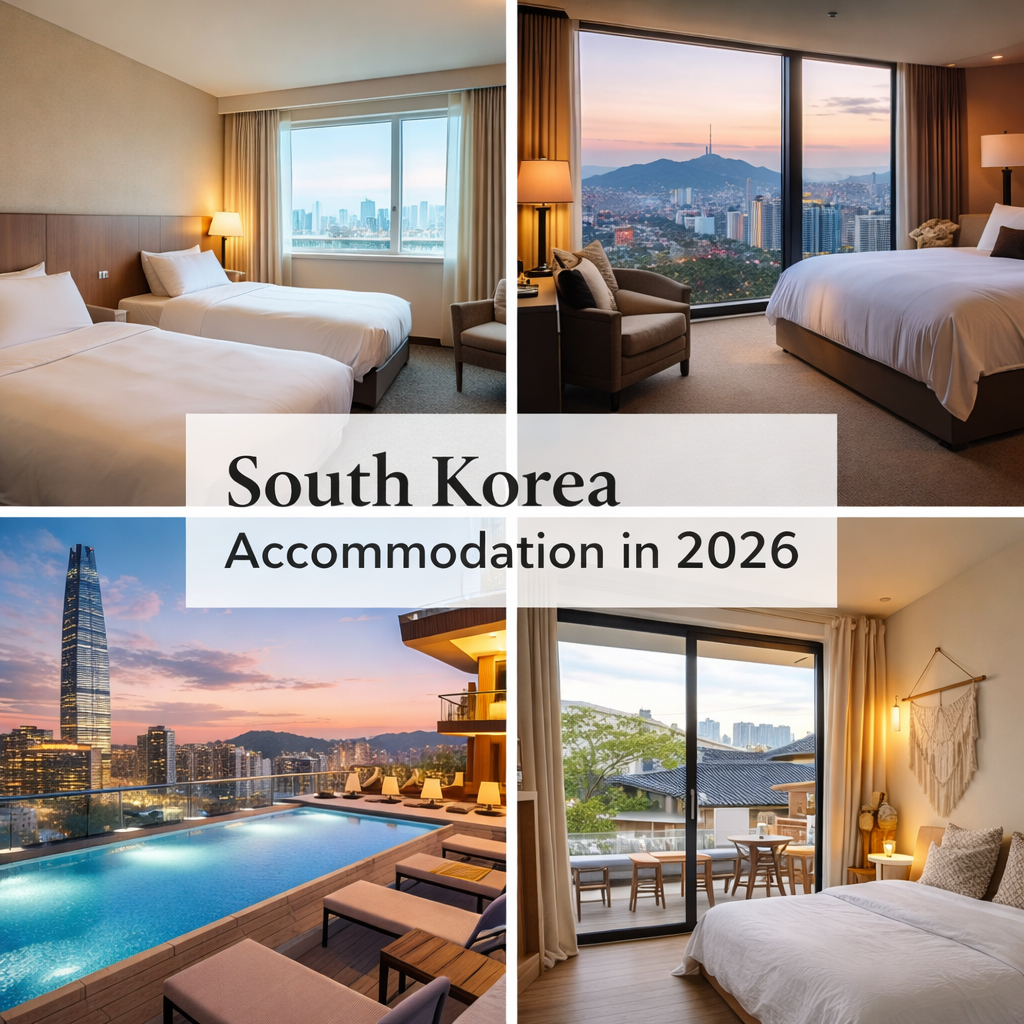
  • How Much Does Accommodation Cost in South Korea in 2026?

    How Much Does Accommodation Cost in South Korea in 2026?

    Accommodation is usually the second biggest expense after flights when traveling to South Korea. Prices vary depending on the city, season, and type of accommodation. Seoul is usually the most expensive, while cities like Busan or Daegu are often more affordable.

    If you are still deciding which part of Seoul fits your trip best, this guide will provide a realistic breakdown of accommodation costs and the best areas to stay in 2026.

    1. Realistic Hotel Prices in Seoul (2026)

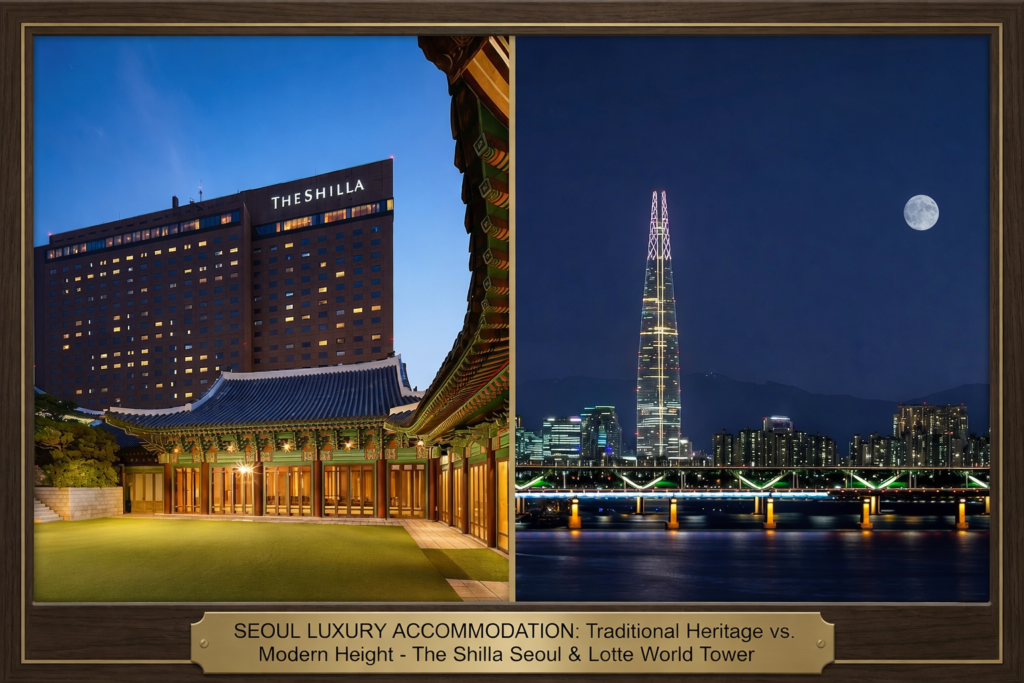
    A side-by-side composite image comparing two distinct luxury accommodations in Seoul, South Korea, at night. 
The left side features a illuminated traditional Korean Hanok guest complex courtyard at The Shilla Seoul with a modern hotel tower in the background, titled 'Traditional Heritage'. The right side features a panoramic view of the Seoul skyline and Han River, with the modern, glowing Lotte World Tower, titled 'Modern Height'. Below the combined image, a plaque reads 'SEOUL LUXURY ACCOMMODATION: Traditional Heritage vs. Modern Height - The Shilla Seoul & Lotte World Tower'. The overall composition emphasizes a contrast between historical elegance and
 contemporary grandeur.

    Average nightly prices for a standard double room in central Seoul:

    • Budget Hotels / Guesthouses: $60 – $100
    • 3-Star (Mid-range) Hotels: $100 – $180
    • 4 to 5-Star (Luxury) Hotels: $200 – $400+
    • Note: Peak seasons such as April (Cherry Blossoms), July–August (Summer Vacation), and October (Autumn Leaves) can increase prices by 20–40%.

    2. Best Areas to Stay in Seoul: Detailed Guide

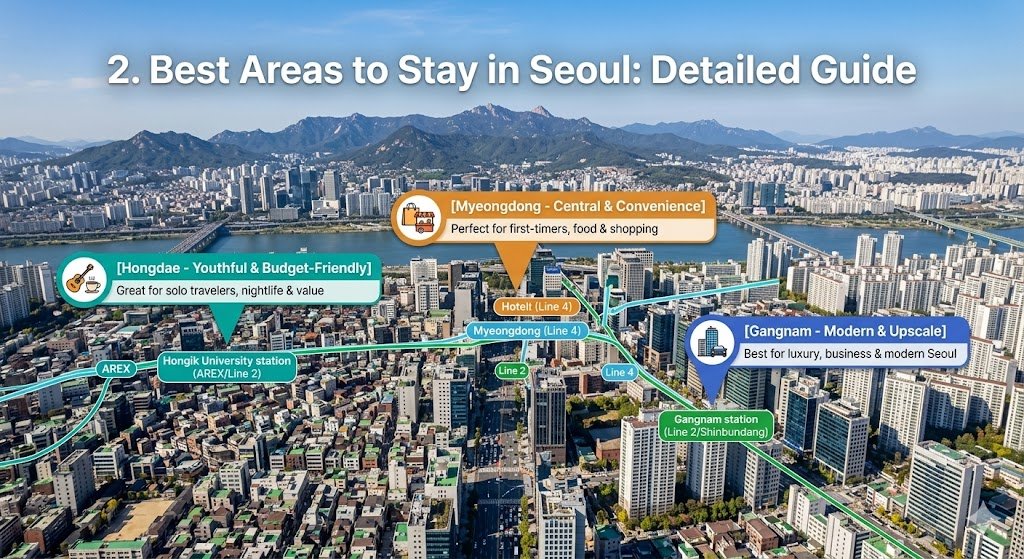
    An intuitive aerial map-style illustration highlighting the best areas for tourists to stay in Seoul, designed for the "2. Best Areas to Stay in Seoul: Detailed Guide" article section. The high-resolution map focuses on three core districts: Myeongdong (central, shopping, food), Hongdae (youthful, nightlife, guesthouses), and Gangnam (modern, upscale, luxury hotels). Each district has a labeled pointer, iconic symbols (like shopping bags, guitars, and high-rises), and a concise summary of its best feature. Subway lines and stations (Myeongdong Stn, Hongik Univ Stn, Gangnam Stn) are clearly visible, showcasing the city's connectivity and making it a perfect visual guide for choosing accommodation.

    Choosing the right neighborhood is key to saving money and time. Here are the most popular districts for tourists:

    Myeongdong (The Heart of Shopping & Convenience)

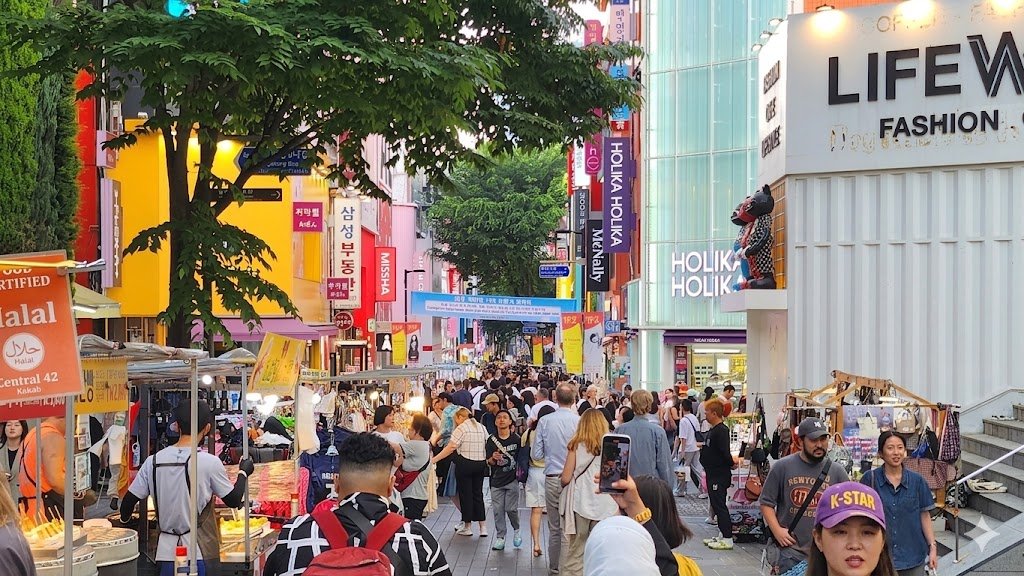
    A bustling daytime scene at Myeongdong shopping street in Seoul, South Korea, crowded with international tourists and locals. The street is lined with vibrant shops featuring colorful signs for brands like Holika Holika and Missha. Street food stalls with various snacks and Halal-certified options are visible in the foreground, creating a lively atmosphere characteristic of Seoul's most famous shopping district.
    • Best for: First-time visitors and foodies.
    • Vibe: Vibrant neon lights and endless street food.
    • Pros: Extremely central with English-speaking staff in most hotels.
    • Budget: $120 – $200 per night.

    Hongdae (Youthful Energy & Budget-Friendly)

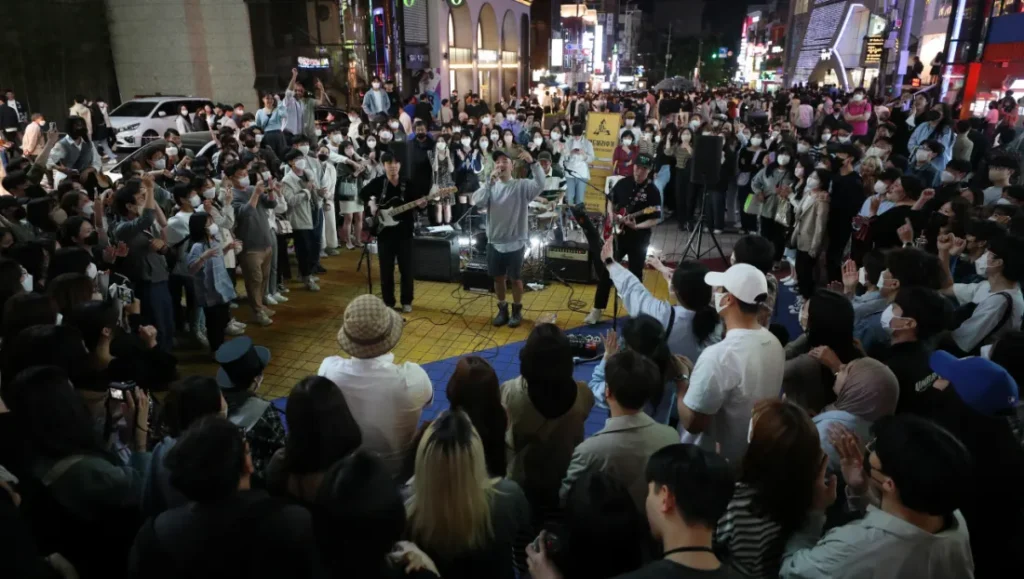
    A vibrant nighttime photograph capturing a high-energy live busking performance in the bustling Hongdae district of Seoul, South Korea. A massive crowd of young people, densely packing the square with some still wearing masks, surrounds a three-piece live band (guitarist, vocalist, and bassist with their instruments) performing live on a textured yellow-tiled street. All elements, including individual faces in the crowd, the band's detailed expressions and equipment, and the bright banner reading 'HONGDAE LIVE PERFORMANCE | BUSKING NIGHTS | #HONGIKUNIV' and all surrounding building signs (in Korean and English), are incredibly sharp and legible. The complex city grid with multiple buildings, all brightly illuminated with specific names, is visible in the distance under a clear night sky. The scene is illuminated by diverse but defined light sources, creating a lively atmosphere. Every single detail and facial expression is defined, making it look like a professional, high-end photograph. The ground is defined by detailed pavers and clear textures. All faces are clear and distinct. The buildings in the far distance are distinct, showing a dense city grid
    • Best for: Solo travelers, night owls, and budget hunters.
    • Vibe: Indie music, street performances, and trendy cafes.
    • Pros: Directly connected to Incheon Airport via AREX. Many affordable studios.
    • Budget: $70 – $130 per night.

    Gangnam (Modern Luxury & Sophistication)

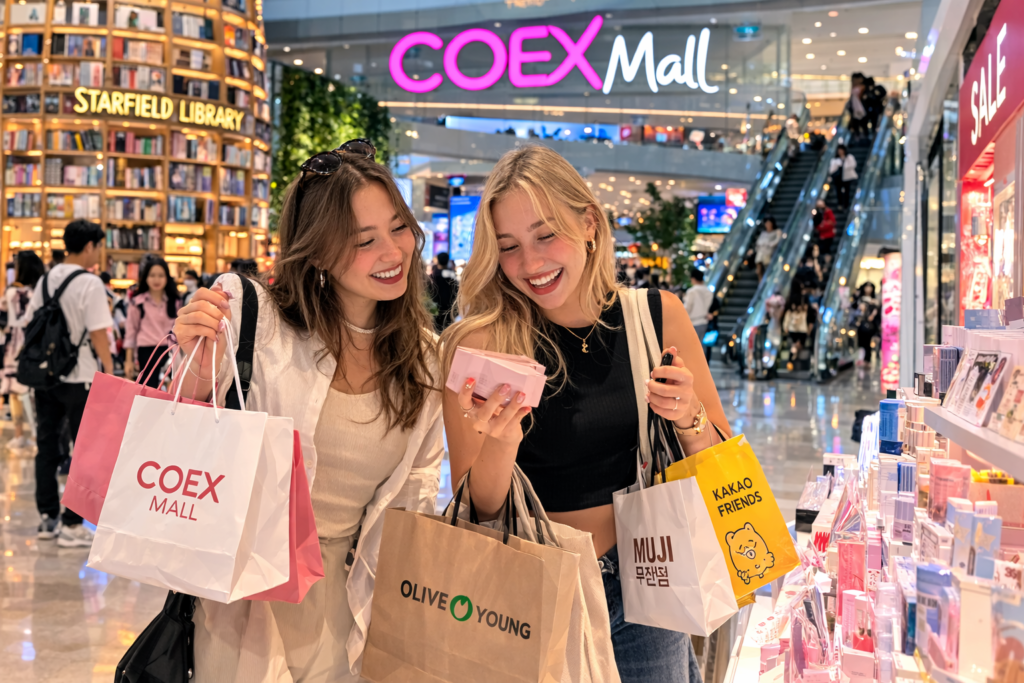
    Two young female tourists smiling and enjoying a shopping trip inside the COEX Mall in Gangnam, Seoul. They are holding several shopping bags from famous Korean brands, including Olive Young, Kakao Friends, and Muji. In the background, the iconic Starfield Library with its massive bookshelves and the bright pink COEX Mall neon sign are clearly visible, capturing the modern and trendy atmosphere of one of South Korea's premier shopping destinations.
    • Best for: Business travelers and luxury seekers.
    • Vibe: Skyscrapers, high-end fashion, and fine dining.
    • Pros: World-class 5-star hotel chains and high-tech amenities.
    • Budget: $200 – $400+ per night.

    3. Unique Stays: Experience Korea Like a Local

    If you want more than just a standard hotel room, consider these iconic “Only in Korea” experiences.

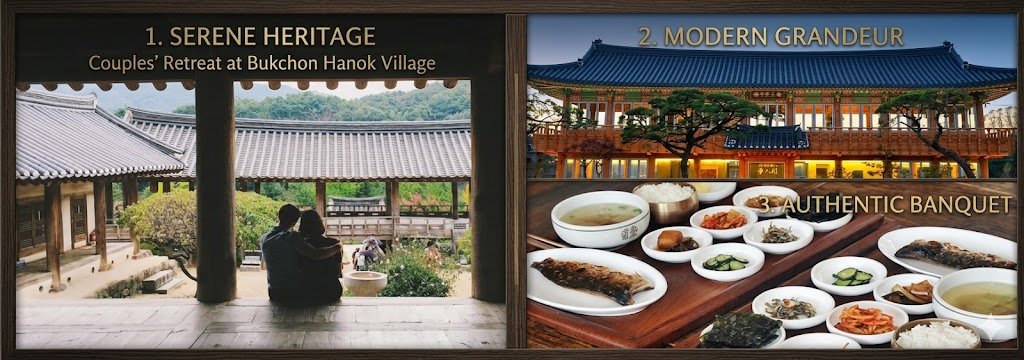
    • Rakkojae Seoul (Traditional Hanok): Stay in a 130-year-old restored Korean house in Bukchon. Experience Ondol (floor heating) and traditional tea ceremonies. (Approx. $250 – $450)
    A single horizontal composite image showcased in a stylized diptych format within a dark wood frame, illustrating a traditional and modern Korean 'Unique Hanok Stay' experience. On the left, titled '1. SERENE HERITAGE | Couples' Retreat at Bukchon Hanok Village,' a couple viewed from behind sits on the wooden veranda of a traditional Hanok, looking out over a peaceful courtyard, old buildings, and a distant hillside. The right side is split; the top half, titled '2. MODERN GRANDEUR,' features a magnificent, multi-story modern-Hanok style hotel (specifically The Shilla Seoul's Hanok complex) at twilight, its roof eaves colorful and windows glowing with warm interior light, set among meticulous pine trees. The bottom half, titled '3. AUTHENTIC BANQUET,' presents two full, elaborate traditional Korean Hanjeongsik (full-course traditional meals) on wooden trays, featuring various detailed side dishes, soups, grilled fish, and rice served in authentic brassware and ceramic bowls. The composition contrasts historical elegance with modern luxury and culinary arts, telling a complete story of a premium cultural accommodation experience. All text is engraved brass style. The lighting across the composite is harmonious twilight.

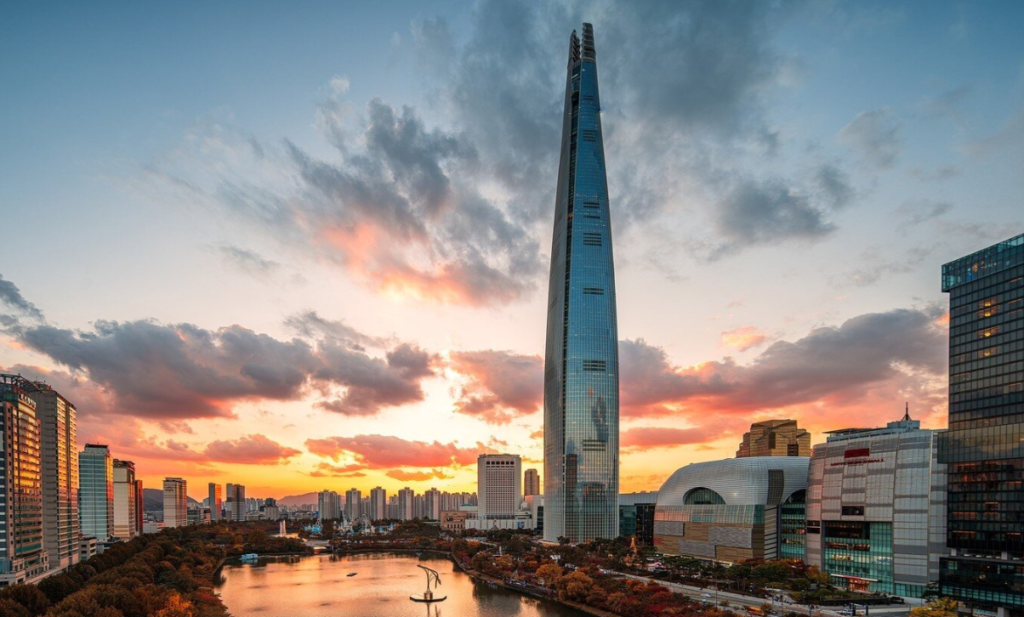
    • SIGNIEL SEOUL (Sky-High Luxury): Located on the 76th–101st floors of Lotte World Tower. Sleep above the clouds with a panoramic city view. (Approx. $600 – $1,200+)
    A stunning sunset view of the Lotte World Tower, the tallest skyscraper in South Korea, piercing through a dramatic orange and blue sky. The photo captures the reflection of the sunset in Seokchon Lake in the foreground, with the modern city skyline of Songpa-gu and Lotte World Mall visible at the base. This image showcases the "Sky-High Luxury" experience of staying at SIGNIEL SEOUL, offering a panoramic view of the city's modern architecture and natural beauty.

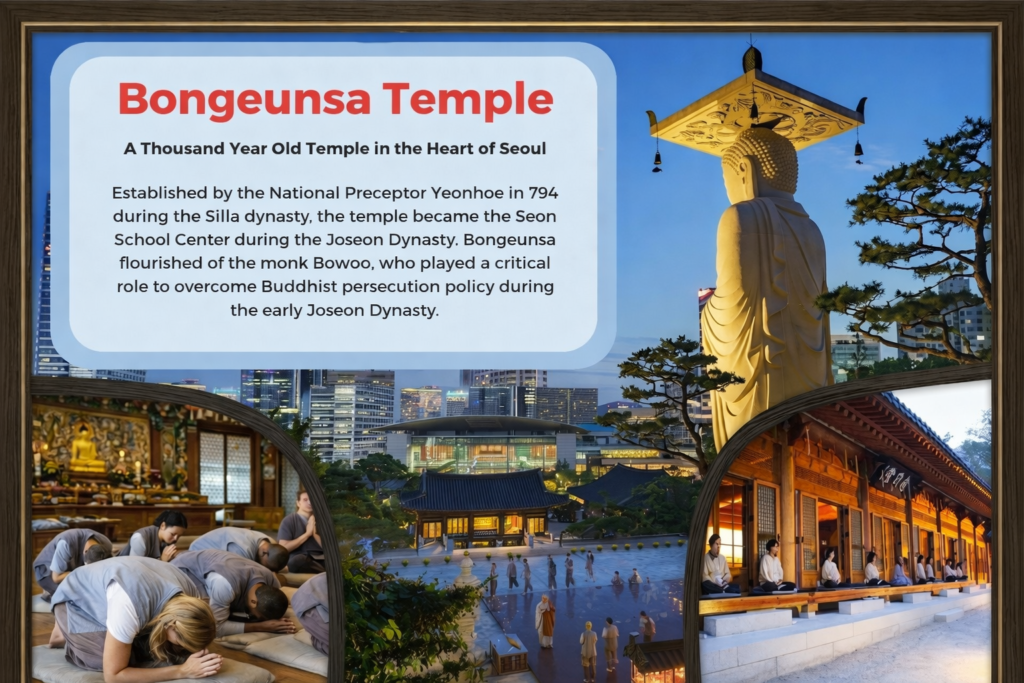
    • Bongeunsa Temple Stay (Spiritual Escape): A peaceful Buddhist temple in the middle of busy Gangnam. Learn Zen meditation and tea with monks. (Approx. $70 – $100 per person)
    A curated multi-image composite in a dark wood frame, illustrating the Bongeunsa Temple Stay experience in Seoul, South Korea. 
The wide central view shows the massive stone Maitreya Buddha statue at twilight overlooking the temple grounds and the modern Seoul skyline. In the upper-left, a legible light-blue text panel contains detailed historical information about the temple, verbatim from image_21.png. Surrounding this central view are detailed insets: on the left, international tourists in grey vests perform a deep bow in a gold-Buddha-filled hall (image_22.png); on the right, people in light-beige robes sit in silent meditation under a traditional Hanok-style pavilion veranda (image_23.png). The overall image blends ancient traditions with modern surroundings, highlighting various activities of the temple stay program. 
The text and all details are sharp and clear.


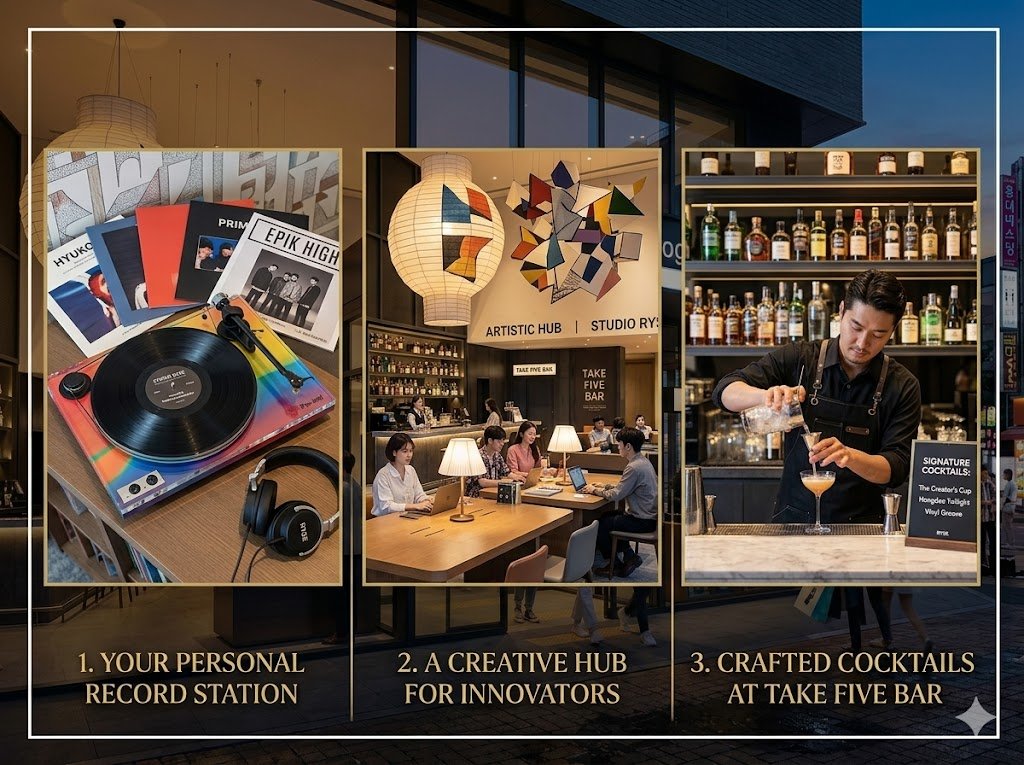
    • RYSE, Autograph Collection (Artistic Hub): A lifestyle hotel in Hongdae designed for creators, featuring custom artwork and vinyl players. (Approx. $180 – $300)
    A curated multi-panel collage in a stylized diptych format within a thin gold divider, illustrating three unique features of the RYSE, Autograph Collection hotel in Hongdae, Seoul, specifically for a travel blog post. The twilight street entrance of image_30.png, with its illuminated "RYSE, Autograph Collection" and "#HONGIKUNIV" signs, serves as a soft background panorama. The collage is split into three distinct sections. The left panel, titled "1. YOUR PERSONAL RECORD STATION", shows a close-up of a Pro-Ject turntable with vinyl records from curated K-Indie artists (like 'STUDIO RYSE | curated by Seoul Local Artists') and headphones with the 'RYSE' logo, representing a personalized audio experience. The center panel, titled "2. A CREATIVE HUB FOR INNOVATORS", shows a detailed interior of the lobby lounge from image_30.png, focusing on the vibrant custom art installations (the large paper lantern and geometric wall art) and a diverse young creative crowd interacting in flexible co-working pods, which include clean wooden tables, unique lamps, and a small library. The right panel, titled "3. CRAFTED COCKTAILS AT TAKE FIVE BAR", captures a master bartender artfully mixing a cocktail inside the Take Five Bar, with a sign listing signature drinks like 'The Creator's Cup' and 'Vinyl Groove'. All text is sharp, clear, and legible. The entire composite is a curated, high-resolution editorial spread that tells a comprehensive story of a unique artistic hotel. All faces are clear.

    • 📺 Want to see more? Check out this detailed video tour of RYSE, Autograph Collection to see why it’s the trendiest spot in Hongdae:

    A curated multi-image composite in a dark wood frame, illustrating the Bongeunsa Temple Stay experience in Seoul, South Korea. 
The wide central view shows the massive stone Maitreya Buddha statue at twilight overlooking the temple grounds and the modern Seoul skyline. In the upper-left, a legible light-blue text panel contains detailed historical information about the temple, verbatim from image_21.png. Surrounding this central view are detailed insets: on the left, international tourists in grey vests perform a deep bow in a gold-Buddha-filled hall (image_22.png); on the right, people in light-beige robes sit in silent meditation under a traditional Hanok-style pavilion veranda (image_23.png). The overall image blends ancient traditions with modern surroundings, highlighting various activities of the temple stay program. 
The text and all details are sharp and clear.

    Experience Korea’s Temple Stay — Book on Trip.com

    4. How to Save on Accommodation in 2026

    1. Book 6–8 Weeks in Advance: Popular spots like Hanok stays or luxury towers fill up fast.
    2. Avoid National Holidays: Prices spike during Seollal (Lunar New Year) and Chuseok.
    3. Stay Near Subway Stations: You don’t need to stay in the city center if you are near a Line 2 or Line 5 station.
    4. Compare Total Prices: Always check for hidden cleaning fees (on Airbnb) or taxes (on some booking sites).

    Compare Prices Before You Book

    Affiliate disclosure: This article may contain affiliate links. If you book through these links, we may earn a commission at no extra cost to you.

    Accommodation prices in South Korea change depending on the season and district. If you are planning your trip, it helps to compare current rates before reserving your stay.

    Blue call-to-action banner encouraging travelers to check Trip.com for unique stays in Korea.
         Looking for unique stays in Korea? Check Trip.com

    Related Guides