Tag: seoul travel guide

  • 10 Best Mountains to Hike in Seoul for Foreign Tourists: Easy, Moderate & Challenging Trails

    10 Best Mountains to Hike in Seoul for Foreign Tourists: Easy, Moderate & Challenging Trails

    Seoul is not only a city of palaces, cafés, shopping streets, K-pop landmarks, and night views. One of the most unforgettable things foreign visitors can do in Seoul is hiking.

    What makes Seoul special is that many mountains are directly connected to subway stations, local neighborhoods, temples, fortress walls, and panoramic viewpoints. You can start your morning in a busy city street and, within 30 minutes, find yourself walking through pine forests, stone steps, rocky ridges, and quiet mountain paths.

    For many visitors, hiking in Korea becomes one of the most memorable parts of the trip. It is not just about reaching the summit. It is about seeing how close nature is to everyday life in Seoul.

    I have personally hiked many of these mountains in Seoul many times, including recently. For me, this is not just a list made from maps or travel brochures. These are real places I have walked, climbed, rested, and returned to over the years.

    One mountain on this list is especially personal to me: Achasan. When I was young, Achasan was right behind my home, so it was one of the first mountains I knew before I even thought of hiking as a travel experience. That is why I always recommend Achasan to first-time visitors who want an easy but meaningful Seoul hike.

    Another reason hiking in Seoul is special is what happens before and after the hike. Many mountain entrances in Seoul are located near old neighborhoods, local restaurants, casual cafés, traditional food streets, and local markets. After hiking, many Seoul locals enjoy a warm meal near the trailhead, such as kalguksu, sundubu-jjigae, pajeon, tofu dishes, gukbap, noodles, grilled meat, or makgeolli.

    For foreign visitors, this is one of the most enjoyable parts of Seoul hiking. You are not only climbing a mountain. You are experiencing a very local Korean routine: take the subway, hike with city views, come down the mountain, and enjoy a satisfying Korean meal nearby.

    In this guide, I will introduce 10 of the best mountains to hike in Seoul, with difficulty levels, public transportation access, easier routes, more challenging routes, and local food or neighborhood ideas after the hike.


    Why Seoul Is Great for Hiking Without a Car

    One of the best things about hiking in Seoul is that you do not need to rent a car or join a private tour for many popular mountains.

    Many trailheads are connected to subway stations, local buses, or short taxi rides from major stations. This makes Seoul very different from many other big cities. You can leave your hotel in the morning, take the subway, hike a mountain, enjoy lunch in a local neighborhood, and return to central Seoul on the same day.

    For foreign visitors, this is a huge advantage. You can plan your hike around public transportation instead of worrying about driving, parking, or complicated transfers.

    However, Seoul mountains often have more than one entrance and exit. The place where you start and the place where you finish may be different, especially for mountains like Bukhansan, Inwangsan, Bugaksan, Gwanaksan, and Achasan if you continue toward Yongmasan.

    Before leaving your hotel, check your route using Naver Map, KakaoMap, or Google Maps. Also check which subway station or bus stop is closest to your planned exit point.

    Since many Seoul hiking trails begin near subway stations, it is also helpful to understand how the subway system works before your hiking day. Read our guide to How to Use the Seoul Subway as a Tourist (2026 Guide) before planning your route.

    You may also need mobile data for maps, translation apps, weather checks, and finding the correct trail entrance.
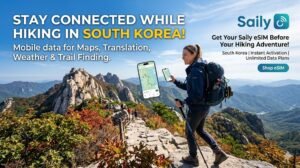
    A professional marketing banner showing a female hiker on a scenic rocky mountain ridge in South Korea, checking a map on her smartphone. The banner features the Saily logo and text promoting eSIM services for mobile data needs like navigation, translation, and weather updates while hiking.

    Check South Korea eSIM options with Saily before your hiking day.


    Quick Difficulty Guide for Seoul Hiking

    Before choosing a mountain, it is important to understand that “hiking in Seoul” can mean very different things.

    Some mountains feel like a city walk with beautiful views. Others are real mountain hikes with steep stairs, rocky sections, and long summit routes.

    Here is a simple guide.

    DifficultyMeaning
    Very EasyShort city walk, gentle slope, suitable for most travelers
    EasyBeginner-friendly hike, some stairs or uphill sections
    ModerateRequires basic fitness, longer stairs, steeper sections
    ChallengingReal mountain hike, rocky paths, longer distance, stronger fitness needed

    If this is your first time hiking in Seoul, start with Naksan, Namsan, Achasan, or Ansan.

    If you want a real Korean hiking experience but not a full-day challenge, try Inwangsan or Bugaksan.

    If you are confident with mountain hiking, Bukhansan, Dobongsan, Gwanaksan, or Cheonggyesan may be better choices.


    Seoul Mountain Subway Access Guide

    MountainMain Subway / Transit AccessBest For
    BukhansanBukhansan Ui Station / Gupabal Station + busSerious hiking
    DobongsanDobongsan StationRocky mountain hike
    InwangsanGyeongbokgung StationFirst-time scenic hike
    BugaksanGyeongbokgung / Changuimun Gate area / Hansung University Station areaHistory and Seoul City Wall
    NamsanMyeongdong / Chungmuro / Dongguk University / HoehyeonEasy city hike
    NaksanHyehwa Station / Dongdaemun areaVery easy wall walk
    AchasanAchasan StationEasy sunrise hike
    GwanaksanSeoul National University area / Sadang StationChallenging hike
    CheonggyesanCheonggyesan StationLocal weekend hike
    AnsanSeodaemun / Dongnimmun / Hongje areaEasy forest walk

    If you plan to use subways and buses to reach several trailheads during your trip, a transport card can make the journey much easier. Read our T-Money Card in Korea: Complete 2026 Guide for Tourists (Including NAMANE Card & Discover Seoul Pass) to understand how to pay for subway and bus rides in Seoul.


    1. Bukhansan Mountain — Best for a Real Korean Hiking Experience

    Bukhansan is probably the most famous mountain for hiking in Seoul. It is part of Bukhansan National Park and offers some of the most dramatic mountain views in the city.

    This is not just a light walk. Bukhansan feels like a real mountain. You will find forest trails, stone steps, temples, rocky ridges, and wide views over Seoul. For many foreign visitors, reaching Baegundae Peak feels like a true achievement.

    Best for

    Travelers who want a serious Korean hiking experience.

    Difficulty

    Challenging.

    Recommended route

    Bukhansan Ui Station area → Baegundae Peak → return or descend toward another trailhead.

    How to get there by subway or bus

    For the Baegundae Peak area, one of the most common access points is Bukhansan Ui Station on the Ui-Sinseol Line. From the station, you can walk toward the mountain entrance and continue toward the main hiking trails.

    Another popular route is to take Line 3 to Gupabal Station, then transfer to a local bus toward the Bukhansanseong Fortress entrance.

    If you are a first-time visitor, Bukhansan Ui Station is often easier to understand. If you want the fortress route, Gupabal Station plus a bus connection is useful, but it requires one extra step.

    Easier option

    Walk only part of the lower trail near the visitor center or enjoy the forest paths without going all the way to Baegundae Peak.

    More challenging option

    Hike to Baegundae Peak, the highest peak of Bukhansan, and continue along a longer ridge or fortress route.

    What to expect

    Bukhansan has steep sections, stone stairs, and rocky areas near the summit. Some parts may feel difficult if you are not used to hiking. Good shoes are strongly recommended.

    After the hike

    Around Bukhansan trail entrances, you can often find local restaurants serving Korean mountain food such as pajeon, makgeolli, tofu dishes, noodles, and hearty soups. This is a classic Korean hiking culture experience.

    Aidan’s note

    Bukhansan is one of the best mountains in Seoul if you want to understand why hiking is such a big part of Korean culture. You will see local hikers with proper hiking clothes, backpacks, gloves, trekking poles, and packed snacks. It feels very Korean in the best way.


    2. Dobongsan Mountain — Best for Rocky Peaks and Strong Hikers

    Dobongsan is also part of the Bukhansan National Park area, but it has a different feeling from Bukhansan. It is known for dramatic rock formations, steep ridges, and powerful mountain scenery.

    If Bukhansan is the classic Seoul hiking experience, Dobongsan feels more rugged and athletic. It is a beautiful mountain, but I would not recommend the summit route to complete beginners.

    Best for

    Experienced hikers, strong walkers, and travelers who like rocky mountain landscapes.

    Difficulty

    Challenging.

    Recommended route

    Dobongsan Station → Dobong Visitor Center → temple area → higher ridge or summit route.

    How to get there by subway

    The easiest public transportation access is usually Dobongsan Station. From the station, walk toward the Dobong Visitor Center and the main hiking entrance.

    This is one reason Dobongsan is popular with local hikers. You can reach the mountain by subway, start walking from the station area, and return to the city without needing a car.

    Dobongsan Station can feel busy on weekends because many Korean hikers use this route. If you want a quieter experience, start early in the morning.

    Easier option

    Walk from Dobongsan Station to the lower temple area and enjoy the forest trail without continuing to the rocky summit sections.

    More challenging option

    Continue toward Sinseondae or the higher rocky ridges. These routes require more confidence, balance, and stamina.

    What to expect

    Dobongsan has beautiful scenery, but some routes include steep climbs and rocky areas. It can feel harder than expected, especially on hot days or after rain.

    After the hike

    The area near Dobongsan Station has many restaurants and casual eateries used by local hikers. After a difficult hike, this is a good place to try simple Korean comfort food before returning to central Seoul.

    Aidan’s note

    Dobongsan is impressive, but it is better for travelers who already enjoy hiking. If you are visiting Seoul for the first time and want something easier, start with Inwangsan, Achasan, or Namsan before trying Dobongsan.


    3. Inwangsan Mountain — Best for First-Time Seoul Hikers

    Inwangsan is one of the best mountains in Seoul for foreign visitors. It is not too long, not too remote, and not too difficult, but the views are excellent.

    From Inwangsan, you can see Gyeongbokgung Palace, the Blue House area, Namsan Tower, downtown Seoul, and parts of Bukhansan. It is also close to Seochon, one of Seoul’s most atmospheric neighborhoods.

    If you want a hike that feels local, scenic, and manageable, Inwangsan is one of the best choices.

    Best for

    First-time Seoul hikers, photographers, palace visitors, and travelers staying near Gyeongbokgung or Jongno.

    Difficulty

    Moderate.

    Recommended route

    Gyeongbokgung Station → Sajikdan area → Beombawi Rock → Inwangsan summit → descend toward Suseongdong Valley or Seochon.

    How to get there by subway

    The most convenient starting point is usually Gyeongbokgung Station on Line 3. From there, you can walk toward Sajikdan Altar and continue up toward Beombawi Rock and Inwangsan summit.

    After hiking, you can descend toward Suseongdong Valley and continue into Seochon, one of Seoul’s most charming local neighborhoods.

    Easier option

    Walk only to Beombawi Rock or a lower viewpoint, then return the same way.

    More challenging option

    Continue to the summit and descend through a different route toward Suseongdong Valley.

    What to expect

    The route has stairs, uphill sections, and some rocky parts near the top. It is shorter than Bukhansan, but it still feels like a real hike.

    After the hike

    One of the best things about Inwangsan is that you can descend toward Seochon. This neighborhood has cafés, small restaurants, bakeries, Korean-style pubs, and quiet alleys near Gyeongbokgung Palace.

    You can easily combine Inwangsan with Seochon, Gyeongbokgung Palace, Bukchon, or the Blue House area on the same day.

    Aidan’s note

    Inwangsan is one of the most balanced hikes in Seoul. It gives you city views, history, local neighborhoods, and a real sense of place without requiring a full-day hiking plan.


    4. Bugaksan Mountain — Best for Seoul City Wall and History

    Bugaksan, also called Baegaksan in some contexts, is a mountain behind the old royal palace area. It is strongly connected to Seoul’s history, the Seoul City Wall, and the area around the Blue House.

    This hike is not only about nature. It is also about walking through layers of Seoul’s history. You can follow fortress walls, pass old gates, and see the city from a very meaningful location.

    Best for

    Travelers interested in Korean history, Seoul City Wall, palace areas, and scenic walking routes.

    Difficulty

    Moderate.

    Recommended route

    Changuimun Gate → Bugaksan / Baegak section → Sukjeongmun Gate → Malbawi area → Waryong Park or Samcheong-dong direction.

    How to get there by subway and bus

    A common starting point is Changuimun Gate, which is usually reached by bus or taxi from the Gyeongbokgung or Jongno area.

    Some travelers also approach Bugaksan from the Hansung University Station side, depending on the walking route and Seoul City Wall section they choose.

    Bugaksan is not difficult to reach, but the starting points can feel less obvious than Namsan or Achasan. Check your exact starting gate before you go.

    Easier option

    Walk a shorter section of the Seoul City Wall without completing the full mountain route.

    More challenging option

    Start from Changuimun and continue the full route across the higher sections of the wall.

    What to expect

    There are many stairs, and some sections can feel steep. However, the route is well defined and rewarding if you enjoy historical scenery.

    After the hike

    Depending on where you finish, Bugaksan can connect with Samcheong-dong, Bukchon, Seochon, or Hyehwa. These areas are excellent for cafés, traditional Korean restaurants, small galleries, and slow neighborhood walks.

    Aidan’s note

    Bugaksan is a good choice if you want hiking and history together. It is not just a mountain trail. It feels like walking through Seoul’s old defensive backbone.


    5. Namsan Mountain — Best Easy City Hike for First-Time Visitors

    Namsan is one of the easiest and most tourist-friendly mountains in Seoul. It is located in the center of the city and is famous for N Seoul Tower.

    This is not a difficult mountain hike. It is more like a city nature walk with beautiful views, especially if you go near sunset or in the evening.

    Namsan is a good option if you want something light, romantic, family-friendly, and easy to combine with Myeongdong, Itaewon, or central Seoul.

    Best for

    First-time visitors, couples, families, night-view lovers, and travelers who do not want a hard hike.

    Difficulty

    Easy.

    Recommended route

    Myeongdong or Dongguk University Station area → Namsan walking path → N Seoul Tower → descend toward Baekbeom Square or another central exit.

    How to get there by subway

    Namsan is very easy to reach from central Seoul. Common subway access points include Myeongdong Station, Hoehyeon Station, Chungmuro Station, and Dongguk University Station, depending on which route you choose.

    You can walk up, take a bus part of the way, or use the Namsan Cable Car if you want an easier visit.

    If you want more of a walk, start from Dongguk University Station or Myeongdong. If you want an easier tourist-style visit, use the cable car or a Namsan bus.

    Easier option

    Use the Namsan Cable Car or a bus to reach near the tower, then walk around the top area.

    More challenging option

    Walk from the lower city area all the way up to N Seoul Tower instead of taking transportation.

    What to expect

    Paved paths, stairs, city views, cafés, tourist facilities, and easy access. It is one of the safest choices for beginners.

    After the hike

    Namsan is easy to combine with Myeongdong, Hoehyeon, Itaewon, or Chungmuro. After walking down, you can find everything from street food and Korean restaurants to cafés and international food.

    Aidan’s note

    Namsan is not the place for a rugged mountain challenge, but it is one of the best places to feel how close nature is to the center of Seoul.


    6. Naksan Mountain — Best Very Easy Seoul City Wall Walk

    Naksan is one of the easiest mountain walks in Seoul. It is more of a scenic hill and fortress-wall walk than a serious hike.

    The route connects well with Hyehwa, Daehangno, Ihwa Mural Village, and Dongdaemun. If you want beautiful city views without a difficult climb, Naksan is a great choice.

    Best for

    Beginners, casual walkers, photographers, couples, and travelers near Dongdaemun or Hyehwa.

    Difficulty

    Very Easy to Easy.

    Recommended route

    Hyehwa Station → Naksan Park → Ihwa Mural Village → Seoul City Wall → Dongdaemun direction.

    How to get there by subway

    The easiest starting point is usually Hyehwa Station on Line 4. From there, walk toward Naksan Park and continue along the Seoul City Wall toward Ihwa Mural Village or Dongdaemun.

    You can also finish near Dongdaemun Station or Dongdaemun History & Culture Park Station, depending on your route.

    Naksan is one of the easiest Seoul mountain walks to combine with a city itinerary. You can visit Hyehwa, Daehangno, Ihwa Mural Village, Naksan Park, and Dongdaemun in one relaxed route.

    Easier option

    Go directly to Naksan Park and enjoy the view without walking the full wall route.

    More challenging option

    Continue along the Seoul City Wall toward Dongdaemun and connect it with nearby neighborhoods.

    What to expect

    Gentle slopes, city-wall scenery, photo spots, and night views. This is one of the most beginner-friendly routes in Seoul.

    After the hike

    Naksan connects naturally with Hyehwa, Daehangno, Ihwa Mural Village, and Dongdaemun. This area is good for casual restaurants, cafés, Korean snacks, and evening walks along the Seoul City Wall.

    Aidan’s note

    If Bukhansan feels too difficult and Namsan feels too touristy, Naksan is a very nice middle ground. It is easy, scenic, and still feels local.


    7. Achasan Mountain — Best Easy Sunrise Hike with Local Feeling

    Achasan is one of my favorite mountains to recommend to foreign visitors who want an easy but meaningful hike in Seoul.

    It is not too high, not too difficult, and not too far from the city. The views over the Han River and eastern Seoul are beautiful, especially in the morning.

    Achasan is also personal to me. When I was young, my home was right near Achasan. For me, this mountain is not just a travel recommendation. It is part of my own memory of Seoul.

    Best for

    Beginners, sunrise lovers, Han River views, local neighborhood hiking, and travelers who want a gentle first hike.

    Difficulty

    Easy.

    Recommended route

    Achasan Station → Achasan entrance → sunrise viewpoint → Achasan ridge → return or continue toward Yongmasan.

    How to get there by subway

    The most convenient access point is Achasan Station on Line 5. From the station, walk toward the Achasan hiking entrance and continue up toward the sunrise viewpoint or ridge trail.

    If you extend the hike toward Yongmasan, you may be able to descend toward Yongmasan Station or nearby local bus stops, depending on the route.

    Achasan is excellent for first-time hikers because the subway access is simple, the trail is not too difficult, and the views over the Han River are very rewarding.

    Easier option

    Walk only to the first major viewpoint and return the same way.

    More challenging option

    Continue from Achasan toward Yongmasan for a longer ridge walk.

    What to expect

    Achasan has stairs and some uphill parts, but it is much easier than Bukhansan, Dobongsan, or Gwanaksan. It is a good choice if you want a real Seoul mountain feeling without a difficult summit climb.

    After the hike

    Achasan has a very local feeling. Around Achasan Station and nearby neighborhoods, you can find casual Korean restaurants, noodle shops, cafés, and small local eateries. It is a nice place to enjoy a simple meal after an easy hike.

    Aidan’s local note

    Because I grew up with Achasan right behind my home, I always see this mountain differently. It has a warm, familiar feeling. If you want a mountain that feels close to local life rather than a major tourist attraction, Achasan is a beautiful place to start.


    8. Gwanaksan Mountain — Best Challenging Hike in Southern Seoul

    Gwanaksan is one of the strongest mountain hikes in southern Seoul. It is popular with local hikers and students because it is near Seoul National University and the southern part of the city.

    This mountain has rocky sections, steep routes, and wide views from the top. It can be very rewarding, but it is not the easiest choice for first-time hikers.

    Best for

    Strong hikers, active travelers, and visitors staying in southern Seoul.

    Difficulty

    Challenging.

    Recommended route

    Seoul National University area or Sadang Station area → Gwanaksan trail → Yeonjudae area → descend by a safer route.

    How to get there by subway and bus

    There are several access points. Many hikers use the Seoul National University area or the Sadang Station side.

    For an easier start, you can go toward the Seoul National University entrance area and connect to the lower trail sections. For a more challenging hike, the Sadang Station route is popular but can feel steeper and more demanding.

    Gwanaksan has different route personalities. The Seoul National University side can feel more manageable, while the Sadang side can feel more like a real workout.

    Easier option

    Start near Seoul National University and walk only part of the lower valley or forest trail.

    More challenging option

    Start from Sadang Station and continue toward the higher ridge and Yeonjudae.

    What to expect

    Steep climbs, rocky paths, stairs, and strong local hiking energy. Some sections require caution, especially in bad weather.

    After the hike

    Depending on your route, Gwanaksan can connect with the Seoul National University area, Sadang, or Gwacheon. These areas have many restaurants where local hikers, students, and office workers eat after hiking.

    Aidan’s note

    Gwanaksan is a great mountain, but it is better to treat it as a real hike, not a casual walk. If you are not used to mountain trails, choose an easier Seoul mountain first.


    9. Cheonggyesan Mountain — Best Local Weekend Hike

    Cheonggyesan is a popular local mountain in the southern Seoul area. It is not as famous internationally as Bukhansan or Namsan, but many Seoul residents enjoy it as a weekend hiking destination.

    The mountain has a comfortable local atmosphere. You will see Korean hikers, forest trails, resting areas, and a more everyday side of Seoul hiking culture.

    Best for

    Travelers who want a local hiking experience away from the most famous tourist routes.

    Difficulty

    Moderate.

    Recommended route

    Cheonggyesan Station → Wonteogol entrance → Maebong Peak → return or descend by a connected trail.

    How to get there by subway

    The easiest access point is Cheonggyesan Station on the Shinbundang Line. From the station, walk toward Wonteogol entrance and continue toward Maebong Peak.

    This is one of the easiest “local-style” mountains to reach by subway in southern Seoul.

    Easier option

    Walk only the lower forest trail near Wonteogol and return before the steeper sections.

    More challenging option

    Continue to Maebong Peak and extend the route depending on your stamina.

    What to expect

    A mix of forest paths, stairs, and steady uphill sections. It is less dramatic than Bukhansan or Dobongsan, but it gives you a very local Seoul hiking experience.

    After the hike

    Cheonggyesan is well known among local hikers for its restaurants near the trailhead. After hiking, many people stop for Korean dishes, noodles, soups, grilled meat, or cafés near Cheonggyesan Station and Wonteogol entrance.

    Aidan’s note

    Cheonggyesan is good if you want to hike like Seoul locals. It is not the most famous mountain for foreign tourists, but that is part of its charm.


    10. Ansan Mountain — Best Easy Forest Trail Near Central Seoul

    Ansan is a very good choice for travelers who want a peaceful forest walk without a difficult hike. It is located near Seodaemun and can be connected with nearby neighborhoods, parks, and historical areas.

    Ansan is especially known for its gentle walking paths. It is one of the better options for people who want nature but do not want steep rocky climbing.

    Best for

    Beginners, families, relaxed walkers, and travelers who want a light forest walk near central Seoul.

    Difficulty

    Easy.

    Recommended route

    Seodaemun area → Ansan Jarak-gil trail → forest path → viewpoint or return loop.

    How to get there by subway or bus

    Ansan is commonly accessed from the Seodaemun, Dongnimmun, Sinchon, or Hongje side, depending on which trail you choose.

    For a relaxed forest walk, many visitors start near Seodaemun Independence Park or connect from nearby neighborhoods. The Ansan Jarak-gil trail is especially good for an easy walk.

    Ansan is a good choice if you want a flexible route. You can do a short forest walk, a longer loop, or connect it with nearby historical and local neighborhoods.

    Easier option

    Walk only a short section of Ansan Jarak-gil and return.

    More challenging option

    Connect Ansan with Inwangsan for a longer half-day walking route.

    What to expect

    Comfortable forest paths, city views, and a relaxed atmosphere. It is less intense than most summit hikes.

    After the hike

    Ansan can connect with Seodaemun, Yeonhui-dong, Sinchon, or Hongje depending on your route. After a light forest walk, you can enjoy cafés, local restaurants, or nearby historical areas.

    Aidan’s note

    Ansan is a good reminder that hiking in Seoul does not always have to be difficult. Sometimes a quiet forest path is enough to enjoy the city in a deeper way.


    Which Seoul Mountain Should You Choose?

    If you are not sure which mountain is right for you, use this simple guide.

    Traveler TypeBest Mountains
    Complete beginnerNaksan, Namsan, Achasan, Ansan
    Best city viewsInwangsan, Namsan, Achasan
    Best historical routeBugaksan, Naksan, Inwangsan
    Best real hiking experienceBukhansan, Dobongsan, Gwanaksan
    Best local hiking feelingAchasan, Cheonggyesan, Ansan
    Best half-day hikeInwangsan, Achasan, Cheonggyesan
    Best challenging routeBukhansan, Dobongsan, Gwanaksan
    Best easy sunrise hikeAchasan
    Best night-view walkNamsan, Naksan

    Best Seoul Mountains for Hiking and Food Nearby

    MountainBest Nearby Area After HikingFood / Neighborhood Feeling
    BukhansanBukhansan entrance areasPajeon, makgeolli, tofu, noodles
    DobongsanDobongsan Station areaLocal hiker restaurants
    InwangsanSeochonCafés, bakeries, Korean restaurants
    BugaksanSamcheong-dong, Bukchon, Seochon, HyehwaTraditional cafés, restaurants, galleries
    NamsanMyeongdong, Itaewon, HoehyeonStreet food, restaurants, cafés
    NaksanHyehwa, Daehangno, DongdaemunCasual food, cafés, night walk
    AchasanAchasan Station areaLocal restaurants, noodles, cafés
    GwanaksanSNU area, Sadang, GwacheonStudent food, hiker restaurants
    CheonggyesanCheonggyesan Station, WonteogolLocal hiker food, soups, noodles
    AnsanSeodaemun, Yeonhui-dong, SinchonCafés, local restaurants, relaxed walk

    Hiking Safety Tips for Foreign Tourists in Seoul

    Hiking in Seoul is usually safe, but you should not underestimate the mountains.

    Even easy-looking trails can include stairs, rocks, slippery surfaces, or sudden weather changes. Many foreign visitors are surprised by how “real” some Seoul mountains feel.

    Here are a few practical safety tips.

    1. Wear proper shoes

    For Namsan or Naksan, comfortable sneakers may be enough.

    For Bukhansan, Dobongsan, Gwanaksan, or longer routes, hiking shoes are much better.

    Avoid sandals, slippers, or fashion shoes.

    2. Check the weather before you go

    Do not hike difficult rocky mountains during heavy rain, snow, or icy weather. Rocks and stairs can become slippery.

    3. Start early

    For longer hikes, start in the morning. You do not want to be coming down a mountain after dark unless you know the route very well.

    4. Bring water

    Even short Seoul hikes can feel tiring in summer. Bring enough water, especially if you plan to hike Bukhansan, Dobongsan, Gwanaksan, or Cheonggyesan.

    5. Do not rush on the way down

    Many hiking injuries happen while descending. Take your time on stairs and rocky paths.

    6. Check your return route before hiking

    Many Seoul mountains are easy to reach by subway or bus, but your starting point and ending point may be different. This is especially true for Inwangsan, Bugaksan, Bukhansan, Gwanaksan, and Achasan-to-Yongmasan routes.

    Before starting your hike, check where you plan to come down and which subway station or bus stop is closest to your ending point.

    7. Follow the signs

    Most major Seoul hiking routes have Korean signs, and some popular areas also have English information. Still, it is useful to check your route before starting.

    8. Respect local hiking culture

    Korean hikers often greet each other quietly, keep trails clean, and dress properly for the mountain. Do not leave trash behind, and avoid loud music on the trail.

    If hiking is part of your Korea itinerary, it may also be worth checking your travel medical coverage before you go. Even short hikes can involve slippery stairs, ankle injuries, or sudden weather changes.

    A travel insurance promotion banner featuring a hiker with a backpack on a rocky Korean mountain peak. In the foreground, a smartphone displays the SafetyWing app interface showing medical insurance coverage details. The text emphasizes protecting your adventure with travel medical insurance for slips, injuries, and unforeseen events while hiking in South Korea

    Check travel insurance options with SafetyWing before your trip.


    What to Bring for a Seoul Hike

    For easy hikes like Naksan, Namsan, Achasan, or Ansan, you do not need much.

    For harder hikes like Bukhansan, Dobongsan, or Gwanaksan, prepare more carefully.

    Recommended items:

    • Comfortable walking or hiking shoes
    • Water
    • Small snack
    • Weather-appropriate jacket
    • Mobile phone with map access
    • Portable battery
    • Sunglasses or hat in summer
    • Gloves in winter or on rocky trails
    • Small towel
    • Travel insurance information, especially if hiking is a major part of your trip

    Best Seasons for Hiking in Seoul

    Seoul mountains can be enjoyed in all four seasons, but the feeling changes a lot depending on when you visit.

    Spring

    Spring is one of the best seasons for hiking in Seoul. The weather is mild, and you may see flowers, fresh leaves, and clear city views.

    Summer

    Summer hiking can be hot and humid. Start early, bring water, and avoid the hottest part of the day.

    Autumn

    Autumn is probably the most beautiful hiking season in Seoul. The air becomes cooler, and many mountains show colorful fall leaves.

    Winter

    Winter can be beautiful, but trails may be icy. Choose easier mountains if you are not used to winter hiking.


    Final Thoughts

    Hiking in Seoul is one of the best ways to understand the city beyond shopping streets, cafés, and tourist attractions.

    What makes Seoul special is that mountains are not far away from daily life. They are part of the city. Local people hike before work, on weekends, after lunch, or during holidays. Some mountains are serious hiking destinations, while others are gentle walking routes connected to neighborhoods and history.

    Hiking in Seoul is not only about reaching the summit. It is also about the local routine around the mountain: taking the subway, walking the trail, enjoying the view, coming down, and eating a warm Korean meal near the trailhead.

    For first-time visitors, I recommend starting with Achasan, Inwangsan, Namsan, or Naksan. These mountains are easier to enjoy and give you beautiful views without requiring too much hiking experience.

    If you want a stronger challenge, try Bukhansan, Dobongsan, or Gwanaksan. These mountains show a more powerful side of Seoul’s landscape.

    For me, Seoul’s mountains are not just tourist attractions. I have walked many of them repeatedly over the years, and Achasan especially feels personal because it was right behind my home when I was young.

    That is why I believe hiking in Seoul can be more than just an activity. It can become one of the most meaningful memories of your trip to Korea.

  • Best Seoul Festivals and Events in May 2026 for Foreign Tourists

    Best Seoul Festivals and Events in May 2026 for Foreign Tourists

    May is one of the best months to visit Seoul. The weather is usually mild, outdoor events become easier to enjoy, and many of the city’s most interesting cultural festivals take place across central Seoul, the Hangang River, DDP, Jongno, Seongsu, and Seoul Forest.

    If you are visiting Seoul in May 2026, this guide introduces some of the best festivals and events foreign tourists can enjoy. The first three events are especially recommended because they are visually impressive, easy to access, and strongly connected to Korean culture or Seoul’s modern travel scene.

    Before visiting any event, always check the official website or event page for the latest schedule, venue updates, reservation requirements, and weather-related changes.


    1. Lotus Lantern Festival 2026: Seoul’s Most Beautiful Traditional Night Festival

    Event Dates: May 16–17, 2026
    Main Parade: May 16, 2026, 7:00 PM–9:30 PM
    Main Area: Jongno Street, from Heunginjimun Gate toward Jogyesa Temple
    Best For: Culture lovers, photographers, first-time visitors, night festival seekers
    Admission: Free to watch
    Official Website: Lotus Lantern Festival official website
    Inquiry: +82-2-2011-1740

    The Lotus Lantern Festival, known in Korean as Yeondeunghoe, is one of the most beautiful traditional festivals you can experience in Seoul. In 2026, the main lantern parade is scheduled for May 16 from 7:00 PM to 9:30 PM, running along Jongno Street from Heunginjimun Gate toward Jogyesa Temple. The wider festival period is listed as May 16–17, 2026.

    This festival is especially meaningful because Yeondeunghoe has a long history of around 1,200 years and is recognized as a UNESCO Intangible Cultural Heritage of Humanity. It began as a Buddhist tradition but has become one of Seoul’s major cultural festivals, attracting both local residents and international visitors.

    The highlight is the night parade. Thousands of lanterns move through central Seoul, creating a glowing street scene filled with lotus flowers, dragons, Buddhist symbols, traditional costumes, music, and large illuminated lantern floats. For photographers and first-time visitors, this is one of the most memorable night events in Seoul.

    One reason this event is so good for foreign tourists is that it combines several things travelers often want from Seoul: Korean tradition, night photography, temple culture, street atmosphere, and easy subway access. You can visit Insadong, Jogyesa Temple, Cheonggyecheon Stream, Gwanghwamun, or Bukchon during the day, then move toward Jongno in the evening for the parade.

    What to See at the Lotus Lantern Festival

    The main event is the lantern parade, but the festival also includes traditional lantern exhibitions, cultural performances, Buddhist cultural programs, and post-parade celebrations. Visit Korea lists the festival programs as including traditional lantern exhibitions, Eoulim Madang, Daedong Hanmadang, traditional cultural events, and cultural performances.

    For visitors, the best experience is usually to arrive early, find a place along the parade route, and stay until the lanterns begin moving through Jongno after sunset.

    Travel Tips for Foreign Tourists

    Because Jongno becomes very crowded during the parade, it is better to use the subway rather than a taxi. Bring a transport card, check your route before leaving your hotel, and arrive earlier than you normally would. If you plan to take photos, choose a spot before the parade begins instead of trying to move through the crowd later.

    For the latest parade route, program details, and visitor updates, check the official Lotus Lantern Festival website before you go.


    2. Seoul Friendship Festival 2026: A Global Culture Festival at DDP

    Event Dates: May 9–10, 2026
    Time: 12:00 PM–9:00 PM
    Venue: Dongdaemun Design Plaza, DDP
    Best For: Food lovers, families, culture seekers, first-time visitors
    Admission: Free
    Official Info: Visit Seoul / Seoul Culture Portal / Seoul Friendship Festival official channels

    The Seoul Friendship Festival is one of the easiest May events to recommend to foreign tourists. In 2026, the festival is scheduled for May 9–10 at Dongdaemun Design Plaza, also known as DDP. Official event information lists the festival time as 12:00 PM to 9:00 PM.

    This event is attractive because it is international, central, and easy to understand. Instead of being only a local Korean festival, Seoul Friendship Festival brings together global culture, international performances, food, and cultural booths. For visitors who are new to Seoul, it offers a comfortable way to experience the city’s global side while staying in one of its most famous modern landmarks.

    DDP itself is already a popular tourist stop. It is known for its futuristic architecture, night views, fashion-related atmosphere, exhibitions, shopping areas, and convenient subway access. Because of this, Seoul Friendship Festival is easy to combine with Dongdaemun shopping, night photography, nearby markets, or a casual evening walk.

    What to Expect at Seoul Friendship Festival

    Visitors can expect international cultural performances, food booths, global city/country booths, and cultural experience programs. Previous and current official festival information describes the event as a place where different cultures come together in Seoul, making it especially suitable for foreign visitors, families, and travelers who want an easy festival experience without needing Korean-language knowledge.

    For tourists, the strongest points are convenience and variety. You can stop by during the afternoon, try different foods, watch performances, walk around DDP, and stay into the evening when the area becomes more photogenic.

    Why It Is Good for Foreign Tourists

    This festival works well for foreign tourists because it is not difficult to access or understand. The venue is well known, the event is free, and the international theme makes it friendly for visitors from many countries.

    It is also a good choice for travelers who do not want a full-day festival plan. You can visit for a few hours, then continue to another area such as Myeongdong, Gwangjang Market, or Cheonggyecheon.

    Visitor Tip

    Because the event is held at DDP, the subway is the easiest way to get there. Check the official event page before visiting for updated booth details, stage schedules, and any crowd-control notices.


    3. Seoul International Garden Show 2026: Seoul Forest, Seongsu, and a Long-Running Outdoor Festival

    Event Period: May 1–October 27, 2026
    Main Area: Seoul Forest and the wider Seongsu-dong area
    Best For: Couples, families, photographers, café lovers, slow travelers
    Main Content: Garden displays, pop-up gardens, cultural programs, market areas, outdoor walking routes
    Official Info: Seoul official English website / Visit Korea
    Inquiry: +82-2-550-2532

    The Seoul International Garden Show 2026 is one of the most useful events for travelers because it runs for a long period. The event period is listed as May 1 to October 27, 2026, which means it is not only a May event but also a spring, summer, and early autumn attraction.

    For 2026, Seoul has announced that the garden show will expand from Seoul Forest into the broader Seongsu-dong area, connecting one of Seoul’s most popular parks with one of the city’s trendiest neighborhoods. Seoul’s official English site describes the 2026 garden show as expanding from Seoul Forest to the wider Seongsu-dong area beginning May 1.

    This makes the event especially attractive for foreign tourists. Seoul Forest is already a good place for a relaxed walk, while Seongsu is popular for cafés, fashion pop-ups, design shops, lifestyle stores, K-beauty spaces, and photo spots. The garden show gives visitors another reason to spend half a day in this area.

    What to See at the Seoul International Garden Show

    The event includes themed gardens, garden displays, garden markets, cultural programs, docent programs, flea markets, and food trucks. Visit Korea lists the event as featuring garden displays, a garden market, cultural programs, docent programs, a flea market, and food trucks.

    For foreign travelers, the best way to enjoy this event is not to rush. Start at Seoul Forest, walk through the garden areas, take photos, and then continue into Seongsu for cafés, shopping, or beauty-related experiences.

    If you are interested in the beauty and lifestyle side of Seongsu, you can also read our guide to Best Free K-Beauty Experiences in Seoul for Foreign Tourists before planning your Seoul Forest and Seongsu itinerary.

    Why It Works Well for Foreign Tourists

    This event is less crowded and less intense than a night parade or major performance festival. It is better for visitors who want a calm daytime activity, a scenic walking route, or a relaxed Seoul itinerary.

    It is also strong for repeat visitors. If someone has already visited Gyeongbokgung, Myeongdong, Hongdae, and Bukchon, Seoul Forest and Seongsu offer a more local and modern side of Seoul.

    Visitor Tip

    Check the official Seoul International Garden Show information before visiting because garden locations and pop-up programs may change during the long event period. Comfortable shoes are recommended because the event is best enjoyed as a walking route.


    4. Seoul Circus Festival 2026

    Dates: May 4–5, 2026
    Venue: Nodeul Island
    Best For: Families, couples, performance lovers, Children’s Day visitors
    Main Content: Circus performances, exhibitions, hands-on programs, special events
    Official Info: Seoul Circus Festival / Nodeul Island official page
    Inquiry: 02-3437-6459 for general festival inquiries / 010-2487-9505 for reservation-based programs

    Seoul Circus Festival 2026 will take place from May 4 to 5 at Nodeul Island. Official festival information describes the event as featuring circus performances, exhibitions, hands-on programs, and special events.

    This is a good option for families visiting Seoul around Children’s Day. Nodeul Island is also a scenic Hangang River location, so visitors can combine the festival with river views, sunset photos, and a relaxed outdoor atmosphere.

    Some hands-on programs may require advance reservation, so check the official Seoul Circus Festival or Nodeul Island page before visiting.


    5. Seoul Spring Festival 2026

    Dates: April 10–May 5, 2026
    Venue: Hangang River Parks
    Best For: Visitors who want a broad spring festival atmosphere
    Main Content: K-content programs, performances, Hangang activities, cultural tourism programs
    Official Website: Seoul Spring Festival official website
    Inquiry: +82-70-4693-6707 / +82-70-4693-6702

    Seoul Spring Festival runs from April 10 to May 5, 2026 across Hangang River Parks. Visit Seoul lists the venue as Hangang River Parks, and Seoul’s official English site describes the festival as Seoul’s largest spring festival, held at major Hangang park areas such as Yeouido, Ttukseom, and Jamsil.

    This event is better understood as a broad spring festival rather than one single attraction. It includes performances, K-content programs, river activities, and special Hangang experiences.

    Because some programs may change depending on weather, crowd conditions, or specific venue operations, check the official Seoul Spring Festival website before visiting.


    6. Hangang Outdoor Library

    Dates: April 11–May 23, 2026
    Main Venue: Yeouido Hangang Park
    May Operating Hours: Every Saturday, 1:00 PM–8:00 PM
    Best For: Slow travelers, families, picnic lovers, solo travelers
    Main Content: Outdoor reading, curated books, relaxation areas, board games, photo booth, digital detox programs
    Official Info: Seoul Metropolitan Government / Seoul Spring Festival program page

    Hangang Outdoor Library runs every Saturday from April 11 to May 23, 2026, with additional openings on May 3 and May 5 around Children’s Day. Seoul’s official English site confirms the event period and Yeouido Hangang Park location.

    The Seoul Spring Festival program page lists more than 5,000 books, a 600-seat relaxation area, a photo booth, board games, PlayStation, and a phone lock-up challenge for digital detox. In May, the operating time is listed as 1:00 PM to 8:00 PM.

    This is a nice local-style activity for visitors who want to experience Seoul more slowly. It is not as dramatic as the lantern parade, but it is a relaxing way to enjoy the Hangang River like a local.

    For weather-related changes and special program updates, check the official Hangang Outdoor Library or Seoul Spring Festival information before visiting.


    7. Car-Free Jamsugyo Bridge Festival

    Period: April 26–June 14, 2026
    Schedule: Every Sunday for eight weeks
    Venue: Jamsugyo Bridge and Banpo Hangang Park area
    Best For: Couples, families, photographers, Hangang night-view seekers
    Main Content: Walking on the bridge, parades, live performances, movie screenings, food trucks, flea markets, photo spots
    Official Info: Seoul Metropolitan Government / official festival channels / @ddooddoo_festa

    The 2026 Car-Free Jamsugyo Bridge Festival begins on April 26 and runs every Sunday for eight weeks until June 14. Seoul’s official English site states that the festival takes place at Jamsugyo Bridge and the Banpo Hangang Park area.

    This is a very Seoul-specific experience. Jamsugyo Bridge becomes car-free, allowing visitors to walk across the bridge, enjoy performances, explore food trucks or market areas, and take photos of the Hangang River.

    It is especially good for travelers who want a local weekend experience rather than a typical tourist attraction. It also pairs well with Banpo Hangang Park, sunset views, and evening walks near the river.

    Check the official festival website or Instagram before visiting because weekly programs and weather-related operations may change.


    8. Seoul Outdoor Library

    Opening Date: April 23, 2026
    Venues: Gwanghwamun Square, Cheonggyecheon Stream, Seoul Plaza
    Seoul Plaza Opening: May 1, 2026
    Best For: Visitors around Gwanghwamun, City Hall, Cheonggyecheon, and palace areas
    Main Content: Open-air reading spaces in central Seoul
    Official Info: Seoul Metropolitan Government official English page
    General Visitor Help: Seoul City 120 / Korea Travel Hotline 1330

    Seoul Outdoor Library officially begins on April 23, 2026. Seoul’s official English site states that the program has three venues: Gwanghwamun, Cheonggyecheon Stream, and Seoul Plaza. Gwanghwamun and Cheonggyecheon open first, while Seoul Plaza begins on May 1.

    This event is not as big as the lantern parade or DDP festival, but it is useful for travelers already visiting central Seoul. If you are planning to visit Gyeongbokgung Palace, Gwanghwamun Square, City Hall, Deoksugung Palace, or Cheonggyecheon Stream, this can be a relaxing add-on.

    Before visiting, check Seoul’s official Outdoor Library updates to see which reading zones and programs are open during your travel dates.


    Quick Comparison Table: May 2026 Seoul Events

    EventDatesVenueBest ForOfficial Info / Inquiry
    Lotus Lantern FestivalMay 16–17Jongno, Jogyesa Temple areaTraditional culture, night photosOfficial Lotus Lantern Festival website / +82-2-2011-1740
    Seoul Friendship FestivalMay 9–10DDPFood, culture, family-friendly visitVisit Seoul / Seoul Culture Portal
    Seoul International Garden ShowMay 1–Oct 27Seoul Forest, Seongsu areaGardens, cafés, photos, slow travelSeoul official site / Visit Korea / +82-2-550-2532
    Seoul Circus FestivalMay 4–5Nodeul IslandFamilies, performancesNodeul Island / Seoul Festival / 02-3437-6459
    Seoul Spring FestivalApr 10–May 5Hangang River ParksK-content, outdoor programsSeoul Spring Festival / +82-70-4693-6707
    Hangang Outdoor LibraryApr 11–May 23Yeouido Hangang ParkRelaxing local-style travelSeoul official page / Seoul Spring Festival page
    Car-Free Jamsugyo Bridge FestivalApr 26–Jun 14Jamsugyo Bridge, Banpo Hangang ParkHangang walks, weekend atmosphereSeoul official page / festival Instagram
    Seoul Outdoor LibraryFrom Apr 23Gwanghwamun, Cheonggyecheon, Seoul PlazaCentral Seoul add-onSeoul official page / 120 / 1330

    Travel Tips for Enjoying Seoul Festivals in May

    Use the Subway Whenever Possible

    Many May festivals take place in busy areas such as Jongno, DDP, Yeouido, Banpo, and Seongsu. During major events, roads can be crowded or restricted, especially near parade routes and Hangang festival zones. The subway is usually the easiest and most predictable way to move around Seoul.

    If this is your first time using public transport in Korea, read our full guide to Transportation in Korea: Complete Guide for Tourists before planning your festival route.

    Prepare Mobile Data Before You Go

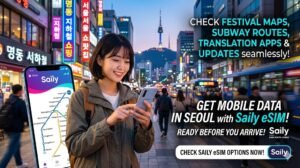
    Festival visitors often need to use maps, translation apps, subway apps, taxi apps, and official event pages while moving around Seoul. Having mobile data ready can make your trip much smoother, especially if you are visiting crowded outdoor events.

    To check festival maps, subway routes, translation apps, and official event updates while moving around Seoul, it helps to have mobile data ready before you arrive.

    A promotional banner for Saily eSIM featuring a young woman smiling and using her smartphone on a busy street in Myeong-dong, Seoul, at dusk. In the background, neon signs and the N Seoul Tower are visible. To the left, a smartphone screen displays the Saily app with a Seoul subway map. The text on the banner reads: 'CHECK FESTIVAL MAPS, SUBWAY ROUTES, TRANSLATION APPS & UPDATES seamlessly!' and 'GET MOBILE DATA IN SEOUL with Saily eSIM! READY BEFORE YOU ARRIVE!' with a 'CHECK SAILY eSIM OPTIONS NOW!' button at the bottom.

    Check South Korea eSIM options with Saily before your trip.

    Arrive Early for Night Events

    For major night events like the Lotus Lantern Parade, arriving early is important. Good viewing spots can fill up quickly, and it may be difficult to move around once the parade begins.

    Check Official Pages Before Visiting

    Outdoor festivals may change depending on rain, crowd control, or city operations. Always check the official website, event page, or Instagram before heading out.

    Combine Events with Nearby Attractions

    Many of these events are located near popular tourist areas. You can combine:

    • Lotus Lantern Festival with Insadong, Jogyesa Temple, Cheonggyecheon, or Gwanghwamun
    • Seoul Friendship Festival with DDP, Dongdaemun shopping, or Cheonggyecheon
    • Seoul International Garden Show with Seoul Forest and Seongsu cafés
    • Hangang events with Banpo, Yeouido, or riverside picnic plans

    If you are planning to visit Seoul during major May festivals, hotel location can make a big difference. Areas near Jongno, DDP, Yeouido, Hongdae, Myeongdong, or Seongsu may help reduce travel time between event

    A travel banner for Trip.com featuring a collage of famous Seoul landmarks: a traditional hanok village with people in Hanbok, the futuristic Dongdaemun Design Plaza (DDP), Yeouido skyline by the Han River, and the vibrant streets of Seongsu and Myeongdong. In the center, a young couple is looking at a smartphone displaying the Trip.com hotel booking app. The main text reads: 'PLANNING A VISIT TO SEOUL IN MAY? STAY NEAR THE FESTIVALS!' and lists key areas: 'Jongno, DDP, Yeouido, Hongdae, Myeongdong, Seongsu'. A call-to-action button says 'COMPARE SEOUL HOTELS ON TRIP.COM BEFORE

    Compare Seoul hotel options on Trip.com before booking.

    Final Thoughts

    May 2026 is a great time to visit Seoul if you enjoy festivals, outdoor walks, cultural events, and local city experiences. The Lotus Lantern Festival is the most visually powerful traditional event, the Seoul Friendship Festival is the easiest free global culture event to enjoy at DDP, and the Seoul International Garden Show is perfect for travelers who want a slower outdoor experience around Seoul Forest and Seongsu.

    If your travel dates match one of these events, it is worth adding at least one festival to your Seoul itinerary. Just remember to check the official event information before visiting, especially for outdoor programs, parade routes, reservation-based activities, and weather-related changes.

  • How to Get from Seoul Station to Myeongdong, Hongdae, and Gangnam

    How to Get from Seoul Station to Myeongdong, Hongdae, and Gangnam

    Seoul Station is one of the most important transport hubs in South Korea.

    Many tourists arrive here after taking the AREX train from Incheon International Airport, the KTX from another city, or a long-distance airport bus. Once they reach Seoul Station, the next question is simple: how do you get from there to your hotel area?

    This guide explains the easiest ways to get from Seoul Station to three of the most common tourist areas in Seoul: Myeongdong, Hongdae, and Gangnam.

    Why Seoul Station Matters for Tourists

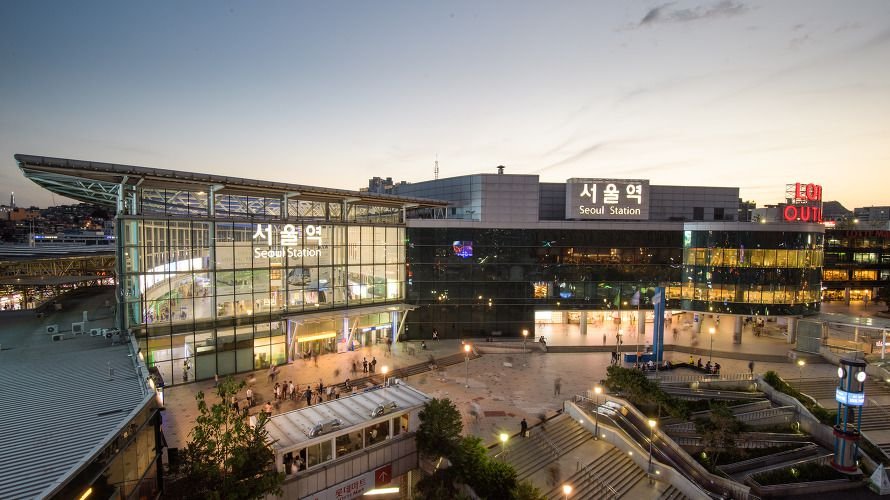
    Exterior view of Seoul Station at dusk with illuminated station signage and surrounding plaza in Seoul, South Korea.

    Seoul Station is often the first major stop many travelers use after arriving in Korea.

    It connects airport trains, long-distance KTX trains, subway lines, taxis, and buses. Because of that, many tourists use Seoul Station as a transfer point before continuing to their hotel.

    To use maps, taxi apps, and translation tools smoothly after arriving at Seoul Station, it helps to have mobile data ready.

    Traveler using Saily mobile data at Seoul Station for maps, taxi apps, and translation tools in South Korea

    Check South Korea eSIM options with Saily.

    If you are still planning your airport arrival route, you may also want to read How to Get from Incheon Airport to Seoul (2026 Guide) and AREX Express vs All-Stop Train: Which Is Better for Tourists?

    How to Get from Seoul Station to Myeongdong

    Myeongdong is one of the easiest tourist areas to reach from Seoul Station.

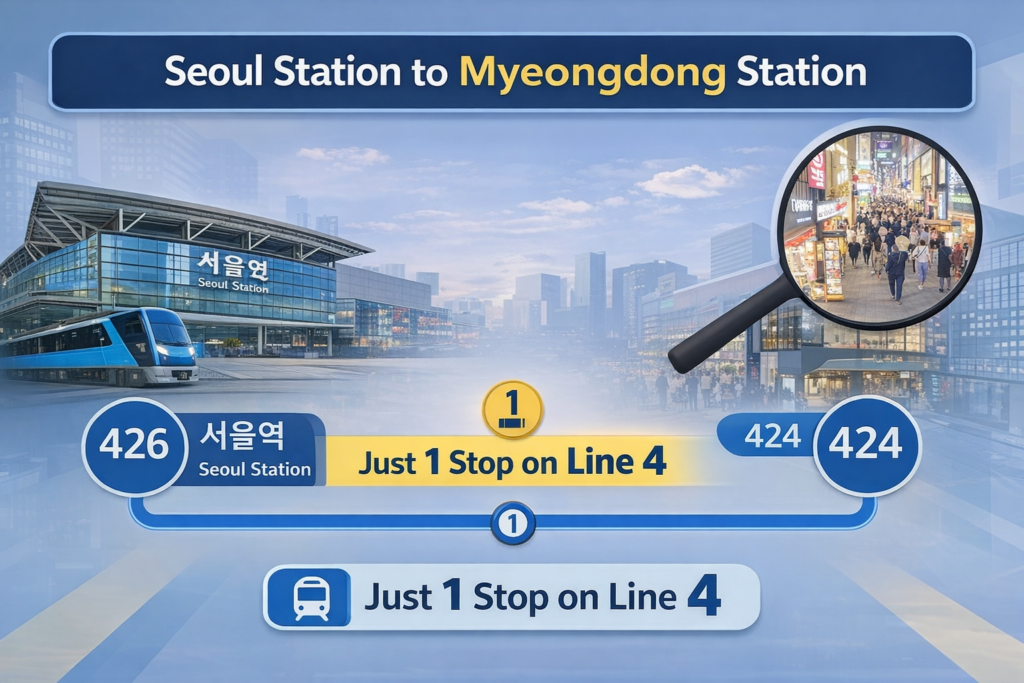
    Infographic showing that Myeongdong Station is just one stop from Seoul Station on Seoul Subway Line 4.

    Option 1: Subway

    The subway is often the most practical choice.

    From Seoul Station, you can take Line 4 and travel one stop to Myeongdong Station. This is a simple and affordable route for most travelers.

    This option is best if:

    • you are traveling light
    • your hotel is close to Myeongdong Station
    • you are comfortable using the subway

    Option 2: Taxi

    A taxi can be convenient if you have large luggage or your hotel is not close to the station exit.

    Because Myeongdong is relatively close to Seoul Station, the ride is usually short. However, traffic can affect travel time depending on the hour.

    This option is best if:

    • you are arriving tired after a long flight
    • you have heavy luggage
    • your hotel is uphill or not easy to reach on foot

    Option 3: Walk

    In some cases, walking can be possible if your luggage is light and your accommodation is near the outer part of Myeongdong.

    However, for most first-time visitors, the subway or a short taxi ride is easier.

    How to Get from Seoul Station to Hongdae

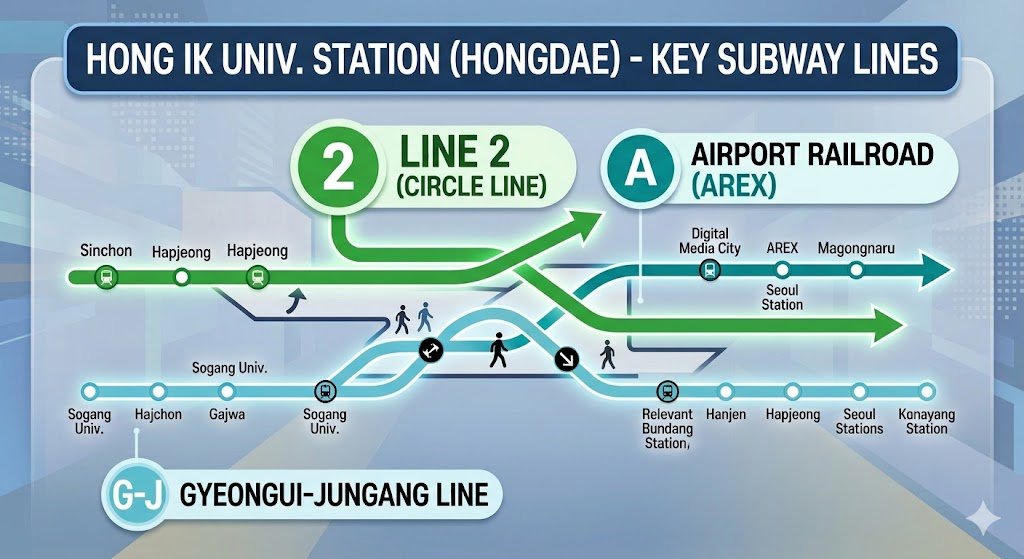
    Infographic showing the subway lines connected to Hongik University Station in Seoul, including Line 2, AREX, and the Gyeongui-Jungang Line.

    Hongdae is another popular area for tourists, especially younger travelers, solo travelers, and visitors interested in nightlife, cafes, and street culture.

    Option 1: AREX or Other Rail Connection

    Hongdae is often easiest to reach by train.

    Because Hongik University Station is a major station on the airport rail route, many travelers find train transfers convenient. Depending on your exact arrival route into Seoul Station, rail can be one of the simplest ways to continue toward Hongdae.

    This option is best if:

    • your hotel is near Hongik University Station
    • you want to avoid road traffic
    • you are comfortable with station transfers

    Option 2: Taxi

    A taxi from Seoul Station to Hongdae is usually straightforward, especially if you are arriving with luggage or traveling in a small group.

    This can be a convenient choice late at night or when you do not want to navigate station exits and transfers.

    If you plan to use taxi apps, maps, or translation tools after arriving in Seoul, having mobile data can make the trip much easier.

    Traveler using Saily eSIM in Hongdae for taxi apps, maps, and translation tools after arriving in Seoul

    Check South Korea eSIM options with Saily.

    This option is best if:

    • you are arriving in the evening
    • you are carrying more luggage
    • you want the most direct route to your hotel

    If you are comparing local taxi options, you may also want to read How to Use Kakao T in Korea as a Tourist, Uber in Korea: What Tourists Need to Know, and How to Use Taxis in Korea (Kakao T, Uber & Tips).

    How to Get from Seoul Station to Gangnam

    Gangnam is farther from Seoul Station than Myeongdong or Hongdae, so the best option depends more on your comfort level, luggage, and the exact location of your hotel.

    Foreign tourist outside Seoul Station deciding between taking the subway or a taxi to Gangnam in Seoul.

    Option 1: Subway

    The subway is usually the most affordable way to reach Gangnam.

    However, the route may require more time and sometimes one or more transfers depending on where in Gangnam you are staying. Since Gangnam is a large district, your exact destination matters a lot.

    This option is best if:

    • you are traveling on a budget
    • you do not mind transfers
    • you are comfortable navigating the subway system

    Option 2: Taxi

    A taxi is often the simplest way to reach Gangnam directly from Seoul Station, especially if you are unfamiliar with Seoul’s subway network.

    Because the distance is longer, the ride will usually cost more than a trip to Myeongdong or Hongdae. Travel time can also change a lot depending on traffic.

    If you are staying in Gangnam, your hotel location can make a big difference in travel time and convenience.

    Trip.com banner showing Gangnam skyline and hotel comparison by location and price for travelers staying in Seoul

    Compare Seoul hotel locations and prices on Trip.com

    This option is best if:

    • you have luggage
    • your hotel is not near a major subway exit
    • you want the easiest door-to-door option

    Which Option Is Best for First-Time Visitors?

    For many first-time visitors, the best option depends on the hotel area.

    Best for Myeongdong

    The subway is usually the easiest choice because the distance is short and the connection is simple.

    Best for Hongdae

    Train or taxi are both practical, depending on how much luggage you have and how close your hotel is to Hongik University Station.

    Best for Gangnam

    A taxi is often easier for first-time visitors, while the subway is better for travelers who want to save money and do not mind a longer route.

    What If You Have Heavy Luggage?

    Luggage changes everything.

    A route that feels easy with a backpack can feel much more stressful with two suitcases. Subway stairs, long station corridors, and crowded train cars can all make arrival feel harder than expected.

    If you are carrying larger luggage, taxis may be worth considering even for shorter routes, especially if:

    • you are arriving during rush hour
    • your hotel is not close to the station
    • you are tired after a long flight
    • you are traveling with children or family

    What About Late-Night Arrivals?

    If you reach Seoul Station late at night, your transport choices may feel different.

    The subway may still work depending on the hour, but many travelers prefer taxis for convenience and peace of mind after dark. This is especially true if they are heading to Hongdae or Gangnam with luggage.

    Late-night arrivals feel much easier when you can use maps, taxi apps, and translation tools right away.

    Saily banner for late-night arrival in Seoul showing taxi, city skyline, and mobile data use for maps, taxi apps, and translation tools

    Check South Korea eSIM options with Saily.

    If your arrival timing is part of your planning, you may also want to read Public Transportation Apps in Korea for Tourists (2026 Guide) and Transportation in Korea: Complete Guide for Tourists.

    Quick Comparison

    Myeongdong

    • easiest by subway
    • short distance from Seoul Station
    • taxi also works well with luggage

    Hongdae

    • train is often convenient
    • taxi is practical for late arrivals or luggage
    • a good option for travelers staying near Hongik University Station

    Gangnam

    • subway is cheaper
    • taxi is simpler
    • better to choose based on luggage, traffic, and hotel location

    Final Thoughts

    Getting from Seoul Station to Myeongdong, Hongdae, and Gangnam is usually not difficult, but the best route depends on your destination, luggage, and comfort with public transportation.

    For Myeongdong, the subway is often the simplest answer. For Hongdae, rail or taxi can both work well. For Gangnam, many travelers choose between a cheaper subway ride and a more convenient taxi ride.

    If you are visiting Seoul for the first time, the easiest route is not always the cheapest one. In many cases, choosing the less stressful option can make your arrival much smoother.

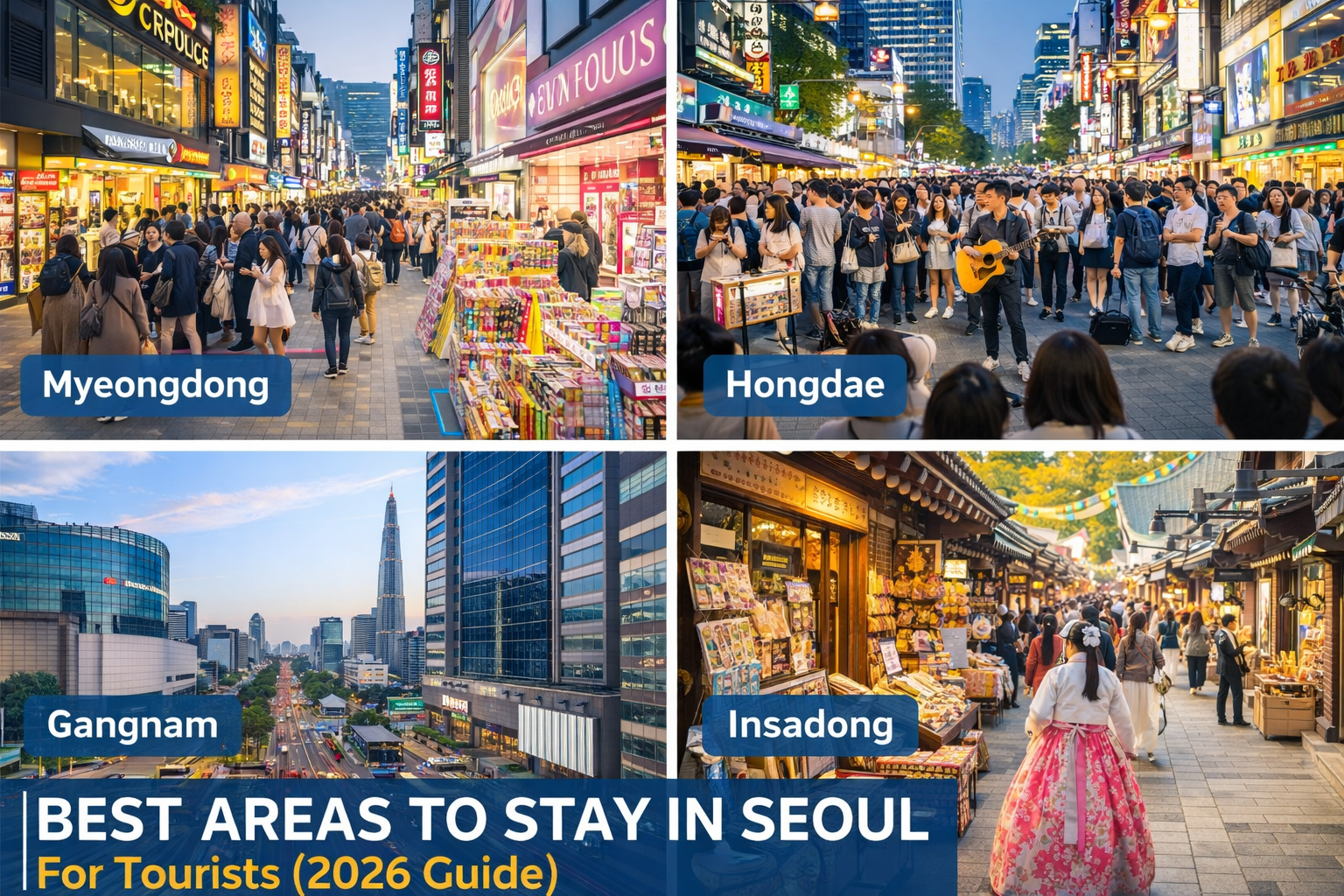
  • Best Areas to Stay in Seoul for Tourists (2026 Guide)

    Best Areas to Stay in Seoul for Tourists (2026 Guide)

    Seoul is a large and diverse city with many unique neighborhoods.
    For travelers visiting South Korea for the first time, choosing the right area to stay can make a huge difference in how convenient and enjoyable the trip becomes.

    Some neighborhoods are famous for shopping and nightlife, while others offer cultural attractions, historic streets, or family-friendly environments.

    Seoul’s excellent public transportation system makes it easy to travel between districts, but staying near a major subway line can still save a lot of time.

    This guide explains the best areas to stay in Seoul for tourists, including the advantages of each neighborhood and which type of traveler each area is best suited for.

    If you are planning how to move around the city, you may also want to read our Seoul Subway Map Guide for Tourists.

    Compare hotel prices in Seoul before you book.
    If you are still deciding between areas like Myeongdong, Hongdae, Gangnam, or Jamsil, it helps to check current room prices for your travel dates.

    A professional and inviting horizontal banner featuring a woman sitting at a modern hotel lobby desk in Seoul, using a laptop to compare hotel prices. On the left, a dark overlay with white and gold text reads: "Compare hotel prices in Seoul before you book. If you are still deciding between areas like Myeongdong, Hongdae, Gangnam, or Jamsil, it helps to check current room prices for your travel dates." Below the text, there is a prominent teal button that says "Compare Hotels in Seoul on Trip.com →". A small map of Seoul with highlighted tourist districts is visible in the background, and a friendly hotel staff member is assisting her, creating a sense of reliable travel planning.

    Compare Hotels in Seoul on Trip.com


    Myeongdong – Best Area for First-Time Visitors

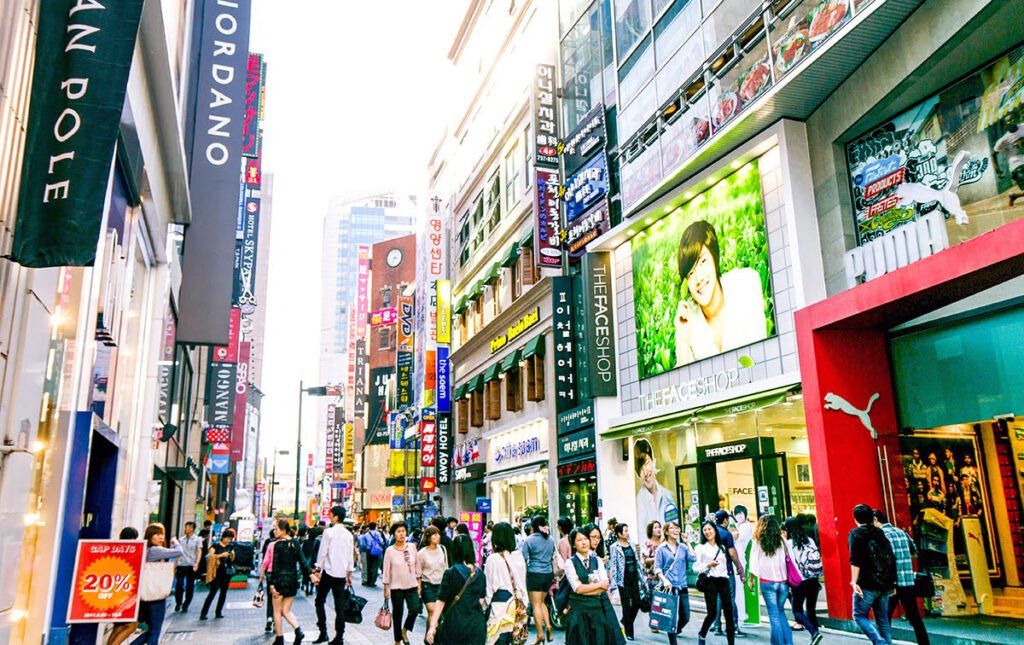
    Myeongdong is one of the most popular places to stay for international travelers visiting Seoul.

    Located in the center of the city, this district is known for its vibrant shopping streets, street food stalls, and convenient access to major tourist attractions.

    Because of its central location, many first-time visitors prefer to stay here.

    Why Myeongdong is Popular

    Tourists walking and shopping in Myeongdong shopping street in Seoul, South Korea

    • One of the most famous shopping districts in Korea
    • Huge variety of street food vendors
    • Walking distance to major attractions
    • Easy access to the airport train and subway

    Nearby Attractions

    • Myeongdong Cathedral
    • N Seoul Tower (Namsan Tower)
    • Namdaemun Market
    • Deoksugung Palace

    Transportation

    Myeongdong Station is located on Seoul Subway Line 4, which connects directly to Seoul Station and Dongdaemun.

    This makes it easy to reach many parts of the city.

    Best for

    • First-time visitors
    • Shopping lovers
    • Short trips to Seoul


    Hongdae – Best Area for Nightlife and Youth Culture

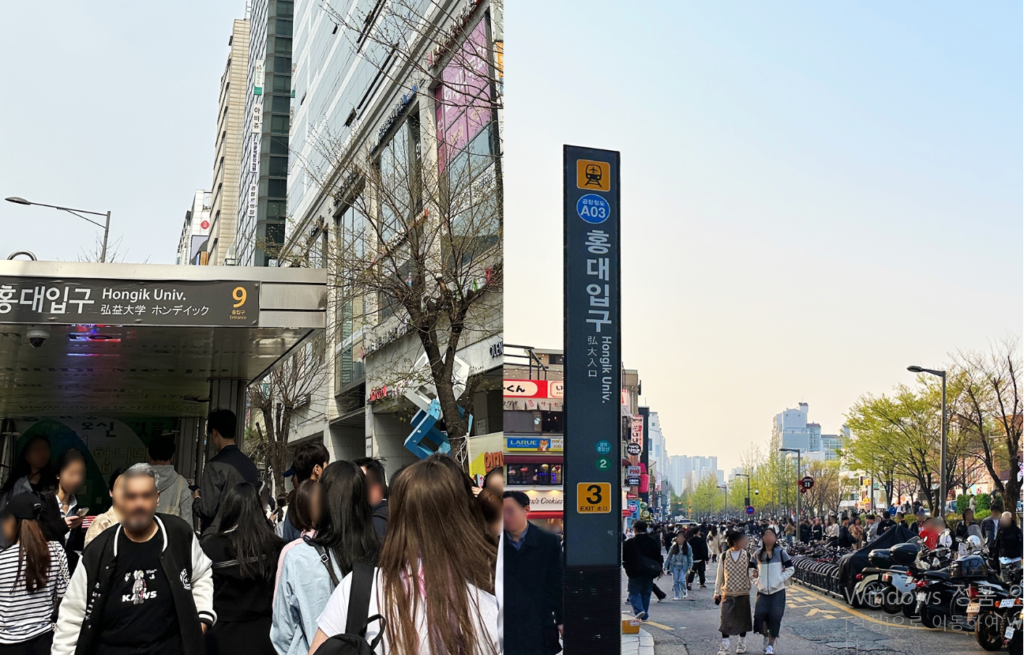
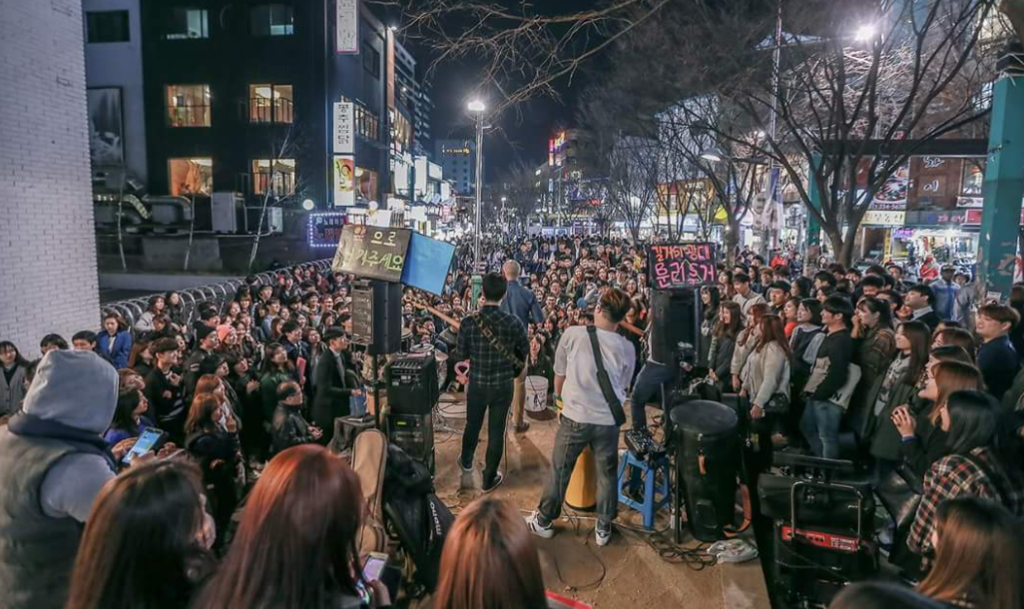
    Hongdae street near Hongik University station in Seoul popular nightlife and youth district for tourists

    Hongdae is one of the most energetic neighborhoods in Seoul.

    Located near Hongik University, the district is famous for its music scene, street performances, trendy cafes, and nightlife.

    Many young travelers and digital nomads prefer staying in Hongdae because of its lively atmosphere.

    What Makes Hongdae Unique

    • Street performances and live music
    • Independent fashion shops
    • Trendy cafes and dessert shops
    • Vibrant nightlife

    Transportation

    Hongik University Station is one of the most convenient stations in Seoul because it connects several important lines.

    • Subway Line 2
    • Airport Railroad (AREX)
    • Gyeongui–Jungang Line

    This means travelers can easily reach Hongdae directly from the airport.

    Best for

    • Younger travelers
    • Nightlife lovers
    • Solo travelers

    If you plan to stay in Hongdae, getting from Incheon Airport is especially easy thanks to the AREX connection.
    Many travelers choose the AREX Express Train for a faster and simpler airport transfer into Seoul.

    Book Your AREX Express Train Ticket

    Promotional banner for the AREX Express Train showing transfer from Incheon Airport to Hongdae in Seoul with train, airport terminal, and Hongdae nightlife scene

    Gangnam – Best Area for Modern Seoul

    Gangnam is one of the most famous districts in Seoul and represents the modern side of the city.

    The area is known for luxury shopping malls, high-end restaurants, and business centers.

    Many travelers who prefer modern hotels and upscale environments choose Gangnam as their base.

    Highlights of Gangnam

    Two female tourists enjoying shopping at COEX Mall in Gangnam Seoul one of the largest shopping malls in South Korea
    COEX Mall in Gangnam Seoul one of the largest underground shopping malls and tourist attractions in South Korea

    • Luxury shopping streets
    • COEX Mall and Starfield Library
    • Bongeunsa Temple
    • Upscale restaurants and cafes

    Transportation

    Gangnam is connected to several major subway lines.

    • Line 2 (Green Line)
    • Shinbundang Line

    These lines make it easy to travel between Gangnam and other parts of Seoul.

    Best for

    • Luxury travelers
    • Business travelers
    • Visitors interested in modern Seoul


    Insadong – Best Area for Culture and Tradition

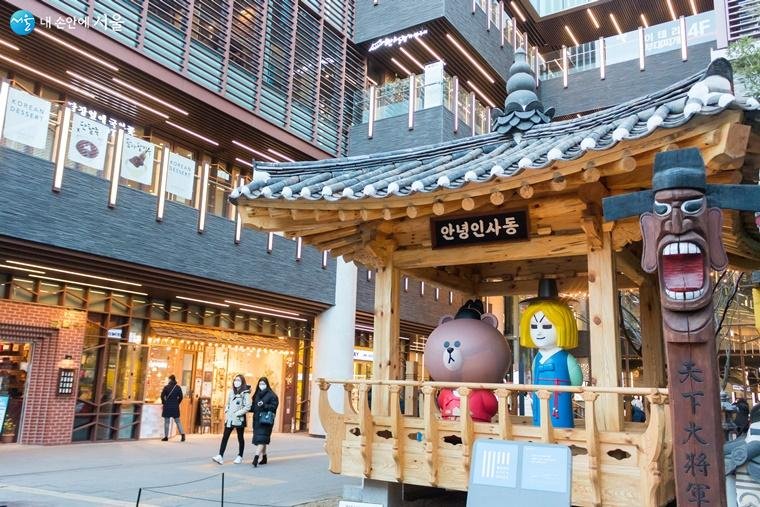
    Insadong street in Seoul traditional cultural shopping district popular with tourists in South Korea

    Insadong is one of the best places to stay if you want to experience traditional Korean culture.

    The area is famous for its traditional tea houses, art galleries, antique shops, and cultural streets.

    Unlike the busy shopping districts of Myeongdong, Insadong has a quieter and more historic atmosphere.

    Nearby Attractions

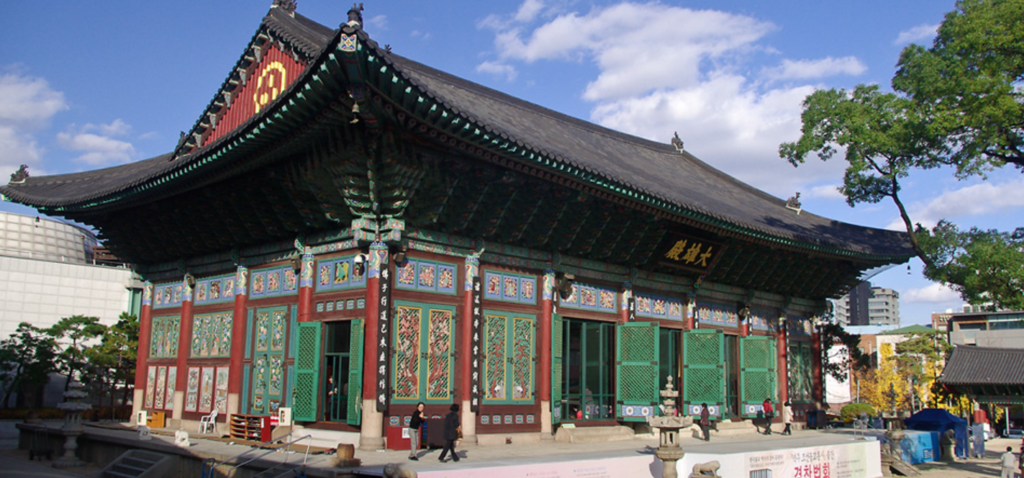
    Jogyesa Temple in Seoul traditional Buddhist temple and cultural landmark in South Korea

    • Gyeongbokgung Palace
    • Bukchon Hanok Village
    • Jogyesa Temple
    • Changdeokgung Palace

    If you are especially interested in traditional neighborhoods and hanok-style stays, you may also want to read our guide to the best hanok stays in Seoul for first-time visitors.

    Transportation

    Insadong is close to several subway stations.

    • Anguk Station (Line 3)
    • Jongno 3-ga Station (Line 1, 3, 5)

    These stations make it easy to explore central Seoul.

    Best for

    • Culture lovers
    • History enthusiasts
    • Travelers interested in traditional Korea


    Jamsil – Best Area for Families

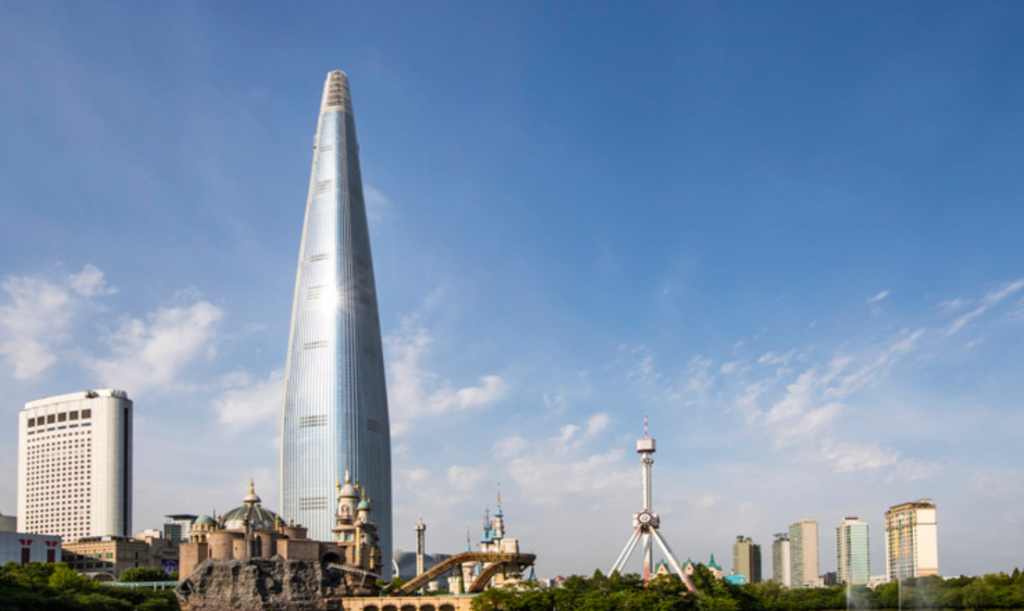
    Lotte World Tower in Jamsil Seoul the tallest building in South Korea and a famous tourist landmark

    Jamsil is a popular area for families visiting Seoul.

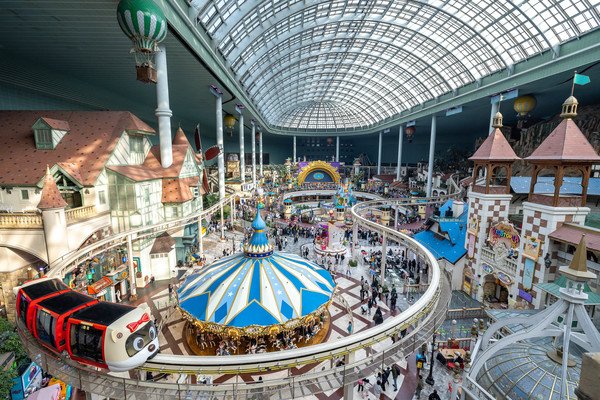
    The district is home to Lotte World Tower, the tallest building in Korea, and Lotte World Theme Park, one of the largest indoor theme parks in the world.

    The area also features beautiful parks and lakes.

    Lotte World Adventure indoor theme park in Seoul popular family attraction in Jamsil South Korea

    Major Attractions

    • Lotte World Tower
    • Lotte World Mall
    • Seokchon Lake
    • Olympic Park

    Jamsil is especially convenient for families because major attractions like Lotte World are close by. If you plan to visit, it may be worth checking ticket options in advance.

    Check Lotte World Adventure tickets here →

    Promotional banner for Lotte World Adventure tickets in Jamsil showing the theme park castle, Lotte World Tower, and family visitors in Seoul

    Transportation

    Jamsil Station is located on Line 2 and Line 8, making it easy to travel to other districts.

    Best for

    • Families traveling with children
    • Theme park visitors
    • Travelers interested in modern attractions


    Other Popular Areas to Stay

    Although the areas above are the most popular, several other neighborhoods are also worth considering.

    Itaewon

    Known for its international restaurants and diverse nightlife.

    Yeouido

    Home to the financial district and beautiful Han River parks.

    Dongdaemun

    A famous area for night shopping and fashion markets.


    Tips for Choosing Where to Stay in Seoul

    When choosing a hotel location in Seoul, consider the following tips.

    Stay Near a Subway Station

    Seoul’s subway system is the fastest way to travel around the city. If you are unfamiliar with the lines, read our Seoul Subway Map Guide for Tourists.

    Choose a Central Area for Short Trips

    If you are visiting Seoul for only a few days, staying in a central area like Myeongdong or Hongdae will reduce travel time.

    Consider Airport Access

    If you arrive via Incheon International Airport, areas connected to the Airport Railroad are especially convenient. You can also read How to Get from Incheon Airport to Seoul before choosing your hotel location.

    Hotel prices in Seoul can vary a lot depending on the area, season, and booking date. It is a good idea to compare prices before choosing where to stay.

    If airport access matters to you, it may be worth booking your AREX transfer in advance before arrival.
    It is one of the easiest ways to reach central Seoul from Incheon Airport.

    Check AREX Express Train Tickets →

    Promotional banner for AREX Express Train tickets showing travel from Incheon Airport to Hongdae with airport terminal, AREX train, and Hongdae street scene

    Final Thoughts

    Seoul offers many great neighborhoods for travelers, each with its own character and advantages.

    For first-time visitors, Myeongdong and Hongdae are usually the easiest choices because of their central location and excellent transportation connections.

    Travelers interested in modern shopping districts may prefer Gangnam, while those looking for traditional culture will enjoy staying near Insadong.

    No matter where you stay, Seoul’s efficient subway system makes it easy to explore the entire city.