
How to Take the Bus in Korea as a Foreigner
Taking the bus in Korea may seem confusing at first, especially for first-time visitors.
Unlike the subway, buses can feel less predictable because routes, stops, and boarding procedures may vary depending on the city. However, once you understand the basics, buses become a useful and affordable way to travel in Korea.
For tourists and foreign visitors, buses are especially helpful when a destination is not close to a subway station. They are widely used, relatively inexpensive, and available almost everywhere in major cities.
This guide explains how foreigners can use buses in Korea more easily, including bus types, fares, payment methods, boarding tips, and practical advice for first-time travelers.
If you want to understand Korea’s transportation system more broadly, read our Transportation in Korea: Complete Guide for Tourists.
Are Buses in Korea Easy for Foreigners?
Yes, but they are usually a little less intuitive than the subway at first.
The subway is often easier because it is more visual and easier to follow line by line. Buses require more attention to route numbers, stop names, and direction. Still, many foreigners use Korean buses successfully after only a short adjustment period.
Once you understand the main bus types and how to pay, buses become much easier to use.
Why Tourists Should Use Buses in Korea
Buses are useful for several reasons.
- They reach places that are not close to subway stations.
- They are usually affordable.
- They can help reduce walking time.
- They are practical for short city trips.
- They are often useful when visiting neighborhoods, hotels, and local areas outside main subway routes.
For many visitors, the best approach is to use the subway for major routes and buses for more specific local travel.
If you are also learning the subway system, read our How to Use the Seoul Subway as a Tourist (2026 Guide).
How Much Does the Bus Cost in Korea?
Bus fares in Korea are generally affordable.
In many cities, the price depends on distance and bus type, but most local bus rides are inexpensive compared with taxis. This makes buses a practical option for tourists who want to save money while moving around the city.
If you are planning your overall Korea travel budget, read our How Much Does a Trip to South Korea Cost in 2026?
Do You Need a T-Money Card for the Bus?
You do not absolutely need one, but it is highly recommended.
A T-Money card makes bus travel much easier because you can tap when boarding and, in many cases, tap again when getting off. It is faster and more convenient than handling individual tickets or cash situations.
T-Money also works well across buses, subways, and many taxis, which is why many tourists buy one early in their trip.
If you want an easier start in Korea, many travelers also check useful travel cards and transport-friendly passes before their trip.

Check Seoul travel cards and passes on Klook
If you are new to this system, read our T-Money Card in Korea: Complete Guide for Tourists (2026).
What Do the Bus Colors Mean in Korea?
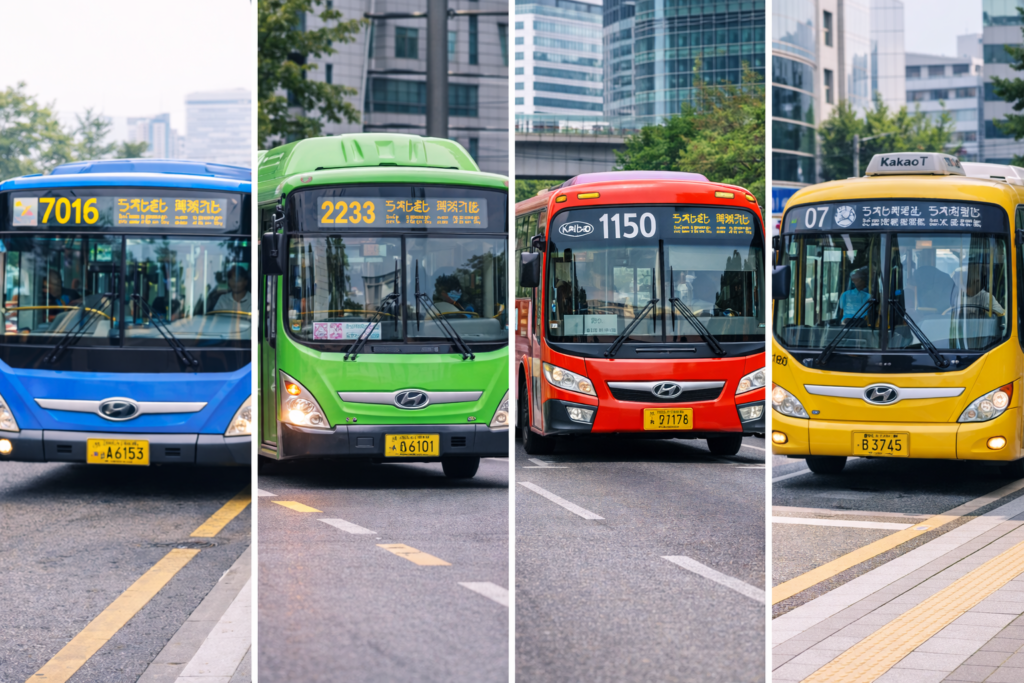
Bus systems vary by city, but in Seoul, bus colors usually help indicate the type of route.
Blue buses
Blue buses usually run on longer routes connecting major districts.
Green buses
Green buses often connect neighborhoods to subway stations or major transfer points.
Red buses
Red buses are commonly used for longer-distance commuter routes, including routes between Seoul and nearby suburban areas.
Yellow buses
Yellow buses usually operate shorter circular or local routes in certain districts.
Tourists do not need to memorize everything, but understanding that colors reflect route type can make the system easier to read.
How to Take the Bus in Korea Step by Step
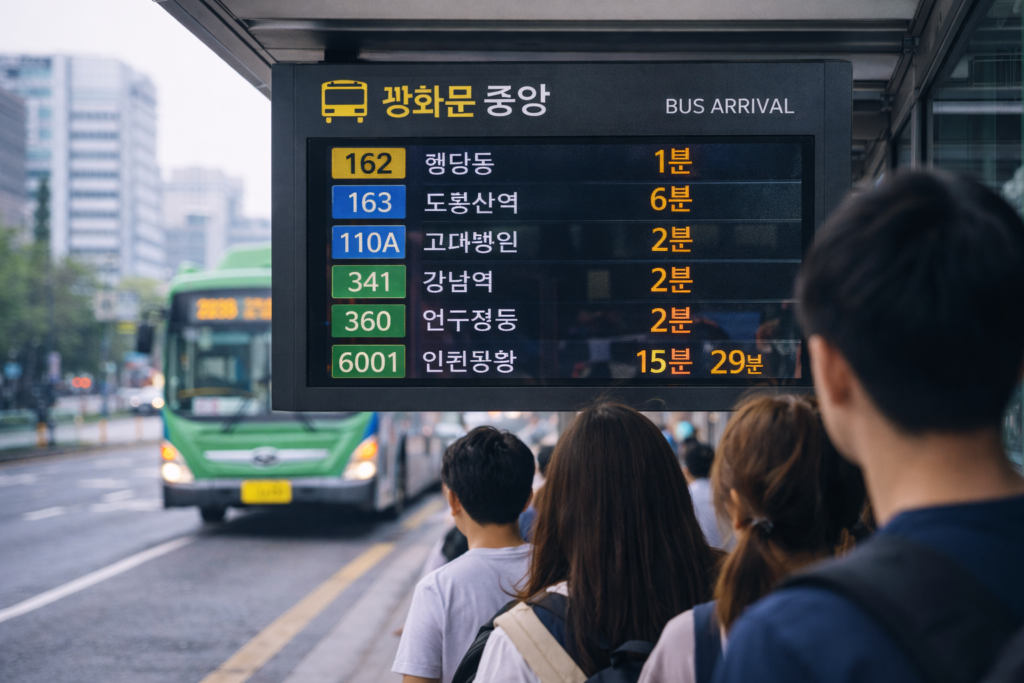
Taking the bus becomes much easier when you think of it as a simple sequence.
1. Check the route before leaving
Use a map or navigation app to confirm:
- the bus number
- the correct stop
- the direction of travel
- where to get off
Bus apps, navigation apps, and translation tools work much better when you have mobile data from the moment you arrive.

Check South Korea eSIM options with Saily
2. Go to the correct bus stop
Make sure you are standing at the right stop and checking the right route number.
Buses with similar numbers may go to different places, so always confirm carefully.
3. Board through the correct door
In many Korean city buses, passengers usually board through the front door.
4. Tap your T-Money card
Tap your card when boarding.
In many systems, you should also tap again when getting off to make sure the correct fare is calculated.
5. Watch for your stop
Use an app, onboard displays, or bus stop announcements to know when your stop is coming.
6. Press the stop button
When your stop is near, press the stop button inside the bus.
7. Exit carefully
Many buses use the rear door for exiting. Pay attention to local flow and signs.
Is It Better to Use the Bus or the Subway?
That depends on your destination.
The subway is usually better when:
- you want the simplest and fastest route between major areas
- you want easier navigation
- you want to avoid road traffic
The bus is usually better when:
- your destination is not near a subway station
- you want to reduce walking
- you are traveling within local neighborhoods
- the bus route is more direct than the subway route
In practice, many tourists use both depending on the day’s route.
Tips for Foreigners Using Buses in Korea
A few simple tips can make bus travel much easier.
- Check the route carefully before leaving.
- Have your T-Money card ready before boarding.
- Pay attention to direction, not just bus number.
- Press the stop button a little before your stop.
- Tap out if required.
- Do not panic if you miss a stop. It is usually easy to adjust with an app.
- Use buses for local convenience, not just long city travel.
These habits help foreign travelers feel much more confident using Korean buses.
Are Korean Buses Safe?
Yes. In general, buses in Korea are considered safe, widely used, and reliable.
As in any country, you should stay aware of your belongings and be careful when boarding or exiting quickly. But overall, most tourists find buses safe and practical to use.
For broader travel safety information, read our Is South Korea Safe for Tourists in 2026?
Final Thoughts
Using the bus in Korea may feel slightly more confusing than using the subway at first, but it becomes much easier once you understand the basics.
For foreigners and tourists, buses are a useful way to reach places that are not directly connected to subway lines. With a T-Money card, a map app, and a little attention to route direction, bus travel in Korea becomes simple and affordable.
For many visitors, the best method is to combine subway travel for major routes with buses for local destinations.
Related Korea Travel Guides
You may also find these guides helpful:
- Transportation in Korea: Complete Guide for Tourists
- How to Use the Seoul Subway as a Tourist (2026 Guide)
- T-Money Card in Korea: Complete Guide for Tourists (2026)
- How to Get from Incheon Airport to Seoul (2026 Guide)
- How Much Does a Trip to South Korea Cost in 2026?
- Is South Korea Safe for Tourists in 2026?