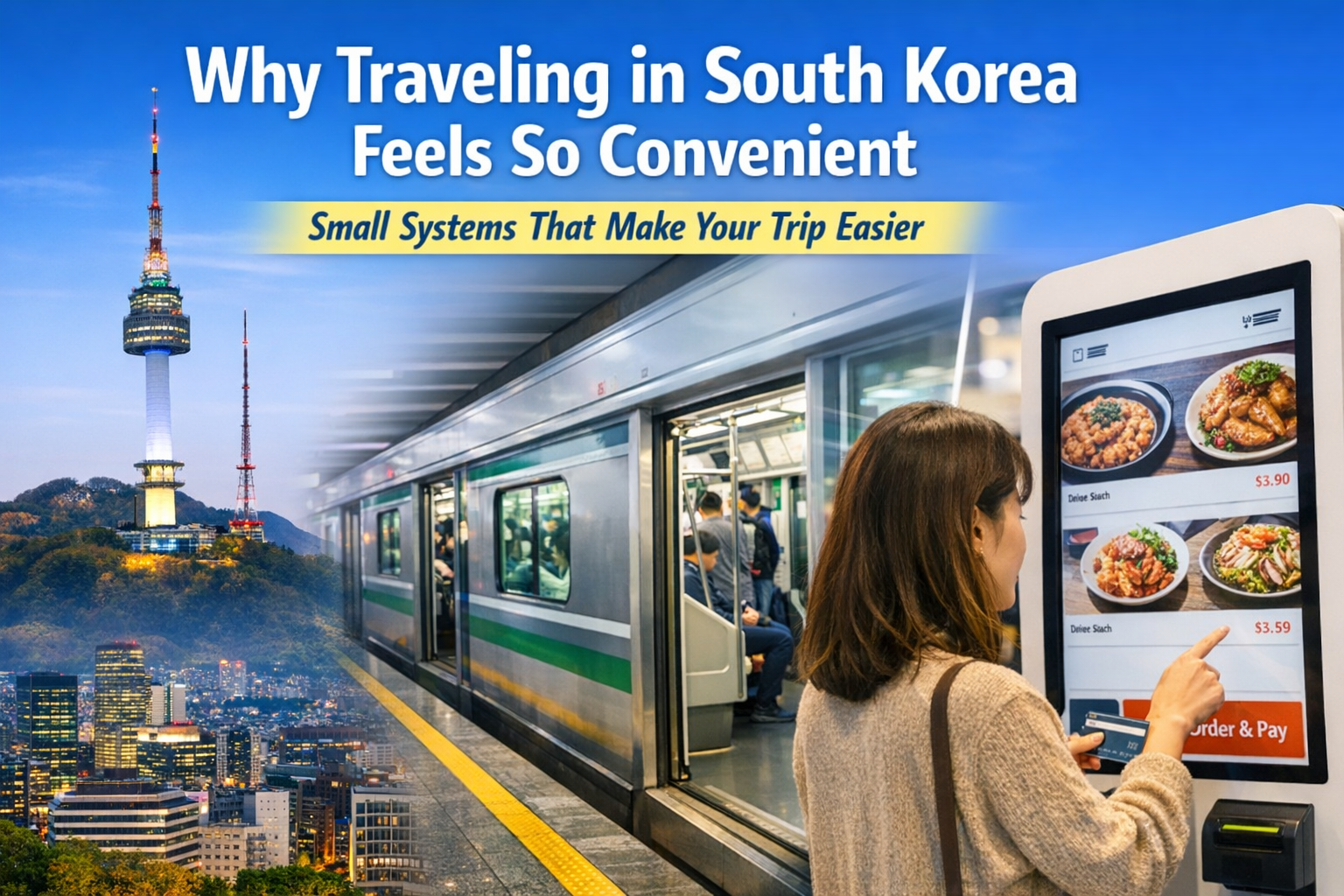
South Korea is not only popular for food, shopping, and famous attractions.
For many travelers, one of the biggest surprises is how convenient daily life feels.
Sometimes it is not one major attraction that stands out most. Instead, it is the small systems that make everyday travel easier.
You notice it when public transportation works smoothly, when ordering food feels less stressful, when convenience stores solve small problems quickly, or when useful services are available faster than expected.
These details may seem small at first, but together they make South Korea feel easier to navigate than many travelers expect.
1. Public Transportation Feels Efficient and Connected
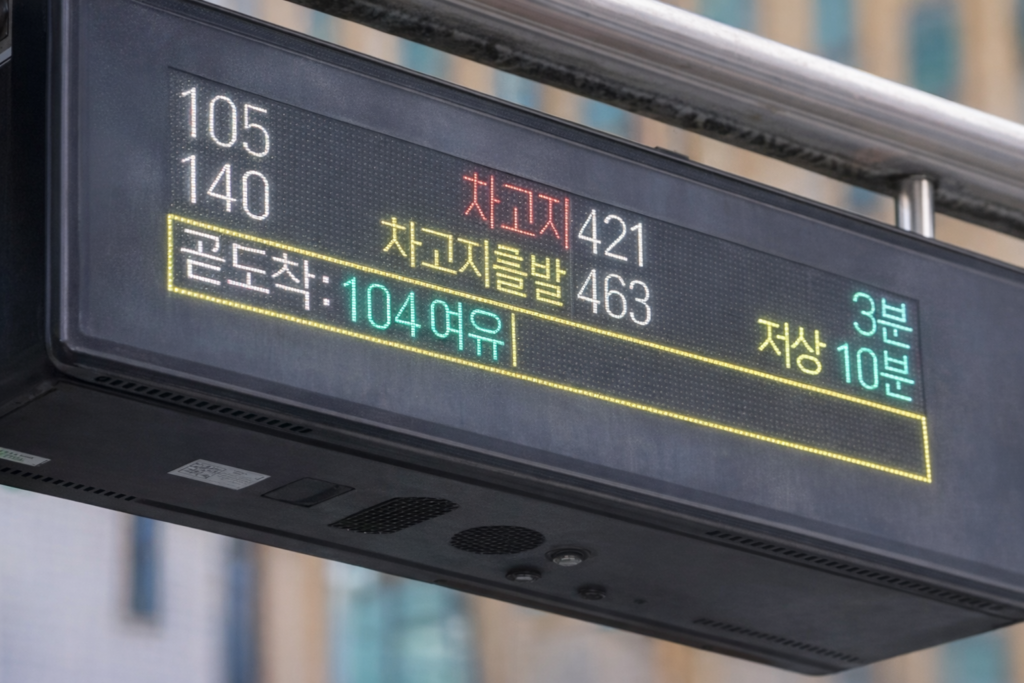
One of the first things many travelers notice in Korea is how practical public transportation feels.
In Seoul and other major cities, it is often possible to move around easily without renting a car. Subways, buses, taxis, and walking routes connect well, which makes daily travel feel more manageable. Seoul’s public transportation system is also designed to work as an integrated system rather than a series of completely separate rides.
The system also feels efficient in a very practical way.
Bus arrival information is usually easy to check. Subway stations are organized clearly. Transfers are part of daily movement instead of feeling confusing or stressful. Official Seoul guidance explains that when you use a transportation card and transfer within the allowed time, transfer discounts apply rather than charging a completely separate full fare every time. In general, the transfer window is 30 minutes, or 1 hour between 9 PM and 7 AM the next day, and riders need to tap when getting off the bus for the discount to apply.
That makes a real difference for travelers. When buses and subways feel connected in both movement and cost, getting around Seoul feels smoother and often more budget-friendly too. Seoul’s official English transportation guide also notes that T-money users can transfer between bus and subway lines, which helps daily travel feel more seamless.
One important detail to remember is that transfer discounts in Korea generally apply when you use a transportation card such as T-money. That is one reason many travelers choose to get a transport card early in the trip, especially if they plan to use both buses and subways in Seoul.
Want easier transfers in Seoul? Check Korea transport card options on Klook before your trip.
If you want to understand the system better before your trip, read Transportation in Korea: Complete Guide for Tourists and How to Use the Seoul Subway as a Tourist (2026 Guide).
2. Small Street Details Can Feel Surprisingly Smart
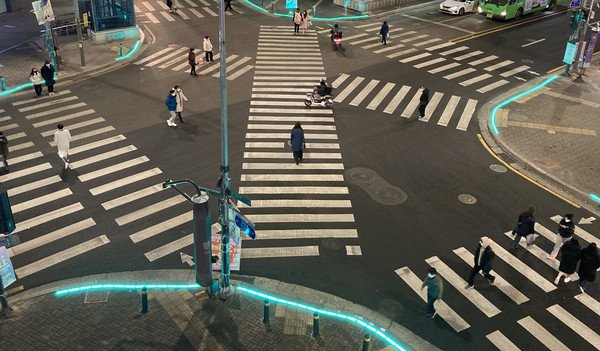
Korea also stands out because of the small details built into city life.
A simple example is the floor-level traffic light system seen in some areas. For pedestrians checking a map or looking at a phone, these lights make it easier to notice when the signal changes.
It may sound minor, but details like this leave a strong impression.
They make travelers feel that the city is designed around real daily behavior.
Another example appears in winter. Some bus stops have heated seats, which can make waiting outside much more comfortable on cold days.
These are not famous tourist attractions, but they are the kind of everyday details visitors often remember.
3. Staying Online Feels Easier Than Many Travelers Expect
A lot of travelers worry about internet access as soon as they land.
They need it for maps, translation apps, taxi apps, hotel messages, and booking confirmations. That is one reason digital convenience matters so much during a trip.
In Korea, staying connected often feels easier than expected.
Mobile service is strong, digital tools are widely used, and public Wi-Fi can also help travelers feel less disconnected when they need quick online access.
This makes a real difference during the trip. Being online is not just a bonus anymore. It affects navigation, food ordering, communication, and everyday movement.
For first-time visitors especially, that digital convenience can make Korea feel much easier to handle.
To use maps, taxi apps, translation tools, and booking confirmations smoothly throughout your trip, it helps to stay connected from the moment you arrive.
Check South Korea eSIM options with Saily before your trip.
You can also read Do You Need an eSIM for South Korea in 2026? (Best Options Explained) and SIM vs eSIM for South Korea in 2026: Which One Should You Choose?
4. Ordering Food Can Feel Less Stressful
Ordering food in a new country can be uncomfortable for many travelers.
Some worry about pronunciation. Others worry about ordering the wrong item or not understanding the menu clearly.
In Korea, self-service ordering systems often make that easier.
In many casual restaurants, cafes, and fast-food places, ordering through a kiosk is already normal. That means travelers often do not need to explain everything out loud first.
Instead, they can take their time, look through the menu, choose what they want, and pay step by step.
For solo travelers, this can feel especially convenient. It makes eating alone feel simpler and less awkward.
5. Convenience Stores Are More Useful Than Many Travelers Expect
Convenience stores in Korea are not just for grabbing a quick drink.
For many travelers, they become one of the most useful parts of daily travel.
You can quickly buy snacks, drinks, simple meals, toiletries, and small travel essentials. In some places, you can also prepare food right there, which makes convenience stores feel much more practical than many visitors expect.
That is one reason so many travelers become interested in Korean convenience store culture.
It is not only accessible. It is also efficient.
If you need a simple breakfast, a late-night snack, a quick drink, or a fast solution to a small problem, convenience stores are often one of the easiest answers.
6. Han River Food Culture Feels Especially Easy and Fun
Another thing that surprises many visitors is how easy outdoor food culture can feel in Korea.
At the Han River, people enjoy picnics, instant ramen, drinks, and even delivery food in a relaxed public space. For foreign travelers, this can feel both practical and memorable.
It is one of those experiences that feels very Korean.
Convenience stores are nearby. Public space is easy to use. Food options are accessible. Delivery culture is strong.
As a result, even a simple afternoon by the river can feel easy to plan and enjoyable to experience.
One especially memorable example is cooking instant ramen from a convenience store and eating it by the Han River. For many young travelers, that becomes one of the most fun and local-feeling parts of the trip.
7. Shared Bikes and Scooters Help With Short Trips
Korea also feels convenient because short-distance movement inside the city can be easier than expected.
Shared bikes and electric scooters can help with that final short distance between a subway station, a cafe street, a park, or a riverside area.
Sometimes a place feels too far to walk comfortably, but too short for a taxi. In those situations, shared mobility can feel very useful.
This kind of system makes city exploration feel lighter and more flexible.
For travelers exploring Seoul, it adds to the feeling that the city is designed for practical daily movement.
8. Fast Service Culture Shows Up in Everyday Life
Some of Korea’s convenience does not come from tourism infrastructure at all.
It comes from everyday service culture.
One example is eyewear. In many countries, getting glasses can take a long time. In Korea, some travelers are surprised by how quickly vision tests and glasses preparation can happen compared with what they are used to at home.
Another example is fast delivery culture.
Many travelers already know that Korea is fast, but they often do not fully understand that until they see how quickly items can arrive or how easy it is to get something delivered.
This creates a strong impression that Korea is not just modern. It is organized around saving time in daily life.
9. Daily Travel Often Feels Easy Without a Car
One of the most impressive things about Korea for many travelers is that daily life in major cities can feel very functional without driving.
You can arrive from the airport, reach your hotel, use public transportation, buy what you need, eat well, and move between neighborhoods without depending on a car.
That matters because in many destinations, transportation becomes one of the biggest sources of stress.
In Korea, the system often reduces that stress instead of adding to it.
This is especially useful for first-time visitors, solo travelers, and people planning shorter city trips.
If you are planning your arrival and local movement, read How to Get from Incheon Airport to Seoul (2026 Guide) and How to Use Taxis in Korea (Kakao T, Uber & Tips).
10. Safety Systems Also Add Peace of Mind
Convenience is not only about speed.
It is also about feeling supported when something goes wrong.
That is another reason Korea can feel easier for travelers. Public systems, emergency response, and organized urban environments can help visitors feel more secure during the trip.
In urgent situations, emergency services are available, which can be reassuring for travelers dealing with unexpected problems.
However, emergency response is only one part of the picture. If you need hospital treatment, tests, or follow-up care, costs can still add up for international visitors. That is why travel medical insurance is worth considering before your trip.
Check travel medical insurance options with SafetyWing before your trip.
For more preparation tips, read Is South Korea Safe for Tourists in 2026? and Travel Insurance for South Korea – Complete 2026 Guide.
11. Korea Feels Convenient Because Many Small Systems Work Together
What makes travel in Korea feel easy is not just one attraction or one useful app.
It is the way many small systems work together.
Public transportation saves time. Convenience stores solve everyday problems. Kiosks reduce language stress. Public Wi-Fi and digital tools help travelers stay connected. Delivery culture adds flexibility. Shared mobility helps with short trips.
Even small details like heated bus stop seats or floor-level traffic lights can make a difference.
None of these things alone defines the whole trip.
But together, they create a strong feeling that daily life in Korea is organized in a practical, traveler-friendly way.
That is one reason many visitors leave with the same impression:
South Korea is not only exciting to visit. It is also surprisingly easy to navigate once you are here.