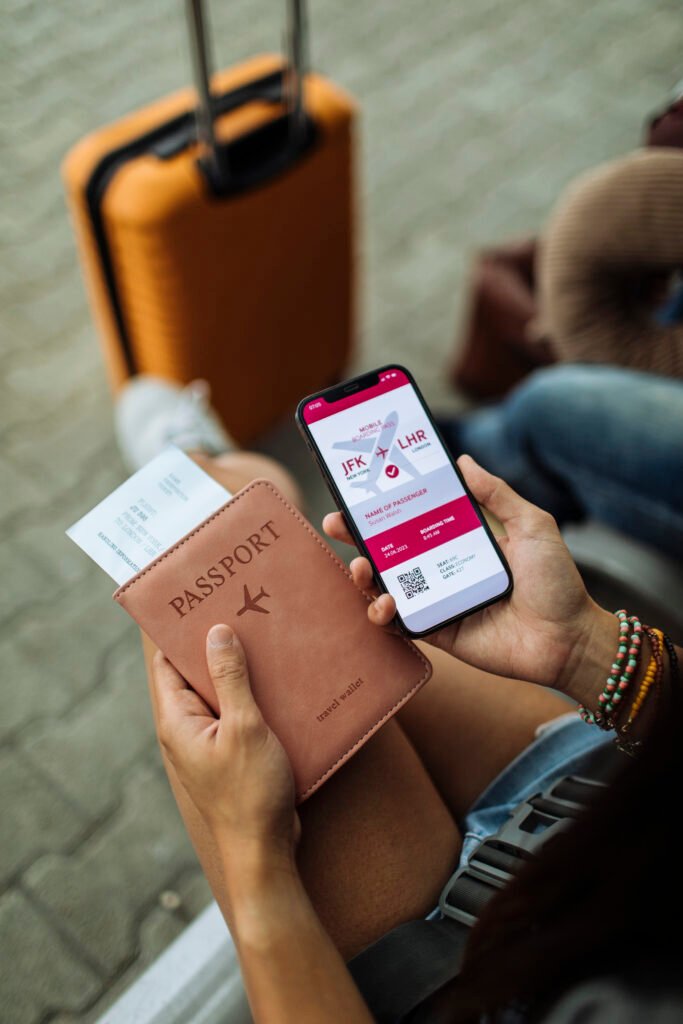
Planning a trip to South Korea in 2026? Travel insurance is one of the most affordable ways to protect your travel budget from unexpected medical bills, trip cancellations, or baggage delays.
South Korea is modern and safe, but accidents and emergencies can happen anywhere.
Why Travel Insurance Matters
Emergency hospital visits can cost hundreds to thousands of dollars without coverage.
Flight cancellations may result in non-refundable losses.
Lost baggage can disrupt your travel schedule.
Travel insurance gives you financial protection and peace of mind.
Do You Need Travel Insurance for South Korea?
Travel insurance is not mandatory for most visa-free travelers. However, it is strongly recommended if:
You are traveling more than 7 days
You have pre-existing medical conditions
You plan outdoor activities
You are traveling from the US, Europe, or Australia
Average Cost in 2026
7-day trip: $20–$50
10-day trip: $30–$70
14-day trip: $40–$90
Prices vary depending on age, trip length, and coverage limits.
Looking for an affordable option? [SafetyWing] offers flexible coverage starting at around $2 per day (approx. $56 for 4 weeks), making it one of the most budget-friendly choices for your trip to Korea.
What Your Policy Should Cover
Emergency medical treatment
Hospitalization
Emergency evacuation
Trip cancellation/interruption
Baggage loss or delay
We recommend at least $100,000 USD in medical coverage.
If you want a plan that meets these global standards including emergency medical and evacuation, we recommend checking out [SafetyWing’s Nomad Insurance].
Flights are usually the largest expense of a trip to South Korea. The good news is that with the right strategy, you can often save hundreds of dollars on your ticket.
This guide explains how travelers find the cheapest flights to Korea in 2026.
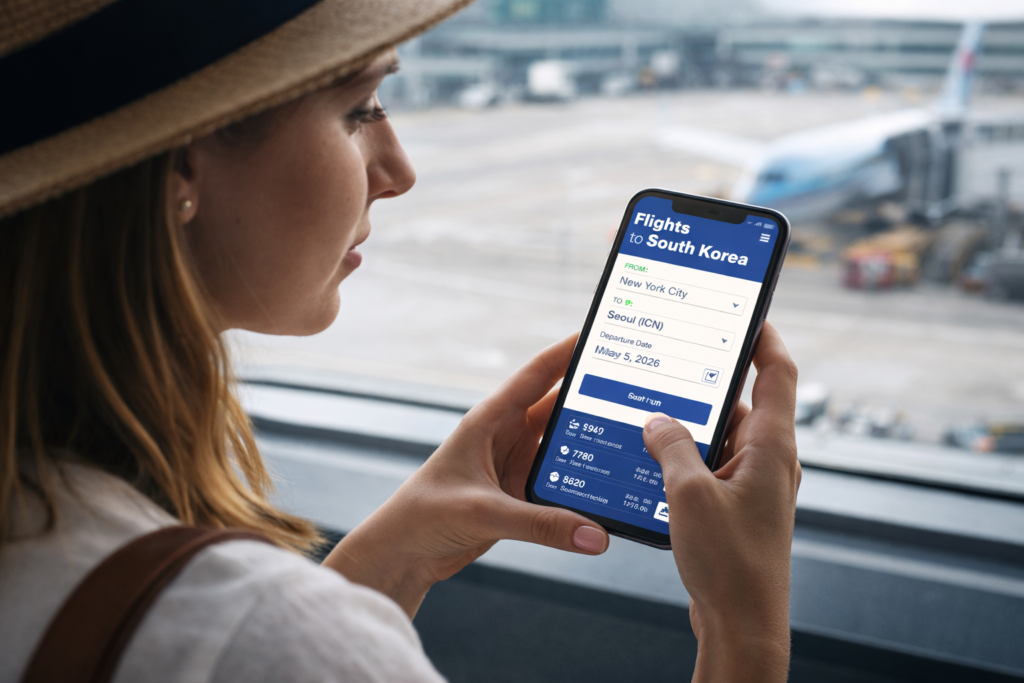
Ready to find your deal? Check the latest flight prices to South Korea on [Trip.com] to lock in the best rates today.
When Is the Cheapest Time to Fly to South Korea?
Flight prices change dramatically depending on the season.
Cheapest months
March
April
November
These months are outside peak tourism seasons.
Expensive months
July
August
Late December
Summer vacation and holiday travel cause prices to increase significantly.
Travelers who are flexible with their dates can often save 30–40% on airfare.
Average Flight Price to South Korea
Typical round-trip prices in 2026:
From North America $700 – $1,200
From Europe $600 – $1,000
From Southeast Asia $250 – $600
Prices depend on season, airline, and booking timing.
Booking 6–10 weeks before departure usually offers the best deals.
We recommend comparing prices across multiple platforms like [[Expedia]] and [[Kiwi.com]] to ensure you’re getting the absolute lowest price available.
To find the absolute lowest price, we recommend comparing real-time rates across these top-rated platforms
You can check and compare the real-time prices on their official sites here: [Expedia] | [Kiwi.com]
Flights to South Korea are widely available from major international airports.
By comparing airlines, choosing flexible dates, and booking at the right time, travelers can find affordable tickets and start their trip with confidence.
Mobile internet is essential in South Korea. Travelers use it for navigation, translation, subway apps, restaurant searches, and bookings.
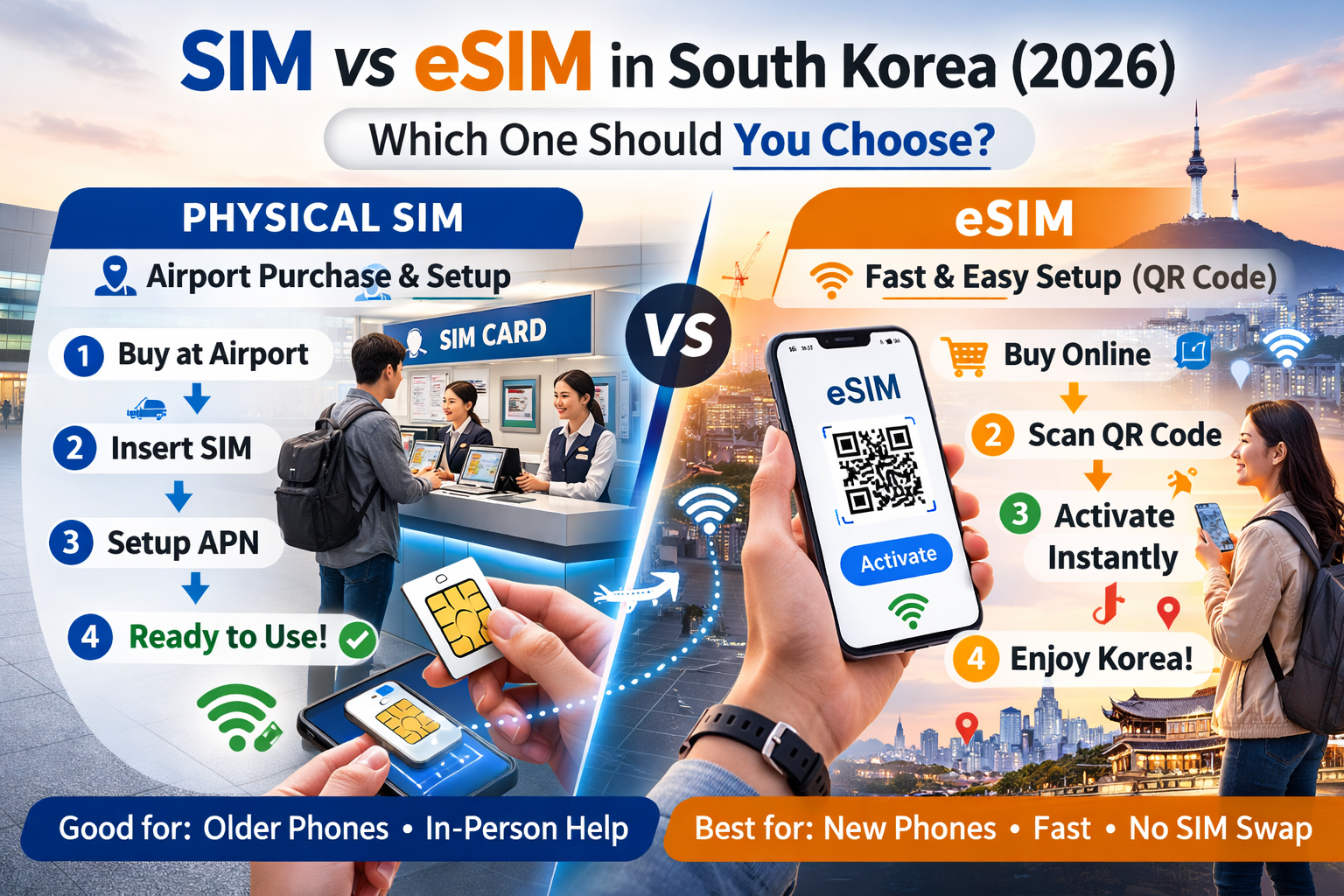
Most tourists choose between a physical SIM card and an eSIM. Both work well in Korea, but the best choice depends on your phone, arrival time, and travel style.
This guide will help you decide quickly.
Quick Answer (Choose in 30 Seconds)
Choose eSIM if:
Your phone supports eSIM
You want the easiest setup
You want to activate before landing
You don’t want to remove your home SIM
Ready to choose eSIM? Stop searching. [Saily eSIM] is our #1 pick for 2026. Get connected in 5 minutes without changing your SIM card.
Choose a physical SIM if:
Your phone does not support eSIM
You prefer buying at the airport counter
You want help from staff with setup
You plan to stay longer and want local-style plans
Best for: older phones, travelers who want in-person help Downside: you must swap SIM cards and keep your home SIM safe
eSIM
A digital SIM activated by QR code (no physical swap).
Best for: convenience and fast setup Downside: not all phones support eSIM
eSIM is often the easiest option for short-term travelers who want quick setup without replacing their physical SIM card.
Want to compare more options? [Airalo] is another world-renowned eSIM provider with reliable Korean network coverage.
While Saily is our top pick, [Airalo] is another world-renowned eSIM provider. It offers reliable Korean network coverage and is a great alternative if you’ve used and liked their service in other countries.
Don’t forget to pack your travel-sized K-beauty essentials! You can shop top Korean brands at [YesStyle] and have them delivered to your door before you fly.
Final Thoughts
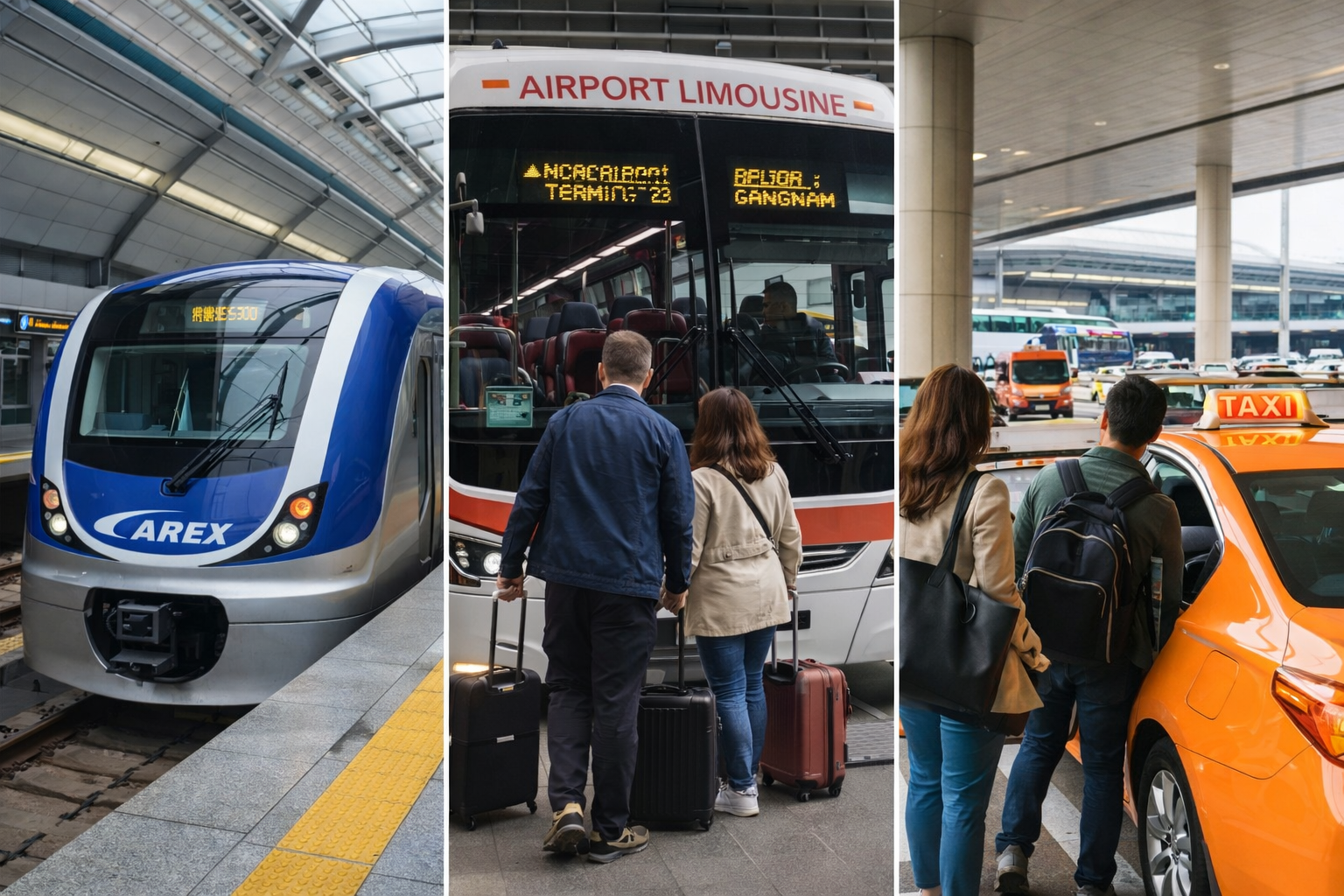
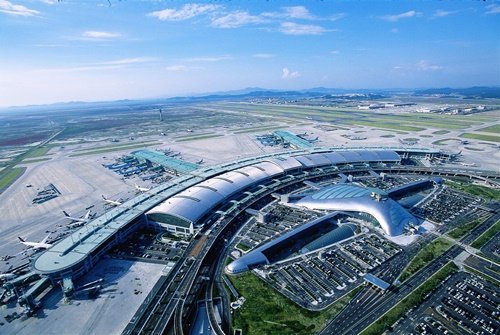
The best way to travel from Incheon Airport to Seoul depends on your schedule and budget:
– Fastest: AREX Express Train – Best with luggage: Airport Limousine Bus – Most convenient: Taxi
Credit cards are widely accepted in hotels, restaurants, and shops, but it is still useful to carry a small amount of cash for local markets or small businesses.
Understanding how payments work in Korea can make daily travel much easier.
“Don’t forget to pre-book your T-money card, AREX airport train tickets, or popular tours through [Klook] to save time and money.”
[Bonus Tip] : K-Beauty Shopping] Shopping
“Want to glow like a Korean celebrity? You don’t have to wait until you land. You can shop for the best K-beauty brands like Anua, Beauty of Joseon, and COSRX at [YesStyle] and have them delivered to your door before your trip!”
Travel budgets vary depending on accommodation choices, transportation, and daily spending.
Some travelers visit South Korea on a tight budget, while others prefer more comfortable travel experiences.
If you want to estimate your travel expenses, read our full guide “How Much Does a Trip to South Korea Cost in 2026?” which explains average travel costs for flights, hotels, food, and transportation.
To get the best deals on flights and accommodation for your trip, check the latest rates on [Trip.com].
7. Review Safety Information
South Korea is widely considered one of the safest travel destinations in the world.
Major cities such as Seoul and Busan have low crime rates, modern infrastructure, and reliable public transportation.
South Korea is widely considered one of the safest countries in the world for travelers. Millions of tourists visit Korea every year and most trips are smooth, comfortable, and safe.
Modern infrastructure, low crime rates, and excellent public transportation make South Korea an easy and secure destination for international visitors.
However, like any country, travelers should still understand basic safety tips before visiting.
This guide explains everything tourists need to know about safety when traveling to South Korea in 2026.
Crime Rate in South Korea
South Korea has a very low violent crime rate compared to many popular travel destinations.
Most visitors experience no safety problems during their trip. Petty crime such as pickpocketing is also relatively rare, especially compared with large tourist cities in Europe or North America.
Major tourist areas such as:
Seoul
Busan
Jeju Island
are generally safe both during the day and at night.
Tourists can usually walk around cities, take public transportation, and explore markets or neighborhoods without major concerns.
Is Seoul Safe at Night?
Seoul is one of the safest large cities in the world.
Many areas remain active late into the night, including restaurants, cafes, convenience stores, and public transportation.
Popular neighborhoods like:
Hongdae
Myeongdong
Gangnam
Itaewon
are full of visitors and locals even after midnight.
Street lighting is excellent, and police presence is common in busy areas.
Most tourists feel comfortable walking around Seoul even late at night.
Public Transportation Safety
Public transportation in South Korea is extremely safe and reliable.
Subways, buses, and trains are clean, modern, and well monitored.
Security cameras are installed in most stations and trains, helping maintain safety for passengers.
Visitors can safely travel between cities using high-speed trains like KTX or regional transportation systems.
Even late at night, taxis and ride-hailing services are widely available and considered safe.
Healthcare and Medical Safety
South Korea has one of the best healthcare systems in Asia.
Hospitals in major cities offer excellent medical care and many doctors speak English.
However, medical treatment for foreign visitors can be expensive without insurance.
For this reason, many travelers choose to purchase travel insurance before visiting Korea.
Stay Protected During Your Trip
While South Korea offers world-class healthcare, costs for international visitors can be high. We recommend SafetyWing for affordable and flexible travel medical insurance that covers you globally. Get peace of mind so you can focus on your adventure. [Check SafetyWing Rates]
South Korea has relatively low natural disaster risk compared with many countries in Asia.
The country rarely experiences:
major earthquakes
hurricanes
large-scale natural disasters
Seasonal typhoons can occur during late summer, but modern infrastructure and emergency systems minimize disruption.
Safety Tips for Tourists
Even in safe countries, travelers should follow basic precautions.
Recommended safety tips include:
• Keep copies of important documents • Use official taxis or ride apps • Follow local transportation rules • Avoid drinking excessively in unfamiliar areas • Store emergency contact information
Stay Protected During Your Trip
While South Korea offers world-class healthcare, costs for international visitors can be high. We recommend SafetyWing for affordable and flexible travel medical insurance that covers you globally. Get peace of mind so you can focus on your adventure.
This guide explains whether travel insurance is necessary for visitors.
Final Thoughts
Overall, South Korea is one of the safest travel destinations in the world.
Modern cities, excellent transportation, and low crime rates make it a comfortable country for international tourists.
With basic travel precautions and proper preparation, visitors can enjoy a safe and memorable trip to South Korea.
Before traveling, it is also helpful to understand the typical travel expenses.
Book Your Verified Safe Stay and Travel Choosing verified and well-rated accommodation is a crucial step in ensuring a secure and stress-free travel experience. We recommend using Trip.comto find the safest hotels in Seoul and Busan. You can also book your KTX train tickets in advance for a smooth and comfortable journey across the beautiful country. Find the best deals for a worry-free Korean adventure.
South Korea is one of the most card-friendly countries in the world.
In most restaurants, hotels, and stores, you can pay with international credit or debit cards without problems.
However, knowing when to use cash and how to avoid foreign transaction fees can save you money.
Can You Use Credit Cards in South Korea?
Yes — Visa and Mastercard are widely accepted.
American Express is accepted in major hotels and department stores but may not work in smaller shops.
Contactless payments (Apple Pay, Samsung Pay) are also increasingly common.
Do You Need Cash?
You may need small amounts of cash for:
Street food vendors
Traditional markets
Small local restaurants
Transportation cards (T-money top-ups)
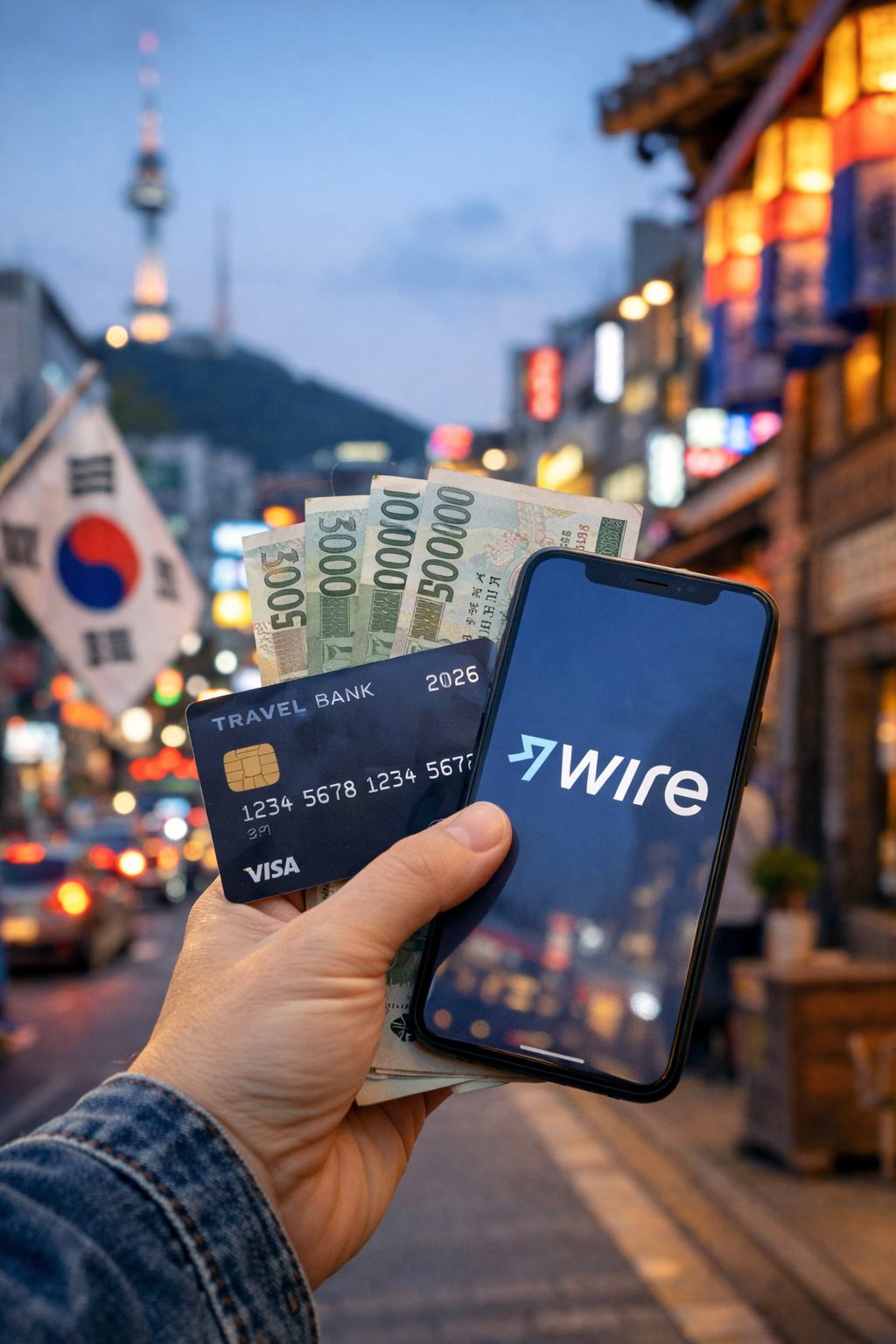
Most travelers carry $50–$150 worth of Korean won.
Pro Tip: While T-money top-ups require cash, you can avoid the hassle by pre-ordering your T-money or NAMANE Card on Trip.com. Pick it up instantly at Incheon.
Using a travel-friendly debit card often provides better rates.
How to Avoid Foreign Transaction Fees
Many banks charge:
2–3% foreign transaction fee
ATM withdrawal fees
Using a multi-currency account or travel card can reduce these costs.
Some travelers prefer using a multi-currency account that offers competitive exchange rates and lower international fees. This can help reduce hidden costs when paying in Korean won.
Mobile Payments in Korea
KakaoPay and Naver Pay are popular locally, but they typically require Korean bank accounts.
Tourists mostly rely on international cards.
The Best Alternative for Tourists: Since local mobile apps can be tricky to set up, the NAMANE Card is highly recommended. It’s a customizable prepaid card you can manage via an app. Book your voucher on Trip.com to skip the payment steps at the kiosk!
Managing money is part of your overall trip planning.
You should also review:
Budget Saving Hack: If you want to save on both transportation and entrance fees for 50+ attractions, the Discover Seoul Pass is a must-have. It even includes T-money functionality! Check the latest deals on Trip.com.
Managing your money is just the first step! To ensure your 2026 trip is fully prepared, make sure to check out these essential guides:
Find Your Home in Seoul: Once you’ve figured out your budget, the next big step is booking a place to stay. Learn about the latest trends and How Much Accommodation Costs in South Korea in 2026 to find the best deals.
Stay Connected Everywhere: Navigating Seoul’s subway and using payment apps is much easier with reliable data. Find out if You Need an eSIM for South Korea and which options offer the best value.
Traveling to South Korea in 2026? Staying connected is no longer an option—it’s a necessity. From navigating complex subway maps to using translation apps in local markets, reliable mobile data makes your trip smoother and safer.
But with so many options at Incheon Airport, do you really need an eSIM? Let’s break down why it’s the top choice for smart travelers this year.
What Is an eSIM?
An eSIM is a digital SIM card that allows you to activate a mobile data plan without inserting a physical SIM.
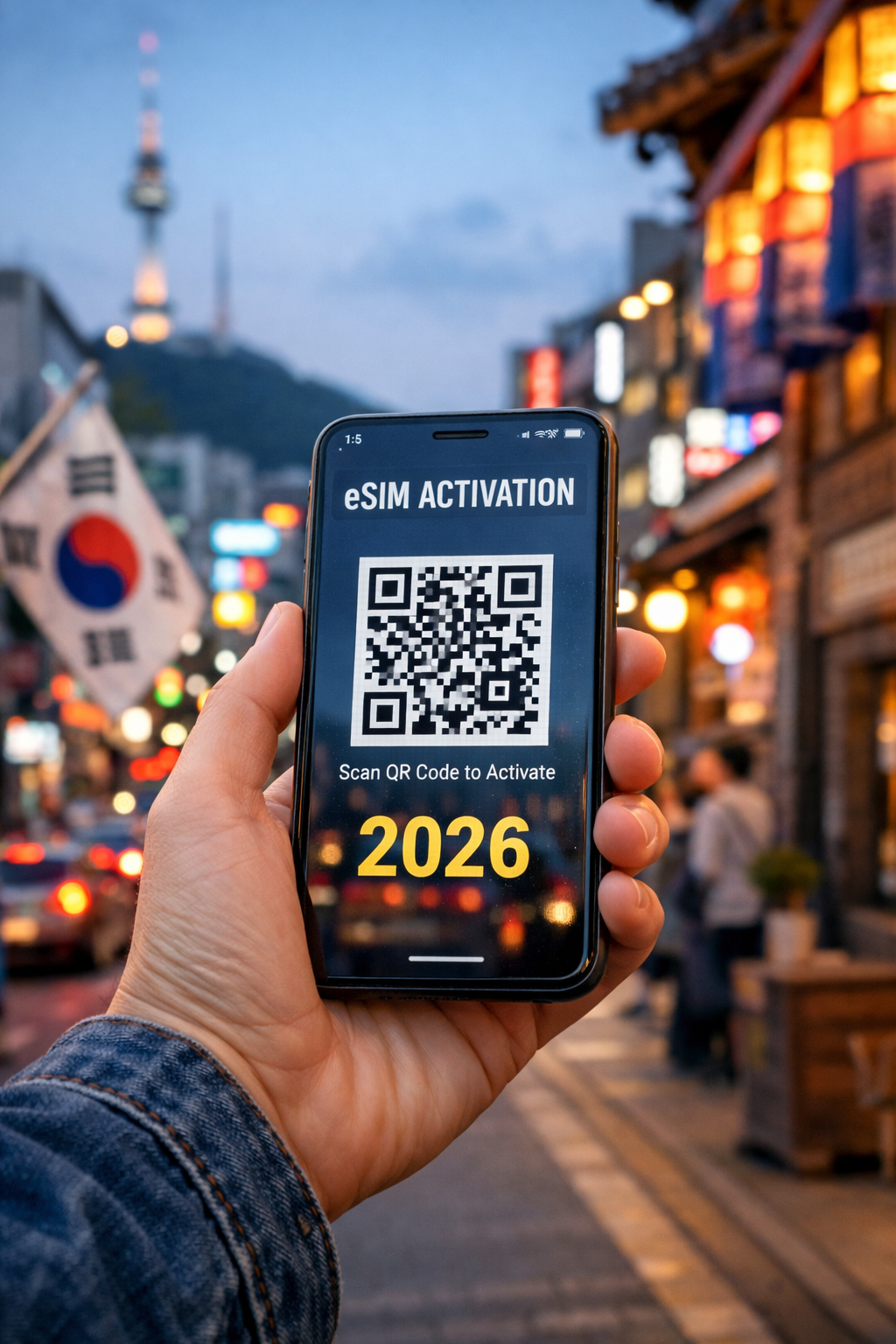
You simply scan a QR code and your data plan activates instantly.
eSIM vs Physical SIM Card
Feature
eSIM
Physical SIM
Setup
Instant (App/QR code)
Must insert card
Delivery
Online / Instant
Airport pickup / shipping
Risk of loss
None
High (Home SIM)
Convenience
Very High
Moderate
For most travelers landing in Seoul, eSIM is the most convenient option. You don’t have to worry about losing your original SIM card or finding a paperclip to open the tray.
Get Your Korea eSIM Instantly Skip the SIM swap and stay connected from the moment you land
How Much Does an eSIM Cost in 2026?
Prices in 2026 have become very competitive. You can expect to pay:
5 days unlimited: $15–$25
10 days unlimited: $25–$40
30 days plan: $40–$60
While physical SIMs can sometimes be cheaper for long-term stays (90+ days), eSIMs offer the best value for typical 1-4 week tourist trips due to the lack of pickup fees and instant access.
Why We Recommend Saily for 2026
After testing various providers, Saily stands out as the most reliable partner for Korea Ready Guide (KRG) readers.
Final Thoughts: Is It Worth It?
If your phone supports eSIM technology, the answer is a resounding YES. It saves you time, prevents the loss of your home SIM, and provides immediate access to essential travel apps.
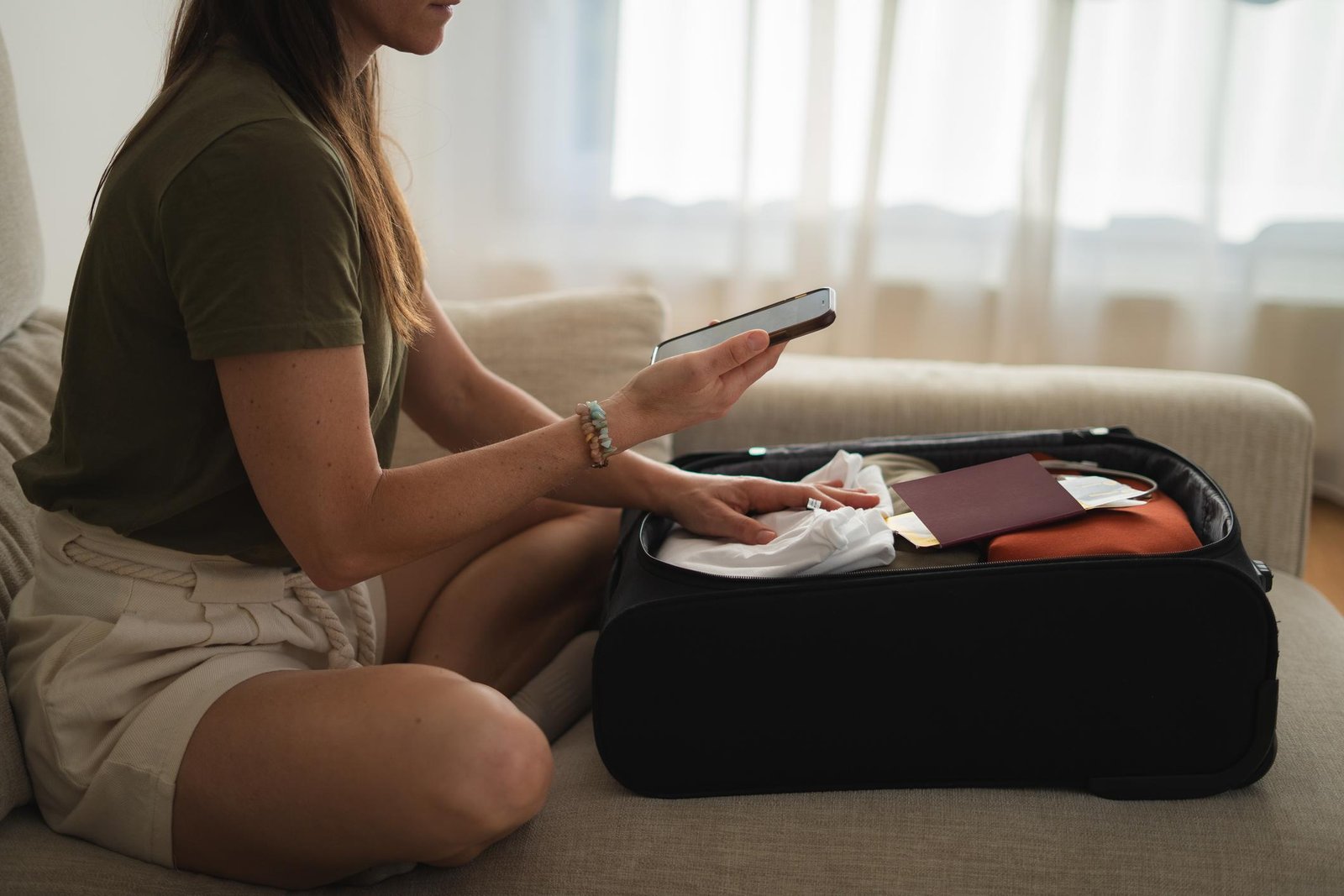
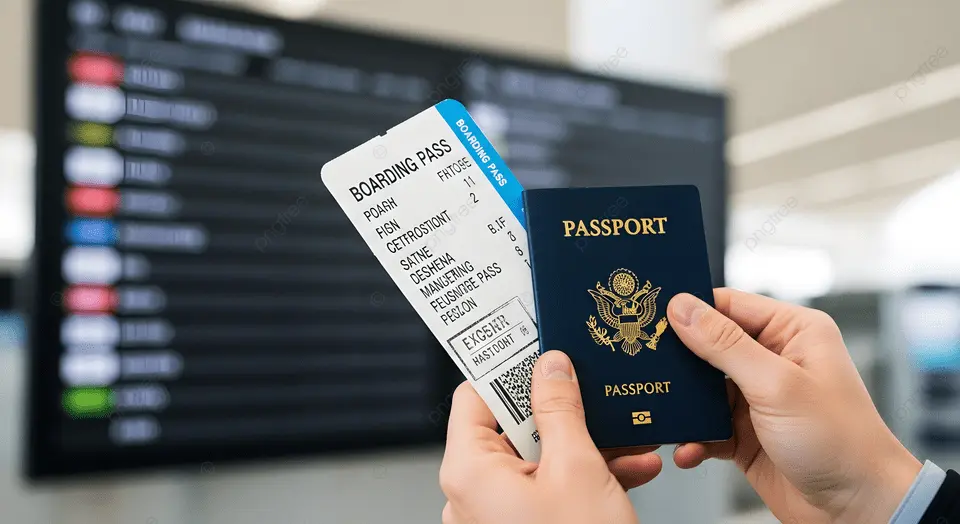
Prepare for Korea Before You Fly Check your flight budget and travel insurance before departure
Before You Fly
Reliable internet access is essential before landing in South Korea.
Before boarding your flight, make sure you understand your full travel budget and protection options.
Accommodation is usually the second biggest expense after flights when traveling to South Korea. Prices vary depending on the city, season, and type of accommodation. Seoul is usually the most expensive, while cities like Busan or Daegu are often more affordable.
If you are still deciding which part of Seoul fits your trip best, this guide will provide a realistic breakdown of accommodation costs and the best areas to stay in 2026.
1. Realistic Hotel Prices in Seoul (2026)
Average nightly prices for a standard double room in central Seoul:
Budget Hotels / Guesthouses: $60 – $100
3-Star (Mid-range) Hotels: $100 – $180
4 to 5-Star (Luxury) Hotels: $200 – $400+
Note: Peak seasons such as April (Cherry Blossoms), July–August (Summer Vacation), and October (Autumn Leaves) can increase prices by 20–40%.
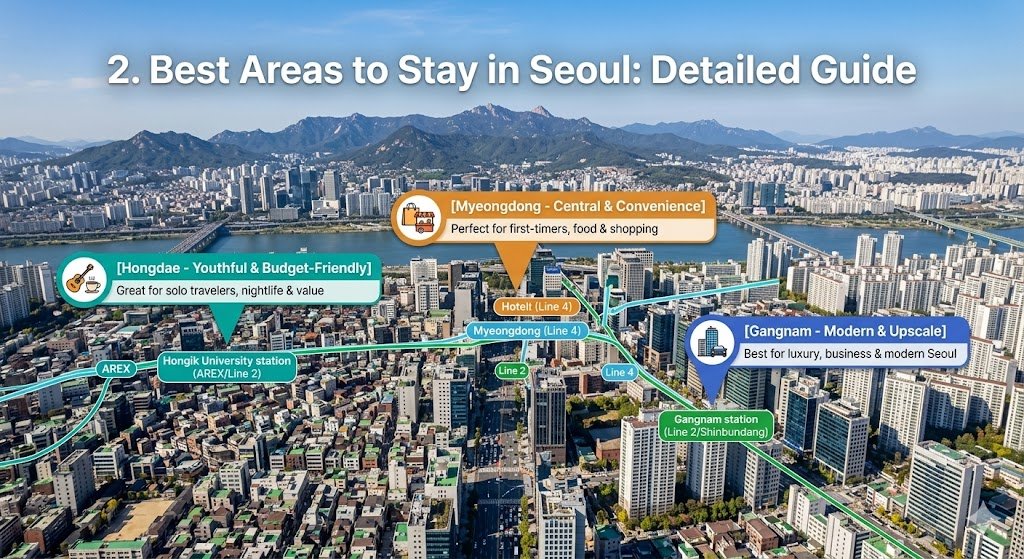
2. Best Areas to Stay in Seoul: Detailed Guide
Choosing the right neighborhood is key to saving money and time. Here are the most popular districts for tourists:
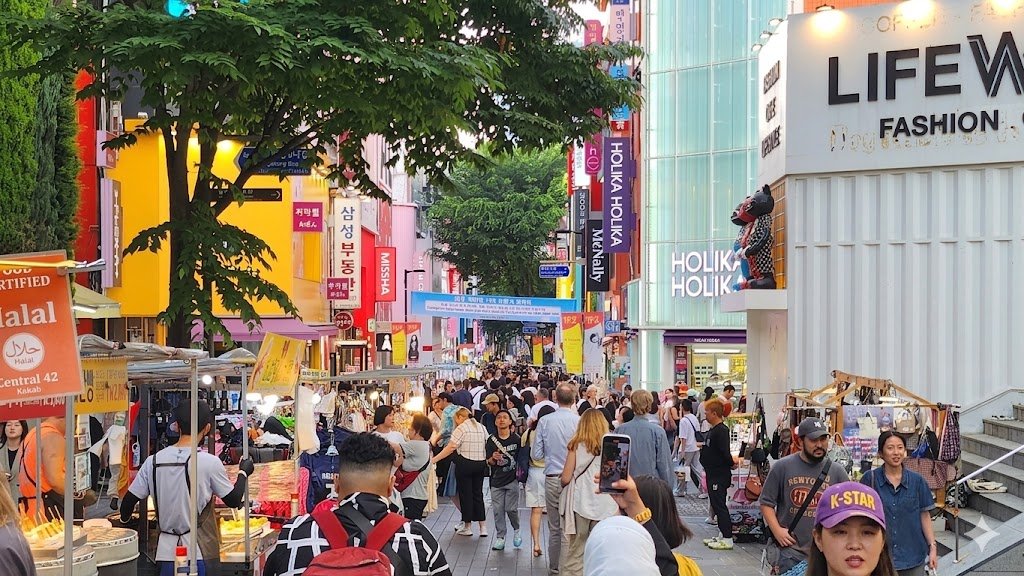
Myeongdong (The Heart of Shopping & Convenience)
Best for: First-time visitors and foodies.
Vibe: Vibrant neon lights and endless street food.
Pros: Extremely central with English-speaking staff in most hotels.
Budget: $120 – $200 per night.
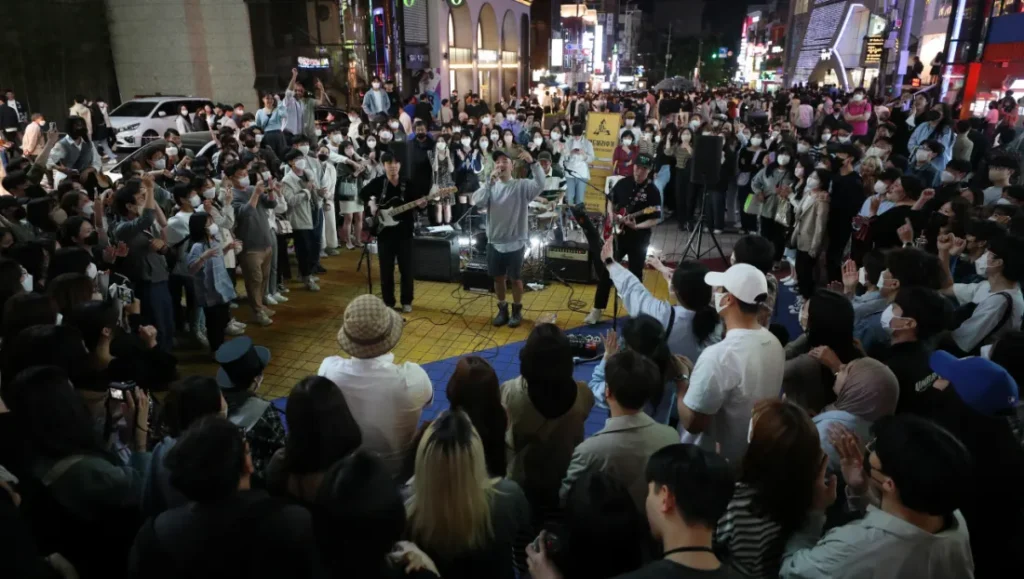
Hongdae (Youthful Energy & Budget-Friendly)
Best for: Solo travelers, night owls, and budget hunters.
Vibe: Indie music, street performances, and trendy cafes.
Pros: Directly connected to Incheon Airport via AREX. Many affordable studios.
Budget: $70 – $130 per night.
Gangnam (Modern Luxury & Sophistication)
Best for: Business travelers and luxury seekers.
Vibe: Skyscrapers, high-end fashion, and fine dining.
Pros: World-class 5-star hotel chains and high-tech amenities.
Budget: $200 – $400+ per night.
3. Unique Stays: Experience Korea Like a Local
If you want more than just a standard hotel room, consider these iconic “Only in Korea” experiences.
Rakkojae Seoul (Traditional Hanok): Stay in a 130-year-old restored Korean house in Bukchon. Experience Ondol (floor heating) and traditional tea ceremonies. (Approx. $250 – $450)
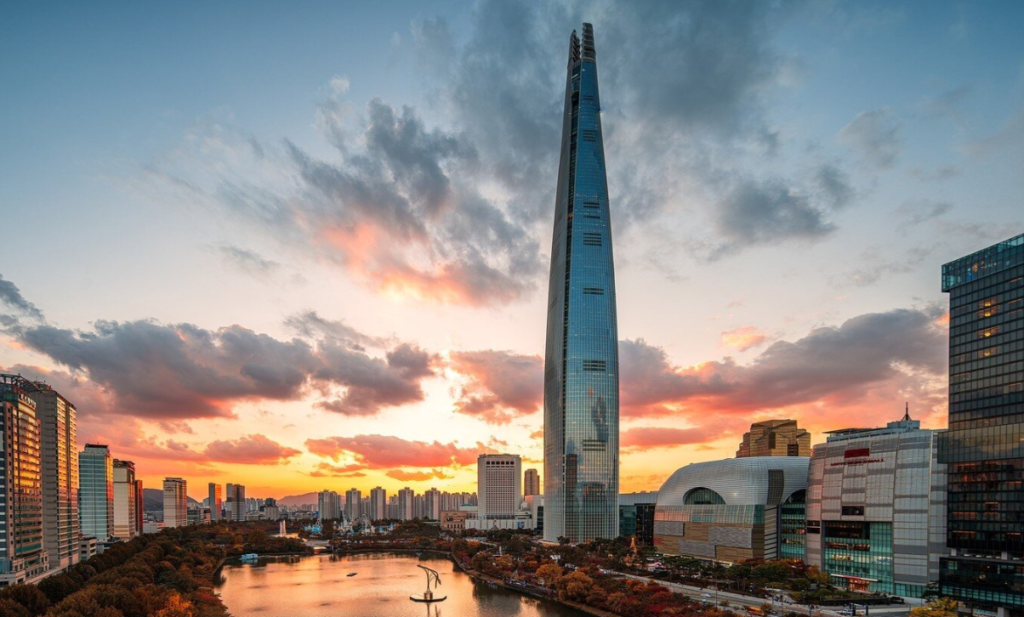
SIGNIEL SEOUL (Sky-High Luxury): Located on the 76th–101st floors of Lotte World Tower. Sleep above the clouds with a panoramic city view. (Approx. $600 – $1,200+)
Bongeunsa Temple Stay (Spiritual Escape): A peaceful Buddhist temple in the middle of busy Gangnam. Learn Zen meditation and tea with monks. (Approx. $70 – $100 per person)
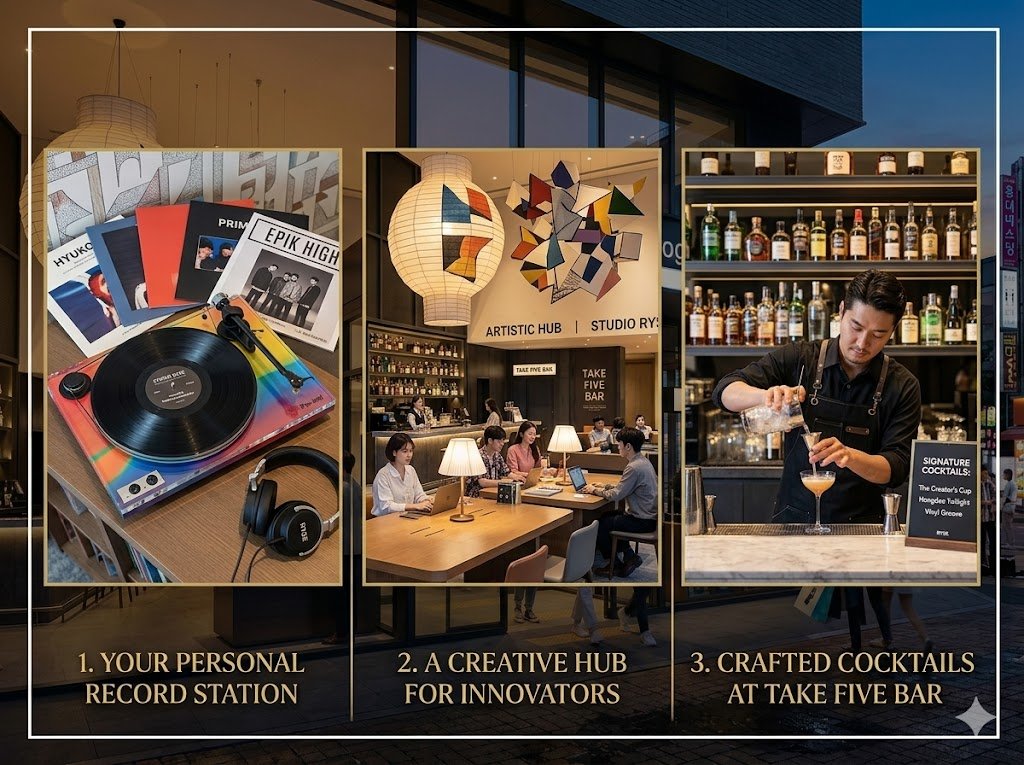
RYSE, Autograph Collection (Artistic Hub): A lifestyle hotel in Hongdae designed for creators, featuring custom artwork and vinyl players. (Approx. $180 – $300)
📺 Want to see more? Check out this detailed video tour of RYSE, Autograph Collection to see why it’s the trendiest spot in Hongdae:
Experience Korea’s Temple Stay — Book on Trip.com
4. How to Save on Accommodation in 2026
Book 6–8 Weeks in Advance: Popular spots like Hanok stays or luxury towers fill up fast.
Avoid National Holidays: Prices spike during Seollal (Lunar New Year) and Chuseok.
Stay Near Subway Stations: You don’t need to stay in the city center if you are near a Line 2 or Line 5 station.
Compare Total Prices: Always check for hidden cleaning fees (on Airbnb) or taxes (on some booking sites).
Compare Prices Before You Book
Affiliate disclosure: This article may contain affiliate links. If you book through these links, we may earn a commission at no extra cost to you.
Accommodation prices in South Korea change depending on the season and district. If you are planning your trip, it helps to compare current rates before reserving your stay.
Flight costs to South Korea in 2026 remain manageable for many travelers, but prices can still change significantly depending on your departure city, travel season, and booking timing.
For most visitors, the best approach is to compare routes early, avoid peak periods if possible, and plan the rest of the trip budget alongside airfare.
A lower flight price can make a big difference, but smart trip planning matters just as much.