Chuseok is one of Korea’s most important traditional holidays. Often compared to Thanksgiving, it is a time when families return to their hometowns, share food, visit ancestors’ graves, and spend several days together.
In 2026, Chuseok falls around September 24–26. For travelers, this can be a memorable time to experience Korean culture—but it also requires more planning than an ordinary trip. Transportation gets busy, many small businesses close, and popular destinations may operate on special holiday schedules.
This guide explains what Chuseok means, what will be open or closed, and how to travel around Korea smoothly during the holiday.
What Is Chuseok?
Chuseok is based on the lunar calendar and takes place on the 15th day of the eighth lunar month. It celebrates the autumn harvest and family reunion.
Many Koreans travel from Seoul and other large cities to their hometowns. Families prepare ceremonial food, honor ancestors through a memorial ritual called charye, visit family graves, and share traditional dishes such as songpyeon—small half-moon rice cakes usually filled with sesame, beans, or sweet ingredients.
For visitors, Chuseok offers a chance to see a quieter, more family-centered side of Korea. However, it is not the easiest period for spontaneous travel.
Will Korea Be Closed During Chuseok?
Korea does not completely shut down during Chuseok, especially in Seoul, Busan, and other major tourist cities. But operating hours often change.
Large department stores, some local restaurants, family-run cafés, neighborhood markets, and small shops may close for one or more days. On the other hand, major tourist attractions, hotel restaurants, convenience stores, chain cafés, and many shopping districts usually remain available.
The key is to check each place before going. Do not assume that a restaurant, museum, attraction, or shopping center will follow its normal timetable.
Transportation During Chuseok: The Biggest Challenge
Chuseok is one of Korea’s busiest travel periods. Millions of people leave Seoul to visit family across the country, then return after the holiday.
Highways can experience heavy congestion, and train tickets for KTX, SRT, and intercity rail routes often sell out quickly. Express buses can also become difficult to book during the main holiday travel days.
If you plan to travel from Seoul to Busan, Gyeongju, Jeonju, Gangneung, Daegu, or another regional destination, book transport as early as possible.
For travelers who have not booked tickets, consider staying in Seoul or choosing destinations accessible by subway, local bus, or a shorter regional route.
Is Seoul a Good Place to Stay During Chuseok?
Yes. Seoul can actually be a comfortable choice during Chuseok if you prefer fewer crowds in some areas and do not need to travel long distances.
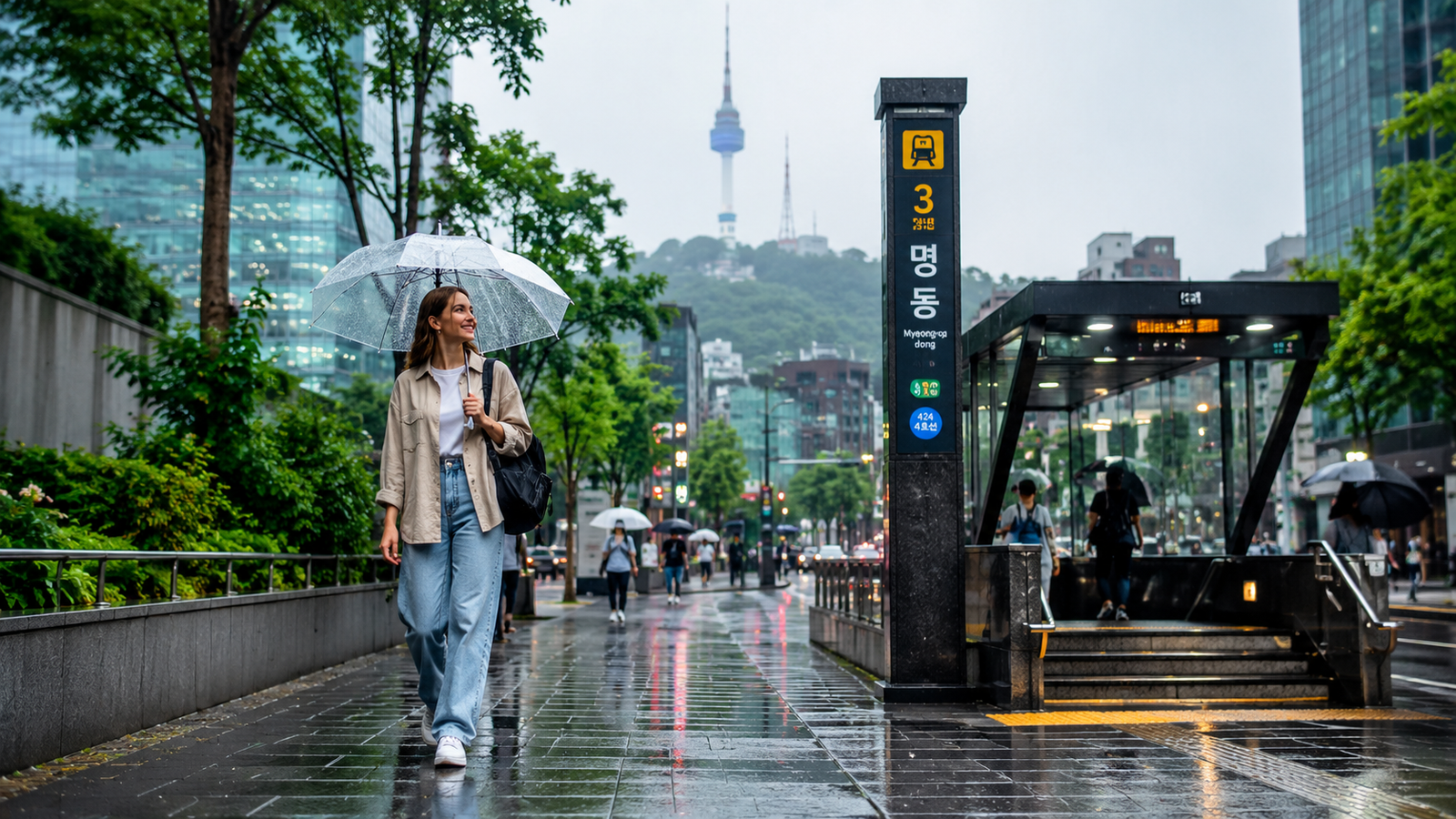
Many residents leave the city, so certain neighborhoods can feel calmer than usual. Public transportation in Seoul continues to operate, although schedules may be adjusted. Major attractions such as palaces, museums, parks, shopping streets, and riverside areas are often still accessible.
Good activities during Chuseok include:
Visiting Gyeongbokgung Palace or Changdeokgung Palace
Walking around Bukchon Hanok Village
Exploring Insadong and Ikseon-dong
Taking a walk beside the Han River
Visiting Namsan Seoul Tower
Enjoying cafés in Hongdae, Seongsu, or Yeonnam-dong
Exploring large shopping complexes and department stores
Before visiting a specific attraction, always check its official holiday schedule.
What Food Should You Try During Chuseok?
The most famous Chuseok food is songpyeon. These rice cakes are traditionally steamed over pine needles and are often filled with sesame seeds, sweet red beans, chestnuts, or other seasonal ingredients.
You may also find dishes such as jeon, Korean-style savory pancakes made with vegetables, seafood, meat, or tofu. Fresh fruit, Korean beef, rice wine, and various side dishes are common on family tables.
During the holiday, department stores, traditional markets, and food shops may sell special Chuseok gift sets. These can include fruit boxes, Korean snacks, premium meat, tea, health products, and traditional sweets.
Can Tourists Join Chuseok Cultural Activities?
Sometimes. Museums, palaces, cultural centers, and local governments may organize holiday programs such as traditional games, folk performances, hanbok experiences, rice-cake making, or craft workshops.
Events vary each year, and schedules are usually announced closer to the holiday. If you are interested in cultural activities, check Seoul tourism information, local city tourism offices, or the official website of the attraction you plan to visit.
Traditional games you may encounter include yutnori, a board game played with four wooden sticks, and folk activities such as ganggangsullae, a traditional circle dance associated with the harvest season.
Tips for Restaurants, Shopping, and Daily Travel
Planning ahead will make your Chuseok trip much easier.
First, save a few restaurant options near your hotel. Smaller local restaurants may close, especially outside central tourist areas. Chain restaurants, food courts, hotel dining, and convenience stores are often more reliable.
Second, keep extra snacks, water, and basic supplies with you when traveling outside Seoul. Service areas on highways can become crowded, and regional stores may have limited hours.
Third, check transportation schedules the day before you travel. Holiday service times can differ from standard weekday or weekend schedules.
✅ Use our guide to taxis in Korea and Kakao T when public transport is crowded or your route becomes complicated.
Should You Visit Korea During Chuseok?
Yes—if you plan carefully.
Chuseok can be a wonderful time to visit Korea for travelers who enjoy cultural experiences, quieter city streets, autumn weather, and traditional food. It is especially suitable for visitors staying mainly in Seoul or another major city.
However, it may not be ideal for travelers who want maximum flexibility, last-minute train travel, or access to every local business. The biggest challenges are sold-out transport, traffic congestion, and holiday closures.
The best approach is simple: secure your transportation early, confirm opening hours, keep your itinerary flexible, and enjoy the holiday atmosphere rather than trying to travel at peak speed.
Final Thoughts
Chuseok is not just a public holiday in Korea. It is a meaningful period of family, tradition, food, and remembrance.
For visitors, a little preparation goes a long way. Plan your transport in advance, expect some closures, and leave room in your schedule for unexpected changes. With the right approach, Chuseok 2026 can become one of the most memorable parts of your Korea trip.
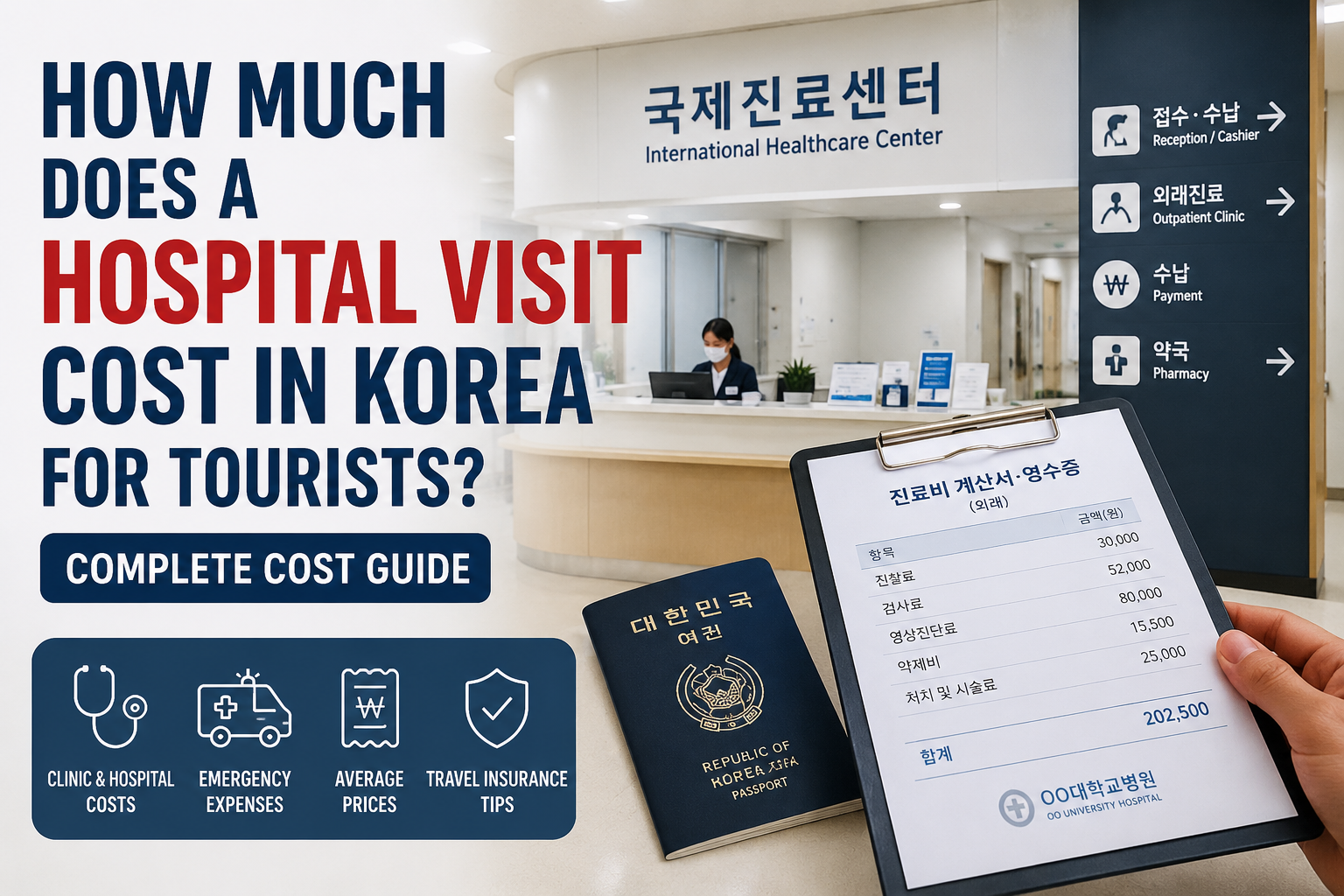
Getting sick while traveling is never part of the plan, but it can happen. A cold, food poisoning, an ankle injury, an allergic reaction, or sudden stomach pain can quickly turn a normal travel day into a hospital visit.
The good news is that South Korea has modern hospitals, efficient clinics, and many medical facilities in major cities that are used to helping foreign visitors. However, tourists are usually not covered by Korea’s National Health Insurance, so you should expect to pay the full bill first and claim reimbursement later if you have travel insurance.
This guide explains how much a hospital visit may cost in Korea for tourists, what types of medical expenses to expect, and how to prepare before your trip.
Is Healthcare Expensive in Korea for Tourists?
Compared with countries like the United States, basic healthcare in South Korea can feel relatively affordable. A simple clinic visit may not be extremely expensive, especially for minor symptoms such as a cold, sore throat, skin rash, or stomach discomfort.
However, the cost can increase quickly if you visit an emergency room, need medical tests, require an English-speaking international clinic, or stay overnight in a hospital.
Medical costs vary depending on the hospital, city, department, doctor, tests, treatment, and whether you visit a local clinic or a large university hospital.
Medical Service
Estimated Cost for Tourists
Basic clinic consultation
₩20,000–₩60,000
English-speaking clinic consultation
₩50,000–₩150,000
Specialist consultation
₩80,000–₩200,000+
Emergency room visit
₩100,000–₩500,000+
Blood test
₩20,000–₩100,000+
X-ray
₩30,000–₩100,000+
CT scan
₩200,000–₩600,000+
MRI
₩400,000–₩1,000,000+
One-day hospitalization
₩300,000–₩1,500,000+
These are general estimates only. Always confirm the expected cost with the hospital before receiving non-emergency treatment.
Common Medical Situations for Tourists
Cold, Flu, or Sore Throat
If you visit a local clinic for basic symptoms, the total cost may include a consultation fee and prescription medication. Many simple visits may cost around ₩30,000–₩80,000, depending on the clinic and medication.
Food Poisoning or Stomach Pain
For stomach problems, a doctor may prescribe medication or recommend IV fluids. Costs can vary widely, but a basic visit may cost around ₩50,000–₩150,000, while treatment with tests or IV fluids may cost more.
Minor Injury
If you sprain your ankle, fall while hiking, or need an X-ray, the bill may include consultation, imaging, bandaging, and medication. A minor injury visit may cost around ₩80,000–₩250,000 or more.
Emergency Room Visit
Emergency rooms are more expensive than regular clinics. Even if you are not hospitalized, the bill can increase if you need tests, scans, injections, or specialist care.
Yes. Tourists can visit clinics, hospitals, and emergency rooms in Korea. In major cities such as Seoul, Busan, and Incheon, large hospitals often have international healthcare centers or foreign patient services.
These services may help with appointments, interpretation, billing, medical records, and insurance documents.
How Do Tourists Pay for Hospital Treatment?
Most hospitals accept credit cards and Korean won cash. Some international clinics can also help prepare documents for insurance claims.
Before leaving the hospital, ask for:
Medical receipt
Detailed invoice
Doctor’s diagnosis or medical certificate
Prescription record
Test results, if needed
These documents may be required when you submit a claim to your travel insurance company.
Can You Go to a Pharmacy Instead?
For very minor symptoms, a Korean pharmacy may be enough. Pharmacists can recommend over-the-counter medicine for headaches, mild colds, allergies, or stomach discomfort.
However, antibiotics, stronger painkillers, and many specific medications require a doctor’s prescription. If symptoms are serious, sudden, or getting worse, visit a clinic or hospital instead.
Travel insurance is not just for major accidents. It can also help with hospital bills, emergency treatment, lost luggage, trip delays, and unexpected cancellations depending on the policy.
Even though basic healthcare in Korea may be cheaper than in some countries, serious treatment can still become expensive. A hospital stay, surgery, emergency scan, or medical evacuation can cost far more than a normal travel budget.
A hospital visit in Korea may be affordable for simple treatment, but tourists should still prepare carefully. The final cost depends on where you go, what treatment you need, and whether the visit is routine or urgent.
For minor symptoms, a local clinic or pharmacy may be enough. For serious pain, injury, breathing problems, allergic reactions, or emergency symptoms, go to a hospital or call 119 immediately.
The safest approach is simple: prepare travel insurance, keep your passport with you, save emergency numbers, and ask for all medical documents before leaving the hospital.
Frequently Asked Questions
How much does a doctor visit cost in Korea for tourists?
A simple clinic visit may cost around ₩20,000–₩60,000, but English-speaking clinics, specialists, tests, or hospital visits can cost more.
Are tourists covered by Korean health insurance?
Short-term tourists are usually not covered by Korea’s National Health Insurance, so they normally pay the full medical bill themselves.
Can I use a credit card at Korean hospitals?
Yes. Most hospitals accept major credit cards, although it is still useful to carry some Korean won for smaller clinics or pharmacies.
What number should I call in a medical emergency in Korea?
Call 119 for emergency medical assistance in Korea.
Should I buy travel insurance before visiting Korea?
Yes, it is strongly recommended. Even if basic treatment is not extremely expensive, emergency care, hospitalization, or surgery can become costly.
Planning a trip to South Korea from the USA, UK, Australia, or Canada? Travel insurance may not be the most exciting part of trip planning, but it can become very important if something unexpected happens before or during your Korea trip.
Many visitors focus on flights, hotels, eSIMs, T-money cards, and itineraries first. However, medical expenses, lost baggage, flight delays, trip interruptions, or emergency care can quickly affect your travel budget.
This guide explains what international travelers should look for when choosing travel insurance for South Korea, especially if you are visiting from the USA, UK, Australia, or Canada.
Why Travel Insurance Matters for South Korea
South Korea is generally a safe and convenient destination for international visitors, but travel problems can still happen. You might get sick, need a hospital visit, lose luggage, miss a connection, or face a weather-related travel delay.
When comparing travel insurance for Korea, do not only look at the price. A cheaper plan may not include the coverage you actually need.
Important coverage areas may include:
Emergency medical treatment
Hospital visits
Emergency evacuation
Trip cancellation or interruption
Flight delays
Lost or delayed baggage
Personal liability
24/7 assistance support
Before buying any plan, read the policy details carefully. Coverage can vary depending on your home country, trip length, age, pre-existing conditions, and travel activities.
Best Travel Insurance for Korea from the USA
Travelers from the USA often pay close attention to medical coverage because healthcare costs abroad can still be stressful without insurance. Even if Korea is often more affordable than the United States for some medical services, hospital visits, tests, prescriptions, or emergency care can still create unexpected costs.
For US visitors, it is wise to choose a policy that includes strong emergency medical coverage, hospital care, and travel delay protection.
UK travelers visiting South Korea should check whether their policy includes overseas medical treatment, trip cancellation, baggage protection, and emergency assistance.
Because South Korea is a long-haul destination from the UK, flight delays, missed connections, or schedule changes can also be important. If your trip includes multiple cities such as Seoul, Busan, Gyeongju, or Jeju, coverage for disruption can be useful.
Best Travel Insurance for Korea from Australia
Many Australian visitors travel to Korea for food, shopping, K-pop, skincare, skiing, hiking, or stopover trips. Depending on the season, your travel insurance needs may change.
Winter travelers should check coverage for snow-related activities if they plan to visit ski resorts. Summer travelers should consider weather disruption, especially if the itinerary includes Jeju, Busan, or domestic flights.
Best Travel Insurance for Korea from Canada
Canadian visitors should also compare travel insurance carefully before flying to South Korea. Important areas include emergency medical care, trip interruption, lost baggage, and support if you need help while abroad.
If your Korea trip includes long flights, multiple hotel bookings, or prepaid tours, cancellation and interruption coverage may be worth reviewing closely.
Is Travel Insurance Required to Visit Korea?
Travel insurance is not always required for every tourist visiting South Korea. However, requirements can change depending on nationality, visa type, travel purpose, or special situations.
Even when travel insurance is not mandatory, it can still be useful. A simple trip can become expensive if you need medical care, replace lost luggage, or change plans suddenly.
Travel Insurance for Seoul, Busan, Jeju, and Multi-City Trips
If your trip is only a short Seoul city break, your insurance needs may be different from someone visiting Seoul, Busan, Gyeongju, Jeju, and ski resorts in one itinerary.
Multi-city trips usually involve more transportation, more hotel bookings, and more opportunities for schedule changes. If you are using trains, buses, domestic flights, or ferries, travel delay and trip interruption coverage may be helpful.
For transportation planning, our ✅ T-money Card Korea Complete Guide can help you prepare for buses, subways, and everyday transportation before you arrive.
What Travel Insurance May Not Cover
Travel insurance does not cover everything. This is why reading the policy wording is important before buying.
Common exclusions may include:
Pre-existing medical conditions unless declared or covered
High-risk activities not included in the policy
Alcohol or drug-related incidents
Unattended baggage
Changing your mind about travel
Claims without proper receipts or documentation
If you are unsure about anything, contact the insurance provider before purchase.
Documents to Keep During Your Korea Trip
If you need to make a claim later, documents matter. Keep digital and physical copies of important paperwork whenever possible.
Useful documents include:
Insurance policy confirmation
Passport copy
Flight and hotel confirmations
Medical receipts
Hospital or clinic documents
Police report if needed
Photos of damaged or lost items
Proof of delays or cancellations
When Should You Buy Travel Insurance for Korea?
Many travelers buy insurance soon after booking major trip expenses such as flights or hotels. This can be useful because some cancellation benefits may only apply after the policy is active.
If your Korea trip includes expensive prepaid bookings, tours, hotels, domestic flights, or seasonal activities, buying earlier can give you more time to review your coverage.
Final Thoughts
The best travel insurance for Korea depends on where you are traveling from, how long you will stay, your health situation, your itinerary, and the activities you plan to do.
Visitors from the USA, UK, Australia, and Canada should compare medical coverage, emergency support, baggage protection, delay coverage, and cancellation benefits before choosing a plan.
Before your trip, take a few minutes to compare your options and choose a plan that matches your Korea itinerary. You can ✅ Compare Travel Insurance Plans for South Korea before departure so you are better prepared if something unexpected happens.
Planning a trip to South Korea can feel exciting, but also confusing. If you have joined a South Korea travel tips and planning Facebook group, you have probably seen the same questions appear again and again.
Travelers often ask about T-money cards, eSIMs, cash, taxis, Naver Map, safety, airport transfers, travel insurance, and where to stay in Seoul.
This guide brings those common questions together in one place so you can plan your Korea trip with more confidence.
1. Do I Need Cash in South Korea?
South Korea is very card-friendly, but carrying a small amount of Korean won is still useful. Cash can help at traditional markets, small food stalls, older local restaurants, and some rural areas.
For most travelers, using a credit card for hotels, shopping, restaurants, and cafés is normal. Still, it is smart to keep some cash for backup.
If you want a deeper breakdown of cards, cash, and mobile payments, our ✅ Complete Guide to Paying in South Korea explains what travelers should prepare before arriving.
2. Do I Need a T-money Card?
Yes, most visitors should get a T-money card or another Korean transportation card. Korea’s official tourism information explains that transportation cards are rechargeable prepaid cards that can be used for public transportation and often for payments at stores as well.
A T-money card is useful for subways, buses, some taxis, and convenience stores. It also makes transfers much easier than buying single tickets every time.
Planning to use public transportation? Our ✅ T-money Card Korea Complete Guide explains where to buy a card, how to top it up, and how to use it on buses and subways.
3. Which eSIM Should I Buy for Korea?
Many travelers prefer buying an eSIM before arriving in Korea. With an eSIM, you can connect to mobile data soon after landing without waiting in line for a physical SIM card.
This is especially helpful because you may need internet immediately for maps, taxi apps, hotel addresses, translation, and airport transfer details.
Need Mobile Internet in Korea?
Setting up an eSIM before departure lets you use maps, translation apps, and ride-hailing services as soon as you arrive.
Google Maps can be useful for checking places, but many travelers use Naver Map or KakaoMap for better local navigation. VisitKorea also lists Naver Map as a helpful app for route suggestions, estimated travel time, and local place information.
For Korea travel, it is best to install Naver Map before your trip and save your hotel, airport, stations, restaurants, and attractions in advance.
5. Is Korea Safe for Solo Travelers?
South Korea is generally considered a safe destination for solo travelers, including solo female travelers. Many visitors feel comfortable walking around busy areas at night.
However, normal travel caution is still important. Watch your belongings, avoid drinking too much in unfamiliar areas, and use official transportation when returning late at night.
6. Do I Need Travel Insurance for Korea?
Travel insurance is not something travelers should ignore. Even if your trip goes smoothly, unexpected illness, flight delays, lost luggage, or cancellations can create extra costs.
It can be especially useful if your Korea itinerary includes multiple cities, outdoor activities, winter travel, or expensive prepaid bookings.
7. What Apps Should I Download Before Going to Korea?
The most commonly recommended apps are Naver Map, KakaoMap, Kakao T, Papago, KakaoTalk, and a subway app. These apps help with navigation, taxis, translation, messaging, and public transportation.
If you only download one map app, choose Naver Map or KakaoMap. If you plan to take taxis, Kakao T is very helpful.
8. Can I Use Uber in Korea?
Uber is available in Korea in some form, but many locals and travelers use Kakao T for taxis. Kakao T is one of the most useful apps for airport rides, late-night returns, and areas where hailing a taxi is difficult.
9. Where Should First-Time Visitors Stay in Seoul?
For first-time visitors, popular areas include Myeongdong, Hongdae, Insadong, Jongno, Gangnam, and Seoul Station. The best area depends on your travel style.
Myeongdong is convenient for shopping and sightseeing. Hongdae is better for nightlife and cafés. Insadong and Jongno are good for culture, palaces, and traditional streets.
10. How Many Days Do I Need in Korea?
For a first trip, 5 to 7 days is a comfortable starting point. With 5 days, you can focus on Seoul and one day trip. With 7 to 10 days, you can add Busan, Gyeongju, Jeju, or another regional city.
11. Is Seoul Expensive?
Seoul can be affordable or expensive depending on your travel style. Public transportation is reasonably priced, convenience stores are useful, and casual Korean meals can be budget-friendly.
Hotels, cafés, shopping, skincare, theme parks, and nightlife can increase your total cost quickly.
12. Should I Book Airport Transfer in Advance?
If you arrive during the day and travel light, airport trains and buses are easy options. If you arrive late at night, travel with family, or carry heavy luggage, booking a private transfer or using a taxi may be more comfortable.
13. Can I Use My Foreign Credit Card Everywhere?
Visa and Mastercard are widely accepted in Korea. However, some smaller shops, machines, or local services may not accept foreign cards. This is why carrying a backup card and some cash is a good idea.
14. Is English Widely Spoken in Korea?
English is common in airports, hotels, major tourist attractions, and some restaurants in Seoul. Outside tourist areas, English may be limited.
Using Papago or another translation app can make your trip much easier.
15. What Should I Know About Korean Restaurants?
Some restaurants require one order per person. Some BBQ restaurants may require a minimum of two servings. In busy local restaurants, menus may be only in Korean, so a translation app is useful.
16. Do I Need to Tip in Korea?
Tipping is not a normal part of Korean culture. In most restaurants, cafés, taxis, and hotels, tipping is not expected.
17. Is Korea Good for Family Travel?
Yes. Korea is a strong family travel destination because public transportation is convenient, cities are clean, and there are many family-friendly attractions.
Families often enjoy aquariums, theme parks, palaces, parks, museums, cafés, shopping malls, and easy day trips from Seoul.
18. What Is the Best Season to Visit Korea?
Spring and autumn are the most popular seasons. Spring is famous for cherry blossoms, while autumn is known for cooler weather and fall foliage.
Summer can be hot and humid, while winter can be very cold but good for snow, ski trips, and winter festivals.
19. Should I Visit Busan or Jeju?
Busan is easier to add to a Seoul itinerary because it is connected by KTX train. Jeju is beautiful but usually requires a domestic flight and more planning.
If you have limited time, Busan may be easier. If you want nature, beaches, and a slower trip, Jeju can be worth it.
20. Are Convenience Stores Useful in Korea?
Yes. Korean convenience stores are extremely useful for travelers. You can buy drinks, snacks, simple meals, umbrellas, chargers, toiletries, and sometimes transportation card top-ups.
21. Can I Travel Korea Without Speaking Korean?
Yes, many travelers visit Korea without speaking Korean. However, learning a few simple phrases helps a lot.
Useful phrases include hello, thank you, excuse me, how much is it, and where is this place?
22. What Should I Pack for Korea?
Pack based on the season. Comfortable shoes are very important because travelers often walk much more than expected in Seoul.
Also bring a universal adapter, portable charger, medication, travel documents, and a backup payment card.
23. What Emergency Numbers Should I Know?
For emergencies in Korea, travelers should know 112 for police and 119 for fire or ambulance. Korea also has the 1330 Travel Helpline, which provides tourist information by phone and real-time chat.
24. What Is the Biggest Mistake First-Time Visitors Make?
The biggest mistake is trying to do too much in one day. Seoul looks easy on a map, but travel time, walking, crowds, and café or restaurant waiting times can slow you down.
Choose fewer places and enjoy them properly.
25. Are Facebook Travel Groups Useful for Korea Planning?
Yes, Facebook travel groups can be very useful because they show real questions from real travelers. You can learn from recent experiences, mistakes, and recommendations.
However, always double-check important information such as visa rules, entry requirements, medical advice, and transportation updates through official sources.
Final Thoughts
South Korea travel Facebook groups are helpful because they show what travelers are actually worried about before arriving. Most questions come down to a few practical topics: money, internet, transportation, safety, apps, accommodation, and itinerary planning.
If you prepare these basics before your trip, your Korea travel experience will feel much smoother from the moment you land.
Finding a job in Korea as a foreigner can feel confusing at first. There are many websites, apps, school job boards, recruiter posts, Facebook groups, and company career pages, but not every listing is suitable for your visa, Korean level, schedule, or experience.
Some platforms are better for part-time jobs. Others are better for full-time office roles, teaching jobs, internships, startup jobs, or international company positions. The most important point is not simply where to search, but how to check whether a job is legitimate and whether you are legally allowed to do it.
Important Notice: This article provides general information only. KoreaReadyGuide does not provide legal advice, immigration advice, job placement, visa sponsorship, or employment guarantees. Job availability, visa rules, and application requirements can change. Always confirm your eligibility with HiKorea, your school, your employer, or the Immigration Contact Center before accepting or starting any job in South Korea.
Start With Your Visa Status First
Before opening job websites or sending applications, check your visa status.
Your visa determines what kind of work you may be allowed to do in Korea. A job that is legal for one foreigner may not be legal for another foreigner.
For example, international students on D-2 or D-4 visas may need separate permission before working part-time. Working holiday visa holders, F-series visa holders, E-series visa holders, job-seeking visa holders, and permanent residents may have different conditions.
Before applying, ask yourself:
What visa do I currently hold?
Am I allowed to work in Korea?
Do I need permission before starting?
Can I work part-time, full-time, or only in a specific field?
Can I change employers freely?
Is this job category allowed under my status?
Does the employer need to sponsor, register, or report anything?
International students should review the permission process carefully before applying. Our D-2 and D-4 student part-time work permission guide explains the basic steps, documents, school confirmation, and approval process.
Do not rely only on a job post that says “foreigners welcome.” That phrase does not automatically mean the job is legal for your visa.
Best Job Websites and Apps in Korea: Quick Comparison
Platform or source
Best for
Korean level
Good for foreigners?
Main caution
JobKorea
Office jobs, companies, internships
Intermediate to advanced
Useful for career jobs
Many listings are written for Korean applicants
Saramin
Professional roles, office jobs, internships
Intermediate to advanced
Useful for serious job seekers
Korean-style résumé may be expected
Albamon
Part-time jobs and hourly work
Basic to intermediate
Useful for local part-time jobs
Check visa permission before applying
AlbaCheonguk
Part-time jobs and local hourly work
Basic to intermediate
Useful for cafés, restaurants, stores
Some employers may not know foreigner visa rules
Craigslist Seoul
English-language job posts and gigs
Basic to advanced
Easy to browse in English
Scam checks are essential
LinkedIn
International companies and professional roles
Intermediate to advanced
Strong for office jobs
Fewer local part-time listings
School job boards
Campus jobs and student notices
Basic to intermediate
Very useful for students
Immigration permission may still be required
Company career pages
Direct applications
Intermediate to advanced
Good for serious applicants
Takes more research
Facebook groups
Community job leads
Basic to advanced
Helpful but informal
Higher scam risk
Recruiters
Professional or specialized roles
Intermediate to advanced
Useful for experienced workers
Avoid recruiters asking applicants for fees
Use more than one source. In Korea, some jobs appear only on Korean platforms, while others appear through schools, recruiters, company websites, or foreigner communities.
Reliable mobile data is also useful when using Korean job apps, checking interview locations, receiving employer messages, or translating job posts on the go. Foreigners with an eSIM-compatible phone can compare Klook’s South Korea eSIM plans before choosing a mobile data option.
1. JobKorea
JobKorea is one of Korea’s major job search platforms. It is commonly used for company hiring, office jobs, internships, career positions, and some part-time opportunities.
It can be useful if you are looking for:
Korean company jobs
Office assistant roles
Marketing positions
Sales support
IT and startup jobs
Internships
Entry-level roles
Foreign-language customer support
Global business positions
The main challenge is language. Many listings are written in Korean and assume that applicants understand Korean workplace terms, résumé formats, and application procedures.
Useful Korean search terms include:
외국인 채용 — hiring foreigners
영어 가능자 — English speaker
외국어 가능자 — foreign language speaker
인턴 — intern
아르바이트 — part-time job
계약직 — contract worker
신입 — entry-level
경력 — experienced
Before applying, check whether the employer clearly mentions visa support, foreigner eligibility, language requirements, job duties, location, and employment type.
2. Saramin
Saramin is another major Korean job search site. It is especially useful for professional roles, office jobs, internships, and career-track employment.
Foreigners may find opportunities in:
Overseas sales
Global marketing
Translation support
Customer service
IT and software
Content localization
International trade
Business development
Education-related companies
Saramin can be useful if you already have a Korean résumé or can prepare one. Many employers expect applicants to submit a Korean-style résumé with education, work history, skills, language ability, and sometimes a self-introduction letter.
Useful Korean keywords include:
해외영업 — overseas sales
글로벌 마케팅 — global marketing
번역 — translation
통역 — interpretation
외국인 가능 — foreigners possible
비자 지원 — visa support
영어권 — English-speaking region
콘텐츠 — content
Saramin is generally better for serious career applications than quick hourly work.
3. Albamon
Albamon is one of the most commonly used platforms for part-time jobs in Korea.
It is useful for finding local hourly jobs such as:
Café work
Restaurant work
Convenience store jobs
Retail shops
Event staff
Kitchen assistant roles
Cleaning or facility support
Short-term promotional jobs
For students and foreigners looking for part-time work, Albamon can be helpful because many listings are location-based and shift-based.
However, students should be careful. A job that looks simple may still require immigration permission. Some employers may not fully understand D-2 or D-4 student work rules.
Before applying, check:
Workplace address
Hourly wage
Working days
Shift times
Duties
Employer name
Business type
Whether the employer can provide documents
Whether the job is allowed under your visa
Avoid starting immediately just because the employer says, “It is okay.” Confirm your visa conditions first.
4. AlbaCheonguk
AlbaCheonguk is another major part-time job platform in Korea. Like Albamon, it is commonly used for hourly jobs and local work.
It may be useful for:
Restaurant jobs
Store jobs
Café jobs
Short-term event jobs
Weekend jobs
Evening jobs
Local neighborhood work
For foreigners, the advantage is that it provides many listings. The disadvantage is that many posts are written mainly for Korean applicants.
Useful filters may include location, working hours, pay, job category, and employment type.
When reviewing a listing, do not focus only on the hourly wage. Also check whether the job requires heavy customer communication, late-night work, food handling, physical labor, or cash register responsibility.
5. Craigslist Seoul
Craigslist Seoul is one of the easier English-language platforms for foreigners to browse.
You may find posts related to:
English teaching
Tutoring
Editing
Modeling
Voice recording
Translation
Short-term gigs
Startup support
International community jobs
The advantage is that many posts are in English. The disadvantage is that quality varies greatly.
Be careful with listings that:
Offer unusually high pay
Ask for personal documents too early
Do not show a company name
Provide only a personal messaging account
Ask for unpaid trial work
Promise visa sponsorship without details
Ask for money or fees
Involve adult entertainment or suspicious modeling work
Ask you to work before checking your visa
Craigslist can be useful, but it requires careful screening.
6. LinkedIn
LinkedIn is better for professional and international jobs than for local part-time work.
It is especially useful for foreigners looking for:
Global company roles
Startup jobs
Marketing positions
IT jobs
Business development roles
International sales
Recruiting
Customer success
Content localization
Office roles using English or another foreign language
Many Korean companies use Korean job platforms first, but international companies in Seoul may also post on LinkedIn.
To improve your chances, prepare an English profile and, when possible, a Korean résumé. Make sure your profile clearly shows:
Visa status or work authorization, when appropriate
Korean language level
English or other language ability
Relevant experience
Software skills
Portfolio or work samples
Availability date
Do not write that you are legally eligible to work unless you are sure.
7. School Job Boards and International Offices
For international students, the school may be one of the safest starting points.
Universities and language institutes may share:
Campus assistant jobs
Department assistant roles
Library work
Research support
Event staff roles
Internship notices
Career fair information
Company recruitment sessions
Part-time work guidance
Immigration document instructions
The biggest advantage is that the school can often explain whether you need permission and what documents you need.
However, a school notice does not automatically mean every student can work. Your visa category, attendance, grades, Korean level, and employment conditions may still matter.
Before accepting any job, ask your international office:
Is this job allowed for my visa?
Do I need permission before starting?
Can the school provide confirmation?
Does the employer need to submit documents?
How many hours can I work?
What happens if I change jobs?
8. Facebook Groups and Expat Communities
Facebook groups and expat communities can be helpful for finding informal job leads, especially in Seoul, Busan, Daegu, Daejeon, Incheon, and other major areas.
You may see posts for:
English teaching
Café work
Restaurant work
Event staff
Modeling
Translation
Voice recording
Babysitting
Tutoring
Short-term projects
Community referrals can be useful because other foreigners may share real experiences. But informal groups also carry a higher risk of scams, illegal work, and unclear payment arrangements.
Never assume a job is legal just because another foreigner did it.
Before responding to a community post, ask for:
Company name
Workplace address
Exact duties
Hourly wage
Working schedule
Contract details
Payment date
Visa requirements
Business registration information
Contact person’s full name
If the employer avoids basic questions, move on.
9. Company Career Pages
For full-time or career-track roles, applying directly through a company’s career page can be more reliable than using only job boards.
This is especially useful for:
Large Korean companies
Global companies in Korea
Startups
Hotels
Airlines
Education companies
Tech companies
Entertainment companies
Tourism companies
International trade companies
Direct applications can take longer, but they often provide clearer information about the company, department, job duties, and hiring process.
Search combinations like:
Company name + careers
Company name + 채용
Company name + foreigner
Company name + global hiring
Company name + internship Korea
Before applying, check whether the position requires native Korean, Korean citizenship, specific visas, professional licenses, or prior experience in Korea.
10. Recruiters and Headhunters
Recruiters can be useful for experienced professionals, bilingual candidates, and foreigners with specialized skills.
They may help with:
Tech jobs
Finance jobs
Marketing jobs
Sales roles
Executive positions
Bilingual roles
Global business roles
International company hiring
However, be careful with recruiters who promise too much.
A legitimate recruiter should not ask you to pay a fee for a normal job application. They should also be able to explain the employer, role, salary range, hiring process, and visa expectations clearly.
Ask recruiters:
Which company is hiring?
Is the role full-time, contract, or freelance?
Is visa sponsorship available?
What is the salary range?
What language level is required?
What documents are needed?
Will my résumé be shared only with my permission?
Do not send your passport or Residence Card to unknown recruiters before verifying the company.
Useful Korean Keywords for Job Searching
Knowing the right Korean keywords can make job searching much easier.
English meaning
Korean keyword
Part-time job
아르바이트 / 알바
Foreigner hiring
외국인 채용
Foreigners possible
외국인 가능
English speaker
영어 가능자
Native English speaker
원어민
Translation
번역
Interpretation
통역
Café
카페
Restaurant
음식점 / 식당
Convenience store
편의점
Event staff
행사 스태프
Internship
인턴
Entry-level
신입
Experienced
경력
Contract worker
계약직
Full-time employee
정규직
Visa support
비자 지원
Weekend work
주말 근무
Evening shift
야간 근무
Hourly wage
시급
Work location
근무지
Work hours
근무시간
Try combining keywords with your city or district.
Examples:
홍대 카페 알바
강남 영어 가능자 알바
서울 외국인 채용
부산 외국어 가능자
대구 행사 스태프
인턴 외국인 가능
How to Read a Korean Job Post
A Korean job post may include many terms that are unfamiliar to foreigners. Before applying, check the following sections carefully.
Look for:
회사명 — company name
근무지 — workplace location
모집직종 — job category
담당업무 — duties
자격요건 — qualifications
우대사항 — preferred qualifications
근무시간 — working hours
근무요일 — working days
급여 — pay
시급 — hourly wage
월급 — monthly salary
계약기간 — contract period
제출서류 — required documents
접수방법 — application method
마감일 — deadline
Pay close attention to the duties section. Immigration permission usually depends not only on the company, but also on what you will actually do.
How to Check Whether a Job Is Safe
A safe job should be clear, documented, and verifiable.
Before accepting, check:
Does the company have a real name?
Is the workplace address clear?
Are the duties written clearly?
Is the wage stated?
Are working hours explained?
Will you receive a written contract?
Can the employer provide documents for immigration if needed?
Is the payment method clear?
Is the job category allowed for your visa?
Does the employer pressure you to start immediately?
A good employer should understand that foreigners may need time to check visa conditions.
Warning Signs of a Bad Job Listing
Avoid or investigate carefully if you see:
“No visa problem” without explanation
“Start today” pressure
No company name
No workplace address
Cash-only payment
No written contract
Very high pay for very simple work
Requests for passport photos before explaining the job
Requests to use someone else’s bank account
Unclear duties
Adult entertainment-related work
Commission-only pay
Unpaid trial shifts
Recruiter fees
Fake visa sponsorship promises
Messages only through anonymous chat apps
If something feels rushed, unclear, or too good to be true, pause before sending personal information.
Documents You May Need When Applying
Documents vary depending on the job, visa, employer, and immigration rules.
You may need:
Résumé
Cover letter
Portfolio
Passport copy
Residence Card copy
Certificate of enrollment
Academic transcript
Attendance record
Employment contract
Employer business registration certificate
School confirmation form
Korean language certificate, when applicable
Bank account information for wage payment
Do not send sensitive documents to unknown individuals before verifying the employer.
English Résumé vs Korean Résumé
Foreigners often need both an English résumé and a Korean-style résumé.
An English résumé is useful for:
International companies
LinkedIn jobs
English teaching roles
Global startups
Foreign-language positions
A Korean résumé may be useful for:
Korean job platforms
Local companies
Part-time jobs
Office support roles
Internships
Korean-speaking workplaces
A Korean résumé may include:
Name
Contact information
Education
Work experience
Language skills
Computer skills
Certificates
Self-introduction
Availability
Visa status, when appropriate
Keep your résumé honest. Do not exaggerate your Korean level, work authorization, degree, or previous experience.
Should You Apply in Korean or English?
Use the language of the job post as your guide.
If the job post is in Korean, apply in Korean unless the employer requests English. If the job post is in English, an English résumé may be acceptable.
For bilingual roles, you may prepare both.
A simple message in Korean can help:
안녕하세요. 채용 공고를 보고 연락드립니다.
저는 현재 한국에 거주 중인 외국인 지원자입니다.
비자 조건을 확인한 후 근무 가능 여부를 상담드리고 싶습니다.
이력서를 보내드려도 될까요?
English meaning:
Hello, I am contacting you after seeing your job posting.
I am a foreign applicant currently living in Korea.
I would like to check whether the job is possible under my visa conditions.
May I send my résumé?
Best Strategy for International Students
International students should start with their school before using public job apps.
Ask your international office about work permission.
Check school job boards.
Search for campus or nearby jobs.
Use Albamon or AlbaCheonguk carefully.
Confirm the employer can provide documents.
Apply for permission if required.
Wait for approval before starting work.
This approach reduces the risk of accepting a job that later causes immigration problems.
Students should also remember that a short-term job, event job, paid training, trial shift, or freelance project may still count as employment. When in doubt, ask your school or immigration office before participating.
Best Strategy for Full-Time Job Seekers
Full-time job seekers should focus on platforms and employers that match their visa and career path.
A good search order is:
Prepare an English résumé and Korean résumé.
Update LinkedIn.
Search JobKorea and Saramin.
Check company career pages.
Contact reputable recruiters.
Look for roles that mention visa support or foreign-language ability.
Track every application in a spreadsheet.
Prepare for Korean-style interviews.
For professional jobs, Korean ability can make a major difference, even when the role uses English.
Best Strategy for English Teachers
English teaching jobs are common, but they have strict visa and qualification requirements.
Search sources may include:
Recruiter websites
School websites
Hagwon job boards
Craigslist Seoul
Facebook groups
LinkedIn
Direct applications to schools
Before accepting a teaching job, confirm:
Visa type
Degree requirements
Criminal record check requirements
Contract length
Housing conditions
Teaching hours
Prep time
Vacation
Pension and insurance
Severance pay
Workplace location
Employer reputation
Teaching without the correct visa or permission can create serious immigration issues.
When job searching in Korea, you may need to travel to interviews, school offices, company locations, or immigration-related appointments. New arrivals who do not yet have a transportation card can check the Klook T-Money Card options for South Koreabefore planning their commute.
How to Organize Your Job Search
It is easy to lose track of job applications, especially when using several websites at the same time.
Create a simple spreadsheet with:
Company name
Platform where you found the job
Job title
Workplace location
Contact person
Date applied
Required documents
Visa or permission status
Interview date
Follow-up status
Notes about risks or concerns
This helps you avoid sending the same application twice and makes it easier to compare offers.
Final Checklist Before Applying
Before you apply to a job in Korea, confirm:
Your visa status
Whether work is allowed
Whether permission is required
Whether the job category is permitted
The employer’s real name
Workplace address
Exact duties
Wage and payment date
Working hours
Contract period
Required documents
Whether the employer can support the process
Whether the job post looks safe
Whether the schedule fits your life in Korea
Good job searching in Korea is not just about applying quickly. It is about applying safely.
Final Thoughts
There are many places to find jobs in Korea for foreigners, including JobKorea, Saramin, Albamon, AlbaCheonguk, Craigslist Seoul, LinkedIn, school job boards, company career pages, recruiters, and community groups.
Each platform has a different purpose. Part-time job seekers may use Albamon or AlbaCheonguk. Professional applicants may focus on JobKorea, Saramin, LinkedIn, and company career pages. Students should begin with their school and immigration requirements before accepting any job.
The best job is not simply the one that replies first. It should be legal for your visa, clearly documented, realistic for your Korean level, and safe for your long-term stay in Korea.
Important Notice: KoreaReadyGuide does not recruit workers, arrange employment, sponsor visas, or determine individual eligibility. Always verify your current work rights through HiKorea, the Immigration Contact Center at 1345, your school, or the relevant immigration office before accepting or starting any job.
work to help with living expenses, gain practical experience, and improve their Korean language skills.
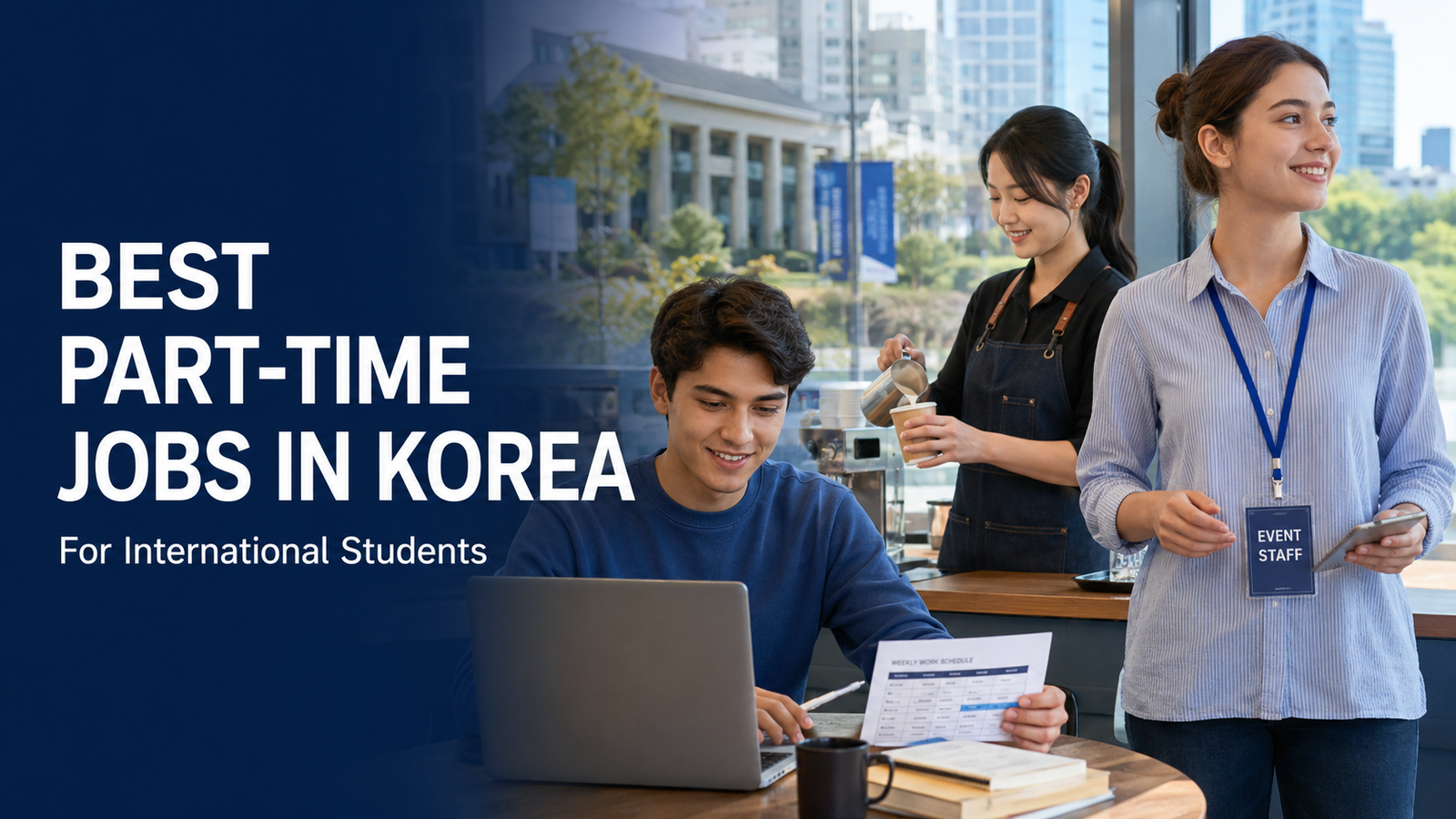
Popular opportunities can be found in restaurants, cafés, shops, university departments, tourism businesses, offices, and international events. However, a job that is commonly advertised is not automatically permitted for every student.
Your eligibility depends on your visa, school, Korean proficiency, academic status, proposed duties, workplace, and immigration approval.
If you need a broader introduction before comparing specific jobs, read our guide to part-time work in Korea for foreigners, including basic visa rules, common opportunities and employment safety precautions.
Important Notice: This article provides general information only. KoreaReadyGuide does not provide legal or immigration advice, job placement, visa sponsorship, or employment guarantees. Always confirm your eligibility with HiKorea, your school’s international office, or the Immigration Contact Center before accepting or starting a job.
Check Your Work Permission Before Choosing a Job
D-2 and D-4 visas are primarily issued for education or training. Holding one of these visas does not automatically give you permission to work anywhere in Korea.
Many international students must receive permission for part-time employment before their first working day. The approved conditions may identify:
The employer
Workplace address
Job duties
Employment period
Working days
Permitted hours
Other restrictions
A job may appear suitable but still be denied because of its duties, schedule, location, or relationship to your visa status.
The highest-paying position is not always the best option for an international student. A suitable job should be legal, manageable, clearly documented, and compatible with your classes.
Consider the following factors:
Distance from your school or home
Required Korean proficiency
Working hours
Evening or weekend shifts
Physical workload
Written contract availability
Employer experience with international students
Opportunity to develop useful skills
Compatibility with immigration conditions
A lower-paying job near campus may be more practical than a higher-paying position that requires a long commute or conflicts with classes.
The table is only a general comparison. Immigration authorities and your school determine whether a specific position is allowed.
1. University and Campus Jobs
Campus-based positions can be among the most convenient options because students do not need to travel far from their classes.
Possible roles include:
Library assistance
Administrative office support
International student event assistance
Campus tour support
Research-related assistance
Language exchange program support
Department event preparation
Computer room or facility assistance
Campus jobs may offer schedules designed around the academic calendar. They may also provide a safer environment for students who are unfamiliar with Korean workplace culture.
However, being located on campus does not automatically make every position exempt from immigration requirements. Ask the university whether the role requires separate employment permission.
Competition for campus jobs can also be strong. Check university job boards, department notices and the international office regularly.
2. Restaurant and Café Jobs
Restaurants and cafés are among the most visible sources of part-time work in Korea.
Common duties may include:
Taking orders
Serving food
Preparing drinks
Washing dishes
Cleaning tables
Packing takeaway orders
Organizing ingredients
Supporting kitchen staff
These positions can help students practice everyday Korean and become more comfortable communicating with customers and coworkers.
The disadvantages are that the work can be physically demanding and the busiest hours often occur during evenings, weekends and holidays. Students should make sure that late shifts do not interfere with classes or transportation home.
Before accepting a position, confirm:
The exact duties
Hourly wage
Break time
Working schedule
Closing time
Payment date
Whether meals are provided
Whether training hours are paid
Whether the employer will provide immigration documents
Do not agree to perform duties that differ significantly from those stated in your contract or approved application.
3. Retail and Convenience Store Jobs
Retail shops, supermarkets and convenience stores may offer regular shifts and workplaces close to residential or university areas.
Typical responsibilities include:
Operating the cash register
Stocking shelves
Checking inventory
Cleaning the store
Receiving deliveries
Assisting customers
Preparing simple food or drinks
These jobs usually require more Korean communication than back-of-house restaurant work. Employees may need to answer questions, explain products, handle payments and respond to delivery workers.
Students with limited Korean should ask about the level of customer interaction before applying.
Cash register responsibility is another important consideration. Ask how the employer handles shortages, refunds, damaged products and mistakes. Never agree to unreasonable deductions from your wages without understanding the legal basis.
4. Tourism, Hotel and Guest Service Jobs
Students who speak English, Chinese, Japanese, Vietnamese or another widely used language may find opportunities in tourism-related businesses.
Possible workplaces include:
Hotels
Guesthouses
Travel businesses
Visitor information services
Cultural experience venues
Exhibition centers
Tourist attractions
International events
Duties may involve greeting visitors, answering basic questions, helping with reservations, providing directions, or translating simple information.
These positions can be useful for students interested in hospitality, tourism or international business. They may also provide more opportunities to use both Korean and another language.
Some roles involve late-night reception, housekeeping, sales, transportation or duties outside the original job description. Confirm every responsibility before signing the contract and applying for permission.
5. Office and Administrative Assistant Jobs
Some Korean companies, startups, university-affiliated organizations and international businesses hire students for administrative support.
Common duties may include:
Data entry
Document organization
Online research
Spreadsheet work
Customer email support
Scheduling assistance
Foreign-language communication
Basic market research
Office work may provide more career-related experience than a general service job. It can also help students learn Korean business culture and workplace communication.
These jobs may require stronger Korean proficiency, computer skills and a professional résumé. Employers may prefer students who can work consistently for several months.
Check whether the advertised position is truly part-time. A role described as an internship, freelance project or contractor position may have different immigration implications.
6. Translation and Interpretation Support
Bilingual students may find work involving translation, interpretation or foreign-language assistance.
Possible tasks include:
Translating short documents
Supporting international customers
Assisting at meetings
Interpreting during events
Reviewing multilingual content
Helping with overseas market research
Language-related work can pay more than some service positions, but students should not assume that every translation project is automatically allowed.
Freelance work, remote projects and payment from overseas clients can be especially complicated. Immigration rules may still apply even if the work is completed online or the client is outside Korea.
Ask your school and immigration authorities to review the actual duties and payment arrangement before starting.
7. Event and Exhibition Staff
Korea regularly hosts trade shows, festivals, academic conferences, concerts and international exhibitions.
Temporary staff may assist with:
Visitor registration
Ticket checking
Booth support
Foreign-language guidance
Guest reception
Survey collection
Event preparation
Basic interpretation
Event work can be attractive because it is short-term and often takes place on weekends. It may also help students build professional contacts.
However, a one-day event, trial shift or temporary assignment can still count as employment. Short duration does not automatically remove the need for permission.
Avoid offers that provide no company name, contract, workplace address or explanation of duties.
8. International Marketing and Content Support
Companies targeting overseas customers sometimes recruit international students to help with global marketing.
Possible responsibilities include:
Reviewing translated content
Researching foreign markets
Managing international customer inquiries
Supporting social media content
Testing overseas-facing services
Providing cultural feedback
Assisting with promotional events
This type of work may be valuable for students studying business, communications, marketing or international relations.
Be careful when the role includes modeling, livestreaming, commission-only sales, personal social media promotion or independent content creation. These duties may not match a standard student work application and could require additional review.
The employer should provide a clear written description of the work.
Jobs That Require Extra Caution
Some positions are more complicated because of immigration restrictions, professional qualifications or unclear employment arrangements.
Be especially careful with:
Private tutoring
Language teaching
Delivery work
Driving jobs
Adult entertainment businesses
Manufacturing or construction work
Door-to-door sales
Commission-only positions
Freelance projects
Remote work for overseas clients
Modeling or promotional work
Jobs paid only in cash
Unpaid trial shifts
This does not mean that every role on the list is prohibited in every situation. It means that students should obtain a clear answer from their school and immigration authorities before participating.
Do not rely only on an employer, recruiter, friend or social media post to determine whether a job is legal.
How Much Can Students Earn in 2026?
Korea’s official minimum wage for 2026 is KRW 10,320 per hour.
The minimum wage generally establishes the lowest hourly amount an employer may legally pay. Actual wages may differ depending on the job, location, required experience, language skills and working schedule.
Before starting, confirm:
Hourly wage
Number of scheduled hours
Break-time rules
Training pay
Overtime or holiday conditions
Wage payment date
Payment method
Applicable deductions
Ask for a written employment contract and keep your own record of every shift.
Do not accept an employer’s claim that foreign students can legally be paid less than Korean workers simply because they hold a student visa.
For questions about Korean labor standards, contact the Ministry of Employment and Labor counseling service at 1350.
Warning Signs of an Unsafe Job Offer
A legitimate employer should be willing to explain the position and provide the documents required for your application.
Warning signs include:
No written contract
No confirmed workplace address
An unclear company name
Pressure to start immediately
Cash-only payment
Unusually high wages for simple work
Duties that differ from the advertisement
Requests to use another person’s bank account
Requests to surrender your passport
Refusal to provide business registration information
Claims that immigration permission is unnecessary
Requests for upfront recruitment fees
Instructions to hide the job from your school
Verify the employer before sharing copies of your passport, Residence Card, bank information or other personal documents.
Questions to Ask Before Accepting a Job
Ask the employer the following questions:
What are the exact duties?
Where is the workplace?
What is the hourly wage?
Which days and hours will I work?
Will I receive a written contract?
Are training hours paid?
When and how are wages paid?
Can you provide the required immigration documents?
Have you previously hired international students?
Can I wait for approval before starting?
Will my duties or workplace ever change?
If the employer refuses to answer basic questions, consider another opportunity.
Reliable mobile data can also help you receive employer messages, check interview locations and use maps or translation apps while job searching. Newly arrived students with an eSIM-compatible phone cancompare Klook’s South Korea eSIM plans before choosing a plan.
How to Choose the Right Job
Start by identifying your priorities.
If improving Korean is important, customer-facing work may provide more practice. If professional experience matters, office or university work may be better. If your schedule changes frequently, temporary event work might seem attractive, although each assignment must still comply with immigration rules.
Before deciding, compare:
Legal eligibility
Compatibility with classes
Travel time
Korean language requirements
Physical demands
Workplace safety
Contract clarity
Skill development
Reliability of the employer
A legal job with a clear contract and manageable schedule is better than a high-paying job that creates problems with your studies or visa.
Final Checklist
Before starting any part-time job, confirm that you have:
Checked your visa category
Spoken with your school’s international office
Confirmed that the job and duties are permitted
Verified the employer and workplace
Received a written contract
Checked the wage and payment schedule
Collected the required documents
Applied for permission when required
Waited for approval
Confirmed your authorized hours and workplace
Saved copies of your contract and approval
Prepared a record of your working hours
Final Thoughts
The best part-time jobs in Korea for international students are not defined only by salary. The right position should be legal, safe, clearly documented and compatible with your education.
Campus work, restaurants, cafés, shops, tourism businesses, offices, translation support and international events can all provide useful experience. However, eligibility must be reviewed individually.
Confirm your visa conditions first, ask the employer for a written contract, and wait for the required permission before beginning work.
Important Notice: KoreaReadyGuide does not recruit workers, arrange employment, sponsor visas or determine individual eligibility. Immigration policies and school requirements may change. Verify the latest information through HiKorea, Study in Korea, the Immigration Contact Center at 1345, your school’s international office or the relevant immigration office.
International students often want to work part-time while studying in South Korea. A part-time job can help with living expenses, provide practical experience, and improve Korean language skills.
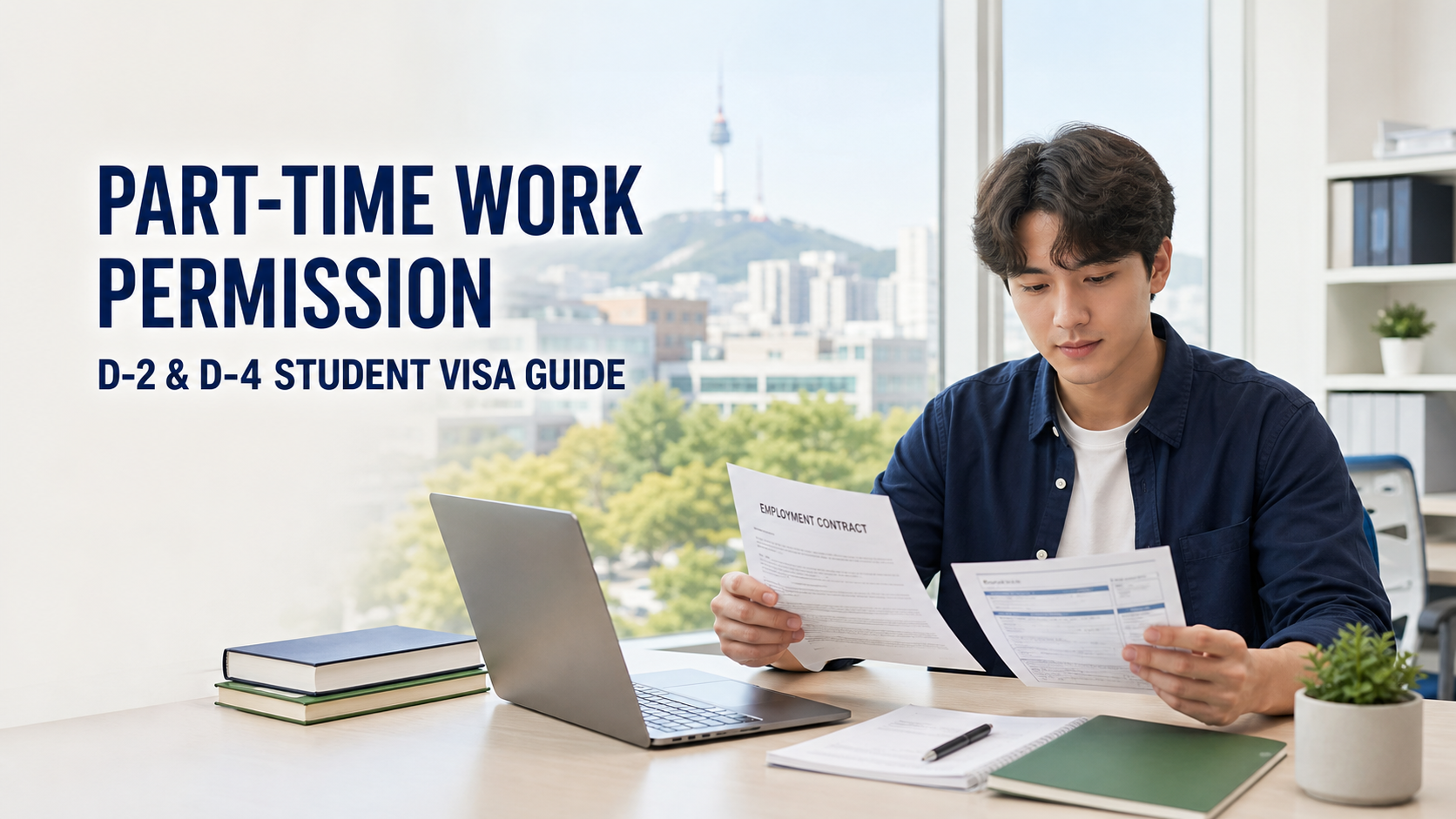
However, holding a D-2 or D-4 visa does not automatically mean that you can begin working. In many cases, international students must receive part-time work permission before starting a job.
Important Notice: This article provides general information only. KoreaReadyGuide does not provide legal advice, immigration advice, job placement, visa sponsorship, or employment guarantees. Eligibility and working conditions can vary depending on your visa subtype, school, academic status, Korean proficiency, job category, and current immigration policy. Always confirm the latest requirements with HiKorea, your school, or the immigration office.
Do D-2 and D-4 Visa Holders Need Work Permission?
Students with D-2 or D-4 visas generally need authorization before working outside their school or educational institution.
The D-2 visa is mainly issued to students enrolled in degree programs, while the D-4 visa is commonly used for Korean language training and certain non-degree programs. Because the primary purpose of these visas is education, employment is treated as an additional activity that may require approval.
Do not assume that you can work simply because:
You have an Alien Registration Card or Residence Card
Your employer has hired foreign students before
The job requires only a few hours per week
You will be paid in cash
Another student is doing the same type of work
The employer says that immigration permission is unnecessary
If authorization is required, you should receive it before your first working day.
Who May Be Eligible?
Eligibility depends on your individual circumstances. Immigration authorities and your school may consider factors such as:
Your visa type and visa subtype
How long you have been enrolled
Your attendance record
Your academic performance
Your Korean language ability
Your school’s approval
The proposed job and workplace
The number of working hours
Whether the job is permitted under your visa
Some students may not be immediately eligible after arriving in Korea. Different conditions may also apply to degree students, exchange students, language trainees, and students in other educational programs.
Ask your school’s international office to review your status before signing a contract or agreeing to a starting date.
Step 1: Check Your Visa and Student Status
First, confirm the exact visa status printed on your Residence Card or immigration record.
D-2 visas include several subcategories based on the student’s program. D-4 visas also include different training categories. Requirements can differ between these subcategories.
Check the following:
Is your current visa valid?
Are you actively enrolled?
Does your school permit you to apply?
Do you meet attendance or academic requirements?
Is there a waiting period for your visa category?
Do you need Korean language certification?
Is the proposed job allowed?
Are there limits on your working schedule?
Your university or language institute should be your first point of contact because school confirmation is commonly required.
Step 2: Find an Eligible Job
Before applying for permission, you normally need to find an employer willing to provide the required employment documents.
Common student job searches may include positions at:
Restaurants and cafes
Offices
Retail stores
Tourism-related businesses
Events
Translation or interpretation projects
University-related workplaces
Businesses seeking foreign-language assistance
A commonly advertised job is not necessarily legal for every student. Eligibility depends on both the student’s visa and the actual duties involved.
Be particularly careful with tutoring, teaching, delivery work, adult entertainment businesses, remote work, freelance projects, and jobs involving activities outside your approved status. These roles may be restricted or may require separate qualifications or authorization.
Students commuting between their school, immigration office, interviews, and workplace will usually rely on public transportation. Our T-Money Card in Korea guide explains how to buy, recharge, and use a transportation card on Korean subways and buses.
Step 3: Ask the Employer for a Written Contract
Request a written employment contract before submitting your application.
The contract should clearly state:
Employer or company name
Workplace address
Job title
Detailed duties
Hourly wage
Working days
Working hours
Contract period
Payment schedule
Employer contact information
Check that the information in the contract matches the actual job. Do not submit a contract describing one role and then perform unrelated duties after permission is granted.
The employer may also need to provide a copy of the business registration certificate or other workplace information.
Step 4: Prepare the Required Documents
Required documents can differ depending on your school, visa status, and immigration office. Commonly requested documents may include:
Passport
Residence Card
Application form
Employment contract
Employer’s business registration certificate
School confirmation form
Certificate of enrollment
Academic transcript
Attendance record
Korean language proficiency evidence, when applicable
Additional documents requested by immigration
Ask your school for its current document checklist. Do not rely only on an old blog post, community message, or a friend’s previous application because requirements may change.
Step 5: Receive Confirmation From Your School
Many D-2 and D-4 students must obtain confirmation or a recommendation from their educational institution.
The school may review:
Your enrollment status
Attendance
Academic performance
Proposed workplace
Job duties
Work schedule
Contract period
Possible conflict with your classes
Your school may refuse to confirm the application if the work could interfere with your studies or if the proposed position does not meet current requirements.
Do not skip this step when school approval is required.
Step 6: Apply for Immigration Permission
After preparing the documents, follow the current application procedure provided by your school and immigration authorities.
Depending on the applicable process, an application may be handled through HiKorea or the relevant immigration office. Confirm whether an appointment, online submission, or additional document review is required.
Submitting an application does not mean that permission has already been granted. Wait until the authorization is approved before beginning work.
Step 7: Check the Approved Conditions
When permission is granted, check the details carefully.
Confirm:
Approved employer
Approved workplace
Permitted job duties
Authorized working period
Allowed working days and hours
Any additional restrictions
Permission for one employer does not automatically allow you to work for another employer. Changing jobs, adding another workplace, or changing your duties may require a new application or a report to immigration.
Ask your school or immigration office before making any employment change.
If you have recently arrived in Korea and do not yet have a transportation card, you can alsocheck the Klook T-Money Card options for South Koreabefore commuting to school, interviews, or an approved workplace.
How Many Hours Can International Students Work?
There is no single working-hour limit that applies equally to every D-2 and D-4 student.
Permitted hours may depend on:
Visa subtype
Degree or training program
Korean language proficiency
Academic standing
School status
Weekday, weekend, or vacation periods
Current immigration rules
Because these limits can change, confirm the exact number of permitted hours directly with your school and HiKorea. Follow the conditions shown in your approval rather than relying on a general figure found online.
Can Students Work During School Vacations?
Different conditions may apply during official school vacations, but a vacation does not automatically remove immigration restrictions.
Your authorization period, workplace, job category, and other conditions still matter. Confirm vacation work rules before increasing your hours or accepting another position.
What Happens If You Work Without Permission?
Unauthorized employment can create serious consequences for both the student and the employer.
Possible consequences may include:
Immigration penalties
Problems extending your visa
Restrictions on future work permission
Difficulty changing your visa status
Cancellation of your stay status
Financial penalties
Disciplinary action from your school
Being paid in cash does not make unauthorized work legal. A short trial shift, unpaid training session, or temporary event assignment may also create problems if it qualifies as employment.
When in doubt, ask immigration before participating.
Employment Warning Signs
Avoid or carefully investigate job offers that include:
No written contract
An unclear company name
No workplace address
Cash-only payment
Unusually high wages for simple duties
Pressure to start immediately
Different duties from those advertised
Requests to use another person’s bank account
Claims that your visa does not matter
Refusal to provide business registration information
Requests for your passport without a clear reason
Do not send sensitive documents before confirming that the employer and workplace are legitimate.
Questions to Ask Before Accepting a Job
Ask the employer these questions before signing a contract:
What are the exact duties?
What is the workplace address?
What is the hourly wage?
What are the working days and hours?
When will wages be paid?
Will I receive a written employment contract?
Can you provide the documents required by immigration?
Have you employed international students before?
Will the schedule conflict with my classes?
Can I wait for immigration approval before starting?
A legitimate employer should understand that an international student may need time to complete the permission process.
Application Checklist
Before starting work, confirm that you have completed the following:
Checked your exact visa category
Consulted your school’s international office
Confirmed that the job category is permitted
Received a written employment contract
Collected the employer’s documents
Obtained school confirmation when required
Submitted the application
Received approval
Checked the approved employer, period, and hours
Saved copies of all documents
International students should also check whether their existing medical or travel coverage remains valid while studying and working in Korea. If you need to compare an additional international option, you can review SafetyWing Nomad Insurance plans and coverage details. Always check the eligibility, exclusions, and policy conditions before purchasing, as this may not replace insurance required under Korean regulations.
Final Thoughts
Getting part-time work permission in Korea requires more than finding an employer. D-2 and D-4 students should confirm their eligibility, obtain the necessary school documents, submit the required application, and wait for approval before working.
The most important rule is simple: do not begin work based only on an employer’s promise or another student’s experience.
For a broader overview of visa requirements, common student jobs, and employment safety precautions, read our guide: Can Foreigners Work Part-Time in Korea?
Important Notice: KoreaReadyGuide does not hire workers, arrange employment, sponsor visas, or determine individual eligibility. Immigration policies and school requirements may change. Always verify current information through HiKorea, the Immigration Contact Center at 1345, your school’s international office, or the relevant immigration office before accepting or starting any work.
Many foreigners come to South Korea for travel, study, language learning, working holidays, or long-term cultural experience. At some point, many of them ask the same question: Can foreigners work part-time in Korea?
Important Notice: This article is for general information only. KoreaReadyGuide does not provide legal advice, immigration advice, job placement, visa sponsorship, or employment guarantees. Part-time work rules in Korea can differ depending on your visa type, school, job category, workplace, and immigration status. Always confirm your eligibility with HiKorea, your school, or the immigration office before accepting or starting any job in South Korea.
The short answer is: sometimes, yes — but it depends on your visa type, your job type, and whether you need permission before you start working.
This guide explains the basic things foreigners should know before looking for part-time jobs in Korea, especially international students and language school students. Rules can change, so always confirm your situation with HiKorea, your school, or the immigration office before accepting any job.
Can Foreigners Legally Work Part-Time in Korea?
Foreigners can work part-time in Korea only when their visa status allows it. Some visa holders may be allowed to work more freely, while others must receive permission before starting any job. For example, many international students on D-2 or D-4 visas are not automatically allowed to work just because they are already living in Korea.
For student visa holders, part-time work often requires permission from the school and the immigration office before the job begins. Working first and applying later can create serious problems, including illegal employment issues, visa extension problems, or difficulty changing visa status in the future.
Why Your Visa Type Matters
Your visa type is the most important factor when looking for work in Korea. A job that is allowed for one foreigner may not be allowed for another person with a different visa.
For example, a student, a working holiday visitor, a spouse visa holder, and a professional work visa holder may all have different rules. Even if the job looks simple, such as working at a cafe, restaurant, event, guesthouse, or office, your visa condition still matters.
Before applying for a job, check these basic questions:
Does my current visa allow part-time work?
Do I need permission from immigration before starting?
Is this job type allowed under my visa?
Is there a weekly hour limit?
Does my school need to confirm the job first?
When applying for jobs, checking maps, receiving employer messages, or using translation apps in Korea, reliable mobile data can make daily life much easier. You can check South Korea eSIM options with Saily before or after arriving in Korea.
Part-Time Work Rules for D-2 and D-4 Student Visa Holders
D-2 and D-4 visa holders should be especially careful. These visas are mainly for study or language training, not for full-time employment. In many cases, students need approval before they can work part-time outside school.
Common requirements may include:
A valid student or language training visa
School confirmation or approval
An employment contract
Information about the workplace
Proof that the job is within allowed work categories
Permission from the immigration office before starting work
Some schools also require students to meet academic or attendance conditions before they can apply for part-time work permission. Language ability, such as TOPIK level, may also affect allowed working hours or eligibility in some cases.
Because the details can differ by visa, school, and personal situation, students should always check with their university international office and HiKorea before accepting a part-time job.
Common Part-Time Jobs for Foreigners in Korea
Foreigners in Korea often look for jobs that match their language skills, cultural background, or student schedule. Common part-time job types may include:
Translation or interpretation
Restaurant or cafe assistant
Office assistant
Tourism assistant
Duty-free shop sales assistant
English tutoring or language tutoring, depending on visa rules
Event staff
Content creation, modeling, or promotional work
Internship-style work related to a student’s field of study
However, just because a job is common does not mean it is automatically allowed for every foreigner. Always check whether the job type is permitted under your visa before starting.
Jobs Foreigners Should Be Careful About
Some part-time job offers may look attractive but can be risky. Be careful if a job post has unclear details, unusually high pay, no written contract, or asks you to start immediately without checking your visa status.
Foreigners should be careful with job offers that include:
No company name or unclear employer information
No written contract
Cash-only payment with no record
Pressure to start before receiving permission
Work that does not match your visa condition
Promises that “visa does not matter”
Requests for personal documents before verifying the employer
If an employer says that permission is not necessary, do not rely only on the employer’s words. Confirm with your school, HiKorea, or the immigration office first.
Where to Find Foreigner-Friendly Jobs in Korea
Foreigners can find job information through several types of sources. Some platforms focus on foreigner-friendly jobs, while others list general jobs in Korea.
Useful places to check may include:
Foreigner-focused job platforms
University international office job boards
Seoul Global Center and foreign resident support centers
LinkedIn Korea
Indeed Korea
Glassdoor Korea
Company career pages
Trusted expat or student communities
When using community posts or social media, be extra careful. Community job posts can be useful, but they may not always be verified. Always check the company, location, contract, pay, visa condition, and contact information before sharing personal documents.
If you plan to travel around Seoul for interviews, school visits, or part-time work, it is also helpful to understand local transportation. Read our guide toT-Money Card in Koreato learn how transportation cards work for subways, buses, taxis, and convenience stores.
Before You Apply: Safety Checklist
Before applying for any part-time job in Korea, use this checklist:
Check your visa type and work permission rules.
Ask your school or immigration office if permission is required.
Confirm the company name and business information.
Request a written contract.
Check hourly pay, working hours, and payment date.
Confirm the workplace address.
Do not send sensitive documents too early.
Do not start working before permission is approved, if permission is required.
If you are staying in Korea longer for study, job searching, or working holiday plans, choosing the right accommodation area also matters. Our Accommodation in South Korea guide explains different stay options, from hotels and guesthouses to hanok stays and apartment-style accommodation.
Useful Questions to Ask an Employer
Before accepting a job, ask clear questions. A reliable employer should be able to answer basic details about the role.
What is the exact job title and duty?
What is the hourly wage?
How many hours per week will I work?
Will I receive a written contract?
Can you provide the business registration information if needed for immigration paperwork?
Have you hired foreign students or foreign workers before?
Part-time work in Korea can be a great opportunity for foreigners. It can help with living costs, improve Korean language skills, and offer real experience with Korean workplace culture. But the most important rule is simple: check your visa first.
If you are a student, do not assume that you can work automatically. If you are unsure, ask your school’s international office or contact immigration before starting. A safe, legal job is always better than a fast job that creates visa problems later.
KoreaReadyGuide will continue to share practical guides and curated resources for foreigners looking for part-time jobs, student work, internships, and work opportunities in South Korea.
Important Notice: KoreaReadyGuide does not hire, sponsor visas, provide immigration advice, or guarantee job placement. This article provides general information and curated public job resources only. Visa and part-time work rules may change and can differ by individual situation. Always confirm your eligibility with HiKorea, your school, or the immigration office before accepting or starting any work in Korea.
Introduction: Should You Worry About Korea’s Rainy Season?
If you are planning to visit South Korea in summer, you will probably hear one word often: jangma.
Jangma refers to Korea’s summer rainy season. It usually arrives around early to mid-summer and brings humid air, cloudy skies, sudden downpours, slippery streets, and occasional travel delays. For first-time visitors, it can feel confusing because Korea’s rainy season is not exactly the same as the tropical monsoon seasons in Southeast Asia.
The good news is that Korea is still very travel-friendly during the rainy season. Seoul’s subway system continues to run efficiently, convenience stores sell umbrellas almost everywhere, and many of Korea’s best indoor attractions are easy to reach by public transportation.
The key is not to cancel your trip. The key is to prepare differently.
This guide explains when Korea’s rainy season usually happens, what to pack, how to adjust your itinerary, where to stay, what to avoid during heavy rain, and how Korea’s rainy season is different from the rainy seasons in countries like Thailand, Vietnam, Japan, and Taiwan.
When Is the Rainy Season in Korea?
Korea’s rainy season is usually associated with June and July, especially from mid-June to mid-July. Visit Seoul describes summer in Seoul as hot and humid, with the Korean rainy season, or jangma, beginning around mid-June and continuing for about a month. It also notes that July is typically the month when precipitation peaks in Seoul.
However, travelers should not treat these dates as fixed.
Some years, the rainy season starts earlier. Some years, it arrives later. In recent years, weather patterns have become less predictable, and Korea’s summer weather can shift between long cloudy periods, intense rainfall, humid heat, and typhoon-related weather.
A realistic way to think about it is this:
June: Warm weather begins, and rainy days may increase toward the second half of the month.
July: Often the wettest and most humid month for travelers.
August: Usually hotter, with heat waves and possible typhoon influence.
September: Less like the main rainy season, but typhoons or localized heavy rain can still affect travel.
If you are visiting Korea between late June and August, you should prepare for both rain and heat.
Is Korea’s Rainy Season the Same Every Year?
No. Korea’s rainy season changes from year to year.
Many travel guides describe the rainy season as if it happens on the same dates every summer, but that is not how it works in real life. Korea’s summer rainfall depends on atmospheric conditions, seasonal fronts, typhoons, and regional weather patterns.
In 2026, Korean media reported that the Korea Meteorological Administration no longer gives a fixed official prediction for the exact timing of the monsoon season, partly because precipitation patterns have become more variable.
For travelers, this means one important thing:
Do not plan your Korea summer trip based only on average rainy-season dates. Check the weather forecast close to your travel dates.
A day that looks rainy two weeks in advance may become partly cloudy. A day that looks clear may suddenly bring heavy rain. This is why flexible planning is more important than perfect planning during Korea’s rainy season.
How Korea’s Rainy Season Is Different from Other Asian Monsoons
Many foreign visitors hear the word “monsoon” and imagine Southeast Asian-style tropical rain. But Korea’s rainy season feels different.
Korea’s rainy season is usually shorter and more concentrated than the long rainy seasons in many tropical destinations. It is also strongly connected to urban travel conditions: subway transfers, wet sidewalks, crowded taxi apps, flooded underpasses, slippery stairs, and sudden changes in outdoor plans.
Korea vs Other Rainy Seasons in Asia
Destination
Typical Rainy Season Pattern
What Travelers Should Know
South Korea
Usually concentrated around June and July, followed by hot, humid weather and possible typhoons later in summer
Rain can be sudden and heavy, but public transportation remains useful in major cities
Japan
Japan’s rainy season, called tsuyu, usually brings cloudy, wet weather before peak summer heat
Similar to Korea in some ways, but timing varies by region
Thailand
Longer tropical rainy season, often from around May to October
Rain may come as intense tropical showers, often with very humid conditions
Vietnam
Rainy season differs greatly by region because the country is long from north to south
You must check the specific city, such as Hanoi, Da Nang, or Ho Chi Minh City
Taiwan
Rainy periods and typhoon season can both affect travel
Typhoon planning is especially important for flights and coastal travel
Korea is not a tropical country. It has four distinct seasons. Summer is hot and humid, but the rainy season is not usually a six-month travel condition like in some tropical destinations. Visit Korea describes Korea as a mid-latitude country with four distinct seasons, with summer characterized by hot and humid weather.
So, if you have traveled in Thailand or Vietnam during the rainy season, do not assume Korea will feel exactly the same.
In Korea, the problem is often not just the rain itself. It is the combination of:
sudden downpours,
humid air,
wet shoes,
crowded subway stations,
delayed taxis,
slippery sidewalks,
and outdoor plans that need a backup.
Does It Rain All Day During Korea’s Rainy Season?
Not always.
Some rainy-season days are wet from morning to night. But many days are more mixed. You may wake up to cloudy skies, see sunshine for a few hours, experience sudden heavy rain in the afternoon, and then walk outside again in humid evening air.
This is why Korea’s rainy season can be tricky for tourists. It may not look serious in the morning, but the weather can change quickly.
A smart rainy-season itinerary should not be completely outdoor or completely indoor. The best approach is:
one main outdoor plan + one indoor backup plan each day.
For example:
Visit Gyeongbokgung Palace in the morning.
Keep a museum, shopping mall, or café area as your backup.
Plan a subway-friendly dinner location.
Avoid long outdoor transfers late at night if heavy rain is expected.
This style of planning keeps your trip flexible without making it feel limited.
What Makes Korea’s Rainy Season Difficult for Tourists?
Korea’s rainy season is not impossible to travel in, but it can create small problems that affect your daily comfort.
1. High Humidity
The rain is only part of the problem. Humidity can make your clothes feel damp, your hair lose shape, and your body feel tired faster than usual.
Even if the temperature is not extremely high, the air can feel heavy.
2. Wet Shoes and Socks
This is one of the most common mistakes travelers make. They pack nice sneakers or fashion shoes, but those shoes become wet on the first rainy day and stay uncomfortable for the rest of the trip.
During Korea’s rainy season, shoes matter more than many visitors expect.
3. Slippery Sidewalks and Subway Stairs
Korea has many underground stations, stairs, slopes, tiled sidewalks, and wet crosswalks. These can become slippery during heavy rain.
If you are carrying luggage, shopping bags, camera gear, or children’s items, rainy-day movement can feel much harder.
4. Crowded Subway Entrances
Seoul’s subway system is one of the best ways to travel during rainy weather. But station entrances can become crowded when everyone stops to open umbrellas, shake off rain, or wait for the rain to weaken.
5. Taxi Demand Increases
When it rains heavily, more people try to call taxis. Apps like Kakao T or Uber can become harder to use during peak rain hours, especially around stations, nightlife areas, hotels, and business districts.
6. Outdoor Attractions May Become Less Comfortable
Palaces, hanok villages, hiking trails, traditional markets, riverside parks, and coastal areas can still be beautiful in light rain. But during heavy rain, they may become uncomfortable or unsafe.
What to Pack for Korea’s Rainy Season
Packing well can make a big difference. You do not need to bring too much, but you should bring the right items.
Essential Rainy-Season Packing List
Item
Why You Need It
Compact umbrella
Easy to carry and useful almost every day
Quick-dry T-shirts
Cotton can stay damp for a long time
Light rain jacket
Better than an umbrella during windy rain
Water-resistant shoes
Wet shoes can ruin a travel day
Extra socks
Small item, big comfort difference
Waterproof phone pouch
Useful during sudden heavy rain
Zip bags
Good for wet clothes, receipts, and electronics
Small towel
Helpful before entering cafés, trains, or hotels
Portable fan
Useful in humid subway stations and outdoor queues
Lightweight backpack cover
Protects camera gear, documents, and chargers
You do not need to overpack. In Korea, umbrellas, socks, towels, rain ponchos, waterproof pouches, and basic travel items are easy to buy at convenience stores, Daiso, subway shopping areas, and large supermarkets.
But if you are arriving late at night, traveling with children, or going directly from the airport to another city, it is better to prepare the basics before arrival.
What Not to Wear During Korea’s Rainy Season
The biggest mistake is not simply getting wet. The real problem is wearing clothes and shoes that stay wet for the rest of the day.
Try to avoid:
thick jeans,
heavy cotton hoodies,
leather shoes,
slippery flip-flops,
white fabric sneakers,
long pants that touch the ground,
heavy backpacks without rain covers,
and clothes that are difficult to dry in a hotel room.
Instead, choose:
breathable shirts,
quick-dry pants,
comfortable walking sandals or water-resistant sneakers,
thin layers,
and a small crossbody bag or backpack that can handle rain.
For Korea summer travel, comfort usually matters more than perfect styling. You can still dress nicely, but rainy-season outfits should be practical enough for subway stairs, wet sidewalks, and sudden weather changes.
Transportation Tips During Heavy Rain in Korea
Subway
The subway is usually the best transportation option during the rainy season, especially in Seoul.
It is not completely free from delays or crowding, but it is generally more reliable than road traffic during heavy rain. Subway stations also connect many shopping malls, department stores, underground passages, and tourist areas.
Rainy-season tip:
Choose routes with fewer outdoor transfers.
Even if one route is slightly longer, it may be better if it keeps you underground for most of the journey.
For a broader overview of subway routes, buses, taxis, and airport transfers, read our Transportation in Korea: Complete Guide for Tourists before planning your rainy-season itinerary.
Bus
Buses can be useful, but they are more affected by road traffic. During heavy rain, buses may be delayed, and waiting at bus stops can be uncomfortable.
Taxis are convenient, but rainy days can make them harder to catch.
When heavy rain starts, many people request taxis at the same time. This can increase waiting times, especially in areas like Myeongdong, Hongdae, Gangnam, Itaewon, Seoul Station, and major hotel districts.
If you plan to use taxi apps, make sure your mobile data works well.
Rainy days in Korea often mean checking subway routes, taxi apps, weather alerts, and map directions more often than usual. Having mobile data ready before arrival can make your rainy-season trip much easier.
영prepare your Korea eSIM in advance through Saily
Airport Transfer
If you are arriving or leaving Korea during the rainy season, give yourself more time than usual.
The AREX train between Incheon Airport and Seoul Station is often a stable option because it is less affected by road traffic. Airport buses and taxis can still be useful, but they may be affected by heavy rain, road congestion, or local flooding.
Where to Stay During Korea’s Rainy Season
Where you stay matters more during rainy season than during dry weather.
In spring or autumn, it may be fine to stay in a quiet neighborhood 15 minutes from the nearest subway station. But during heavy summer rain, that 15-minute walk can feel much longer, especially with luggage.
Good access to palaces, museums, and central Seoul
Best Indoor Backup Ideas for Rainy Days in Korea
Rainy days do not have to ruin your trip. Korea has many excellent indoor places that are easy to combine with outdoor sightseeing.
Seoul Rainy-Day Ideas
National Museum of Korea
COEX Mall
Starfield Library
The Hyundai Seoul
Lotte World Mall
Seoul Museum of History
War Memorial of Korea
Myeongdong shopping streets and underground shopping
Hongdae cafés and photo booths
Gangnam beauty and shopping areas
Busan Rainy-Day Ideas
Shinsegae Centum City
Busan Museum of Art
Spa Land
Local cafés
Jagalchi Market nearby indoor food areas
Jeju Rainy-Day Ideas
Museums
Cafés
Indoor markets
Tea museums
Wellness spas
However, Jeju requires extra caution during heavy rain or strong wind because flights, ferries, coastal roads, and outdoor attractions may be affected.
The best rainy-season itinerary is not an indoor-only itinerary. It is a flexible itinerary with indoor backup options.
Places to Avoid During Heavy Rain in Korea
During light rain, many places are still fine to visit. A palace in gentle rain can be beautiful. A café street on a cloudy day can feel cozy. A traditional market can still be fun.
But during heavy rain, some places should be avoided.
Avoid These During Heavy Rain
riverside walking paths,
streams and creeks,
underpasses,
low-lying roads,
mountain trails,
valleys,
waterfalls,
coastal rocks and breakwaters,
construction areas,
and steep alleys with slippery surfaces.
The UK Foreign, Commonwealth & Development Office warns that South Korea can experience heavy rainfall during the summer rainy season, usually in June and July, and that torrential rain may cause flooding near rivers and creeks, including built-up areas. It also notes that landslides are possible in hilly and mountainous areas.
This is especially important for travelers planning hiking, riverside cycling, camping, island trips, or rural day trips.
If a heavy rain warning is issued, change your plan. Do not try to “push through” bad weather just because the attraction was on your itinerary.
Typhoons and Late-Summer Weather
Korea’s main rainy season is usually associated with June and July, but travelers should also understand late-summer typhoon risk.
Typhoons do not affect every traveler, every city, or every summer trip. But when they do affect Korea, they can cause flight delays, ferry cancellations, strong winds, heavy rain, coastal danger, and temporary closure of outdoor attractions.
This is more relevant if you are visiting:
Jeju Island,
Busan,
coastal areas,
islands,
mountain regions,
or multiple cities by domestic flight.
If you are traveling in August or September, check the forecast more carefully before booking tight transportation schedules.
Travel Insurance Tips for Korea’s Rainy Season
Most travelers do not need to panic about Korea’s rainy season. But travel insurance can be worth considering if your trip includes:
domestic flights,
island travel,
hiking,
expensive hotel bookings,
multiple city transfers,
medical concerns,
or a tight schedule that could be affected by weather delays.
Heavy rain can sometimes cause transportation disruption, route changes, or unexpected cancellations. In 2025, South Korea experienced severe torrential rain events that caused flooding, evacuations, infrastructure damage, and landslides in some regions. Reuters reported deadly flooding and landslide damage after days of heavy rain in July 2025.
For ordinary city travelers, this does not mean Korea is unsafe. It simply means that summer weather should be treated seriously.
If you are visiting Korea during the rainy season, especially with domestic flights, hiking plans, island trips, or multiple city transfers, it may be worth comparing travel insurance before departure.
If you are not sure whether travel insurance is necessary for your Korea trip, our full guide to Travel Insurance for South Korea – Complete 2026 Guide explains what travelers should consider before departure.
Useful Weather and Safety Apps for Korea’s Rainy Season
During Korea’s rainy season, you may check your phone more often than usual.
Useful app categories include:
weather forecast apps,
subway route apps,
map apps,
taxi apps,
translation apps,
and emergency alert notifications.
In Korea, weather can change quickly during summer. Checking the forecast once in the morning is helpful, but checking it again before long outdoor activities is even better.
The Korea Meteorological Administration provides official weather information and severe weather alerts, including heavy rain, typhoon, heatwave, strong wind, and other warning categories.
Before leaving your hotel, check:
chance of rain,
hourly precipitation,
wind,
humidity,
heat index,
and any heavy rain warnings.
Final Rainy Season Checklist for Korea
Before your summer trip to Korea, use this checklist.
Before You Fly
Check Korea’s weather forecast close to your travel dates.
Pack quick-dry clothes.
Bring or plan to buy a compact umbrella.
Prepare water-resistant shoes.
Set up mobile data or eSIM before arrival.
Consider travel insurance if your itinerary includes flights, islands, hiking, or multiple cities.
Choose accommodation near a subway station.
During Your Trip
Check the hourly forecast each morning.
Keep one indoor backup plan each day.
Use the subway when roads are affected by rain.
Avoid rivers, streams, mountains, and underpasses during heavy rain.
Carry extra socks or a small towel.
Do outdoor attractions early if the forecast shows afternoon rain.
Give yourself extra time for airport transfers.
When Heavy Rain Is Forecast
Do not hike.
Avoid riverside parks and low-lying areas.
Avoid coastal rocks and breakwaters.
Move indoor plans earlier.
Check transportation updates.
Do not ignore local alerts.
Final Thoughts: Is Korea Worth Visiting During the Rainy Season?
Yes, Korea is still worth visiting during the rainy season.
You may not get perfect blue skies every day. You may need to change outdoor plans. Your shoes may get wet. You may spend more time checking weather apps than expected.
But Korea is also one of the easiest countries to travel in during bad weather because major cities have excellent subway systems, many indoor attractions, convenient stores everywhere, and dense neighborhoods where food, shopping, cafés, and transportation are close together.
The secret is to travel with flexibility.
Do not build a summer Korea itinerary that depends on perfect weather every day. Build an itinerary that works even when it rains.
If you prepare well, Korea’s rainy season can still be a memorable part of your trip — not because the weather is perfect, but because you know how to move, where to stay, what to pack, and how to adjust your plans like a smart traveler.